
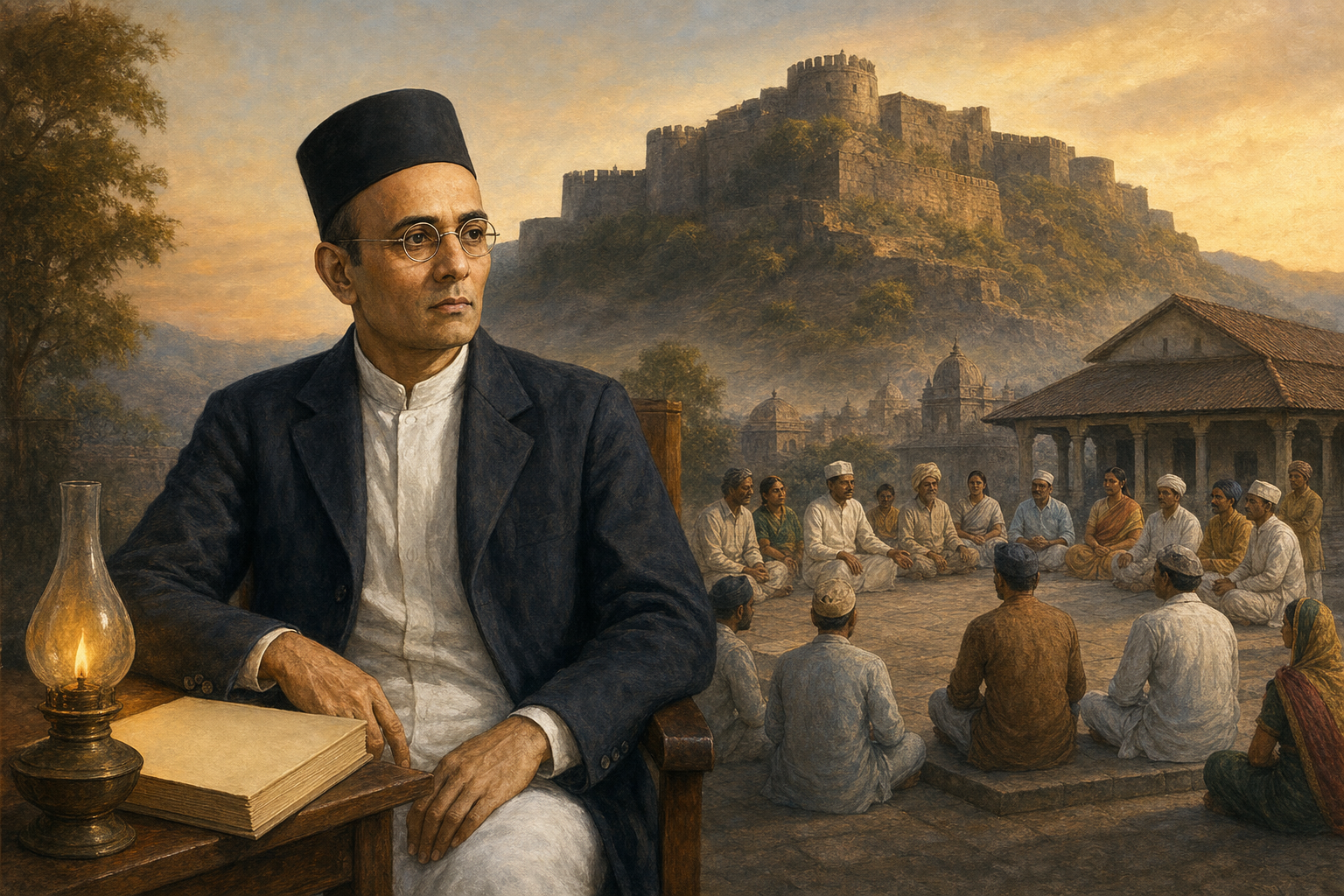
You may admire V. D. Savarkar and still wonder what fidelity to his legacy requires in public life. You may also distrust the politics conducted in his name while recognizing that dismissing him with a label leaves a major strand of modern Hindu thought unexplained.
The useful question is not whether you must accept a ready-made verdict on Savarkar. It is what kind of political inheritance strengthens Hindu society, serves Bharat, respects equal citizenship, and converts civilizational confidence into disciplined public work. That question becomes especially important whenever the maxim “Hinduize the Politics and Militarize the Hindudom” is repeated without explaining what either imperative permits, requires, or forbids.
Key takeaways

- Savarkar’s political legacy cannot be reduced to one slogan. Read his revolutionary background, political concepts, historical writings, and institutional prescriptions as connected but distinct parts of the record.
- A constitutionally defensible reading of “Hinduize the Politics” means bringing dharma, probity, equal dignity, and civilizational awareness into public life. It cannot mean placing a party, leader, or community above the law.
- For civilians, the usable meaning of “Militarize the Hindudom” is lawful protective capacity: fitness, first-response skills, discipline, legal awareness, disaster readiness, and organized service. It is not a license for vigilantism or intimidation.
- A pro-Hindu proposal should be judged by what it builds. Ask whether it protects liberty, applies rules fairly, increases community competence, and leaves institutions more trustworthy.
- The best commemoration of Savarkar joins careful reading to measurable civic work. A lecture without study becomes mythology; a slogan without service becomes spectacle.
Read the legacy in three layers, not as a loyalty test
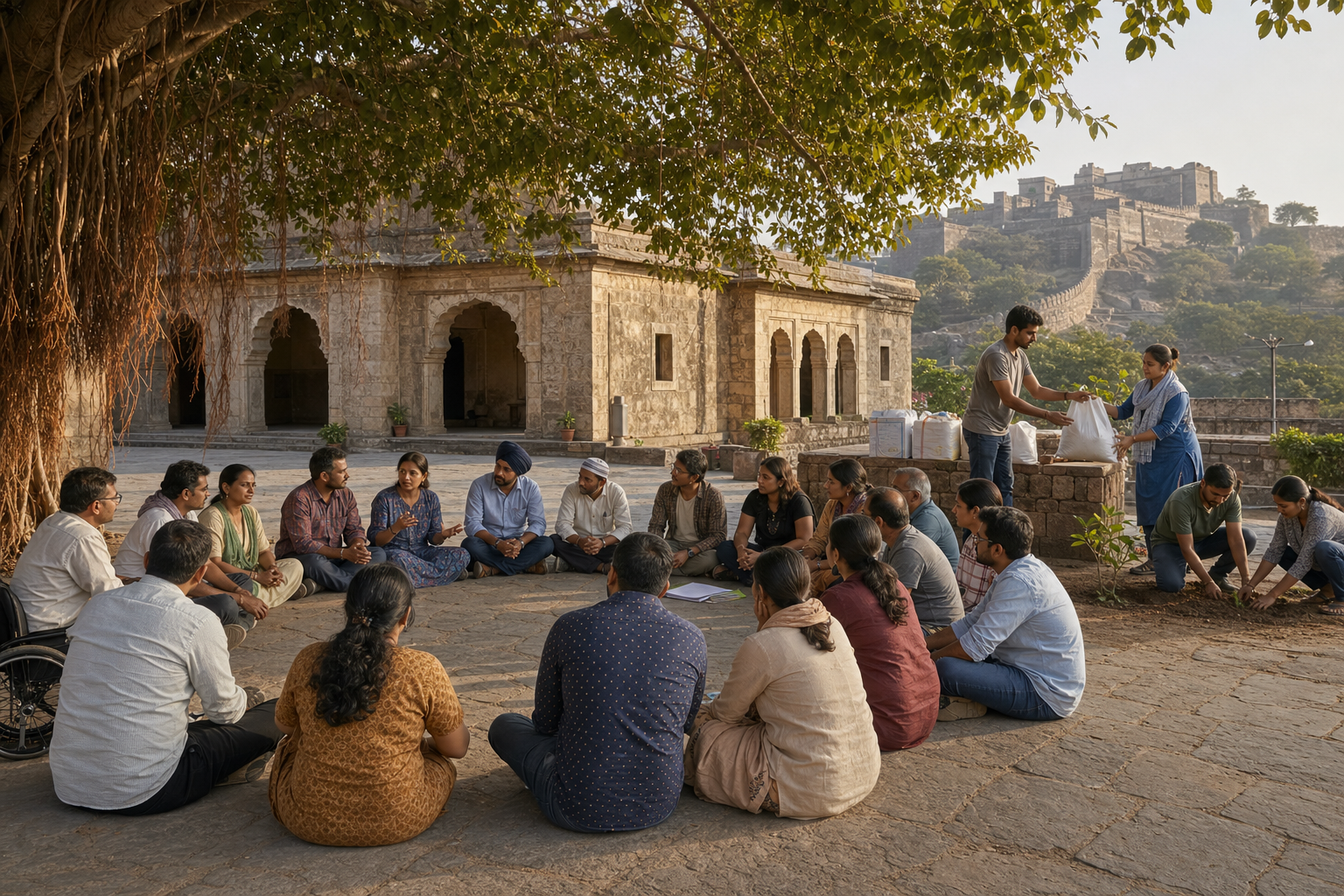
Savarkar entered politics under conditions very different from those of constitutional India. Born in 1883, he participated in revolutionary networks, endured prolonged incarceration that included the Cellular Jail, and later wrote works such as Hindutva: Who Is a Hindu? and Six Glorious Epochs of Indian History. Colonial subjection, revolutionary strategy, civilizational identity, and the problem of collective weakness therefore meet in his legacy. Pulling out one sentence while ignoring those pressures produces certainty without understanding.
Use three layers when you read or discuss him.
<!– wp:list {