
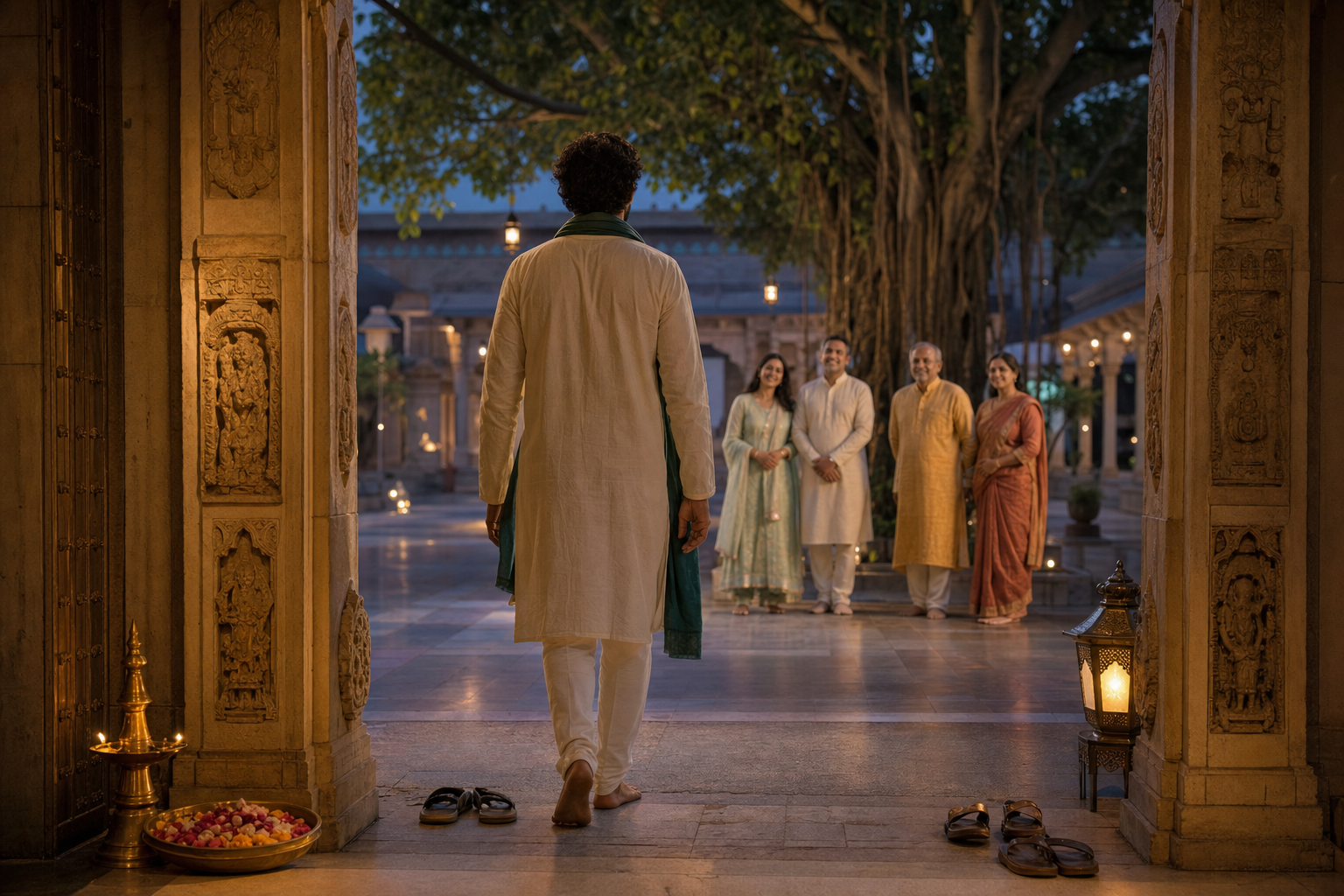
You may be considering Ghar-Wapsi for yourself, helping a relative who wants to return to Hindu practice, or deciding whether your temple should support such a request. The difficult question is rarely whether a ceremony can be arranged. It is whether the homecoming will be voluntary, historically grounded, socially real and durable after the lamps are extinguished.
Hindu history gives you strong grounds to reject the claim that a person who left the fold can never return. It also warns you against reducing return to a public spectacle. Paravartana, Shuddhi and admission into Sanatana Dharma developed in different circumstances, and a responsible contemporary process must preserve that precision.
Key takeaways
- Ghar-Wapsi is the modern popular name for a much older family of ideas and practices concerning return, readmission and social reintegration.
- Paravartana, Shuddhi and Vrātya-stoma are related but not interchangeable. The right frame depends on whether a person is returning, reconnecting through ancestry or entering Hindu Dharma for the first time.
- Dharmashastric discussions of coercion support a crucial principle: an identity imposed by force cannot be treated as an irreversible expression of free conviction.
- A ceremony is only the threshold. Homecoming becomes real through worship, learning, relationships, festivals, family life and recognition by a living community.
- Contemporary practice must be initiated by the person, free of inducement or pressure, sensitive to safety and privacy, and separated carefully from jurisdiction-specific civil paperwork.
Begin by identifying what kind of homecoming this is
The word ghar gives Ghar-Wapsi its emotional force. It invokes ancestors, family deities, inherited customs, sacred geography and a civilizational memory larger than an individual lifetime. But that emotional range can conceal several different situations. Before discussing a rite, identify which situation is actually in front of you.
- Personal return: The person once identified and lived as a Hindu, later adopted another religion, and now freely wants to resume Hindu life.
- Ancestral reconnection: The person was raised in another religion but understands the family to have Hindu ancestry and personally chooses to reconnect with it. Ancestry can explain the word home, but it cannot substitute for present consent.
- Adoption of Hindu Dharma: The person has no claimed Hindu ancestry but wants to enter a Hindu sampradaya or way of life. This is an entry into Dharma, not literally a return to an ancestral religious identity.
- Exploration without formal affiliation: The person studies Vedanta, practises yoga, visits temples or reveres a Hindu deity but has not chosen a new religious identity. Interest should not be prematurely labelled as conversion or homecoming.
The older vocabulary helps preserve these distinctions. Paravartana denotes return or turning back in the context under discussion. Shuddhi names a form of purification or restoration used for readmission. Vrātya-stoma belongs to an older ritual setting concerned with admitting people who stood outside the established samskara order. The Vrātya-stoma tradition is traced to the Tāṇḍya Mahābrāhmaṇa, also called the Pañcaviṃśa Brāhmaṇa, and is presented as one mechanism through which outsiders could enter Sanatana society.
These categories affect what you should do. Someone resuming a former practice may need reconciliation and community support more than instruction in elementary beliefs. Someone reconnecting through distant ancestry may need patient study before any public declaration. A person entering without ancestral claims needs honest initiation into a particular tradition, not a manufactured genealogy. A spiritual explorer may need nothing more than access to teaching and worship.
Ask the person to complete one sentence privately: “I want to do this because…” If the answer centres on conviction, practice, deity, ancestors or a considered sense of belonging, the next conversation can proceed. If it centres on marriage pressure, employment, money, political attention, fear or the expectations of an organiser, pause. A rite cannot repair compromised consent.
The textual record treats return as possible, not automatic
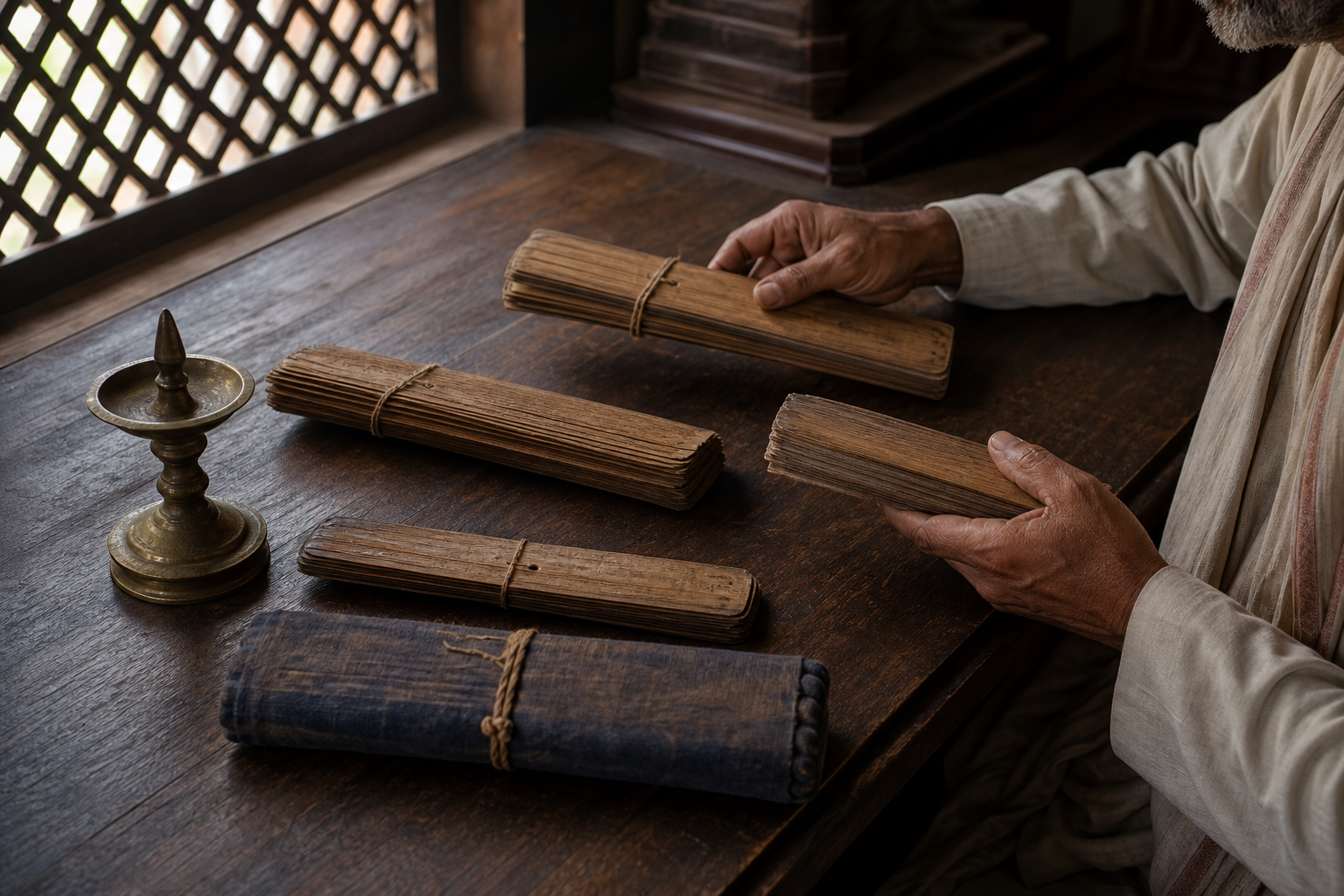
The belief that one can only be born a Hindu and can never return after leaving is difficult to reconcile with the textual record. Hindu traditions discussed both the admission of outsiders and the restoration of people separated from their communities. That does not create one universal modern conversion formula, but it does establish something more fundamental: exclusion was not always understood to be permanent.
A foundational ethical idea appears in the Dharmashastric treatment of force. Transactions brought about through compulsion were regarded as void. P.V. Kane applied that principle to people who had been forcibly converted and argued that their desire to return to the religion of their forebears should be supported. The relevance for you is direct: a declaration extracted through violence, captivity, fraud or overwhelming pressure should not be treated as an eternally binding spiritual choice.
The Devala-Smriti developed procedures for people who had been forced outside Hindu society. Its discussion included women subjected to sexual violence and pregnancy, and related provisions also appear in the Atri-Smriti and Atri-Samhita. These traditions of Mlecchita-Shuddhi and restoration matter because they contradict permanent abandonment of the victim.
A contemporary community should preserve that restorative purpose while refusing language that transfers blame to the person who suffered coercion. A survivor of force is not morally stained by the aggressor’s act. If a ritual is desired, explain it as healing, renewed sankalpa and social welcome. Never present it as punishment for having been victimised.
The discussion did not disappear after one early text. Vijnaneshvara’s commentary on the Yājñavalkya-Smriti, associated with the court of the Kalyana Chalukya ruler Vikramaditya VI in the 12th century, addressed restoration after coercive separation. Later, Nagoji Bhatta’s Vrātyatā-śuddhisaṅgraha shows that questions of exclusion and readmission still occupied Hindu scholarship in the 18th century. The continuity is more important than any attempt to lift a historical procedure unchanged into the present.
| Textual or ritual layer | What it helps establish | What it does not establish |
|---|---|---|
| Vrātya-stoma | Hindu tradition possessed a conceptual and ritual route for admitting outsiders. | That every contemporary entrant must undergo one identical ancient rite. |
| Devala, Atri and related Shuddhi discussions | Coercive separation need not make exclusion permanent. | That a victim should be blamed, humiliated or treated as morally polluted. |
| Vijnaneshvara and later commentators | Restoration remained a serious Dharmashastric question across centuries. | That one historical rule overrides every sampradaya, local custom or present legal requirement. |
| Nagoji Bhatta’s 18th-century compendium | Scholarly attention to readmission continued under radically changed political conditions. | That a historical digest supplies a complete protocol for modern civil documentation. |
Use these texts to answer the threshold question: return is possible. Do not use them as a kit of detached ritual fragments. Hindu rites derive meaning from a living lineage, a competent acharya and the circumstances of the seeker. The practical task is to locate the right living authority, not to stage a reconstruction from isolated passages.
History shows that reintegration required public responsibility
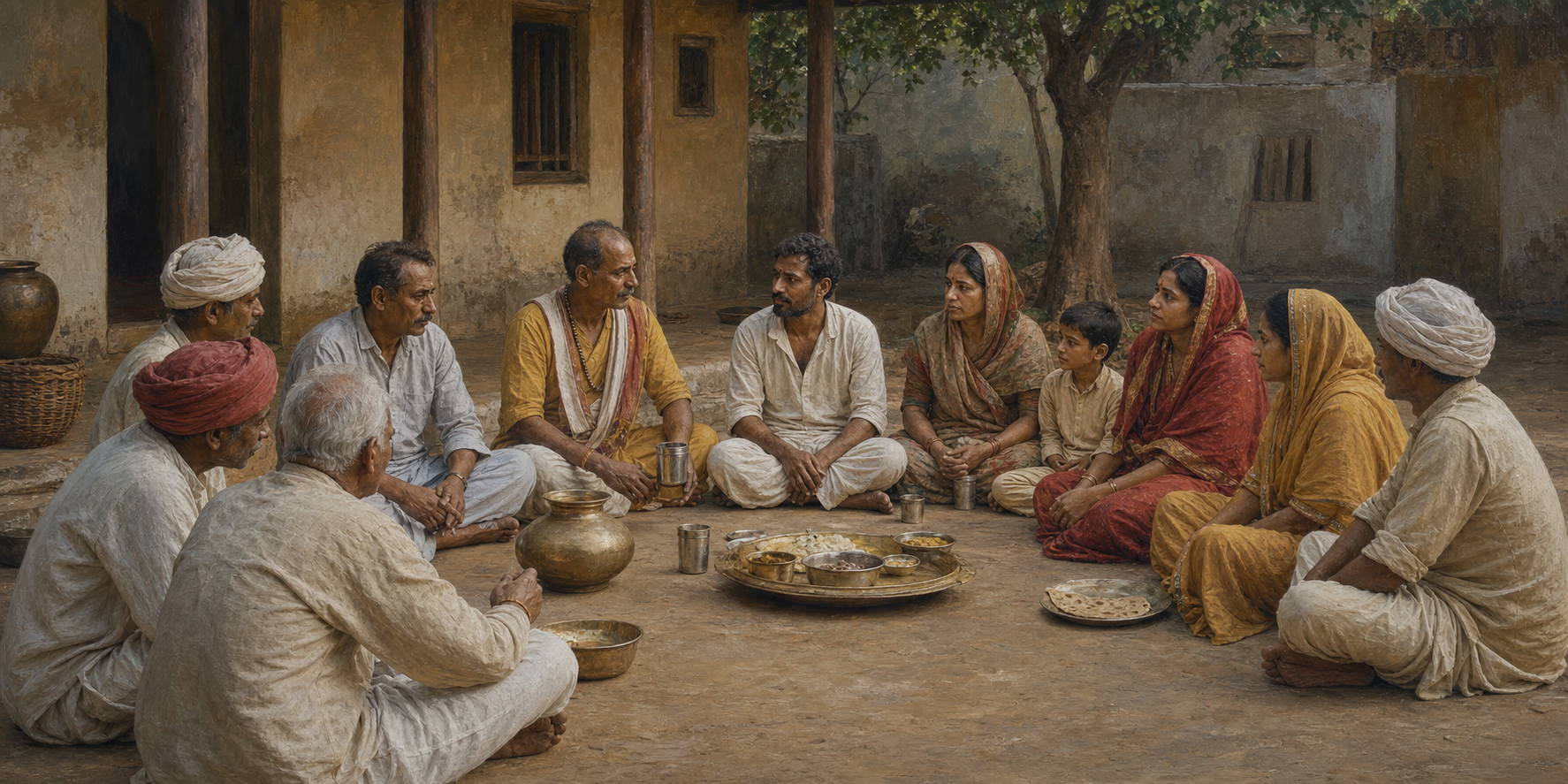
Historical episodes add an institutional lesson. In one reported Vijayanagara episode following the Bahmani-Vijayanagara war that ended in 1398, Hindu captives were released after payment of ten lakh honnu and a mass Shuddhi restored the forcibly converted men and women to Hindu society. Because this episode reaches modern readers through later historical narration, its precise scale should be independently corroborated before anyone uses it as a statistic. Its central social idea is nevertheless clear: release from captivity was followed by readmission, not rejection.
Under Maratha rule, restoration was not always left to an improvised village gathering. The Panditarao’s religious jurisdiction included convening learned Brahmanas, considering appropriate prayaschitta and facilitating restoration. Authorities at centres such as Paithan, Nasik and Karad could be consulted. The arrangement joined spiritual judgement, political protection and social recognition.
That combination matters. A priest may perform a samskara, but the returnee still needs a community willing to share worship, meals, festivals and ordinary social life. A ruler or organisation may protect the right to return, but it cannot manufacture conviction. A family may welcome a relative home, but it should not dictate the person’s chosen deity or sampradaya. Each institution has a role, and trouble begins when one actor claims all of them.
The Arya Samaj later brought Shuddhi into the age of organised mass movements. Swami Dayananda Saraswati supplied the reforming impulse, and Swami Shraddhananda made readmission a major field of public work. His campaigns among Malkana Rajputs demonstrate that homecoming could operate village by village rather than only as an individual rite. They also demonstrate the danger surrounding such work: Swami Shraddhananda was murdered in his home.
By July 1933, D.R. Bhandarkar described Malkana Rajput villages undergoing reconversion and noted the persistence of older Hindu customs among sections of the community. This history can help explain why Ghar-Wapsi is experienced as recovery rather than novelty. It must not be turned into a claim over living people. Neither Malkana nor Meo ancestry gives an outside organisation permission to assign a religious identity to present-day individuals. Historical lineage can open a door for a person who wants to walk through it; it cannot push that person across the threshold.
If your institution wants to support homecoming, build the social structure before announcing a ceremony:
- Identify a competent acharya or authorised ritual leader who understands the seeker’s chosen tradition.
- Assign one private contact who is responsible for consent, confidentiality and practical questions.
- Find a local temple or satsanga that will welcome the person after the rite, not merely host the event.
- Arrange a realistic path of study: basic practice, the meaning of the chosen mantras, festival participation and access to questions.
- Discuss family and personal safety before publishing a name, photograph, location or numerical claim.
- Explain honestly that no organiser can guarantee acceptance by every hereditary or local group.
A public count without sustained belonging is a campaign statistic, not a completed homecoming. Measure success by whether the person can live a Hindu life with dignity months and years later, not by the size of the gathering on one day.
Literature preserves homecoming but also demands precision
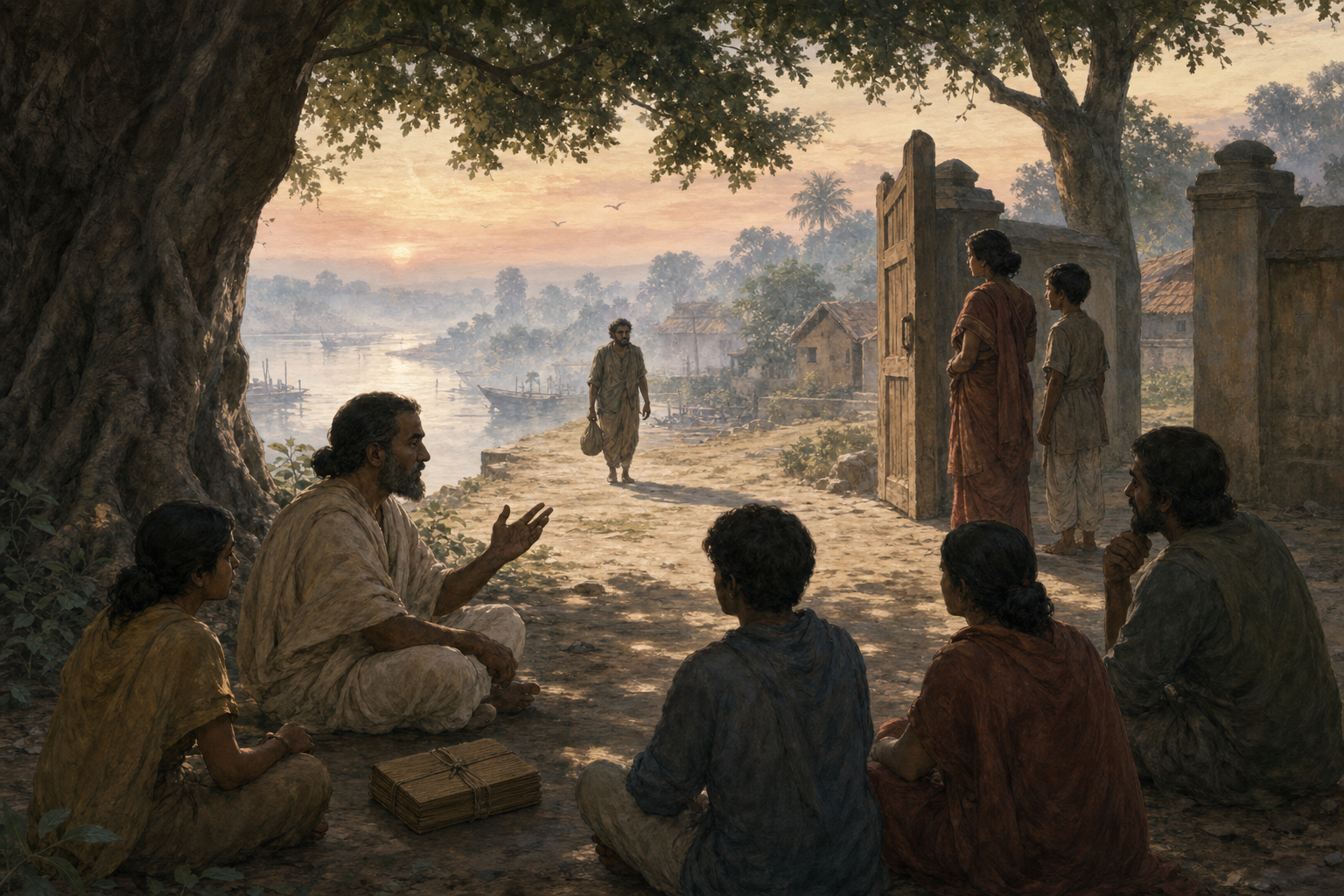
Homecoming appears in Hindu literature not only as an administrative or ritual problem but as a familiar metaphor. Vidyaranya’s Pañcadaśī compares the Atman’s freedom from bodily identification to a Brahmana seized by outsiders who, after appropriate prayaschitta, returns to his former status. The analogy works only if restoration was intelligible to the intended audience. A social possibility had become useful philosophical language.
This literary use reveals the deepest promise in the word home. Something essential need not be destroyed merely because external circumstances obscure it. Yet the metaphysical analogy must not be misused. The Atman may transcend imposed labels, but a living person’s religious identity still requires that person’s voice. No organiser is entitled to infer consent from philosophy.
In more recent public culture, Paravartana and Shuddhi have remained present in speech, literature and activism. That persistence explains why Ghar-Wapsi can carry several registers at once: family reunion, recovery from coercion, civilizational renewal, spiritual recommitment and organised social action. When writers move among these meanings without marking the transition, the reader can mistake a metaphorical return to Indian thought for a formal religious act.
You can avoid that error by distinguishing four levels:
- Intellectual reception: A thinker finds Hindu philosophy persuasive or creatively important.
- Spiritual practice: A person adopts meditation, mantra, puja, yoga or devotion while leaving formal identity unresolved.
- Formal adoption: A person consciously enters Hindu Dharma or a particular sampradaya and may receive a samskara, name or initiation.
- Ghar-Wapsi: A person understands the movement as a return to a former or ancestral Hindu home and freely claims that language.
Schopenhauer and Emerson are among the Western figures described as inwardly embracing aspects of Sanatana thought without ceremonially converting. David Frawley’s formal adoption of Hindu identity and the name Vamadeva Sastri belongs to a different category. The difference between intellectual affinity and formal entry is not pedantic. It protects both the tradition and the person from false claims.
Apply the same discipline to contemporary stories. Someone reading the Gita, practising yoga or visiting a temple is not automatically a Hindu. Someone with Hindu ancestors is not automatically seeking Ghar-Wapsi. Someone who has formally returned should not be described forever through the identity that was left behind. Let the person’s considered self-description determine the language.
Contemporary Ghar-Wapsi needs a consent-first protocol
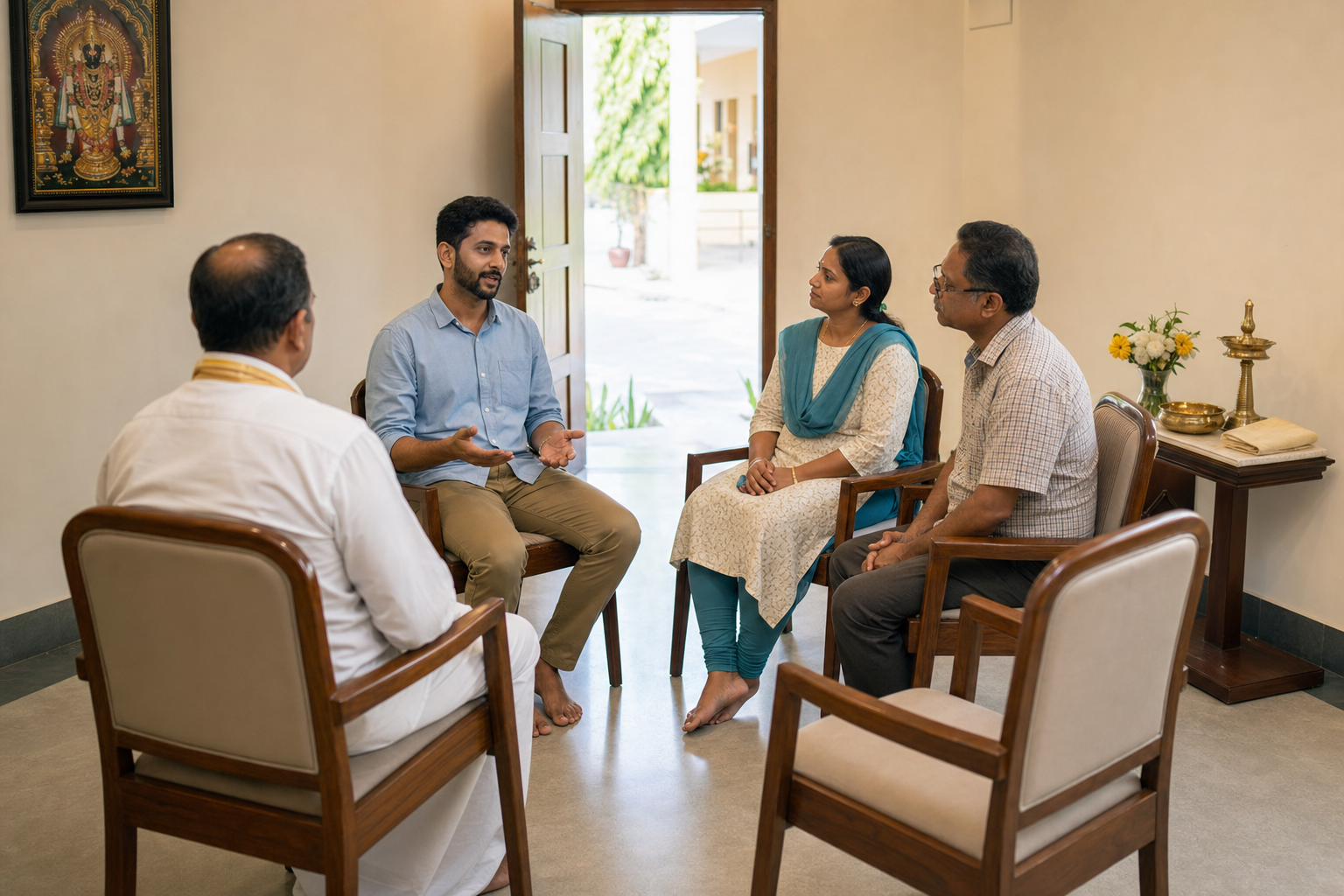
Contemporary advocacy sometimes presents Ghar-Wapsi as an answer to civilizational erosion and organised proselytisation. It also concedes that homecoming by itself is only a partial response. That limit should shape your practice. A ceremony cannot substitute for strong families, serious religious education, functioning temples, cultural confidence or daily sadhana.
Urgency does not relax the ethical standard. It raises it. When people believe a civilization is in danger, they become vulnerable to numerical thinking, publicity pressure and shortcuts. Ghar-Wapsi remains dharmic only when the returning person is treated as an end in themselves, never as a demographic instrument.
- Let the seeker initiate the process. A community may make welcome publicly available, but the specific request should come from the person. Record that request only if necessary, keep sensitive information secure and do not circulate it through informal messaging groups.
- Clarify the intended identity. Ask whether the person means personal return, ancestral reconnection or first-time adoption. Ask which deity, philosophy, sampradaya or form of practice draws them. “Hindu” can be the right civilizational answer while the ritual path still requires greater specificity.
- Screen privately for pressure. Ask whether the choice would remain the same without a marriage proposal, financial assistance, employment, family approval, political recognition or media attention. Assistance for food, shelter, healthcare or safety must never be conditional on religious change.
- Create room to reconsider. Do not move directly from an emotional conversation to a public rite. Give the person a meaningful interval for study and private reflection. State clearly that they may stop the process without punishment, exposure or loss of support.
- Choose a living tradition and qualified guide. Historical Shuddhi and Vrātya-stoma establish precedent, not a single mandatory script. Let a competent acharya explain which samskara, sankalpa, initiation or preparatory practice is appropriate within the chosen lineage.
- Separate spiritual belonging from jati classification. Historical Maratha restoration sometimes involved return to caste, but unresolved jati status should not be used to deny access to Hindu worship and learning today. Do not invent ancestry, demand a caste certificate or promise recognition that a particular hereditary community has not agreed to give.
- Separate the rite from civil paperwork. A religious ceremony, a change of name and a change to official records are different acts. Laws and procedures vary by jurisdiction. Before altering documents, organising a large public event or making declarations with legal consequences, obtain advice from a qualified local lawyer or the relevant civil authority.
- Protect minors and dependent adults. Their capacity to refuse may be limited by parents, guardians or material dependence. Do not treat family consent as a complete substitute for the individual’s welfare and agency. Seek specialist safeguarding and jurisdiction-specific legal advice before proceeding.
- Plan ordinary Hindu life after the ceremony. Agree on where the person can worship, whom they can contact with questions, what they will study and how they will participate in festivals and seva. A mentor should be available without controlling the returnee’s friendships, marriage choices or political views.
- Make privacy the default. Obtain separate, explicit permission for photographs, video, press interviews and publication of the person’s former affiliation. Consent to a samskara is not consent to publicity. If disclosure could provoke family or communal danger, omit the public event and prioritise safety.
You should pause the process when the organiser speaks for the seeker, when promised benefits depend on conversion, when a deadline is imposed, when proof of ancestry becomes more important than conviction, or when cameras have been arranged before a local community has agreed to receive the person. These are not minor defects in presentation. They undermine the meaning of return.
The language used during the rite matters as well. Welcome is better than interrogation. Sankalpa is better than humiliation. Acknowledging coercion is different from cultivating hostility toward every present-day member of another faith. Historical truth can be stated firmly without making a returnee perform anger as proof of loyalty.
If you are ready to help someone return, begin with one private conversation, not a stage. Establish what the person is choosing, find a trustworthy living tradition, resolve safety and legal questions, and build the relationships that will remain after the ceremony. That is how Ghar-Wapsi becomes what its name promises: not a moment of publicity, but a home in which someone can actually live.
References
- Dharma Dispatch — The Scary Finale: Ghar-Wapsi in a Time of Rapid Erosion and Existential Crisis
- Dharma Dispatch — How Ghar-Wapsi was Celebrated in Contemporary Indian Literature
- Dharma Dispatch — Ghar-Wapsi in the Vijayanagara and Maratha Empires
- Dharma Dispatch — Meos, Malkana Rajputs and a Saga of Missed Opportunities for Ghar-Wapsi
- Dharma Dispatch — Vrātya-stoma: Schopenhauer, Emerson, Elst and Frawley: How Westerners Embraced Sanatana Dharma
