
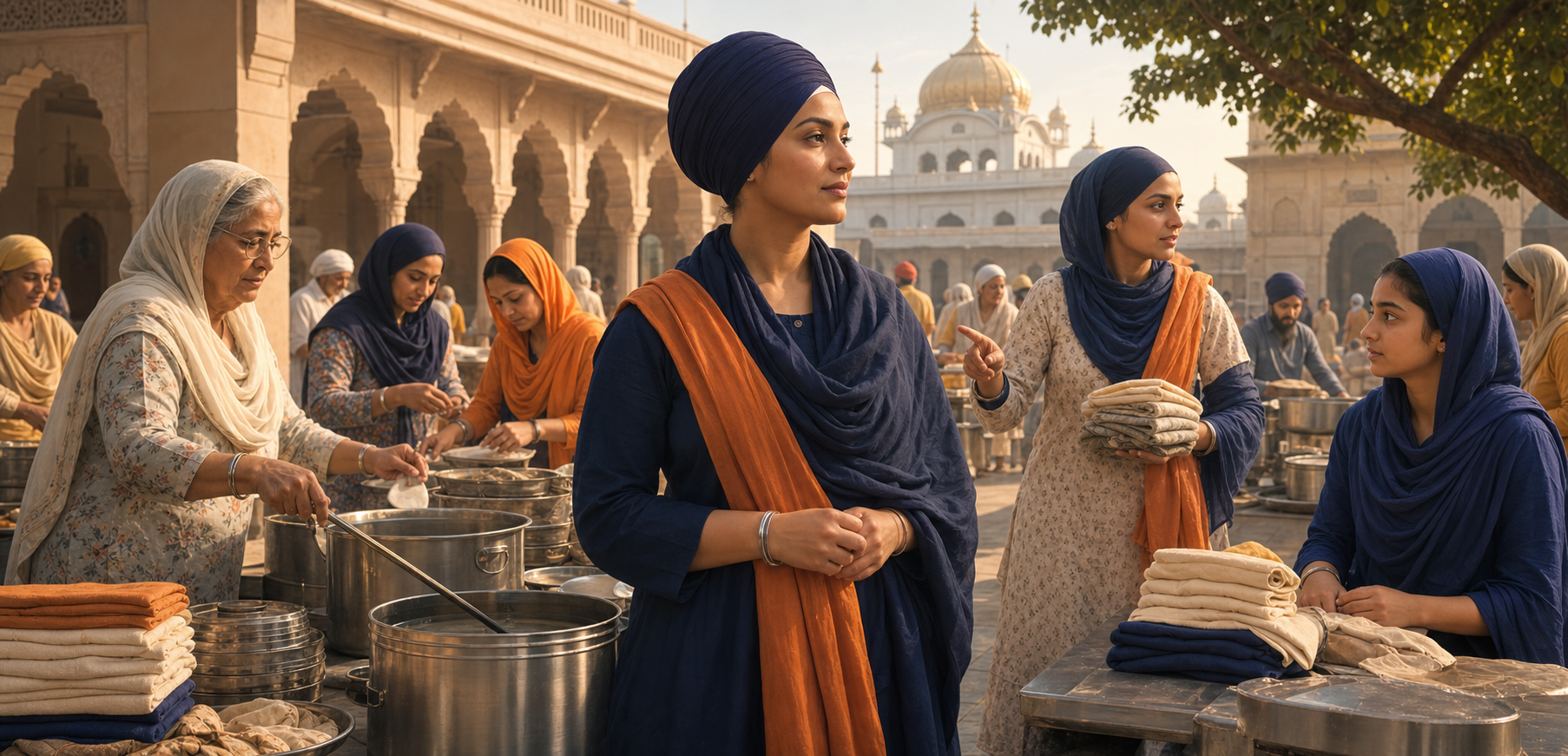
If you are trying to show a daughter, a student, or a sangat committee why Sikh women belong at the centre of leadership, the sentence “Sikhism teaches equality” is true but insufficient. Give her names. Show her the institutions women sustained, the decisions they made, the dangers they faced, and the responsibilities they carried.
Sikh history does not leave us searching for isolated heroines who somehow escaped the limits of their tradition. It gives us a continuous range of leadership: spiritual recognition, langar administration, family and community formation, martial command, political strategy, cultural preservation, scholarship, and humanitarian seva. The practical question for you is not whether Sikh women have led. It is whether your family and institutions know how to recognize, teach, and continue that leadership.
Equality has to appear in practice, not only in praise
Guru Nanak’s question in Asa di Vaar asks why woman should be called inferior when even kings are born through her. Its force is larger than a courteous instruction to respect mothers. It rejects the premise that spiritual or social dignity can be ranked by gender. Equality before the One must shape the household, the sangat, and the responsibilities through which the Panth governs itself.
That distinction matters because communities can honour women in speeches while withholding ordinary authority. A woman may perform indispensable seva yet remain absent when the budget, teaching programme, public message, or institutional priorities are decided. Praise does not correct that imbalance. Responsibility, resources, recognition, and a real voice in decisions do.
When you assess equality in a gurdwara, school, cultural association, or family initiative, look at three separate layers:
- Participation: Who performs the visible and invisible work, including preparation, teaching, cooking, cleaning, transport, caregiving, and follow-up?
- Authority: Who chooses the programme, controls its resources, resolves disagreements, and represents it in public?
- Recognition: Whose name enters the minutes, archives, photographs, publications, and stories later taught to children?
A community can have high female participation and still fail the other two tests. That is why Sikh women’s history should not be used to romanticize service without authority. It should help us see seva itself as disciplined leadership and ensure that those who sustain an institution can also shape it.
Seva built the Panth’s everyday institutions
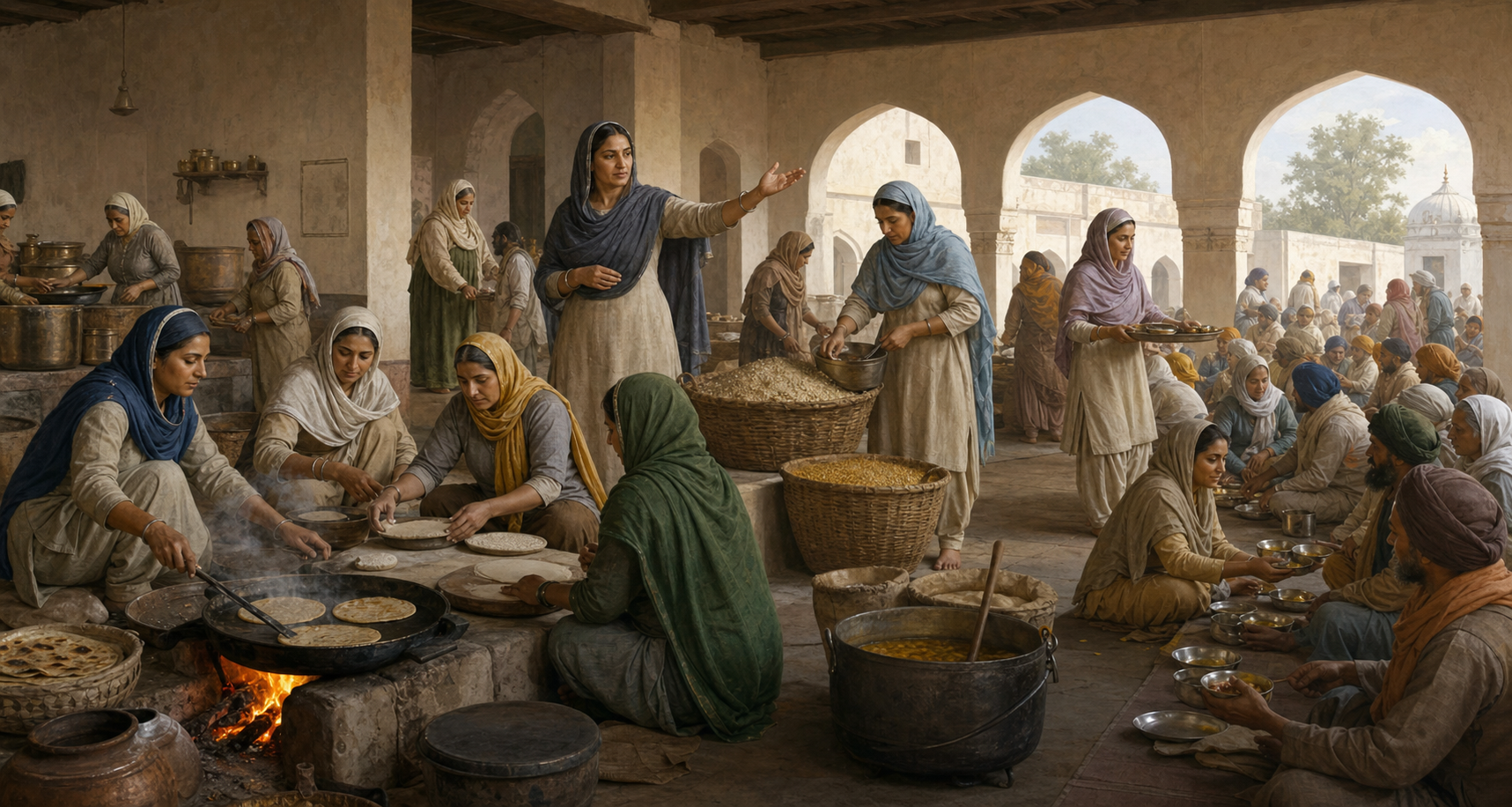
Mata Khivi’s stewardship of langar is one of the clearest examples of leadership through institution-building. Her service receives distinctive recognition in the Guru Granth Sahib. Langar was not merely the preparation of food. It required reliable provision, organization, hospitality, and a disciplined refusal to reproduce distinctions of caste, creed, or status at the meal. Nourishment became a public practice of dignity.
This changes how you should teach Mata Khivi. If she is presented only as a generous woman who fed people, the institutional achievement disappears. Present her instead as someone who helped make an ethical principle repeatable. A good institution allows strangers to encounter the same dignity after its original organizers are gone. Langar continues to do that in gurdwaras around the world.
The same wider lens reveals the formative work of Bibi Nanaki, Bibi Bhani, and Mata Gujri. Their devotion, counsel, resilience, and transmission of values helped sustain a community in which spiritual learning could pass between generations. Calling such work private or peripheral misunderstands how a Panth survives. Public institutions depend upon homes, relationships, teaching, memory, and moral formation long before they depend upon buildings.
The Khalsa ideal proclaimed under Guru Gobind Singh at Anandpur Sahib in 1699 affirmed the spiritual equality of women and men in initiation and discipline. Within that history, Mata Sahib Kaur is honoured as the Mother of the Khalsa. The title should not be reduced to ornamental motherhood. It identifies moral formation and collective identity as serious Panthic responsibilities in which women are not secondary participants.
When you teach any of these lives, move beyond asking children to memorize a name. Use four questions:
- What human or institutional need did she recognize?
- What did she organize, protect, decide, or transmit?
- Who became able to participate because of her work?
- Where does that responsibility exist in our community now?
For Mata Khivi, those questions lead directly from langar history to the quality of hospitality in your own gurdwara. For Bibi Nanaki, Bibi Bhani, and Mata Gujri, they lead to counsel, education, resilience, and intergenerational responsibility. For Mata Sahib Kaur, they lead to the formation of collective discipline. History then becomes a guide to work that still needs doing.
Sikh women also exercised command, strategy, and guardianship
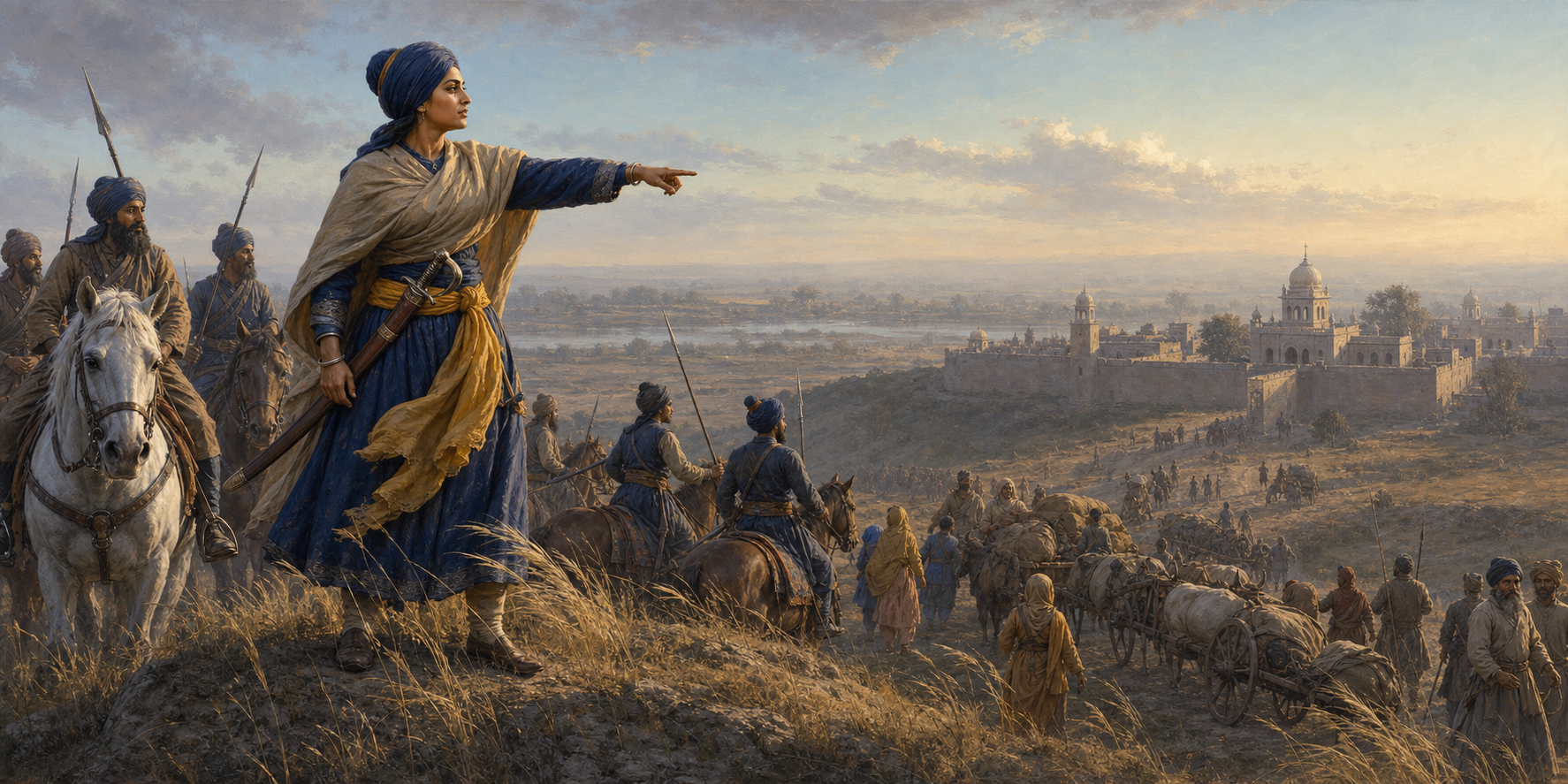
Leadership through care and education must not be used to hide leadership in conflict and governance. In 1705, Mai Bhago, also remembered as Mata Bhag Kaur, rallied and led the Chali Mukte at Muktsar. Her leadership turned remorse into renewed commitment. The enduring lesson is not simply that one woman fought. It is that moral clarity can recall others to a duty they have abandoned.
Rani Sada Kaur demonstrates a different kind of power. As leader of the Kanhaiya misl, she shaped alliances and strategy during the rise of Maharaja Ranjit Singh and the consolidation of Sikh power. Her example corrects the habit of treating statecraft as an exclusively male inheritance. Political leadership requires judgement about relationships, timing, collective strength, and the responsible use of power; Sikh women were actors in that history.
Princess Bamba Duleep Singh represents another field of responsibility: the protection of memory, art, and heritage. Civilizational assets do not preserve themselves. Manuscripts, objects, music, family histories, and institutional records survive because someone recognizes them as a trust rather than as clutter from the past. Cultural guardianship is leadership because it determines what later generations will be able to know.
These lives give you three useful ways to identify leadership that a narrow list of offices may miss:
- Moral command: restoring courage and responsibility when others have retreated, as Mai Bhago did.
- Strategic command: shaping alliances and political direction, as Rani Sada Kaur did.
- Cultural guardianship: preserving the materials through which a people remember themselves, as Princess Bamba Duleep Singh did.
When a girl encounters these figures, do not offer courage as a personality trait she either possesses or lacks. Show its structure: a crisis was present, a decision had to be made, other people were affected, and responsibility carried a cost. That makes historical courage available as a discipline rather than distant admiration.
Turn remembrance into a working leadership pipeline
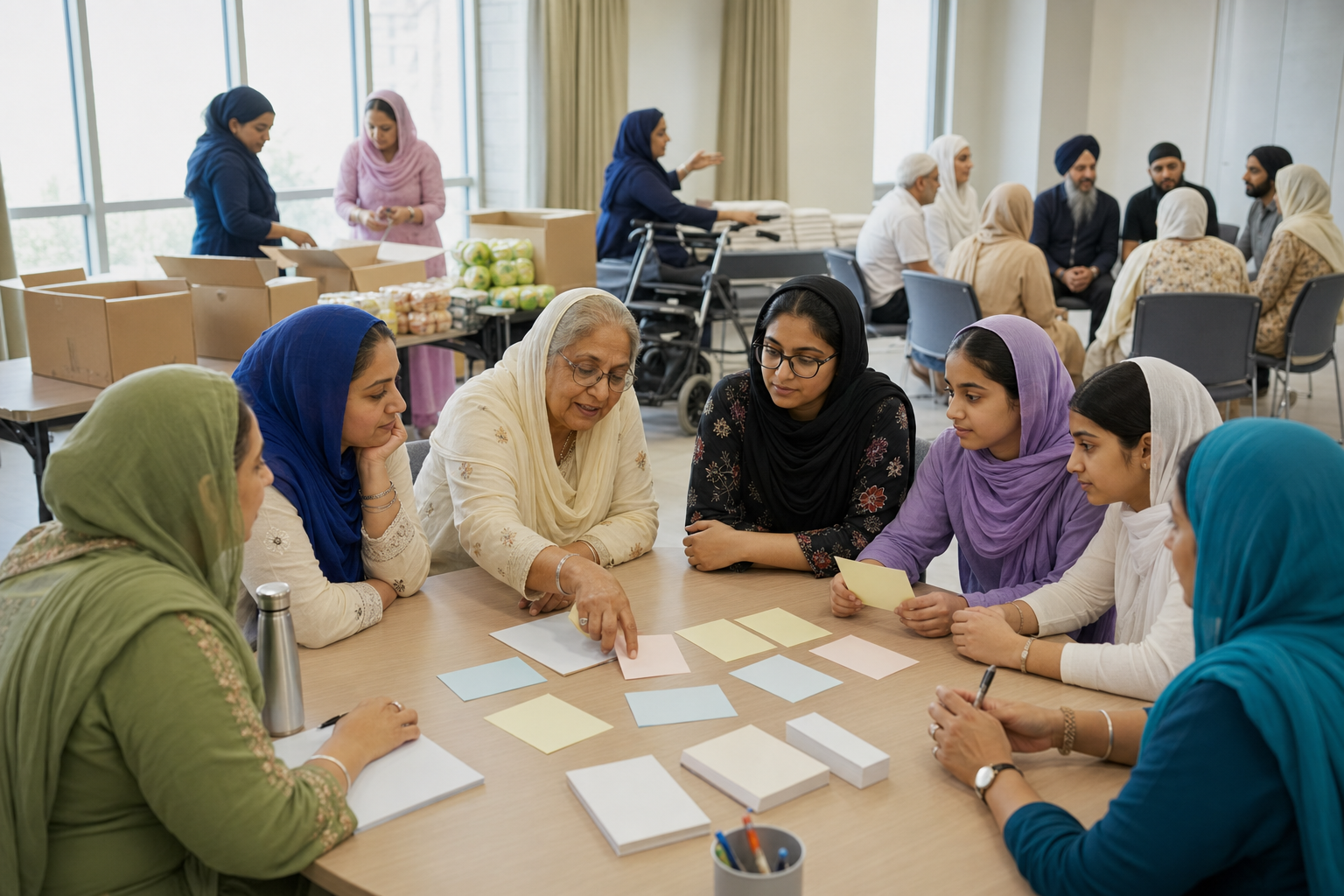
A commemorative event can introduce these names, but it cannot carry the whole responsibility. If you want Sikh women’s leadership to grow, connect memory to recurring opportunities, resources, mentorship, documentation, and safety. Start with one programme you can sustain rather than a long list that disappears after its launch.
- Record one elder’s oral history. Ask for consent, then record her full name, places she has lived, languages she uses, forms of seva, teachers, difficult decisions, and changes she witnessed. Mark uncertain dates as uncertain instead of guessing. Keep the original file in two trusted locations and attach a short written description so a future listener knows whose voice it contains.
- Audit one recurring seva programme. On a single page, list who performs the work, who sets the rota, who controls the budget, who handles problems, and who reports the results. If women are concentrated in labour but absent from decisions, redesign the responsibility rather than merely recruiting more volunteers.
- Commission a project instead of offering a ceremonial slot. Give a woman or a women-led team a defined remit, a modest budget, a deadline, and public credit. A research booklet, kirtan workshop, langar improvement, local archive, or youth curriculum produces something the sangat can keep using.
- Run a small mentorship cycle. A manageable pilot can use three meetings over 90 days. In the first, the participant chooses one skill or goal. In the second, mentor and participant review a real piece of work. In the third, the mentor makes a practical introduction or helps the participant take a visible responsibility. Record the next step so the relationship does not end as an encouraging conversation.
- Teach embodied and intellectual traditions together. Create paths for women and girls to learn and eventually teach gatka, kirtan, katha, archival practice, historical research, and community administration. Attendance is not the final measure. Ask who has progressed to instruction, interpretation, authorship, or programme leadership.
- Build safety before inviting participation. Publish who receives concerns, how privacy will be handled, and who can remove a participant from an unsafe situation. For minors, follow applicable local safeguarding requirements rather than relying on informal one-to-one arrangements. A leadership programme that cannot protect participants is not ready to recruit them.
After the first cycle, measure changes that reveal authority rather than optics: women holding defined decision rights, managing an allocated budget, receiving authorship or archival credit, teaching a class, leading a response, or mentoring the next participant. A photograph of diverse attendance can document an event. It cannot tell you whether responsibility was shared.
There is also room for inter-Dharmic cooperation. Sikh seva can meet Hindu understandings of Shakti, Buddhist disciplines of compassion, and Jain anekantavada in projects such as food service, environmental stewardship, or restorative justice. The strongest cooperation does not pretend that all traditions are identical. It lets each speak in its own language while participants accept a shared duty toward dignity and responsible action.
That distinction protects both unity and integrity. Sikh women’s equality does not need to be borrowed from another tradition, and common Dharmic values do not require Sikh history to lose its particular names, institutions, and theological grounding. Solidarity becomes credible when it produces service while respecting difference.
Key takeaways
- Sikh women were formative leaders in the Panth, not occasional exceptions at its edges.
- Mata Khivi shows that seva is institution-building when it turns equality into a reliable public practice.
- Bibi Nanaki, Bibi Bhani, Mata Gujri, and Mata Sahib Kaur make counsel, education, resilience, and collective formation visible as leadership.
- Mai Bhago and Rani Sada Kaur demonstrate moral command, martial resolve, political judgement, and strategic power.
- Remembering women requires archives, authority, budgets, teaching opportunities, mentorship, public credit, and safeguards.
- Inter-Dharmic cooperation is strongest when shared service honours the distinctiveness of each tradition.
At your next family discussion or sangat meeting, choose one Sikh woman whose leadership deserves to be taught and one responsibility a living woman should be empowered to carry. Put a name, resource, deadline, and record around that commitment. That is how remembrance moves from the stage into the future of the Panth.
References
