

If you know Muktsar only as the place where forty Sikhs fell in battle, you know the ending but not the part that makes the history personally demanding. Before they became the Chali Mukte, the Forty Liberated Ones, they had signed a bedava formally disavowing their bond with Guru Gobind Singh.
Their path from rupture to liberation answers a difficult question you may carry after failing a duty: can a serious breach be repaired without pretending it never happened? Muktsar gives a clear answer. Yes, but remorse has to become responsible action, and action must remain open to grace.
The rupture at Anandpur was not a footnote
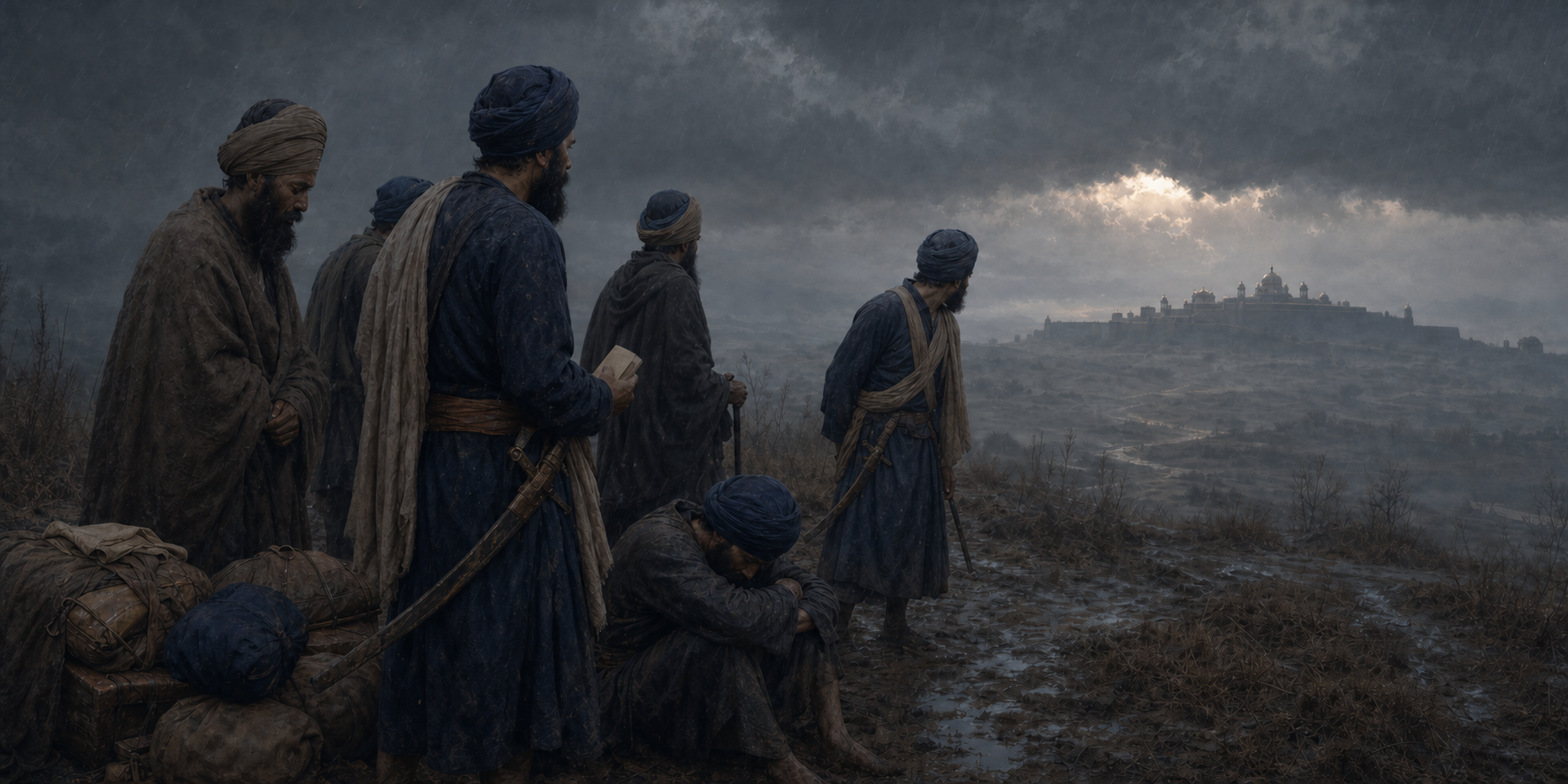
The crisis began during the prolonged siege of Anandpur Sahib in 1704-1705. Mughal commanders, notably Wazir Khan of Sirhind, were allied with several hill rajas of the Shivalik region against Guru Gobind Singh. Supply routes were constricted, provisions dwindled, and the Khalsa garrison endured the compounding strain of hunger, danger, and uncertainty. The siege tested more than military strength. It pressed on the relationship between individual endurance and collective duty.
Under that pressure, forty Sikhs signed the bedava, a formal statement that they were no longer bound to the Guru. This was more than private doubt or a momentary complaint. It gave written form to a broken commitment.
Yet reducing these men to cowards would empty the episode of its moral force. Sikh memory does not hide the conditions in which they failed. Exhaustion and fear help you understand their decision, even though they do not make the decision right. The distinction matters whenever you judge your own failure or someone else’s: context explains the pressure on a person; it does not eliminate the person’s agency.
Guru Gobind Singh did not compel the forty to remain, retaliate against them, or humiliate them into obedience. He accepted their decision and allowed them to depart. That response preserved volition at the very moment when coercion might have seemed expedient. A bond to the Guru could not be made spiritually meaningful by force.
Keep both truths in view when you remember Anandpur. The men had reached a genuine human limit, and they had also made a consequential moral choice. If you erase the pressure, the history becomes a harsh caricature. If you erase the choice, their later return ceases to be repentance and becomes mere circumstance.
Mai Bhago turned remorse into a path of return
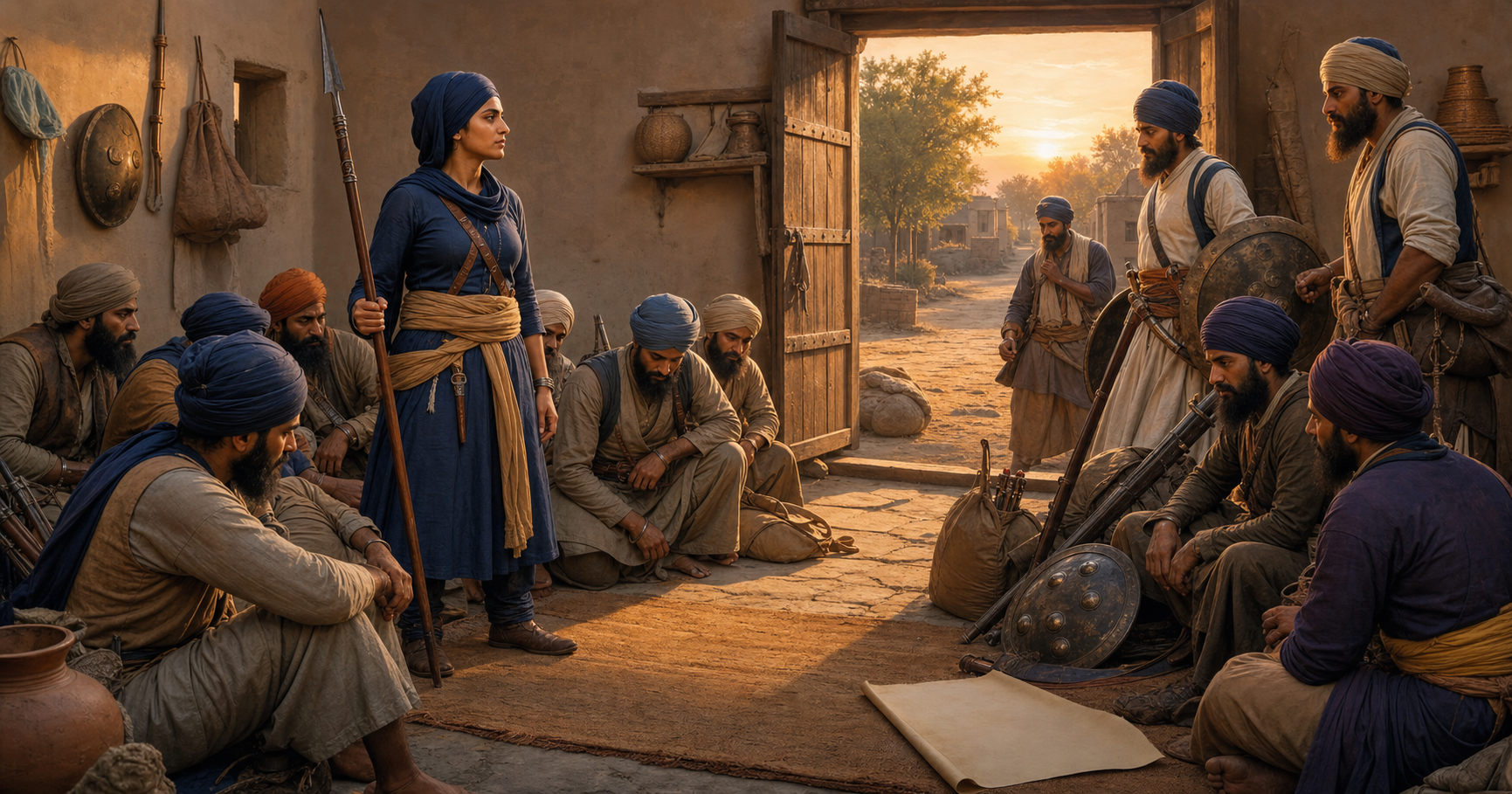
As the forty travelled back toward their homes in Majha, they encountered Mai Bhago, also remembered as Bibi Bhag Kaur. She saw their retreat more clearly than they wished to see it themselves. Her challenge was direct: Khalsa identity could not be claimed only when loyalty was comfortable.
Mai Bhago’s role is sometimes compressed into the idea that she shamed deserters back into battle. That is too shallow. Shame by itself usually drives a person toward concealment, defensiveness, or despair. She did something more exacting and more constructive. She named the breach, called the men back to their highest commitment, and then led them back toward the Guru. She shared the danger of the corrective action she demanded.
That combination gives you a practical test for moral counsel. A person who only condemns you may leave you trapped in the identity of your worst act. A person who only reassures you may help you avoid the repair you owe. A trustworthy Mai Bhago voice does neither. It tells the truth about the breach, reminds you that you are capable of acting differently, and directs you toward a concrete return.
Her leadership also prevents the story from being told as though Sikh martial fidelity were exclusively male. Mai Bhago was not standing outside the field as a commentator on courage. She fought in the front ranks and survived. Her spiritual clarity, martial resolve, and willingness to bear risk make her a moral center of the episode rather than a supporting figure in someone else’s redemption.
If you are helping another person repair a failure, follow that pattern. State what was broken without exaggeration. Identify the duty that still remains. Offer a way back that does not depend on denial. Where appropriate, stand beside the person while the repair is made. Accountability is strongest when it restores moral agency instead of merely distributing humiliation.
At Khidrana, recommitment became costly action
Guru Gobind Singh moved toward Khidrana, the place later known as Muktsar. The area was water-scarce, exposed, and marked by wind-swept dunes. Against a larger pursuing force, the selection of ground mattered. Limited water, difficult terrain, tactical deception, and disciplined resistance could reduce some of the enemy’s numerical advantage.
The forty arrived not with a speech about renewed loyalty but with a willingness to bear its consequences. Under Mai Bhago’s leadership, they engaged the approaching Mughal detachment and fought with such determination that the pursuit was blunted. The battle should not be romanticized as a search for death. It was a defensive act within the Sikh understanding of dharam yudh: righteous resistance undertaken when peaceful alternatives had been exhausted and the Guru, the Panth, and the vulnerable had to be defended.
This distinction protects the meaning of their sacrifice. Despair says that life and action no longer matter. The Chali Mukte acted because duty still mattered, even after they had failed it. Their courage lay not in treating death lightly but in treating responsibility seriously enough to return when escape remained possible.
After the fighting, the wounded Sikh commonly remembered as Bhai Mahan Singh asked Guru Gobind Singh to forgive the forty and annul the bedava. The Guru tore the document and honored them as mukte, liberated ones. The earlier rupture was neither concealed nor allowed to have the final word.
Details of naming and sequence vary across textual and oral retellings, as they often do in a living tradition. The central arc remains steady: the bedava at Anandpur, Mai Bhago’s intervention, the return, the stand at Khidrana, Mahan Singh’s plea, and the Guru’s act of forgiveness. You can acknowledge variations without treating the episode’s ethical core as uncertain.
Khidrana came to be remembered as Muktsar, the pool of liberation. The change of name directs attention beyond the military result. The field became sacred in Sikh memory because a severed relationship was restored there through courage and the Guru’s grace.
Mukti here is not a reward for never having failed
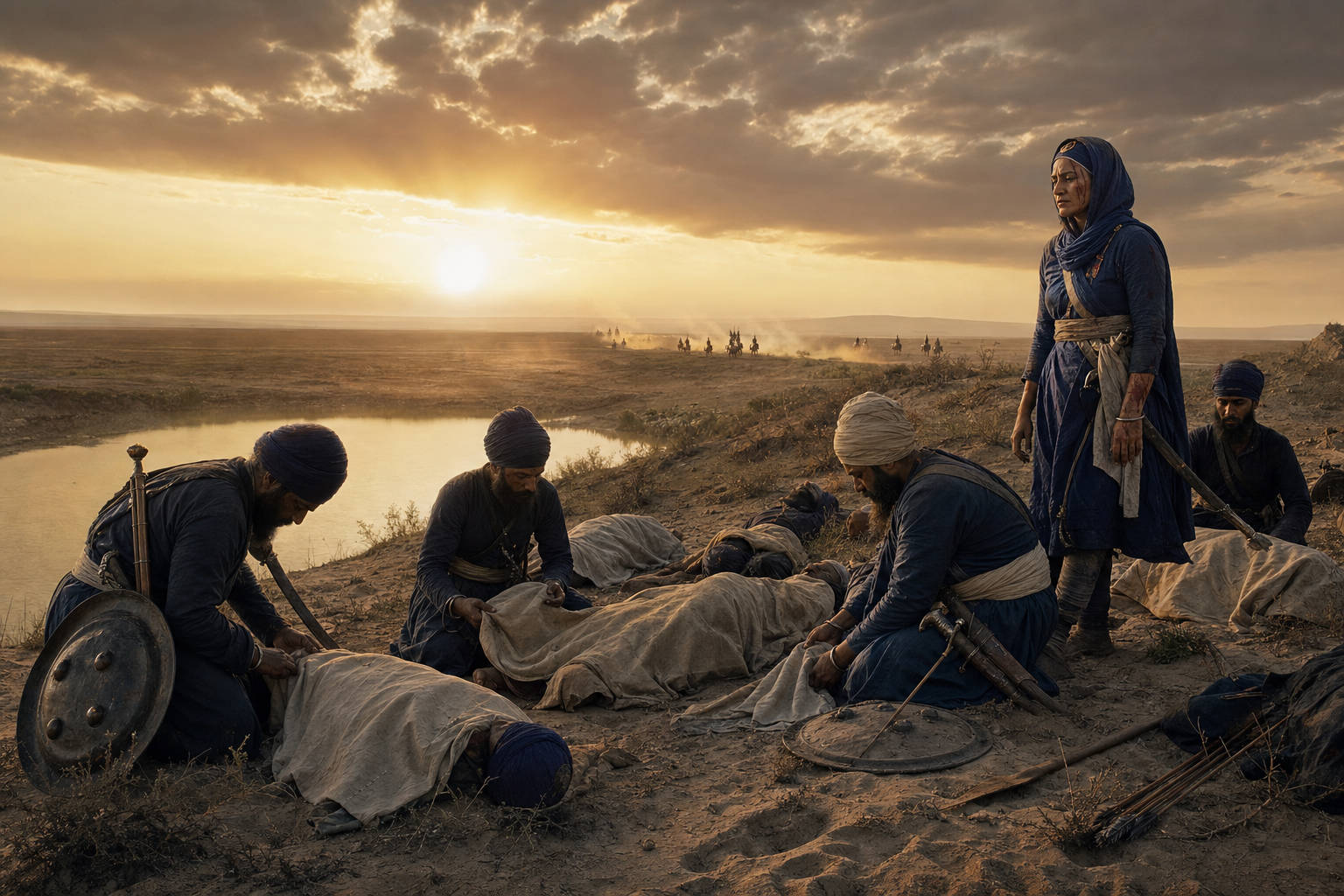
The word mukta can be misunderstood if it is treated as a synonym for someone who died in battle. The forty were not honored simply because they became casualties. Their liberation belongs to the whole movement from disavowal to repentance, from repentance to recommitment, and from recommitment to sacrificial duty. Guru Gobind Singh’s public recognition completes that movement as an act of grace.
Three boundaries help keep the teaching clear. Remorse without repair is incomplete because it leaves the consequences of the breach untouched. Corrective action does not purchase grace, as though one heroic deed could place the Guru in a debtor’s position. Grace does not falsify the past; the bedava had existed, and the request that it be torn acknowledged its seriousness.
In Sikh thought, nadar or kirpa does not make ethical effort unnecessary. Grace frees the person to return to hukam and disciplined responsibility without being permanently imprisoned by failure. The tearing of the bedava therefore signifies more than cancellation of a document. It restores relationship, honor, and the capacity to serve.
Mai Bhago’s survival is important here. If the meaning were merely that a glorious death grants liberation, her continuing life would sit awkwardly beside the forty. Instead, she shows the other form of the same fidelity: steadfast service after the crisis. Mukti is not an escape from life. It is freedom from the fear, pride, and self-protection that prevent a person from doing what dharma requires.
Readers from other Dharmic traditions may recognize resonances without collapsing distinct teachings into one doctrine. Jain pratikraman joins reflection and repentance to a resolve not to repeat the wrong. Buddhist kshanti joins forbearance to moral clarity rather than passivity. Hindu sharanagati makes surrender the beginning of renewed duty, not an excuse to abandon it. The distinctively Sikh center at Muktsar remains the living bond with the Guru, the discipline of the Khalsa, responsible action, and grace.
This is why the story can meet you after a broken promise more honestly than either perfectionism or easy absolution. Perfectionism says your failure has disqualified you forever. Easy absolution says sincere regret is enough. Muktsar rejects both. Your past act is real, your next act remains open, and mercy can restore what shame alone cannot.
Carry Muktsar into the next duty in front of you
The annual Mela Maghi at Muktsar Sahib keeps this memory within the life of the sangat. Whether you make the pilgrimage, hear the sakhi at home, or discuss it with younger members of your family, remember the entire sequence. Beginning only with the battle produces admiration for bravery. Beginning with the bedava produces a discipline of honest self-examination.
You can use the following questions in personal reflection, a family conversation, or a sangat program. They are not a way to equate an ordinary mistake with the ordeal at Anandpur. They help preserve the moral shape of the episode when you apply it to a smaller duty.
Key takeaways
- Name your bedava precisely. What commitment did you withdraw from, who was affected, and what pressure influenced you? Describe the pressure truthfully, but do not turn it into an alibi.
- Find the Mai Bhago voice. Seek someone who will neither flatter nor discard you. Sound counsel should identify the breach and direct you toward a possible act of return.
- Make the repair fit the harm. A private feeling cannot repair a public injury. The needed action may be an apology, restored work, returned property, corrected information, renewed service, or a truthful conversation with the people affected.
- Receive grace as a call back to duty. Endless self-punishment can become another form of avoidance. Once you have acknowledged the wrong and begun repair, let forgiveness make you more dependable in the next responsibility.
Most modern failures do not call for a dramatic gesture. The temptation to wait for one can delay the ordinary work that repair actually requires. Make the overdue call. Correct the record. Resume the seva you abandoned. Keep the next promise when it becomes inconvenient. Recommitment becomes credible through the duty that can be done now.
When you next remember the Forty Liberated Ones, do not ask only whether you would have stood at Khidrana. Ask which obligation you are tempted to disown today, and what an honest return would require before the day ends.
References
