
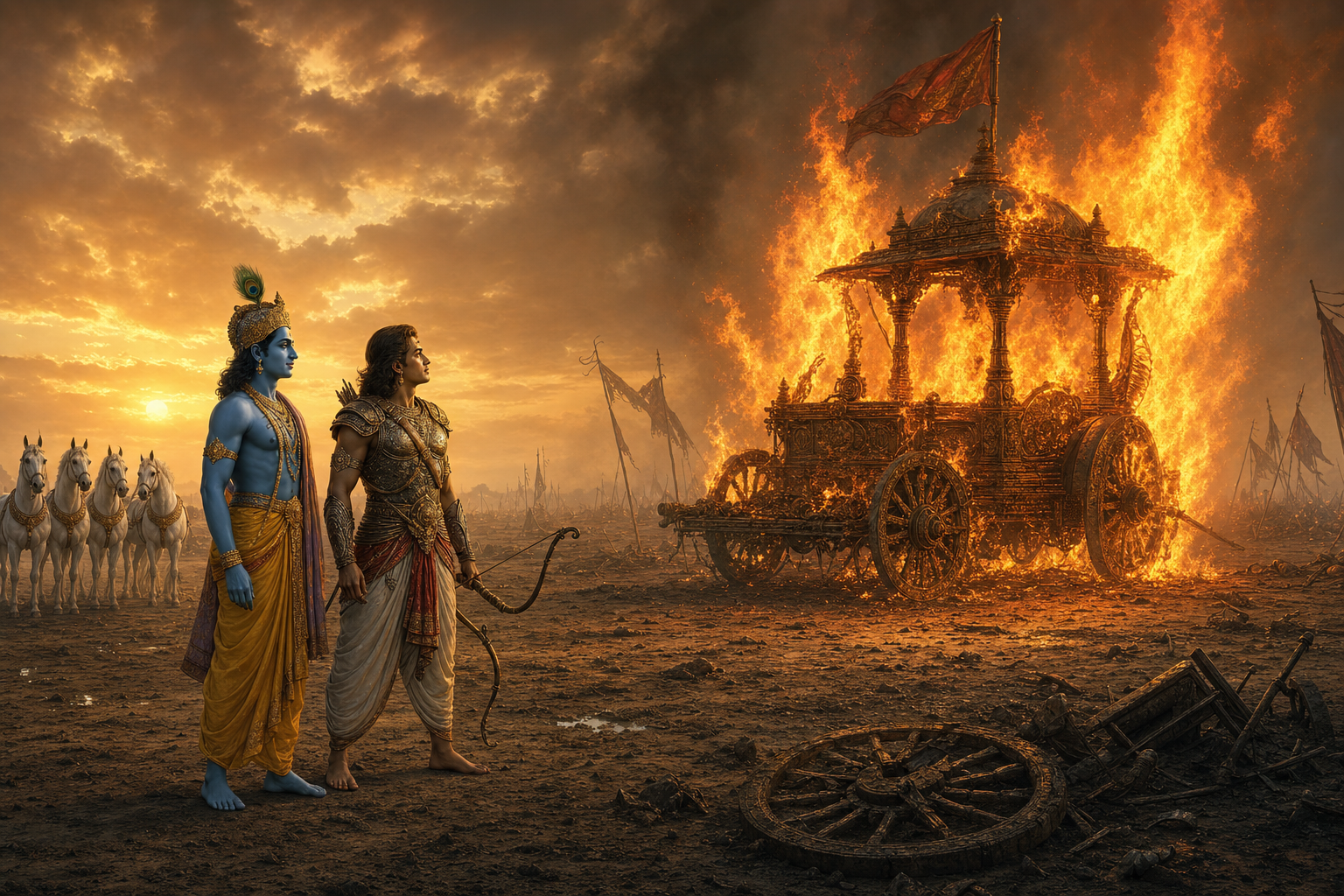
Arjuna’s chariot survived the violence of Kurukshetra, carried him to victory, and then burned after the battle was over. If Krishna’s presence had protected it, you may wonder why that protection ended in ashes.
The answer lies in a distinction that matters well beyond the battlefield: divine protection may preserve you and your means for a particular dharmic purpose without making those means permanent. The chariot was protected until its work was complete. Its destruction did not prove that grace had failed.
Why the chariot burned only after Krishna stepped down
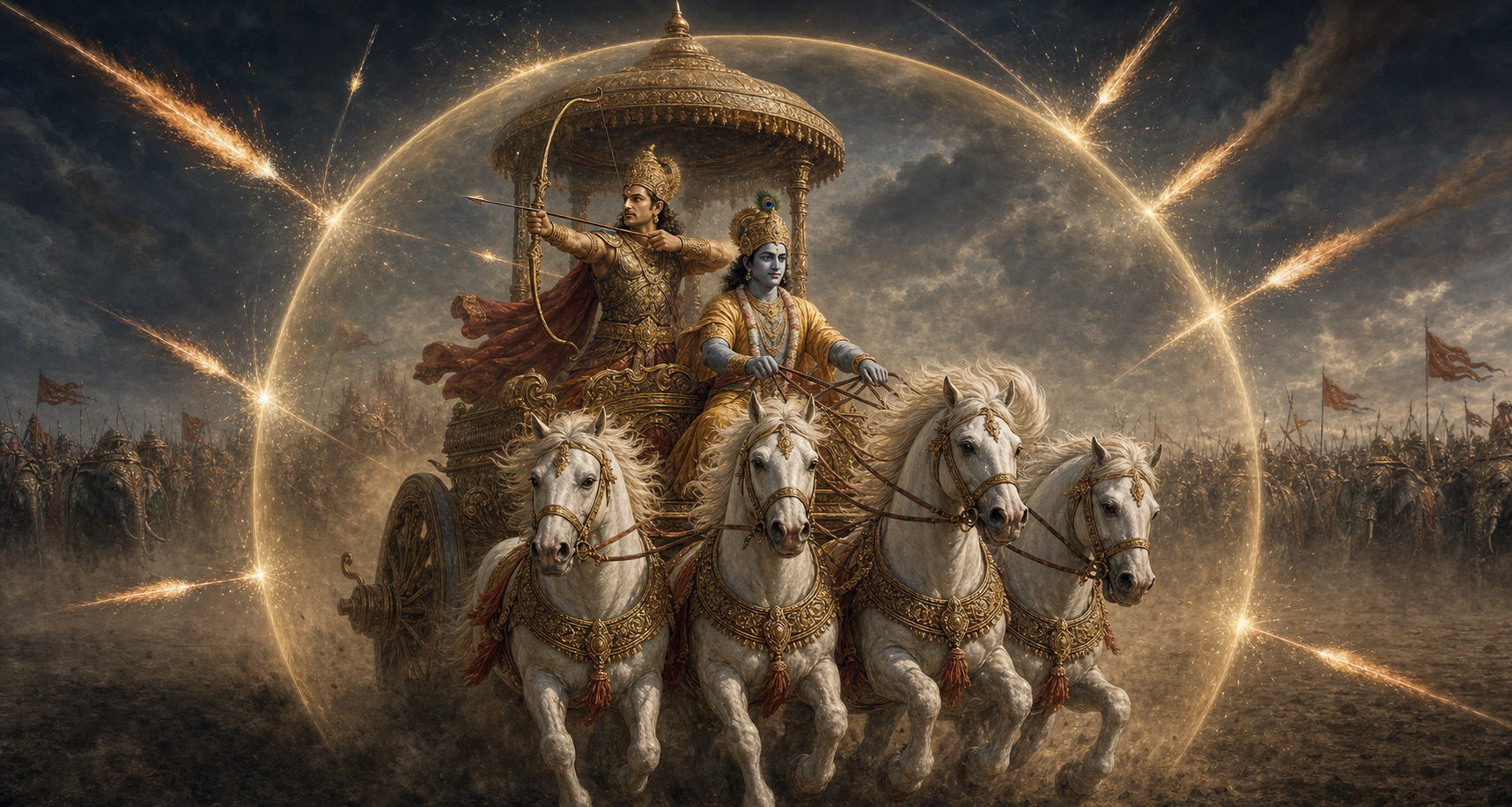
When the fighting had ended, Krishna instructed Arjuna to take his bow and quivers and descend from the chariot first. Arjuna followed the instruction. Krishna then stepped down, and the chariot was reduced to ashes.
Krishna explained that the chariot had already received the destructive force of celestial weapons during the war. His presence had prevented that destruction from taking effect while Arjuna still needed the vehicle. Once Arjuna was safely outside and the chariot’s purpose had been fulfilled, the previously suspended consequence became visible.
This changes the meaning of the fire. It was not a fresh defeat after victory. It revealed damage that had already been sustained. The chariot had appeared intact, but its continued usefulness depended upon a protection Arjuna could not see from the outside.
The order of events is also important. Arjuna reached safety before he received the explanation. He did not have to understand the hidden condition of the chariot in order to follow Krishna’s timely direction. First came the safe dismount; then came knowledge of what had been holding the vehicle together.
Divine protection is not the same as permanent preservation
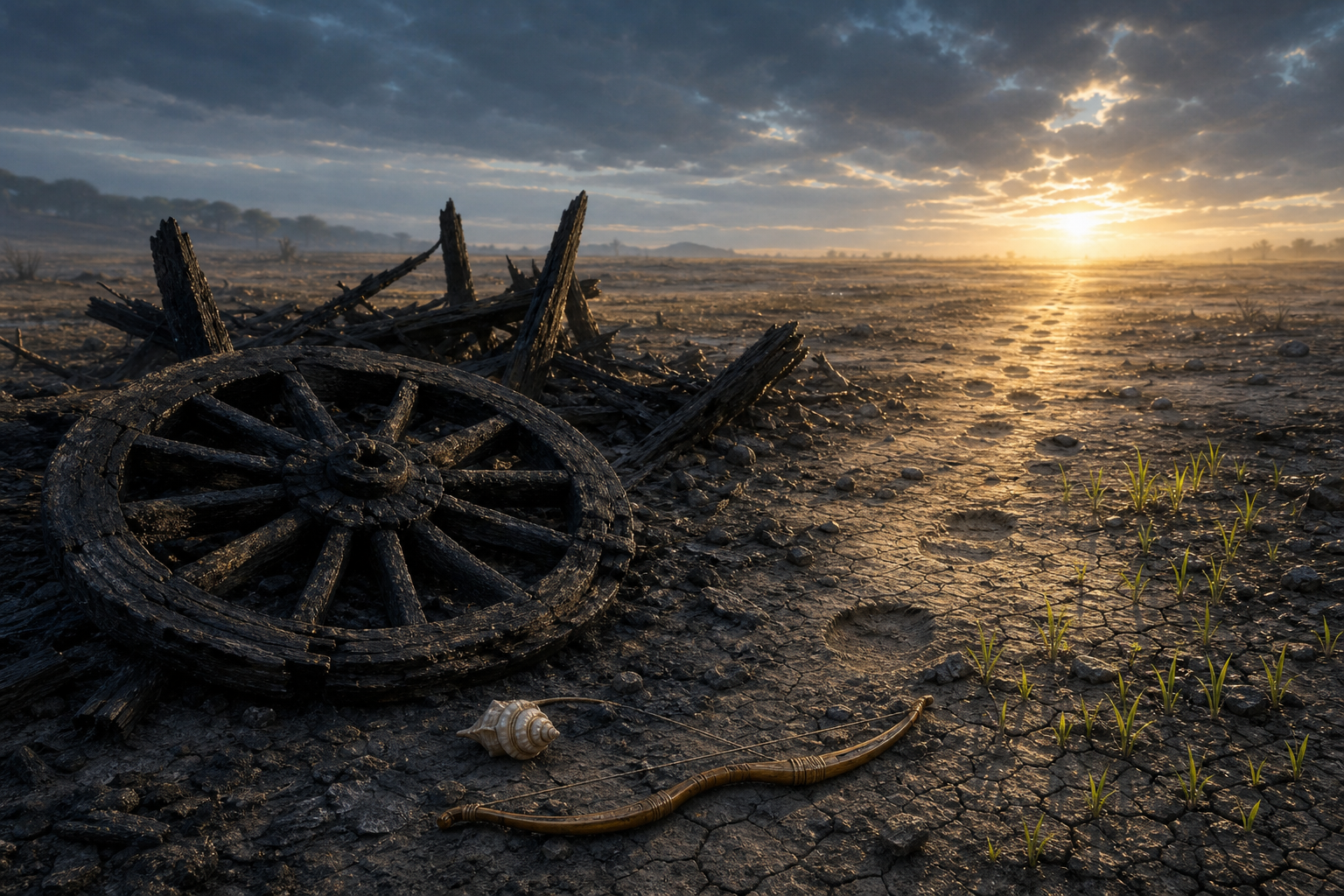
There are two different gifts here. One is protection sufficient to complete a duty. The other is indefinite preservation of the instrument used to perform it. Arjuna received the first. The chariot was not promised the second.
That distinction prevents a common spiritual misunderstanding. We often imagine grace as a guarantee that nothing valuable will break, leave, age, or end. But in this episode, grace does not make a material vehicle everlasting. It enables the vehicle to serve until the warrior has completed his responsibility and can step away safely.
The protected thing was not merely the chariot as an object. Krishna’s protection encompassed Arjuna’s ability to carry out his dharma. Once that purpose was complete, preserving the same vehicle was no longer necessary. The mission continued to matter; the instrument did not have to remain.
You can use this distinction when an intense period of duty comes to an end. A role, routine, institution, plan, or outward identity may have carried you through a difficult season. Its later collapse does not automatically erase the good accomplished through it. Ask whether the instrument completed its work before you conclude that its ending made the entire effort meaningless.
The chariot therefore leaves you with three precise questions: What had to remain available until the duty was finished? What cost was accumulating beneath its outward appearance? What are you trying to preserve even though its purpose is already complete?
Read the chariot as instruction, not superstition
This episode offers a theological lens, not a method for declaring every breakdown miraculous. You cannot look at every loss and confidently announce that an invisible intervention delayed it. The narrative tells us what Krishna was doing in this particular event because Krishna explains it. In ordinary life, our knowledge is rarely so complete.
It also does not teach that devotion cancels material consequences. The chariot had been struck. Protection delayed the result; it did not turn damage into an illusion. Faith should therefore make you more attentive to reality, not less willing to acknowledge wear, exhaustion, or a structure that can no longer serve responsibly.
Nor should worldly success be treated as automatic proof of divine approval. Arjuna’s protection belongs within a specific dharmic relationship with Krishna and a specific duty at Kurukshetra. Using the story to certify every personal ambition would reverse its moral direction. Arjuna serves the dharmic purpose; divine protection is not presented as a servant of Arjuna’s ego.
Test the purpose. Ask whether your interpretation helps you perform a genuine responsibility or merely protects something you want to possess.
Test the effect on your character. A sound reading should produce gratitude, humility, and greater care. If it produces superiority or a belief that ordinary consequences no longer apply to you, something has gone wrong.
Test your contact with reality. Divine grace and practical responsibility are not rivals. You can recognize grace while repairing what is damaged, retiring what is no longer sound, and accepting that a completed phase of life should remain complete.
Key takeaways
- The chariot’s burning revealed earlier damage; it did not signify a new attack or a late failure of Krishna’s protection.
- Krishna preserved the chariot until Arjuna had completed his duty and could leave it safely.
- Divine protection in this episode serves dharma rather than guaranteeing the permanent survival of a possession.
- An instrument can finish its purpose faithfully even if it cannot accompany you into the next stage.
- The practical response to an ending is gratitude, honest inspection, and timely release – not denial, entitlement, or superstition.
A practical way to apply the lesson after a difficult season
The story becomes useful when it changes how you handle an ending. When a demanding duty, conflict, project, or life phase has concluded, work through the following practice before rushing into the next one.
- Step down before you reuse the chariot. Create a clear end to the completed duty. Hand over what must be handed over, close unfinished administrative loops, and stop treating emergency habits as a permanent way of living.
- Inspect what carried you. Look separately at your routines, commitments, relationships, resources, and public role. Ask which remained healthy and which merely continued functioning because extraordinary effort or support was holding them together.
- Name the protection without pretending to know everything. Offer gratitude for Krishna’s grace, for disciplined practice, and for the people whose help sustained you. You do not need a complete theory of divine intervention in order to recognize that you were not self-sufficient.
- Separate purpose from possession. Write down what the completed phase enabled you to do. Then identify the vehicle you are reluctant to release. This keeps you from confusing a sacred duty with the temporary form through which you performed it.
- Carry the dharma forward, not the ashes. Preserve the truth, discipline, skill, or responsibility gained through the experience. Retire the identity or structure that has finished serving. Gratitude does not require indefinite continuation.
This practice is especially important after apparent success. During a crisis, survival can make every supporting structure look stronger than it is. Completion finally gives you the distance to see what the effort cost. Inspect before recommitting.
Arjuna did not remain seated in the chariot to prove his faith, and he did not climb back into the ashes. When your own demanding season ends, step down, give thanks, examine what carried you, and take the next dharmic step without insisting that every former vehicle come with you.