
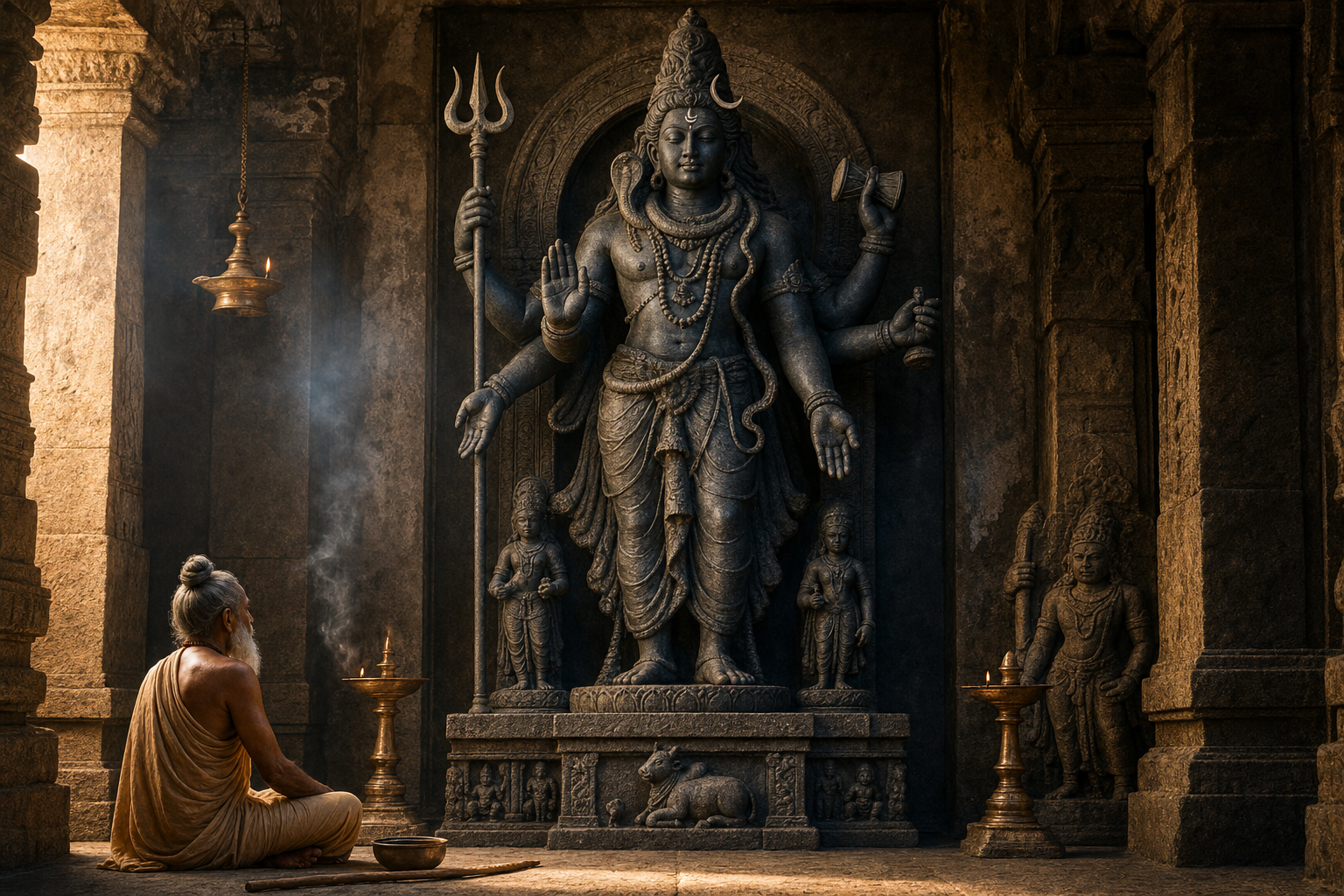
You see matted hair, ash, skulls, serpents, weapons, and an unflinching gaze. Is the figure Shiva, a fierce manifestation such as Veerabhadra or Bhairava, a guardian, or a member of an ascetic order? The symbols overlap so deliberately that identifying one object and declaring the problem solved is usually the first mistake.
You can read the image more reliably by separating three questions: who the figure is, what sacred role the figure performs, and which ascetic ideal the figure embodies. That method lets you appreciate fierce Shaiva art without turning every skull into evidence of a Kapalika or treating every weapon as uncontrolled violence.
First distinguish a divine form from an ascetic portrait
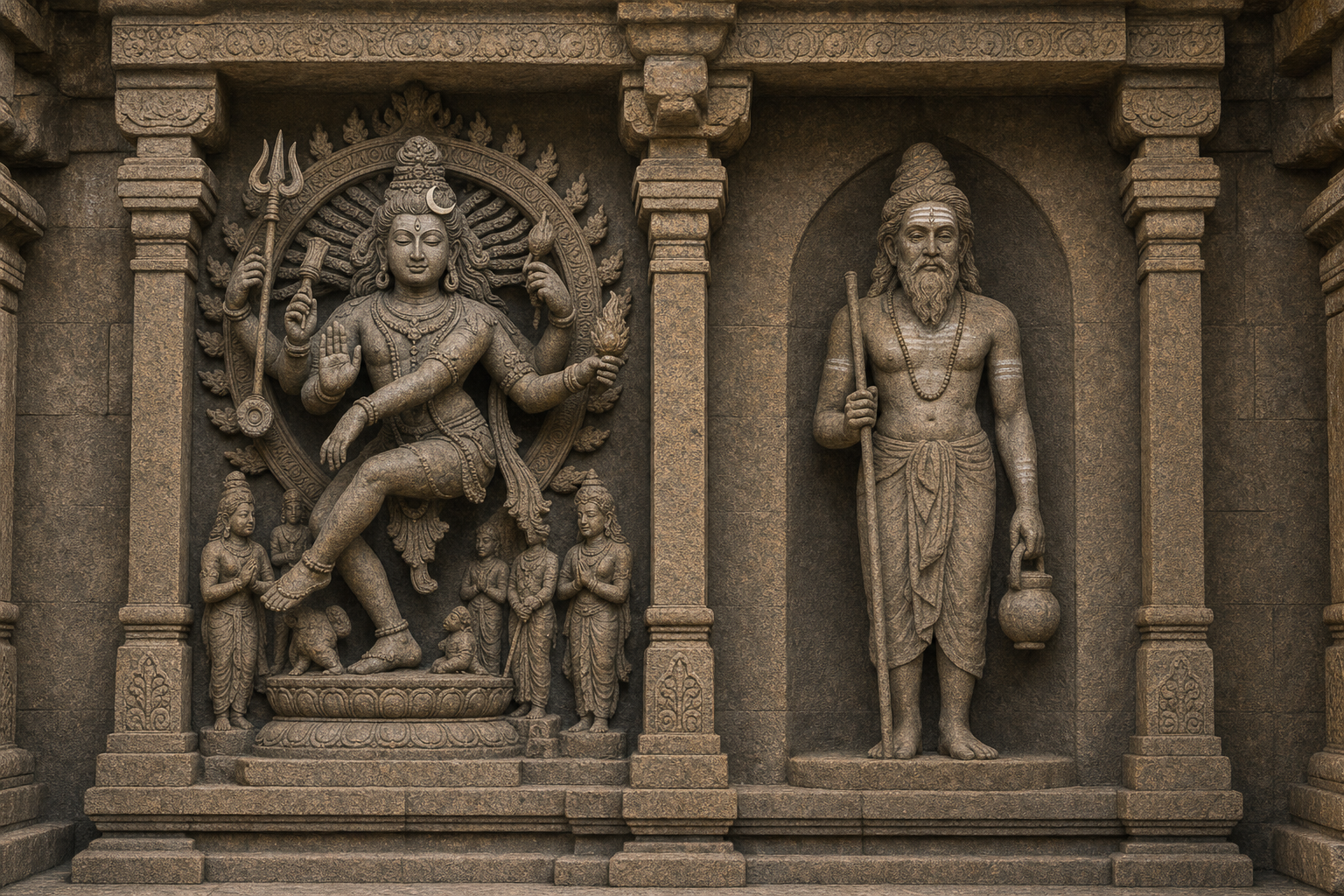
Shaiva iconography and Shaiva ascetic life share a visual language because ascetics patterned themselves upon Shiva, while divine images made renunciation visible. A Kapalika carrying a skull-bowl could emulate Shiva as Kapalin; a sculpted deity could carry the same sign without representing a historical Kapalika. The resemblance is the point, not proof that the two figures are identical.
Begin with the kind of figure before interpreting individual objects:
- Look for divine multiplication. Several arms, a third eye, an aureole, and a coordinated set of supernatural attributes strongly favor a deity or divine manifestation over an ordinary human ascetic.
- Establish the figure’s role in the sacred setting. A principal murti, a subsidiary deity, a narrative figure, and a boundary guardian do different work even when they share Shaiva signs. Veerabhadra can appear as a principal deity, a parivara-devata, or a kshetrapala-like protector.
- Separate bodily insignia from divine attributes. A forehead mark, rudraksha, an alms bowl, or a staff may identify an ascetic affiliation. A whole arrangement of posture, weapons, companions, and narrative figures is more likely to identify a divine form.
- Check the object’s present context. In a temple, a consecrated murti participates in worship and should not be approached merely as an art specimen. In a museum, provenance, date, region, missing limbs, and the possibility of displacement become essential parts of the reading.
This first distinction prevents two opposite errors. One is to label any skull-bearing image Kapalika. The other is to imagine that an institutional ascetic must look wild or socially marginal. Kalamukha teachers could lead temple-linked mathas, administer endowments, supervise worship, and participate in education and charitable distribution while remaining committed renouncers.
Read the whole body before naming the smallest symbol
An attribute becomes meaningful through its relationship with the rest of the image. Read from the largest visual decision to the smallest. This order keeps one dramatic object from overpowering the evidence supplied by the complete composition.
- Start with the silhouette and stance. A seated teacher, a standing ascetic, and a deity braced in a martial posture announce different kinds of presence before you identify a single implement. In the alidha or pratyalidha stance, one leg advances or bends while the other braces the body. The form conveys directed readiness rather than a loss of control.
- Read the head and face. Matted locks signal tapas and Shaiva affiliation broadly. A towering jata-mukuta, third eye, sharply pronounced brows, fangs, or a fiery halo can intensify a fierce divine modality. A South Indian Veerabhadra may also bear a moustache that strengthens his martial and guardian character.
- Move to the torso and clothing. A serpent worn as the sacred thread, tiger skin, skull garland, armlets, and girdle can combine ascetic mastery with sovereign power. The result is not simply a hermit or a king, but the Shaiva conjunction of renunciation and command.
- Inventory the hands without interpreting them yet. Record whether you see a trishula, damaru, sword, shield, bow, arrow, noose, goad, skull-bowl, or staff. Also record broken or empty hands. A missing object should create uncertainty, not invite a convenient guess.
- Identify companions and subordinate figures. Bhadrakali, ganas, a kneeling Daksha, or a goat-headed Daksha can settle an identification that weapons alone cannot. Nandi places a figure within Shiva’s sacred world, but Nandi by himself may not distinguish one Shaiva manifestation from another.
- Notice ritual surface and placement. Water, ash, sandalwood, pigment, oil, garlands, and the patina of repeated abhishekam belong to the living history of a temple image. Granite, schist, bronze, or wood can help establish regional and ritual context, but material alone rarely identifies the figure.
A worked reading of Veerabhadra
Suppose the central figure has matted locks, a third eye, a forceful gaze, several arms, and a body poised for combat. Those features establish a fierce Shaiva deity, but not yet Veerabhadra. Now add a sword and shield, trishula or bow, an energetic martial stance, Bhadrakali or ganas nearby, and a diminished figure of Daksha. The identification becomes much stronger because body, attributes, action, and story now converge.
The most important feature is the control running through the composition. Broad shoulders communicate capacity, the contained waist suggests mastery, and the braced lower body resolves the apparent movement into balance. The Veerabhadra complex at Lepakshi joins this fierce but composed form with Vijayanagara architecture, murals, and a monumental Nandi, allowing the surrounding sacred landscape to reinforce the identity of the murti.
If only a fragment survives, reduce the certainty of your label. Fierce Shaiva torso, Bhairava-related image, or probable Veerabhadra may be more responsible than a confident sectarian or narrative identification unsupported by the remaining evidence.
Ascetic signs are a vocabulary, not a sect label
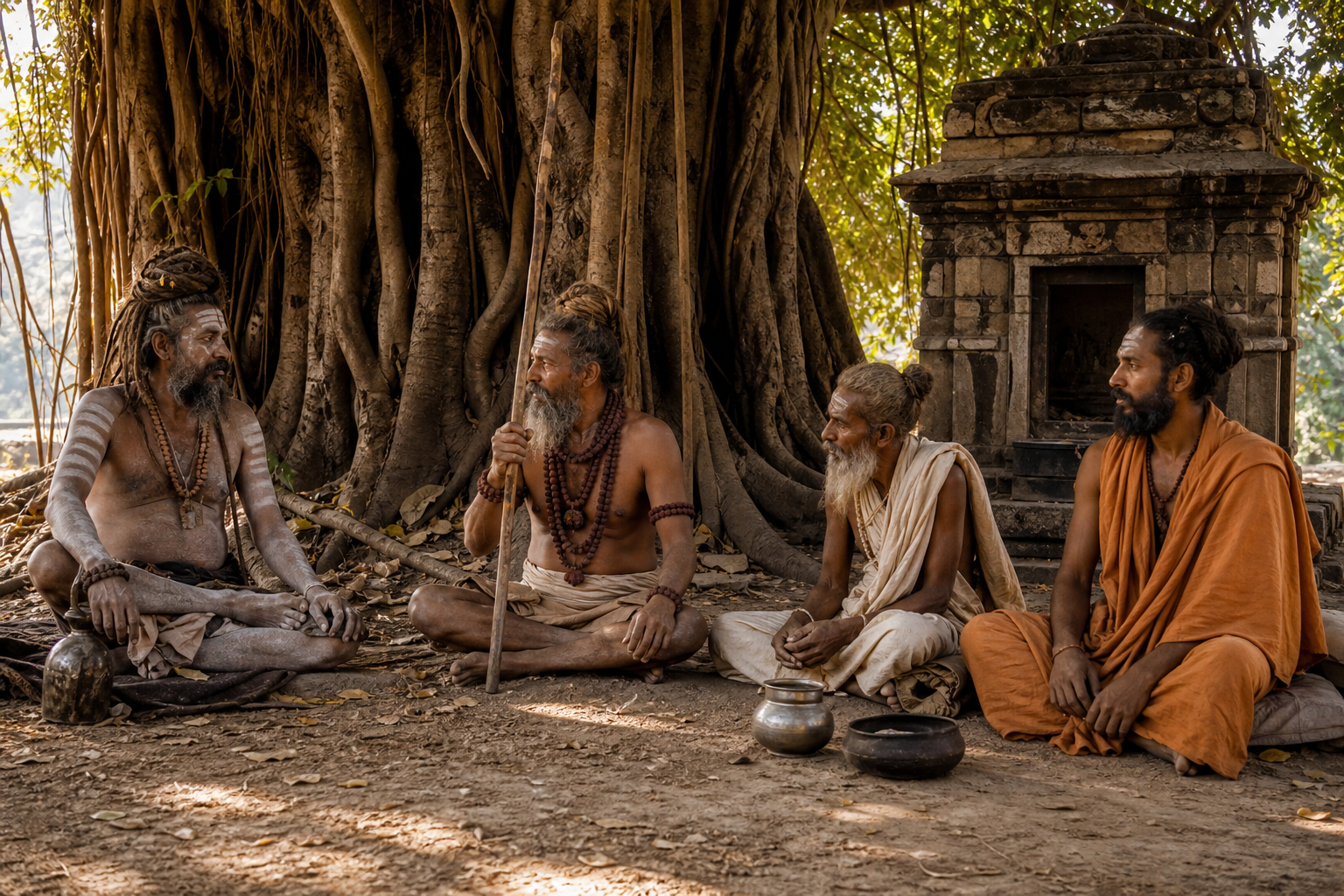
The body served as a visible record of initiation, vows, and religious affiliation. Yet many signs traveled between deities, mendicants, temple specialists, and regional traditions. Kapalika skull insignia and Kalamukha forehead markings carried different sectarian associations, while matted hair, ash, tripundra, and rudraksha belonged to a much wider Shaiva field.
| Visible sign | What it can support | What it cannot prove by itself |
|---|---|---|
| Matted locks | Tapas, renunciation, and affiliation with Shiva’s ascetic form | A particular sect or historical lineage |
| Ash-smeared body | Shaiva renunciation, mortality, and in fierce settings a cremation-ground register | That the figure is necessarily a Kapalika |
| Tripundra and rudraksha | Broad Shaiva identity and devotional discipline | Kalamukha identity without additional context |
| Skull-bowl and skull-topped staff | The Kapalin or Bhairava register; in a human ascetic image, possible Kapalika vows | The full ritual behavior attributed to Kapalikas in literary drama |
| Distinct dark forehead mark | A possible Kalamukha affiliation when supported by location, inscription, or institutional context | That every otherwise similar Shaiva ascetic belonged to the Kalamukhas |
| Skull garland, serpent sacred thread, or tiger skin | Mastery over death, time, danger, and conventional status in a divine or ascetic register | A single fixed identity across every region and period |
Use a convergence rule: require evidence from at least three levels before assigning a precise identity. Combine the figure’s overall role, a distinctive attribute or bodily sign, and a contextual clue such as companions, inscription, provenance, shrine position, or institutional affiliation. Three repetitions of the same general idea do not count. Ash, rudraksha, and matted hair all confirm Shaiva identity, but they still may not name the sect.
This rule is especially useful in museums, where a figure may have been removed from its architectural ensemble and stripped of perishable attributes. It is also useful in temples whose present ritual identity may preserve, adapt, or overlay an older sculptural program.
Place Kapalikas and Kalamukhas on the right historical map
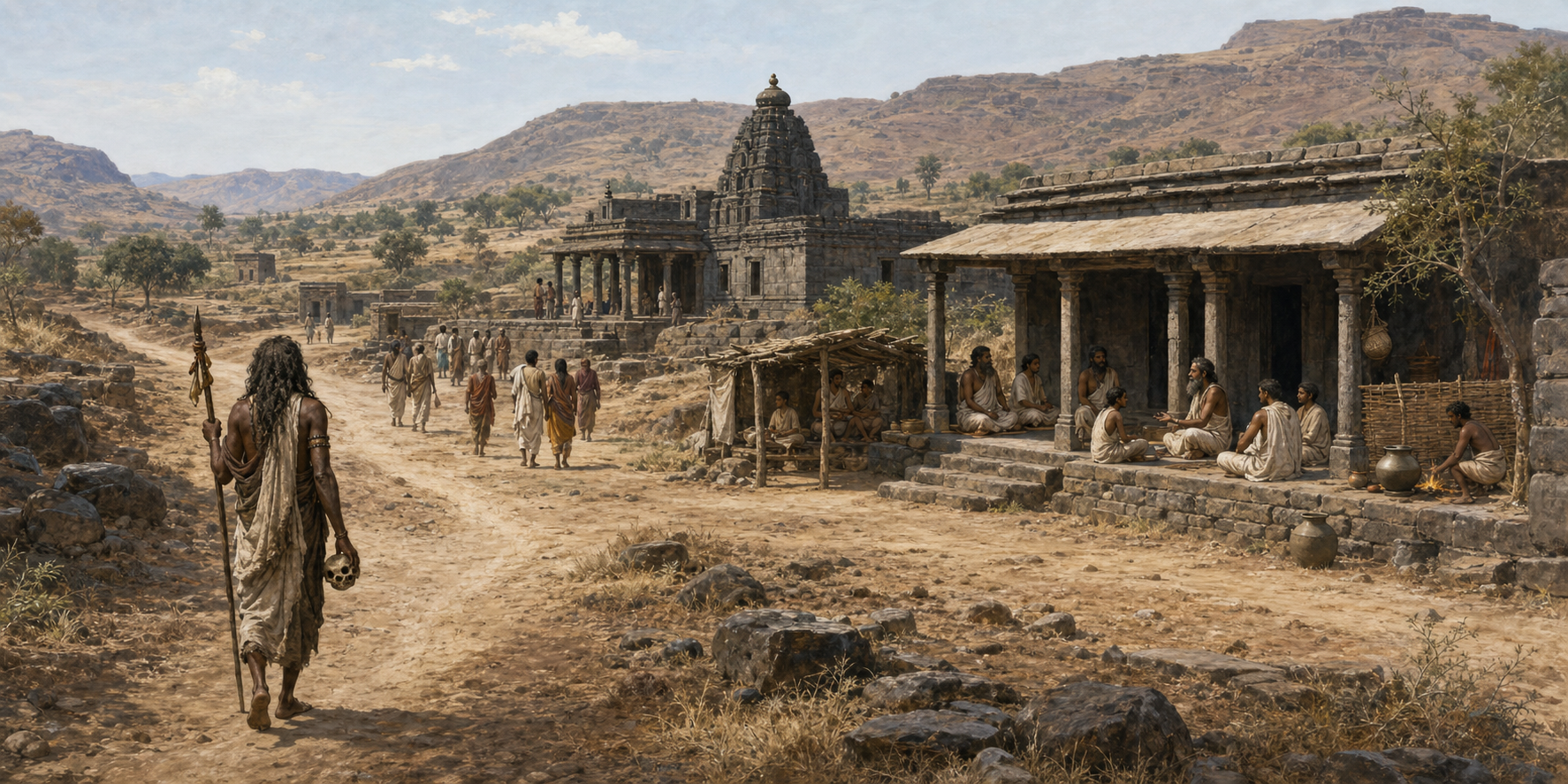
Shaiva ascetic traditions are often arranged around the Atimarga, the ascetic path associated with Pasupata and Lakula currents, and the Mantramarga, the tantric and Agamic field that includes Shaiva Siddhanta and Bhairava-oriented traditions. The map is useful, but its borders were porous. Initiation, mantra, temple service, pilgrimage, and local patronage created overlaps that a modern label can make look cleaner than they were.
Kapalikas: the theology of the threshold
Kapalikas are visible in literary and historical notices from roughly the sixth through twelfth centuries in places including Ujjain, Kanchipuram, Kashi, and at times Kashmir. Their name comes from kapala, skull, and their public signs included the skull used as an alms bowl, the skull-topped khatvanga, ash, and matted hair. Their ritual world was associated with Bhairava, the Matrikas, cremation grounds, and disciplines intended to confront fear, aversion, impurity, and attachment.
Much of this picture comes through satire, polemic, drama, and accounts written by outsiders. Mattavilasa Prahasana, Malatimadhava, Karpuramanjari, and Rajatarangini attest that the Kapalika type was publicly recognizable, but lurid scenes involving intoxication, taboo substances, or threatened human sacrifice cannot automatically be treated as routine social reportage. A theatrical villain tells you something about an audience’s expectations; it does not provide a census of actual practice.
Kalamukhas: ascetic discipline inside institutions
Kalamukhas are most securely visible between the tenth and thirteenth centuries in inscriptions from present-day Karnataka and parts of Andhra. Their name is associated with a dark facial or forehead mark, but their institutional record is more revealing than the mark itself. Kalamukha acharyas headed mathas attached to Shiva temples, received and managed land grants, supervised worship, maintained lamps and festivals, taught, and directed charitable uses of temple resources.
This history corrects the assumption that serious asceticism always required flight from civic life. A renouncer could maintain vows while anchoring a temple, training disciples, administering endowed property, and serving an agrarian community. Kalamukha practice appears to have joined linga worship, mantra, vrata, Pasupata inheritance, and regional Agamic observance rather than centering the cremation-ground idiom associated with Kapalikas.
By the twelfth and thirteenth centuries, the rise of Virashaiva and Lingayat institutions changed the Shaiva landscape of Karnataka. Kalamukha establishments appear in some cases to have been absorbed, reformed, or replaced, so disappearance from inscriptions need not mean that every discipline, office, or community vanished at once. Claims of direct continuity from Kapalikas to later Aghori or Nath traditions likewise remain debated. Shared skull, ash, or charnel-ground imagery establishes resemblance; it does not by itself establish an unbroken lineage.
When you write a label, caption, or description, match the claim to the evidence. Use Kapalika when a text, inscription, or sufficiently distinctive ascetic context warrants it. Use Kalamukha when the mark, region, period, and institutional record converge. Otherwise, Shaiva ascetic, Kapalin imagery, or Bhairava-related register may be the more accurate choice.
Interpret fierce imagery without flattening its purpose
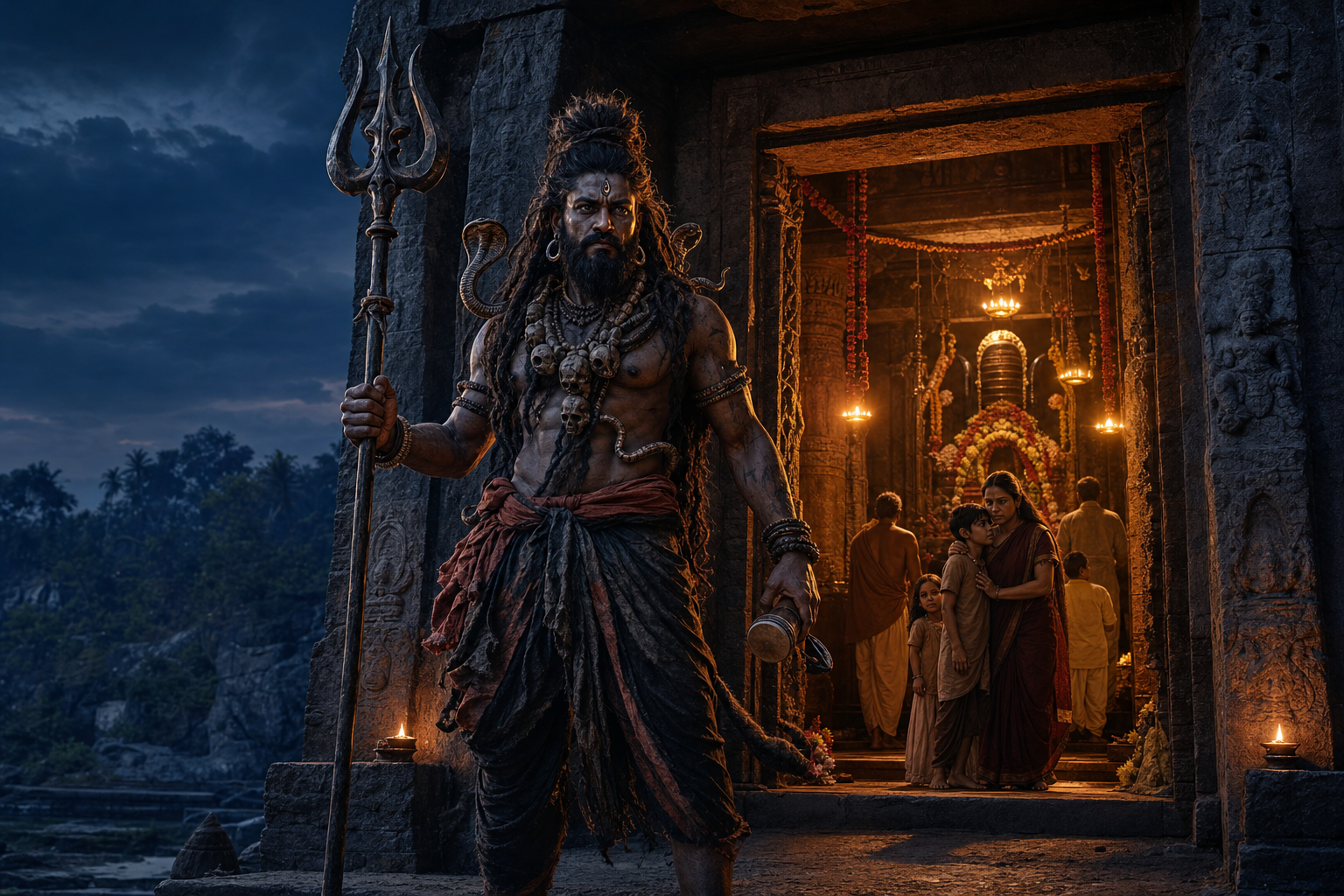
The fiercest Shaiva images are easy to sensationalize because modern viewers often treat appearance as temperament: skulls become morbidity, weapons become aggression, and fangs become evil. Shaiva visual grammar asks a different question. What has this force been ordered to protect, correct, or transform?
Veerabhadra offers a precise test. He arises from Shiva’s grief and dharmic fury after Sati’s dignity and tapas are violated at Daksha’s yajna. He destroys the arrogance governing the sacrificial arena, but the narrative does not end with annihilation. Daksha returns with a goat’s head and re-enters a restored order. Veerabhadra is raudra in energy and bhadra in purpose: fierce enough to stop adharma, disciplined enough to serve restoration rather than appetite.
The weapons continue that logic. The sword can signify discriminating insight; the shield protects dharma and community; the bow and arrow make intention focused; the noose binds unruly impulses; the goad redirects them; the trishula penetrates constraining triads; and the damaru places destructive force within the larger rhythm of manifestation and dissolution. Read as a coordinated set, the implements turn a warrior image into an ethical map. Read in isolation, they become a weapons inventory.
Kapalika cremation-ground disciplines press the same visual challenge from another direction. Their purpose was not a casual fascination with death, but a radical confrontation with the fear and aversion that ordinarily govern conduct. That aim does not authenticate every sensational tale told about the sect, nor does it make esoteric practice a do-it-yourself extension of temple viewing. Symbol, initiated discipline, and literary stereotype must remain distinct.
Comparable fierce guardians appear elsewhere in the Dharmic world. Buddhist Mahakala embodies protective force, Jain sacred landscapes include powerful yaksha and yakshini guardians, and Sikh bir ras joins valor to the defense of righteousness. These are parallels, not interchangeable doctrines. They reveal a wider Indic refusal to confuse compassion with passivity or disciplined power with cruelty.
Key takeaways
- Identify the kind of figure and its sacred role before interpreting a dramatic object.
- Read posture, bodily signs, attributes, companions, and setting as one visual sentence.
- Require several independent clues before assigning a specific deity, sect, or lineage.
- Treat literary portrayals of transgressive ascetics cautiously when inscriptions or other historical evidence do not confirm them.
- Ask what fierce power protects, restrains, or restores; do not assume that a frightening appearance celebrates uncontrolled violence.
On your next temple or museum visit, give the image three passes. First observe only posture and placement. Then name the attributes and companions you can actually see. Finally compare that visual evidence with the label, provenance, and ritual setting. If the clues do not converge, preserve the uncertainty. A careful partial reading honors Shaiva tradition better than a dramatic but unsupported name.
References
- DharmaRenaissance Blog – From Shiva’s Rage to Sacred Art: Decoding Veerabhadra’s Iconography and Symbolism
- DharmaRenaissance Blog – Kalamukhas vs Kapalikas: decoding enigmatic Shaiva ascetics, their history, rituals, and legacy