
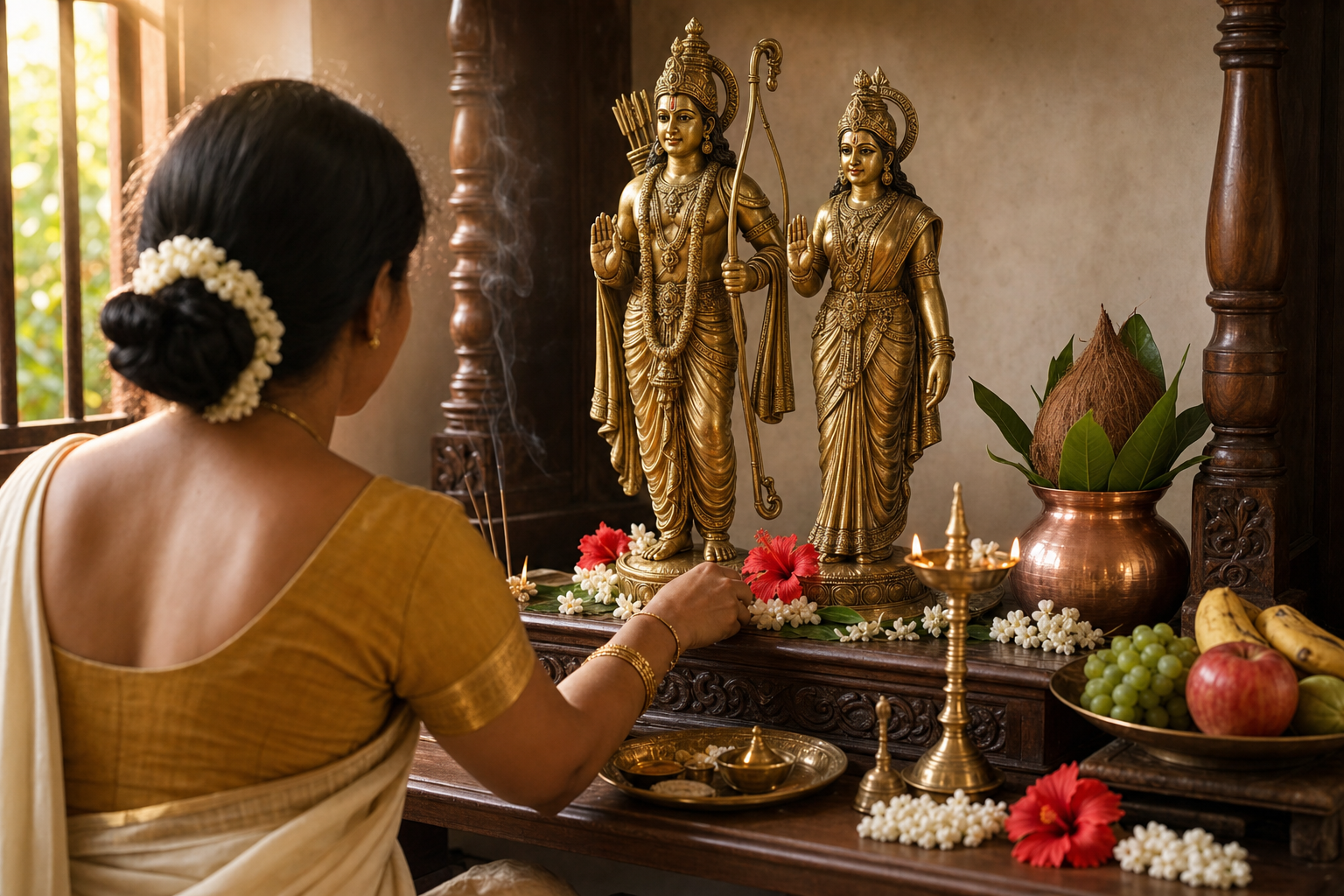
If Sita Navami is approaching and you are unsure whether a simple home observance is enough, begin with two decisions: which local Navami window applies, and which form of worship you can complete with attention. A correct date filled with hurried ritual misses the purpose. An elaborate fast that harms your health does not become more dharmic through difficulty.
In 2026, Sita Navami is observed on April 25, during Vaishakha Shukla Navami. Treat that civil date as your planning anchor, then verify the tithi and puja window for your own city. The aim is not ritual maximalism. It is to remember Sita with clarity, restraint and a form of devotion that changes how you conduct yourself.
Set the observance by tithi, not by calendar alone
The first common mistake is to assume that a Hindu festival begins at midnight and lasts until the next midnight. A tithi follows the changing angular relationship between the Moon and the Sun. Each tithi begins after another 12 degrees of separation, so its duration is variable – roughly 19 to 26 hours – and it can start or finish at any civil-clock time.
This is why a national festival graphic is not enough for deciding your sankalpa or puja time. Two devotees in different time zones may encounter different sunrise conditions even though both are observing the same lunar tithi. Use a Panchang calculated for the city where you will actually perform the worship.
Work through the timing in this order:
- Select your city or the nearest reliable location in a regional Panchang.
- Note the local start and end of Navami, the local sunrise, and the Madhyahna interval.
- Check which rule your family, temple or sampradaya follows. Many households use Udaya Tithi, meaning Navami should prevail at sunrise. Some Jayanti traditions give special importance to worship during Madhyahna while Navami is present.
- If Navami touches two sunrises, do not choose a date merely because it is more convenient. Some authorities prefer the second sunrise in that situation, but practice varies. Follow your established tradition or ask the temple whose paddhati you ordinarily follow.
- Confirm the parana rule separately if you are fasting. Do not assume that the end of your puja automatically determines the proper time for breaking the vrat.
This distinction matters especially in the diaspora. You do not need to reproduce the clock time used in Bharat or Nepal. You need to preserve the Panchang principle using your own location’s sunrise and tithi boundaries. That is continuity of tradition, not a departure from it.
A home puja that is complete without becoming complicated
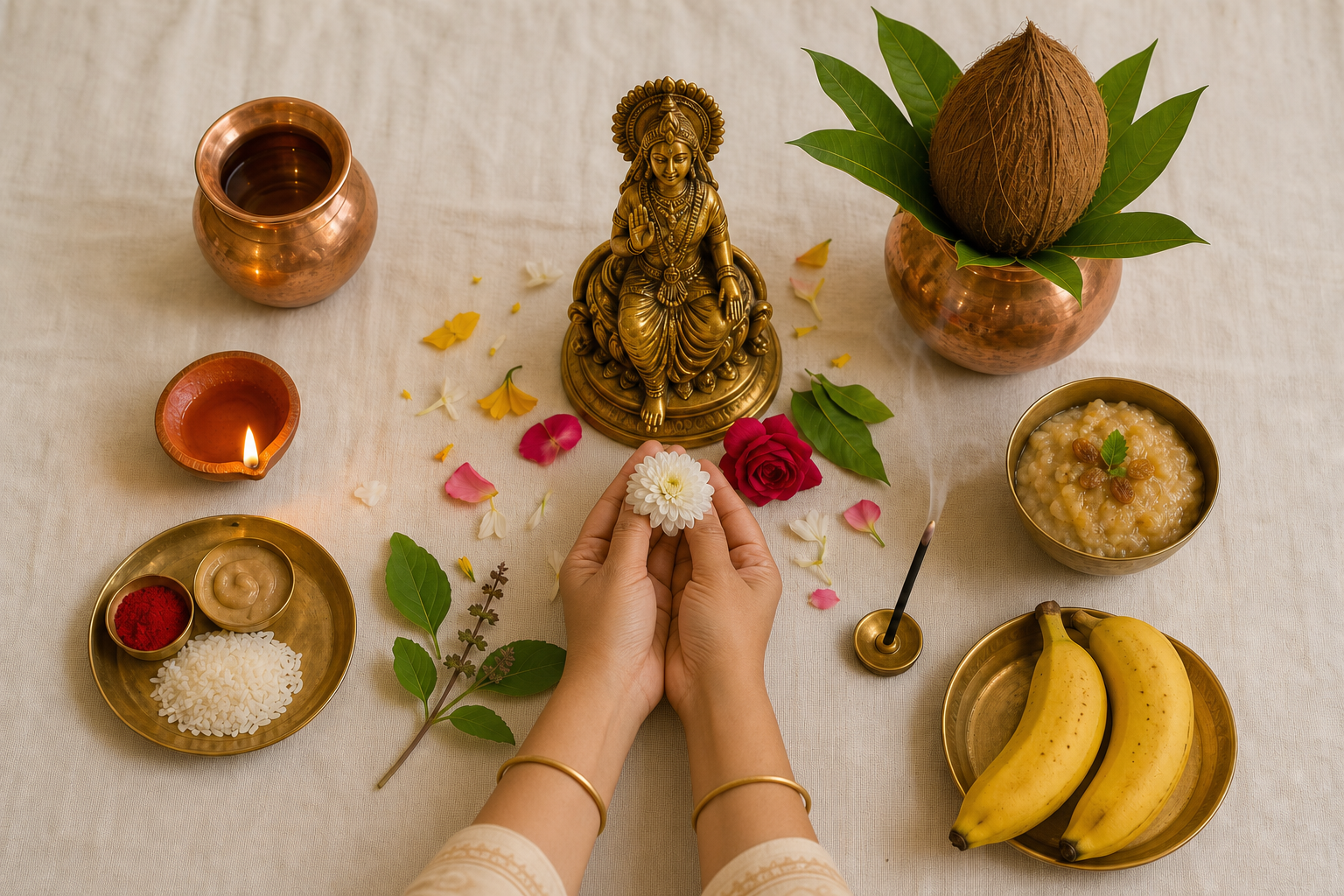
A household altar for Sita Navami commonly places Sita with Sri Rama; images including Lakshmana and Hanuman are also appropriate. Gather what you already use for daily or festival worship. The basic materials may include a clean altar cloth, an image or murti, a lamp, flowers, fragrance or incense, water, and a sattvic naivedya. A kalasha may be installed when that belongs to your household practice.
Suitable offerings include seasonal fruit and familiar sattvic preparations such as kheer, payasam, panakam or coconut-based sweets. You do not need every regional item. Choose food that can be prepared cleanly, offered reverentially and shared without waste.
Use this sequence as a practical framework, while allowing your family paddhati to take precedence:
- Prepare yourself and the space. Bathe, wear clean clothing, clean the worship area and arrange the altar before the chosen muhurta.
- Become still. Sit before the altar and settle your attention. Perform achamana and pranayama if they are part of your practice.
- Take sankalpa. State your intention to observe Sita Navami according to your capacity. Let the vow include purity of speech, thought and conduct, not only completion of ritual actions.
- Invoke Ganesha. Offer the customary prayer for the removal of obstacles before beginning the principal worship.
- Install the kalasha if applicable. If you do not ordinarily know this procedure, follow a family priest or temple method rather than improvising a complicated version.
- Worship Sita and Sri Rama. A Panchopachara offering can include gandha, pushpa, dhupa, deepa and naivedya. Families trained in a fuller Shodashopachara sequence may follow it.
- Recite Sita’s names. Two accessible mantras are Om Sri Sita Janaki Devyai Namah and Om Sri Sita Ramaya Namah. You may also offer the Sita Ashtottara Shatanamavali.
- Read with a purpose. Choose a Ramayana passage that lets you contemplate Sita rather than merely finish a quota of verses.
- Complete the worship. Offer naivedya, perform aarti, make kshama-prarthana for unintentional lapses, and distribute prasada respectfully.
For scriptural reading, the Bala Kanda passages concerning Sita’s appearance and Swayamvara give the festival its narrative setting. Sundara Kanda places Sita at the moral center of a story of separation, courage, remembrance and service. Select one passage and read slowly enough to notice what it asks of you. More pages do not automatically mean deeper shravana.
If an item is unavailable or your living situation is modest, do not turn the puja into a shopping test. A clean image, a lamp, a simple offering, sincere nama-japa and attentive reading can support a meaningful household observance. Simplicity is not carelessness; it is the removal of what distracts from worship.
Choose a vrat you can keep with steadiness
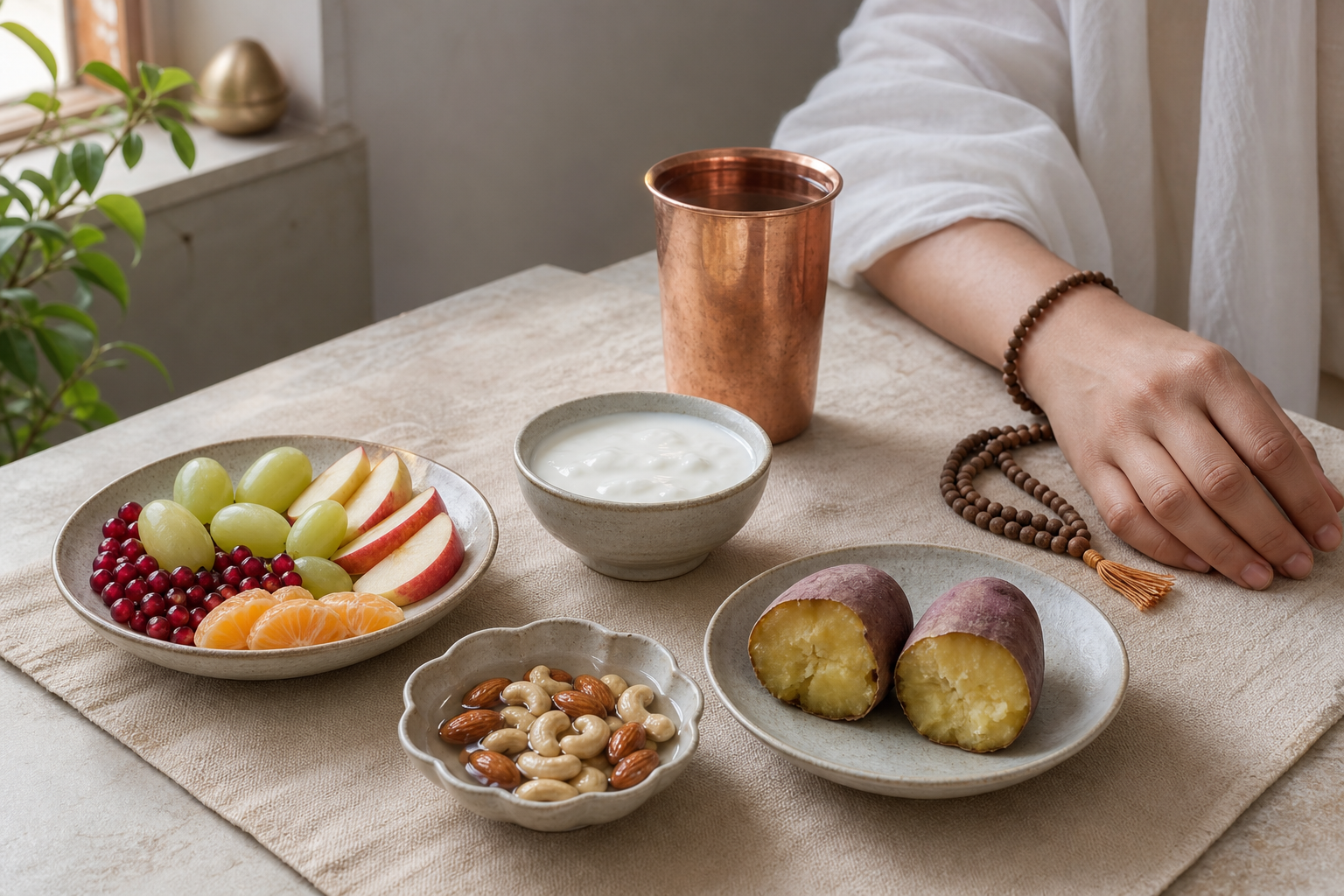
There is no single food rule that every Sita Navami observer must adopt. Practice may take the form of a complete fast, phalahar using fruit, a sattvic anukalpa meal, or worship without a dietary fast. Fasting is not mandatory, and its strictness should never become the measure by which you judge another devotee.
Decide your level before the festival rather than under social pressure on the day. Ask three practical questions:
- Can I keep this form of vrat without neglecting necessary family, work or caregiving duties?
- Can I maintain patience and clarity, or will the restriction make the entire day revolve around food and irritation?
- Does my health, age or medication schedule make food restriction unsafe?
Children, elders and people with health conditions should adapt or omit the food fast. If food timing affects medication or an existing condition, follow qualified medical advice rather than a generic festival timetable. A vrat that interferes with necessary treatment is not the right form for you.
Whatever food discipline you choose, give the vow an ethical center. Restrain harsh speech. Refuse needless conflict. Complete an obligation you have been postponing. Make space for prayer and scriptural reflection. This prevents upavasa from shrinking into a menu of permitted and prohibited foods.
Parana, the formal conclusion of the fast, should follow the locally applicable tithi rule and your tradition’s practice. If your temple publishes a Sita Navami schedule, use its parana guidance together with your city’s Panchang rather than borrowing a time circulating for another location.
Let Sita’s significance shape conduct after the puja
Dignity is not passive submission
Sita is revered in Vaishnava theology as a manifestation of Sri, or Lakshmi. The Valmiki Ramayana, Adhyatma Ramayana and later devotional retellings remember her through compassion, forbearance, truthfulness and steadfastness. These virtues require strength. They should not be flattened into the claim that a good person must quietly accept every injustice.
Kshama does not require the abandonment of discernment. Dhriti is not helplessness. Grihastha-dharma cannot be reduced to one-sided sacrifice by women while everyone else avoids responsibility. If Sita Navami is to inform family life, it should deepen mutual respect, truthful communication and the protection of each person’s dignity.
You can turn the virtues into a concrete daily discipline:
- Karuna: notice a need in your family or community that has been overlooked, then respond without making the recipient perform gratitude.
- Satya: have one necessary conversation without manipulation, exaggeration or concealment.
- Dhriti: remain steady in a rightful duty after the mood that inspired it has passed.
- Kshama: release vindictiveness while keeping the boundaries needed to prevent repeated harm.
- Seva: offer time, food, learning or practical help where it will actually be used.
Bhumi-putri makes reverence for the Earth personal
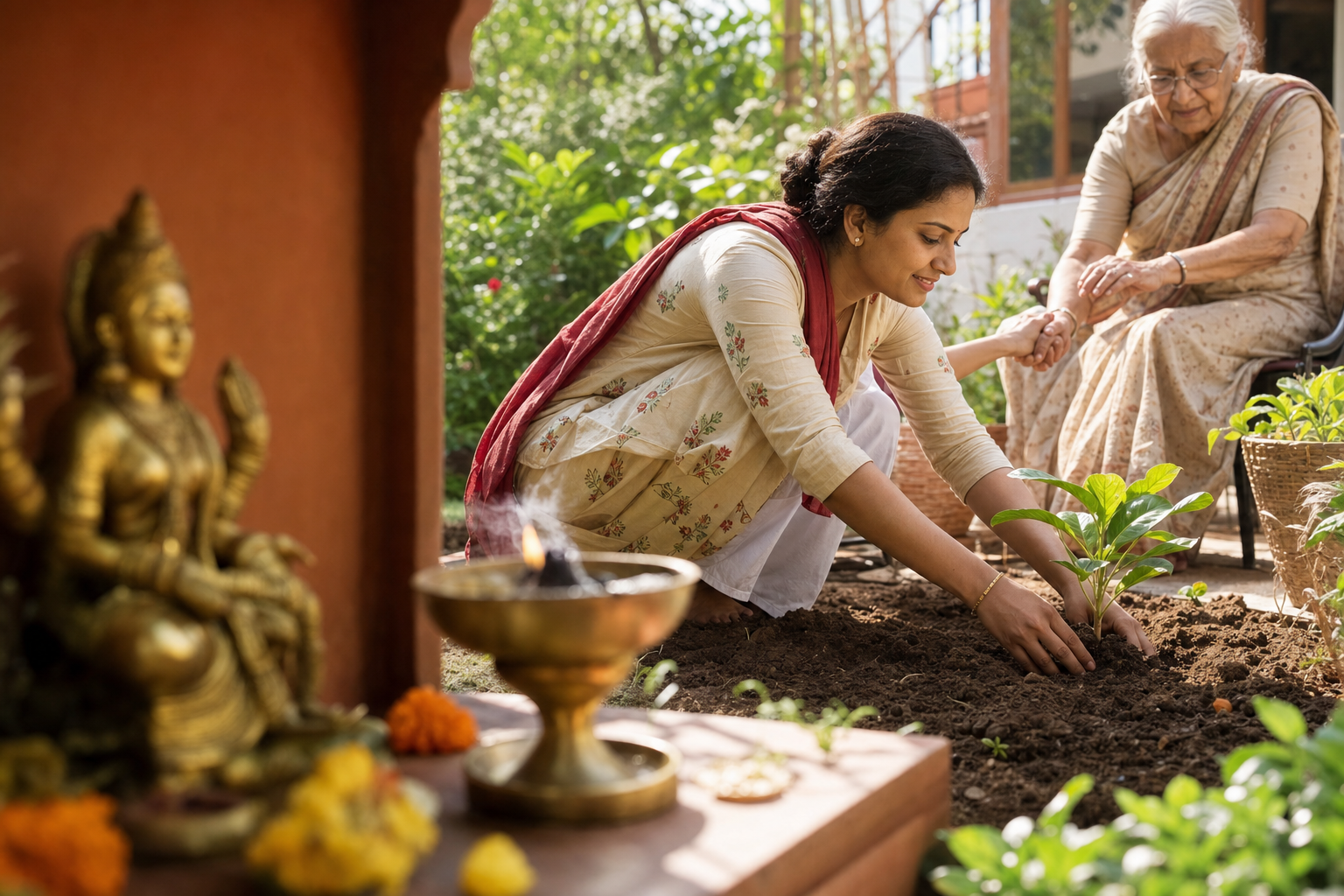
King Janaka’s discovery of Sita in a furrow gives her the names Janaki and Bhumi-putri and expresses her ayonija, or not womb-born, origin. Vaidehi connects her with Videha, while Maithili connects her with Mithila. These names are not decorative alternatives. They preserve her relationships with father, kingdom, land and cultural memory.
The furrow also makes agriculture part of the festival’s moral imagination. Food does not begin in a packet or on a supermarket shelf. It depends on soil, water, cultivation and human labor. An observance honoring Bhumi-putri should therefore avoid needless waste. Prepare only as much naivedya as can be offered and shared. Use reusable puja materials where practical, care for a tree, or support work that protects soil and local food systems. The act need not be large; it should be real.
Local traditions can differ without competing
In Mithila and Janakpur in Nepal, Janaki’s relationship with the land is expressed through special worship and public celebration around Janaki Mandir. Ayodhya traditions commonly emphasize Ramayana patha, bhajans and archana. South Indian Sri Rama temples may perform abhishekam or thirumanjanam, alankaram, archana and regional naivedya for Sita-Lakshmana-Hanuman-sameta Sri Rama. Diaspora communities often arrange collective worship around local tithi conditions and the practical availability of families.
Do not use these variations to rank one region as more authentic than another. Preserve the core – Sita’s remembrance, the Navami discipline, sattvic worship, scriptural engagement and ethical conduct – while following the liturgical language of your own community.
Sita Navami also complements Sri Rama Navami rather than duplicating it. Sri Rama Navami foregrounds maryada, ideal kingship and the public responsibilities of dharma. Sita Navami brings dignity, compassion and steadfastness into sharper focus. Together, they prevent dharma from being imagined only as rule, authority or statecraft; it must also govern relationships, suffering, care and moral courage.
Move from remembrance to seva
After the puja, choose one expression of service. Anna-dana and community meals extend prasada into hospitality. Support for girls’ education gives practical form to concern for dignity and opportunity. Environmental care honors the Bhumi-putri symbolism. Compassionate outreach turns karuna from a praised quality into a lived one.
Families can also make the day intergenerational. Tell children how Sita received the names Janaki, Vaidehi, Maithili and Bhumi-putri, then invite questions about courage, fairness and right conduct. Do not shut down a difficult question merely because it complicates a polished festival narrative. Dharma becomes durable when the next generation learns to inquire within the tradition, not only repeat it.
Compassion, self-restraint, right conduct, seva and ahimsa also resonate across Hindu, Buddhist, Jain and Sikh ethical life. Recognizing that shared vocabulary does not erase doctrinal distinctions or imply that every Dharmic community observes the same ritual. It gives us a basis for cooperating in service while remaining honest about the particular Vaishnava and Ramayana-centered meaning of Sita Navami.
Sita Navami questions people actually ask
Are Sita Navami, Seeta Navami, Janki Navami and Sita Jayanti the same observance?
Yes. These names refer to the commemoration of Sita’s appearance on Vaishakha Shukla Navami. Janki or Janaki is especially familiar in North India, while Seeta Navami occurs in several South Indian usages. The spelling or regional name does not create a different festival.
Can unmarried people and men observe Sita Navami?
Yes. The observance is not restricted to married women. Women and men, married and unmarried devotees, young people, elders and other sincere seekers may worship Sita. Her virtues and the dharma questions raised by her life concern the whole household and society, not one demographic group.
Is fasting compulsory?
No. A complete fast, phalahar or sattvic anukalpa meal may be undertaken according to capacity and tradition, but fasting is not the condition that makes the worship valid. Puja, nama-japa, Ramayana reflection, disciplined conduct and seva remain substantive forms of observance.
What can I do if I have very little time?
Prepare a clean image of Sita and Sri Rama, light a lamp, take a sincere sankalpa, offer flowers or a simple naivedya, recite Sita’s names, and read one short Ramayana passage attentively. End with aarti and kshama-prarthana. A focused observance is better than an ambitious sequence performed with anxiety and divided attention.
Before the festival, save the Panchang timing for your city, decide on a realistic vrat, choose your reading, and identify one act of seva. Then, when Navami arrives, you can give the day to Sita’s remembrance instead of spending it negotiating logistics.