
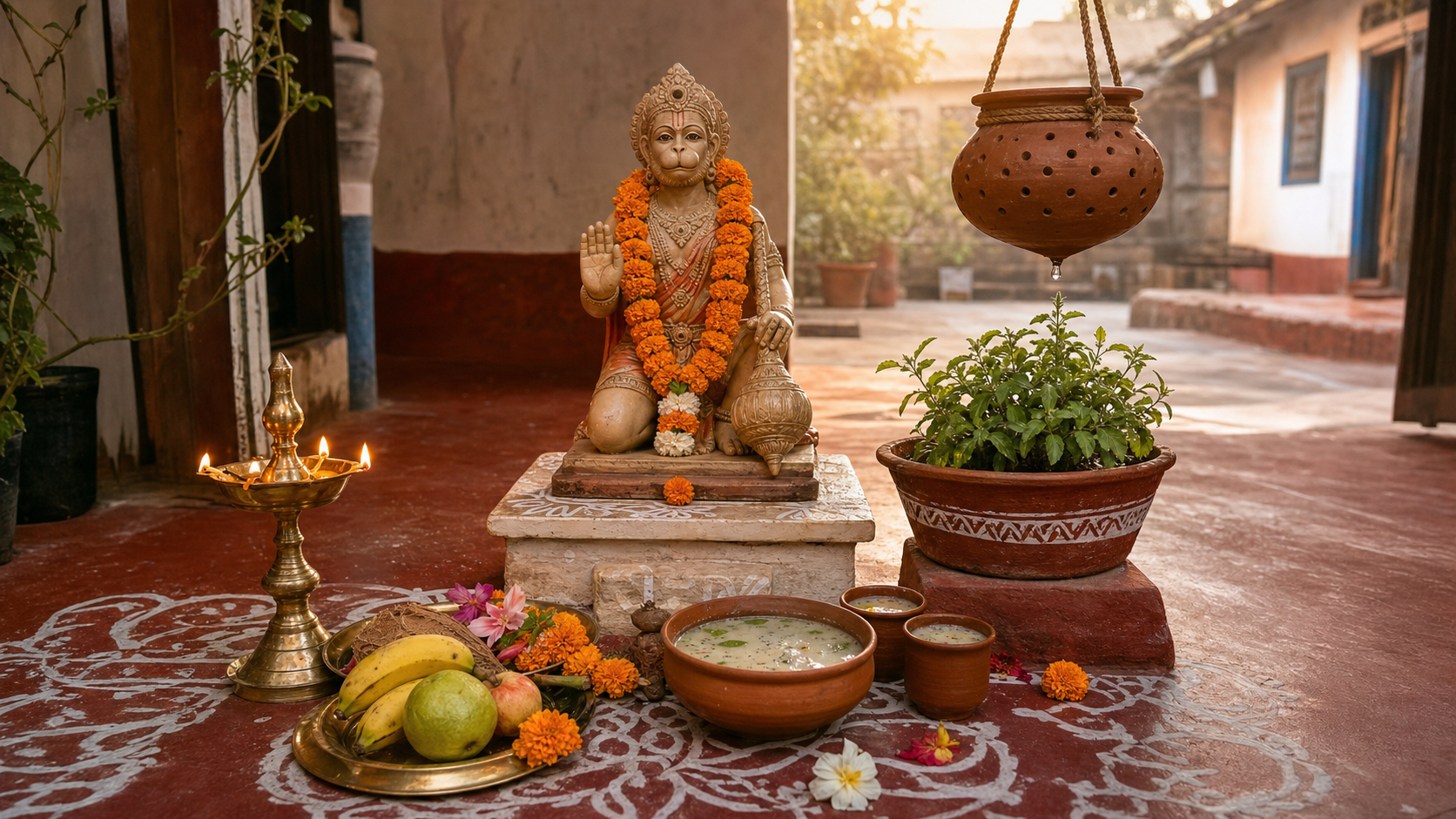
If you are trying to decide when to observe Hanuman Jayanti in an Odia household, you do not have to choose between Hanuman bhakti and New Year tradition. In Odisha, they meet on the same day: Maha Bishuba Sankranti, widely called Pana Sankranti, is both the Odia solar New Year and the regional observance of Hanuman Jayanti.
That meeting gives the day its distinctive shape. You begin a new year not merely by changing the calendar, but by choosing the qualities with which you intend to live: courage without arrogance, strength governed by discernment, devotion expressed through service, and seasonal hospitality extended beyond your own household.
One sacred day with three connected meanings
Maha Bishuba Sankranti, Pana Sankranti, and the Odia New Year are different names or dimensions of the same seasonal observance. Hanuman Jayanti adds the devotional center. Seeing these layers together prevents a common mistake: treating the day as either a New Year celebration with a brief puja or a Hanuman festival to which pana has been added as a cultural extra.
The calendrical anchor is Mesha Sankranti, when Surya enters Mesha in the sidereal zodiac. It ordinarily falls on April 14 or April 15, but the civil date by itself is not enough for planning the rites. An Odia Panji gives the precise Sankranti moment and identifies Punya Kala and, when applicable, Maha Punya Kala for practices such as snana, japa, puja, and dana.
Before fixing your household schedule, therefore, consult the Panji followed by your family or temple. Note three things: sunrise, the stated Sankranti time, and the relevant auspicious window. Many devotees begin worship at sunrise and place a principal offering, recitation, or act of dana near the recorded Sankranti moment. If work, health, or caregiving responsibilities prevent an exact-time observance, use the Panji to make an informed arrangement instead of abandoning the day altogether.
The word Bishuba can evoke equality and has an older association with the idea of an equinox, but the present observance should not be confused with the March equinox. Its practical calendrical basis is the Sun’s sidereal ingress into Mesha, which is why it comes in mid-April.
You may also encounter calendars that place Hanuman Jayanti on Chaitra Shukla Purnima. That is the prevailing observance in several other regions. It does not invalidate the Odia date, nor does Odisha’s practice invalidate theirs. Sanatana Dharma has long allowed shared devotion to take locally rooted calendrical forms. If you belong to an Odia family but now live elsewhere, follow your lineage or household tradition while explaining the regional distinction clearly to children and guests.
Build the home observance around a workable vow
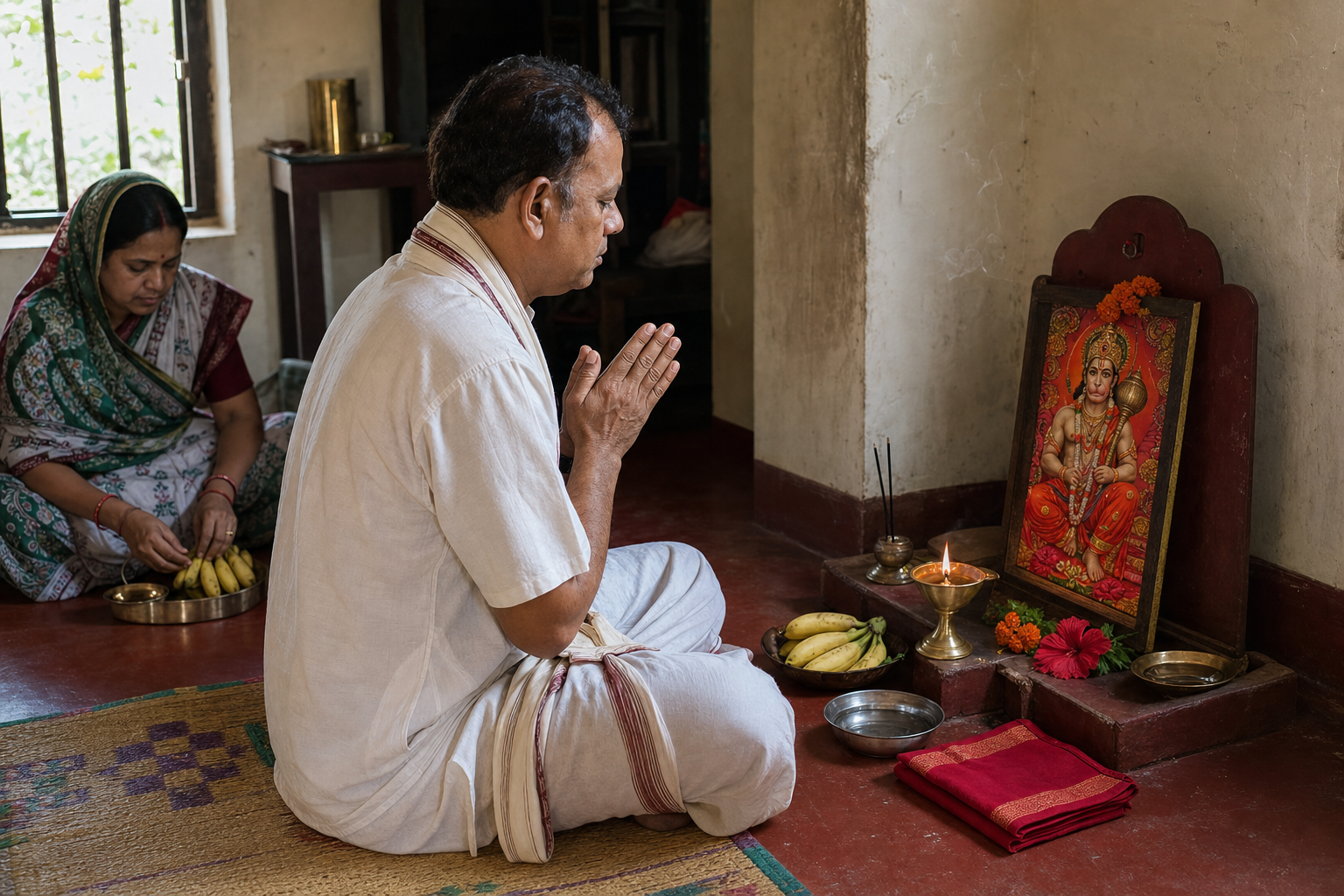
A crowded ritual plan is not necessarily a deeper one. Hanuman is remembered through bala, bhakti, and buddhi: strength, devotion, and discernment. Your observance should make those qualities more visible in your conduct, not leave you exhausted from trying to reproduce every temple custom at home.
- Confirm the timing the day before. Check the local Odia Panji or ask the temple which Panji it follows. Write down the relevant times rather than relying on a generic festival notification.
- Choose one clear sankalpa. Make it behavioral and measurable: complete a neglected duty, control an angry habit, serve someone without seeking recognition, or maintain a daily period of Sri Ram japa. A New Year vow becomes meaningful when you can tell whether you kept it.
- Prepare only the offerings you will use respectfully. Where customary, these may include materials for abhisheka, til oil, sindoor, bananas, boondi laddus, and a diya. Temple and family conventions differ, so follow the form you have received rather than improvising around sacred images.
- Begin with snana and a settled mind. Perform the puja at sunrise or within the Panji-indicated period available to you. If you light an akhanda diya, place it on a stable, fire-safe surface and arrange responsible supervision; an unattended flame is not a test of devotion.
- Select a realistic recitation. The Hanuman Chalisa is manageable for many households. A Sundara Kanda parayana requires more time and preparation. You may also recite the Hanuman Ashtottara Shatanamavali or maintain Sri Ram japa through the day. Completing one chosen discipline attentively is better than rushing through several.
- Give the vow an outward expression. Add dana, practical seva, or the respectful distribution of prasada. Hanuman’s devotion is active: it carries responsibility rather than stopping at personal emotion.
- Close with restraint. If you undertake vrata, follow the form appropriate to your health, family discipline, and capacity. Otherwise, keep a simple sattvic meal and use the day to cultivate clarity rather than display austerity.
This sequence is a framework, not a claim that every Odia household must worship identically. Preserve inherited practice where you have it. Where you do not, let simplicity protect you from turning devotion into performance. Bala without buddhi becomes mere force; bhakti without seva becomes sentiment. Hanuman brings all three into alignment.
Let pana and Basudha Puja shape the New Year
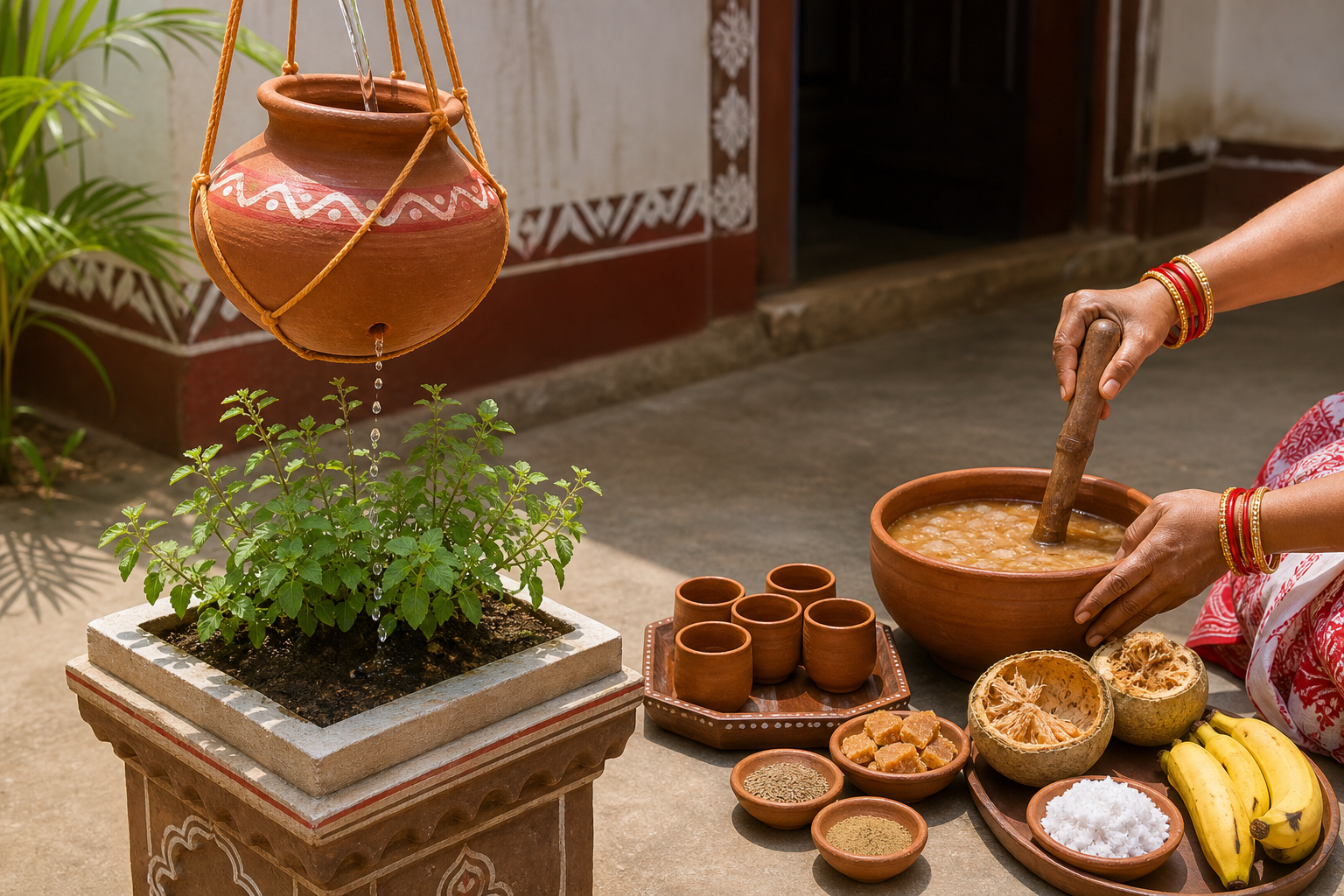
Pana Sankranti arrives as the climate grows hotter, so its hospitality is seasonally intelligent. Bela Pana commonly brings together bael fruit, jaggery, black pepper, and seasonal fruits, although household recipes vary. Make enough to offer as prasada and share with relatives, neighbors, or visitors. The act matters as much as the recipe: nourishment moves from the domestic shrine into the surrounding community.
Do not let elaborate presentation defeat that purpose. Decide in advance who will prepare the pana, when it will be offered, and how it will be distributed hygienically. If you are hosting people unfamiliar with the drink, tell them what it contains rather than assuming every guest knows the ingredients.
Basudha Puja gives the seasonal transition another physical form. A fresh earthen pot, often made with a small aperture, is positioned near Tulasi or at the household entrance to create a gentle jaladhara. Some families also pour a water libation for Tulasi. The practice honors Mother Earth while bringing attention to the value of water at the beginning of the hot season.
Keep the stream gentle, place the pot where the water can be received without creating stagnant puddles, and connect the rite to one actual act of water stewardship. Repair a leaking tap, prevent unnecessary overflow, or assign someone to check the household’s water use. The pot should train attention, not become a decorative excuse for waste.
This is where the Odia New Year becomes more than a festive greeting. Pana asks whom you will nourish. Basudha Puja asks how you will treat the material world that sustains you. Hanuman Jayanti asks what your strength is for. A useful sankalpa should answer all three questions in daily life.
Keep community devotion disciplined and welcoming
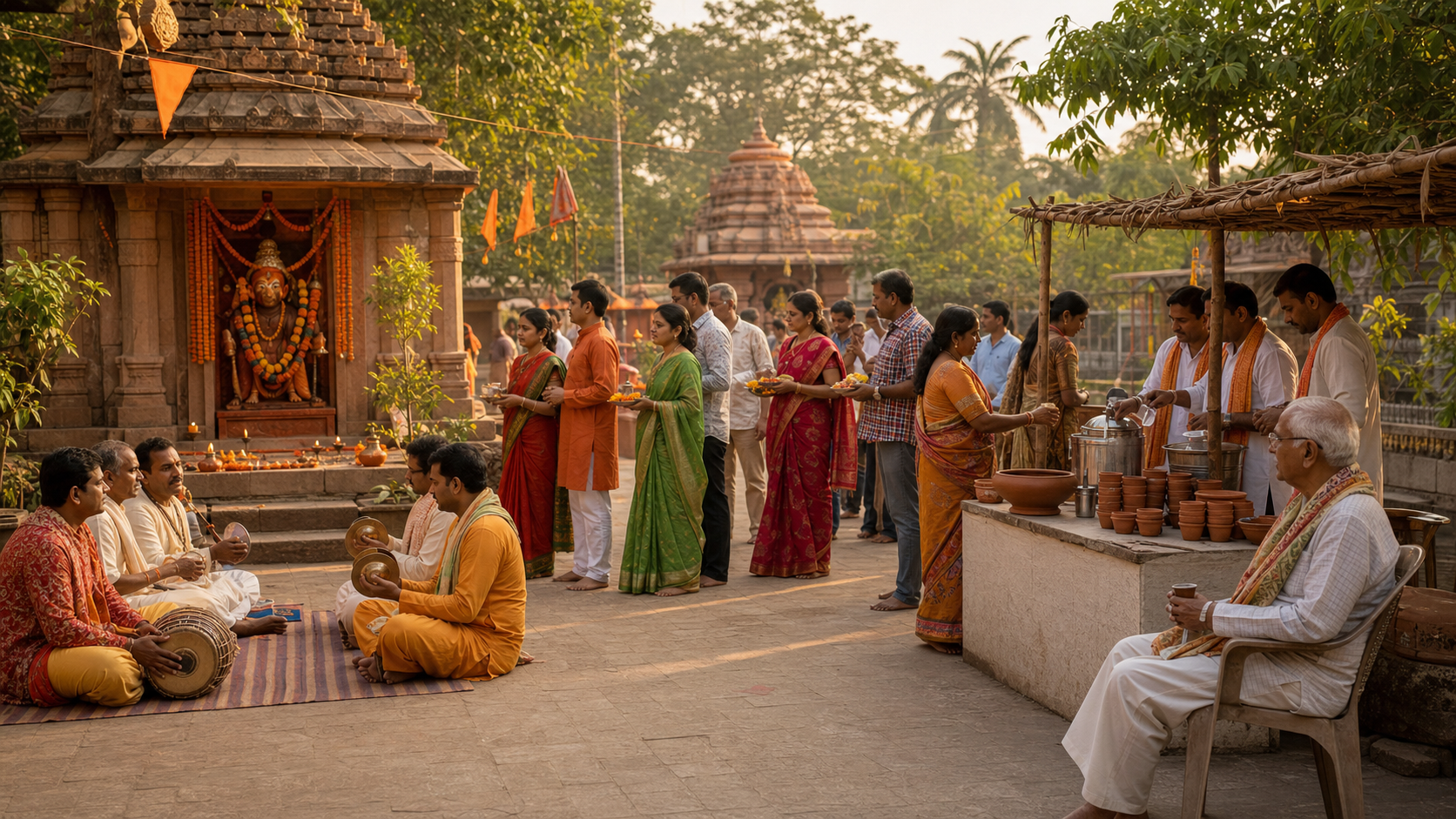
The public culture surrounding the day can be vigorous. Danda Nata, a votive and ascetic performance tradition, culminates around Pana Sankranti in parts of Odisha. In selected places, Jhamu Jatra is also observed, notably at Kakatpur’s Maa Mangala Temple, where austere vows are understood as tapas. These are living disciplines with community and ritual contexts. Observe them respectfully; do not imitate severe practices casually or treat another devotee’s vow as entertainment.
In Cuttack and Bhubaneswar, Hanuman Jayanti Shobha Yatras may bring mandalis and akhadas together with traditional drumming, synchronized movement, and malla-kreeda. If you help organize or join a procession, judge its success by discipline as well as participation. Confirm the approved route, follow traffic arrangements, preserve access for residents, and keep sanitation responsibilities clear.
Noise and movement need particular care near hospitals and schools. Accessibility also belongs in the plan: elderly devotees, children, and people with disabilities should not be treated as afterthoughts. These considerations are not external restrictions imposed on dharma. They are applications of compassion, self-control, and seva within shared civic space.
The same principle applies to the festival’s wider Dharmic meaning. Hanuman’s energetic perseverance can be placed in conversation with Buddhist virya, his disciplined service with Jain attention to vows, and his selfless action with the Sikh commitment to seva. These are not interchangeable doctrines, but they provide recognizable ethical points of contact. Shared values are honored best through practice and mutual respect, not by erasing the distinctions among traditions.
Key takeaways
- In Odisha, Hanuman Jayanti is observed on Maha Bishuba Sankranti or Pana Sankranti, which also begins the Odia solar New Year.
- Check an Odia Panji for the precise Sankranti moment, Punya Kala, and any Maha Punya Kala instead of relying only on April 14 or April 15.
- Build the home observance around a manageable combination of puja, recitation, Sri Ram japa, dana, and a specific vow of seva.
- Use Bela Pana as shared seasonal prasada, and connect Basudha Puja to a real act of water stewardship.
- Respect Chaitra Shukla Purnima as another regional date for Hanuman Jayanti; calendrical variation does not require a contest over devotion.
- In public celebrations, route discipline, quiet-zone respect, accessibility, fire safety, and sanitation are expressions of dharma rather than secondary logistics.
Before the next observance, open the Panji, write down the relevant time, and choose one sankalpa you can carry beyond the festival. Then prepare enough pana to share. That small combination – precise attention, disciplined devotion, and open-handed hospitality – is a worthy way to enter the Odia New Year with Hanuman.