
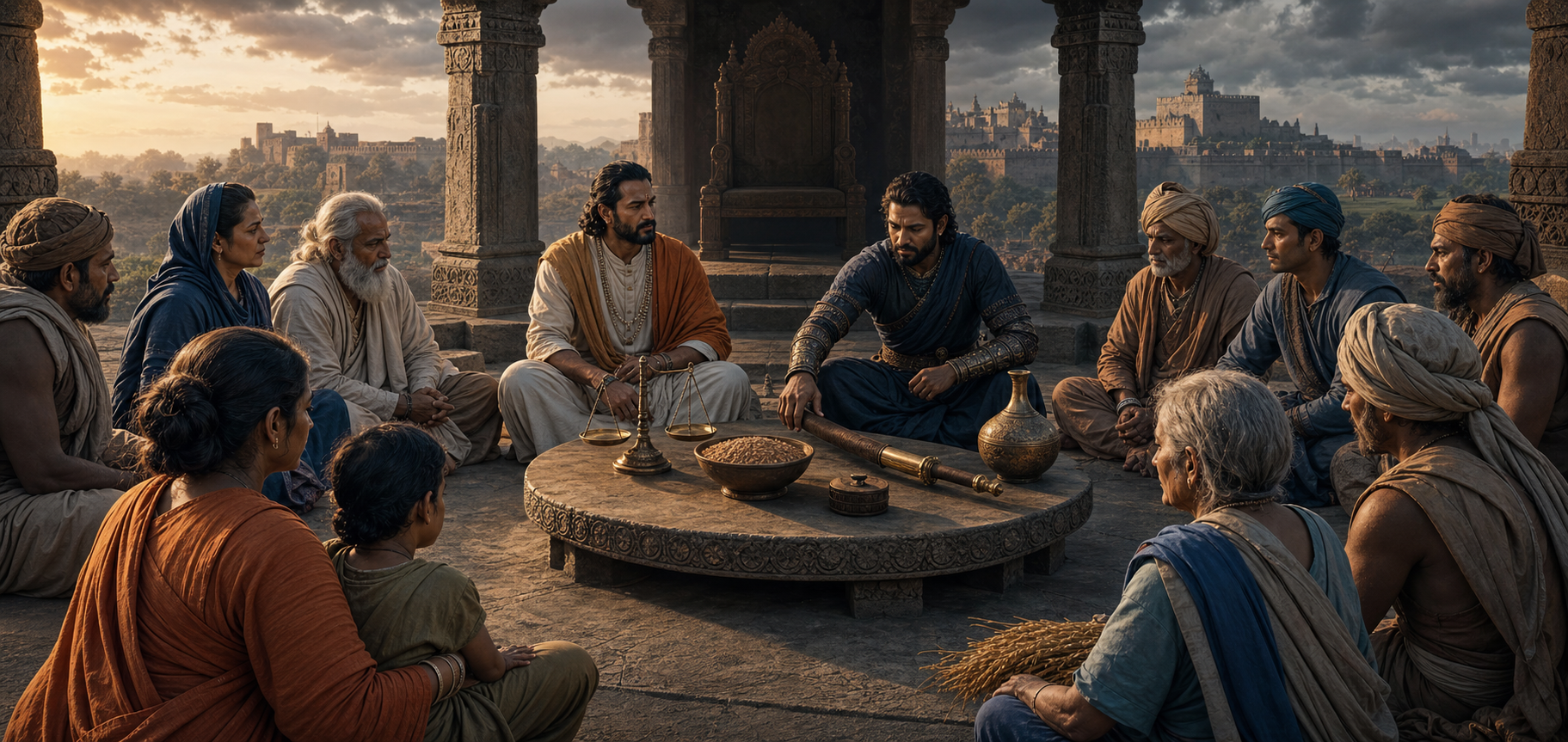
You may hear dharma invoked when a ruler, movement, or community asks for loyalty, sacrifice, or the use of force. The difficult question is not whether the cause sounds sacred. It is whether power remains bound by dharma after its holders gain the ability to punish.
You can judge that claim without romanticizing war or treating all resistance as aggression. Look for five things: a protective purpose, a real path away from violence, limits on conduct, accountable command, and responsibility for the people who must live with the result.
Five tests that keep righteous force from becoming a slogan
Dharma-yuddha does not mean that declaring a righteous cause makes every method righteous. It means that the purpose, authority, conduct, and conclusion of a struggle remain answerable to a moral order. That is a much harder standard than simply choosing the correct side.
- The protective-purpose test. Who or what is being defended? A dharmic objective protects the vulnerable, restrains injustice, or restores a violated order. Humiliation, collective punishment, personal revenge, and dominion for its own sake cannot be cleansed by sacred vocabulary.
- The off-ramp test. Has the opponent been given a genuine opportunity to end the wrong? Angada’s mission to Ravana’s court combined an unmistakable warning with a final invitation to choose prudence over destruction. Diplomacy was not a retreat from courage; it was an attempt to secure justice without paying the full human price of battle.
- The restraint test. Which acts remain forbidden even under pressure? In the Khalsa understanding of dharma-yuddha, noncombatants are to be spared, cruelty is rejected, and force is treated as a last resort rather than an instrument of vengeance. If a cause permits every act once its supporters feel wronged, it has abandoned dharma for appetite.
- The accountability test. Who can correct the leader, replace a commander, or stop an impulsive decision? Sacred authority without counsel, role clarity, or a mechanism of correction is especially dangerous because ordinary criticism can be mislabeled as disloyalty.
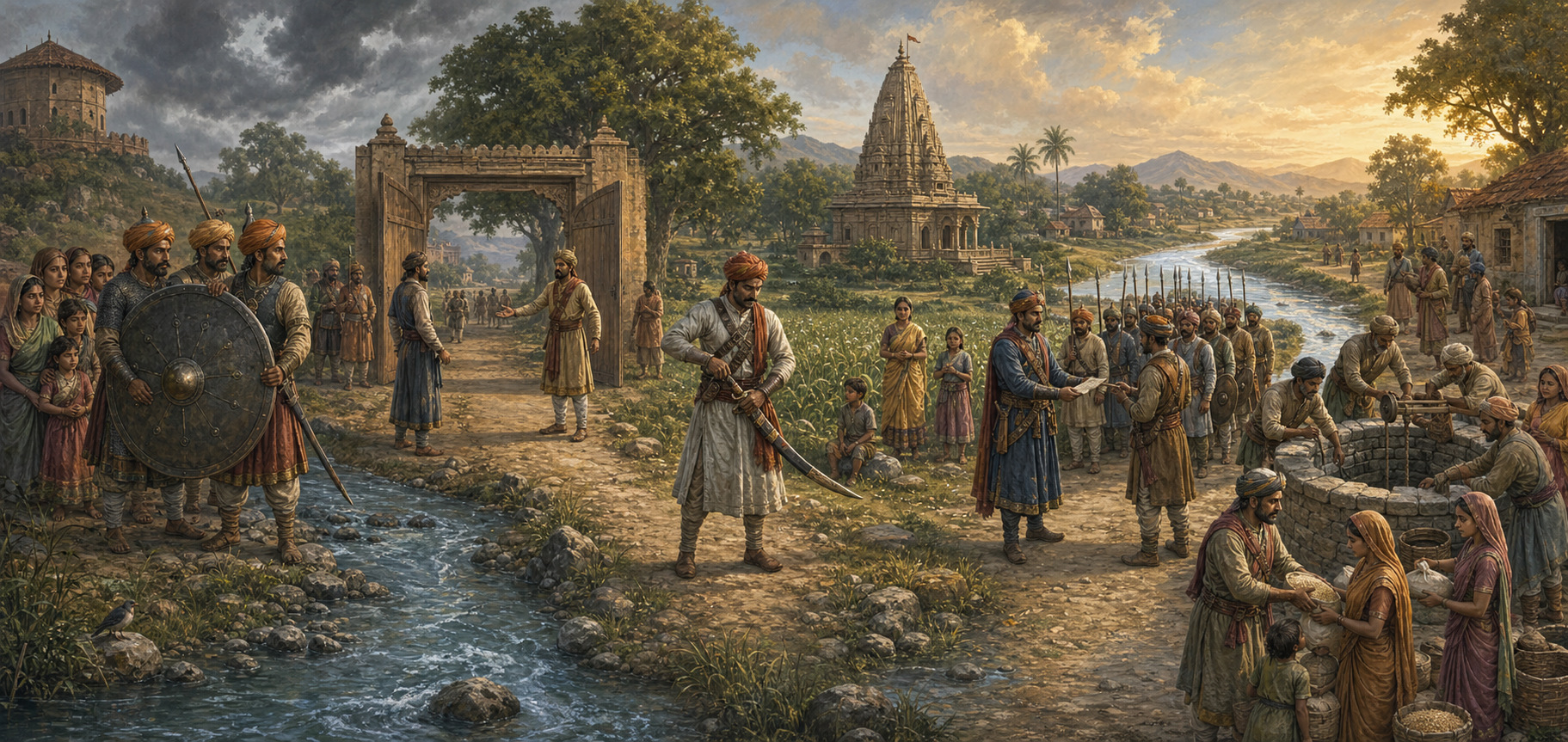
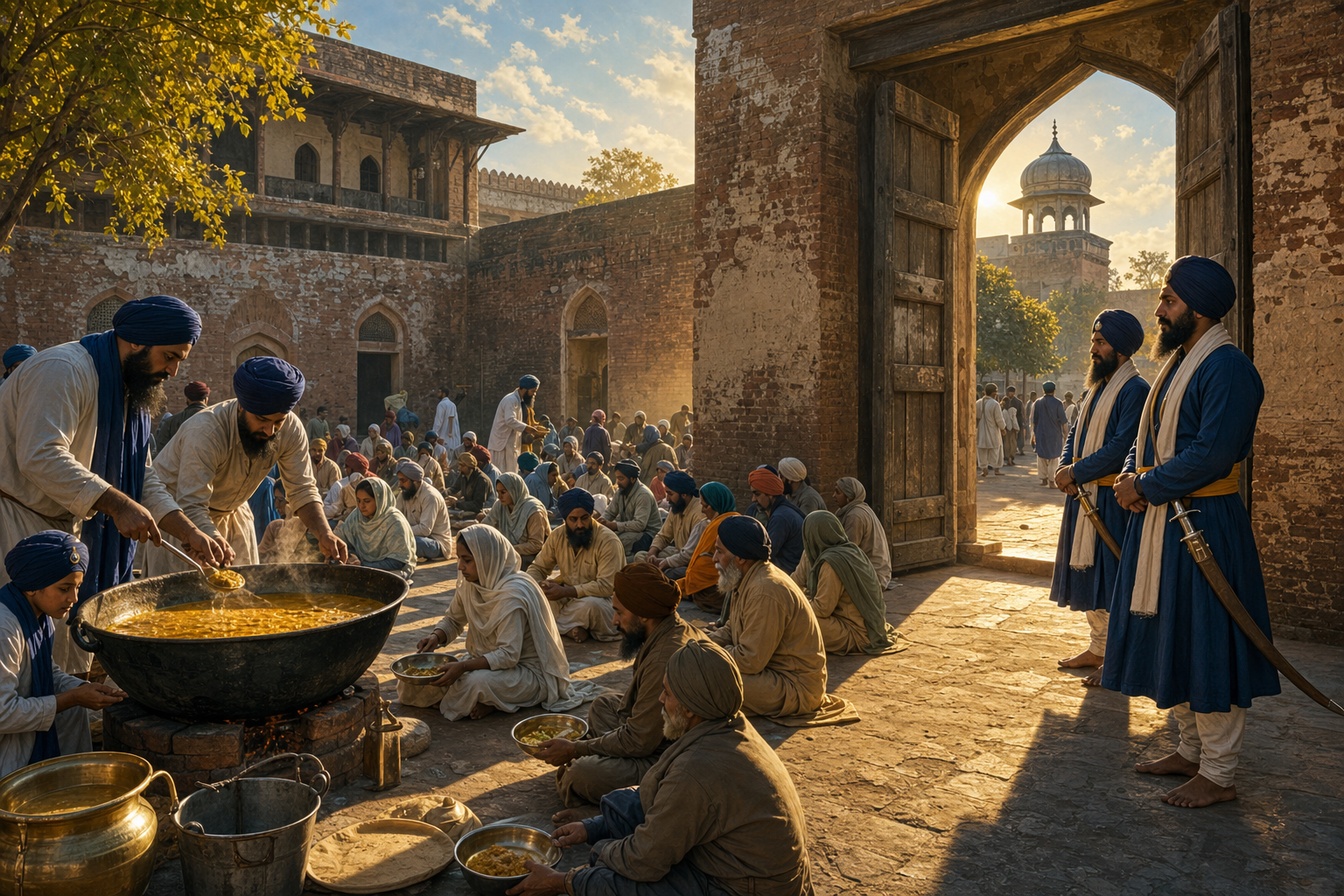
- The service-and-repair test. Who feeds, heals, shelters, and rebuilds? The Vanara campaign treated engineering, intelligence, medicine, and recovery as essential parts of the struggle. The Khalsa formulation Deg Tegh Fateh joins the communal kitchen to the duty of protection. Care and defense are not rival missions. Together they reveal what the struggle is actually for.
These tests prevent two opposite errors. The first is to confuse ahimsa with indifference while another person is harmed. The second is to invoke warrior duty as permission for rage. Dharmic restraint does not require helplessness, but it does place the burden of discipline on anyone who claims the authority to use force.
Rama’s coalition shows why courage needs a chain of command
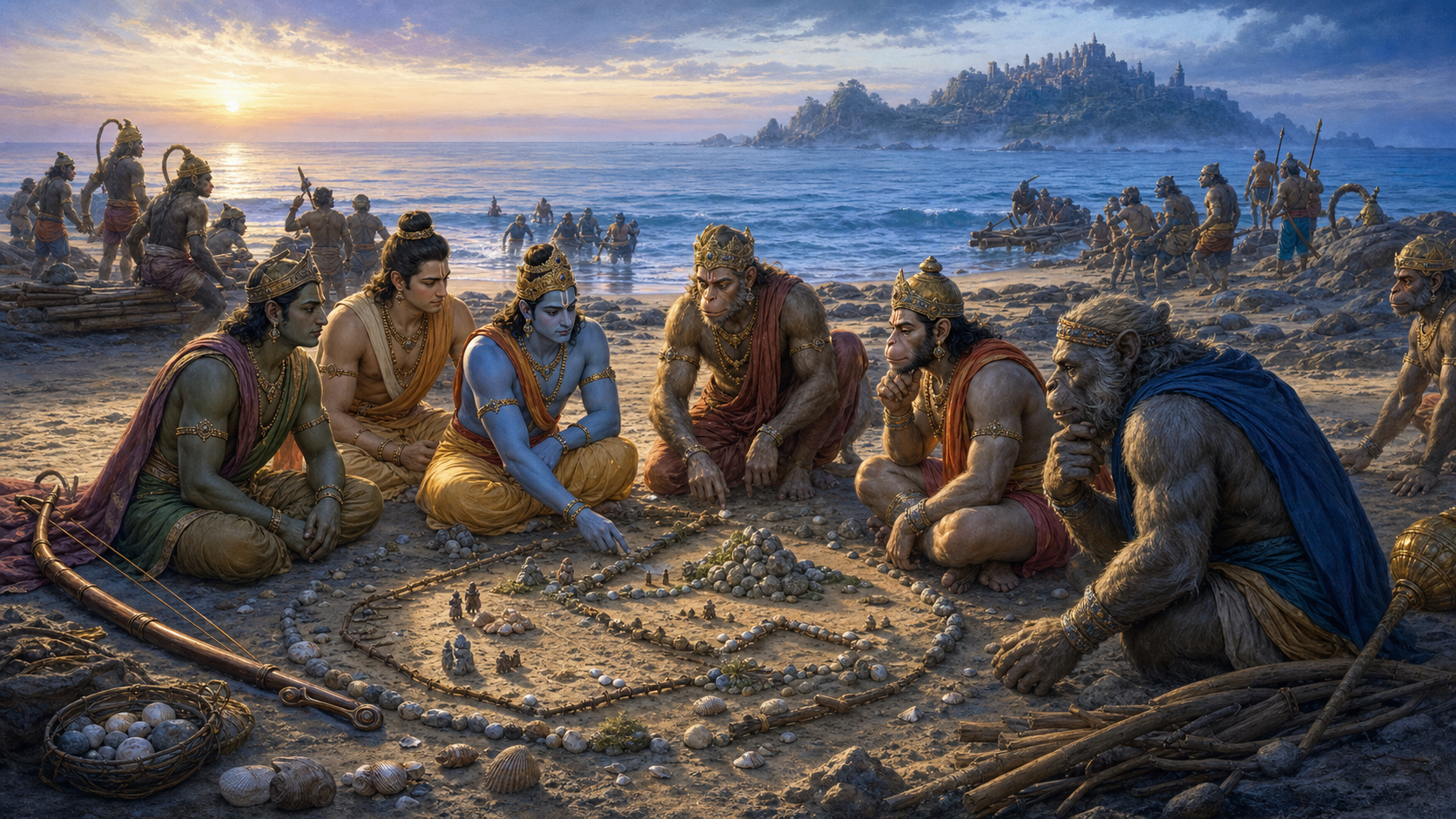
The campaign against Lanka depended on more than heroic strength. Nala and Nila enabled movement across the sea through the Setu. Vibhishana supplied knowledge of Ravana’s command. Jambavan brought seasoned counsel. Hanuman combined reconnaissance, extraordinary initiative, and strategic logistics. Sushena represented the indispensable work of battlefield medicine and recovery. Sri Rama and Lakshmana contributed precise martial power and the authority that held the coalition to its purpose.
Sugriva nevertheless exposed the alliance to a familiar danger: a brave leader mistaking personal action for responsible command. Accounts vary in their details, but they preserve the central problem of Sugriva rushing into a direct confrontation with Ravana. His courage was real. So was the unnecessary risk to the coalition’s political and military continuity. In many tellings, Hanuman’s timely intervention becomes crucial to bringing him out of grave danger.
The mistake matters because Sugriva was not an expendable champion. He was a sovereign, an alliance-builder, and the political center connecting Vanara forces to Rama’s mission. When such a leader pursues personal glory at the expense of command continuity, everyone else must abandon assigned work to save him. One impulsive duel can therefore consume reconnaissance, reserves, attention, and morale far beyond the immediate encounter.
The dharmic response was not to pretend that Sugriva’s previous service had become worthless. It was to separate courage from command fitness at that moment. Sugriva retained his legitimate place while accepting greater restraint, and Angada assumed a larger operational role among the principal Vanara formations. Correction preserved the alliance because it did not become either denial or vindictive humiliation.
Angada brought more than royal lineage. As Vali’s son and the yuvraja, he could bridge a dangerous division within the Vanara polity. His conduct during the southern search for Sita had already tested his ability to face exhaustion and collapsing morale. He recognized Hanuman’s decisive capacity without needing to make himself the hero of Hanuman’s leap. Later, as envoy in Lanka, he could deliver a severe warning while leaving Ravana a choice.
His famous planted foot is easy to read as theatrical bravado. Its deeper function was psychological and diplomatic. Angada confronted Ravana’s court with a visible sign of Vanara resolve while still pressing its ruler to avoid ruin. The best psychological operation is not the one that produces the loudest fear. It is the one that weakens an unjust opponent’s confidence, creates space for reconsideration, and reduces the violence required to end the wrong.
The resulting command pattern was distributed without becoming directionless. Angada could coordinate field formations. Jambavan could counsel and manage reserves. Hanuman could undertake exceptional missions. Nala and Nila could keep movement possible. Sushena could restore fighting capacity. Vibhishana could interpret the adversary from within. Rama and Lakshmana could retain strategic direction and apply their distinctive strengths where those strengths mattered most.
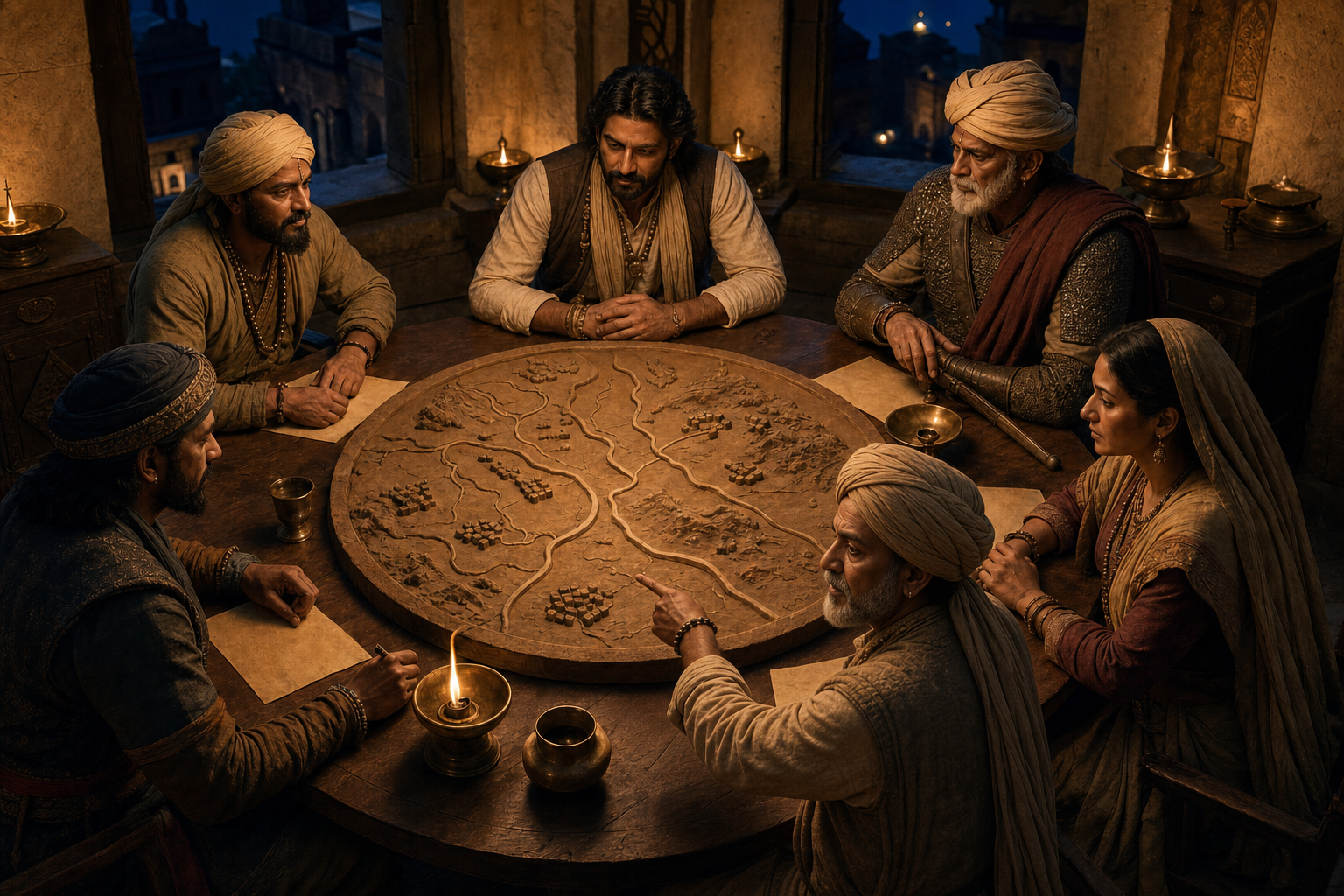
If you lead an institution under pressure, this is the part to apply before a crisis. Name who holds strategic authority, who directs operations, who provides independent counsel, who owns intelligence, and who is responsible for the injured and exhausted. Designate a deputy before the leader becomes unavailable. Most importantly, decide in advance what behavior requires a commander to step back. A succession plan prepared only after pride or injury disrupts command is already late.
The Khalsa joins protection to service and self-rule
The Khalsa addresses the same moral problem at the scale of an entire community: how can people acquire the strength to resist tyranny without becoming a hereditary class of armed privilege? Its answer begins with disciplined equality rather than weaponry.
The Sikh Gurus developed this public ethic across generations. Guru Nanak established a commitment to truthful living, fearless devotion, and human equality. Guru Hargobind’s miri-piri united spiritual commitment with temporal responsibility. The martyrdom of Guru Tegh Bahadur in 1675, remembered as a defense of religious freedom, gave the duty of protection an immediate historical weight. At Anandpur Sahib on Vaisakhi 1699, Guru Gobind Singh formed the Khalsa as a disciplined order of saint-soldiers.
The Panj Piare embodied a rejection of inherited rank. Bhai Daya Singh, Bhai Dharam Singh, Bhai Himmat Singh, Bhai Mohkam Singh, and Bhai Sahib Singh came from different regions and social backgrounds. Commitment to truth, not caste or family status, established their standing. The institutional meaning became even sharper when Guru Gobind Singh requested initiation from the Panj Piare after initiating them. Authority was not merely bestowed downward. It was accepted through the disciplined community.
Khande di Pahul made belonging a covenant rather than a political label. The Five Ks then kept that covenant physically present: kesh signified acceptance of divine will; the kangha joined that acceptance to order and cleanliness; the kara became a continuing reminder of ethical conduct; the kachhera signified modesty and readiness; and the kirpan represented a duty to protect rather than a license to dominate. Singh and Kaur proclaimed dignity that was not supposed to depend on caste or gender.
This is why Khalsa sovereignty cannot be reduced to control of territory. Miri-piri binds public power to spiritual responsibility. The salutation “Waheguru ji ka Khalsa, Waheguru ji ki Fateh” places both the community and victory under the Divine rather than the ego of a ruler. “Raj Karega Khalsa,” within this ethic, calls for just and accountable order, not dominion over people deemed inferior.
Deg and tegh provide a concrete test of that order. The deg nourishes without caste distinction. The tegh protects the person whom injustice would otherwise leave defenseless. The langar is therefore not charitable decoration beside a martial identity. It tells you the end for which strength exists. A sword severed from the kitchen can become coercion; a kitchen deprived of protection may be unable to serve when oppressors decide who is allowed to eat.
Personal discipline completes the structure. Naam Simran, collective worship, truthful livelihood, seva, and rehat cultivate reliability before danger arrives. The prohibition of intoxicants is part of that readiness because a protector whose judgment can be casually surrendered is not dependable under pressure. Chardi Kala sustains courage without requiring hatred. The sant-sipahi must be spiritually governed precisely because martial capacity magnifies the consequences of an undisciplined impulse.
Institutional checks matter as much as personal virtue. The Akal Takht, the Sarbat Khalsa, and collective gurmatas provided forms of deliberation and accountability. No structure makes a community immune to error, but these institutions establish an essential principle: a sacred mission cannot depend solely on one person’s claim to purity.
When an organization invokes ethical sovereignty, look for its equivalents of rehat, langar, and collective deliberation. What disciplines its members when nobody is watching? What public good does it provide before demanding sacrifice? Who can question its leadership without being declared an enemy? A movement with weapons but no self-rule, service, or correction has adopted the appearance of sovereignty while refusing its obligations.
Shared Dharmic grammar does not erase real differences
Hindu, Buddhist, Jain, and Sikh traditions do not offer one interchangeable political constitution or a single permission structure for warfare. Treating them as identical would erase the very disciplines that make their insights useful. Their family resemblance lies at a more fundamental level: power must first be governed within the person, harm must never become casual, and public authority carries obligations beyond the ruler’s desire.
In the Ramayana’s martial world, kshatra is legitimate when strength serves a just order and submits to discernment. Sugriva’s error demonstrates that valor without restraint can imperil the very people it intends to help. His correction demonstrates something equally important: admitting error under pressure can be an act of sovereignty rather than a loss of it.
Buddhist reflection sharpens suspicion of pride and intoxication with victory. Jain emphasis on ahimsa and apramada, or vigilance, places searching attention on carelessness and the consequences of action. The Sikh sant-sipahi ideal makes the defense of the vulnerable a public duty but places martial action beneath spiritual discipline, seva, and collective responsibility. These emphases should remain distinct even when they illuminate one another.
That distinction helps when ethical language is being manipulated. If ahimsa is invoked to demand passivity from the threatened while imposing no restraint on the aggressor, ask whose safety that passivity purchases. If kshatra or the saint-soldier ideal is invoked to excuse hatred, ask whether the speaker still forbids cruelty and vengeance. If unity is invoked to silence counsel, remember that Rama’s coalition succeeded through differentiated roles and that Khalsa authority included collective deliberation.
You should also examine how victory is defined. Ravana’s defeat was not a mandate for Sugriva, Angada, or Hanuman to pursue limitless personal conquest. Khalsa victory belongs to truth and justice, not to the ego claiming possession of it. A struggle that cannot state when force must stop is not describing restoration. It is preparing permanent mobilization.
Ethical sovereignty therefore works inward, outward, and institutionally. Inwardly, it disciplines fear, anger, pride, and intoxication. Outwardly, it protects people and limits harm. Institutionally, it distributes responsibility, preserves counsel, and makes correction possible. Remove any one of those dimensions and the remaining two become unstable.
Key takeaways: audit sovereignty before you lend support
When a government, movement, religious body, or community leader calls a struggle dharmic, write down answers to these questions. Do not accept abstractions where a concrete answer is possible.
- What exactly is being protected? Look for identifiable people, freedoms, duties, or institutions. An endlessly expanding list of enemies is not a protective objective.
- What would allow the conflict to end without force? A serious claim should contain a credible off-ramp, not a demand designed so that no opponent could ever satisfy it.
- Which actions remain forbidden? Civilian harm, cruelty, vengeance, and collective blame cannot become acceptable merely because supporters believe their side is righteous.
- Who can restrain or replace the leader? Ask for the council, code, chain of command, or collective process that can correct pride and preserve continuity.
- Where are the deg, the bridge-builders, and the healers? Food, mobility, intelligence, medicine, shelter, and recovery reveal whether protection is real or merely rhetorical.
- Can responsibility follow competence? Angada’s rise shows why lineage alone is insufficient, but it also shows how inherited divisions can be reconciled when authority is earned through service and steadiness.
- What does a just aftermath require? The objective should be restored safety and order, not permanent humiliation, uncontrolled reprisals, or conquest without limit.
This framework helps you evaluate claims; it does not authorize private violence. In civic life, protection should proceed through lawful and nonviolent channels wherever they remain capable of preventing harm. The burden of justification becomes heavier, not lighter, as an action grows more dangerous and irreversible.
Before lending your name, vote, money, or loyalty to a claim of dharmic power, insist on those answers. If a leader can name an enemy but cannot name restraints, accountable authority, care for the vulnerable, or a stopping point, withhold your assent. Ethical sovereignty survives scrutiny because dharma makes power more answerable, not less.
References
- DharmaRenaissance Blog — From Crisis to Command: Sugriva’s Recklessness and Angada’s Rise in the Ramayana War
- SikhNet — Khalsa Unveiled: Equality, Sovereignty, and Sacred Resistance in Guru Gobind Singh’s Vision