
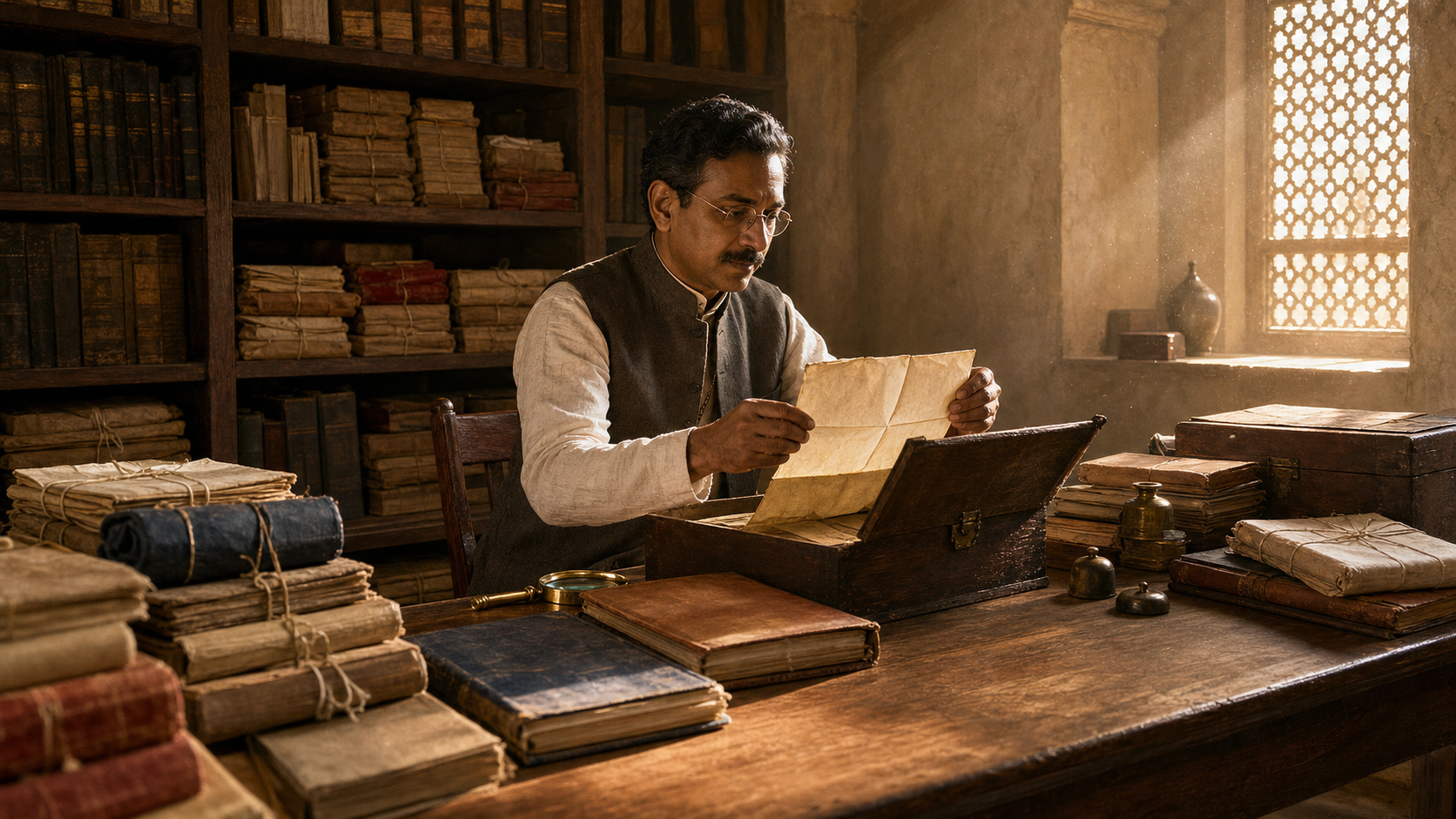
If you have encountered D. B. Parasnis only as a name in a bibliography, you can easily miss why he matters. His most consequential work happened before the historian’s argument begins: he found endangered Maratha records, gained access to them, arranged and transcribed them, and placed their contents within reach of other readers.
That distinction changes how you should approach his legacy. Parasnis was not merely an author who happened to use old papers. He helped create the documentary ground on which later accounts of Maratha government, diplomacy and political life could stand. When you open one of his editions, you are looking at part of a rescue operation as well as a book.
Key takeaways
- Parasnis’s central achievement was archival: he collected, selected, transcribed, edited and published records that faced neglect, sale or dispersal.
- He worked with several distinct classes of evidence, including Peshwa diaries, decisions, sanads, kaifiyats, yadis, treaties, letters and diplomatic despatches.
- His periodicals turned publication into a form of preservation. Twenty-four issues of Bharatvarsha appeared over two years, while Itihas Sangraha continued for seven years.
- His collections expose a wide Maratha information network connecting Poona with Delhi, Malwa, Calcutta, Seringapatam, Jaipur, Jodhpur and other political centres.
- You should use a printed edition as an access layer, not as a complete replacement for the original. Seals, handwriting, paper, endorsements and physical arrangement may carry evidence that transcription cannot preserve.
The archival crisis was dispersal, not a shortage of history
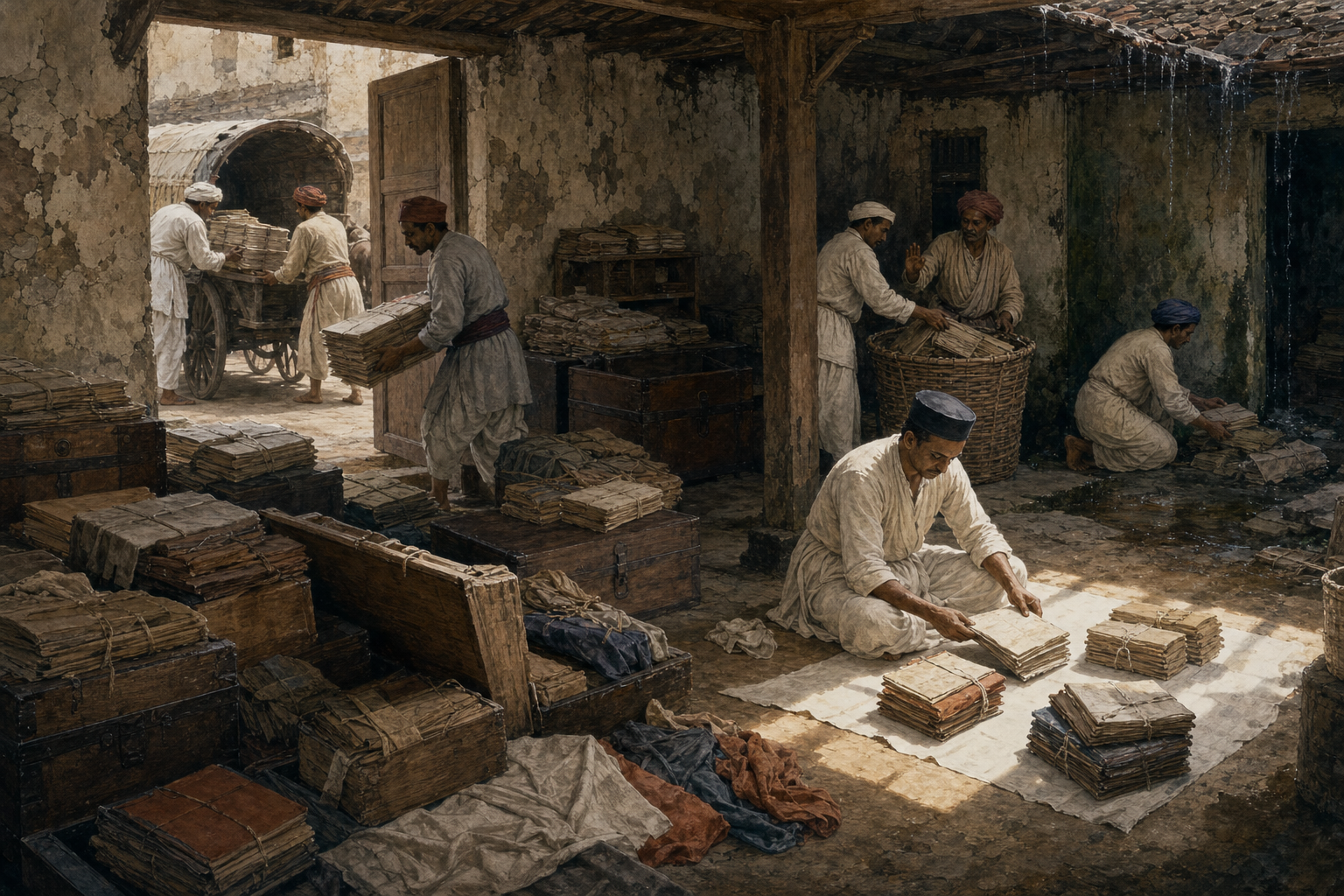
Maratha history did not suffer because its governments left no records. The danger arose because political collapse separated records from the offices, families and systems that had given them order.
Nana Fadnavis kept a favoured country residence at Menauli, and substantial quantities of despatches and foreign-department papers moved there during his ascendancy. After his fall and death, his family’s circumstances deteriorated. Neglect and dispersal consumed so much of the collection that a great deal had passed beyond recovery within two generations.
The Satara Rajas faced a related process of loss. Lord Dalhousie’s annexationist policy reduced the heirs of Shivaji’s royal house to the position of landholders or pensioners. Papers, paintings, manuscripts, weapons and other objects accumulated over nearly two centuries then began to leave the palace. Indo-Saracenic and Rajput paintings, illuminated Sanskrit manuscripts, decorated swords and ceremonial objects entered private hands or sale rooms, breaking apart a treasury of political and cultural memory.
This is what makes archival dispersal so destructive. Losing a paper is one injury; losing its relationship to surrounding papers is another. A letter detached from its bundle may retain its words but lose the filing sequence that identifies the office handling it. A charter separated from its attestations and ownership history may become harder to authenticate. A diplomatic despatch read without the replies before and after it may reveal an event while concealing the decision-making cycle.
Parasnis intervened while parts of this documentary world remained recoverable. He searched for surviving papers, negotiated with custodians and undertook the slow work of selection, transcription, annotation and publication. The practical lesson is sharp: an archive becomes most vulnerable when institutional authority has collapsed but its papers still appear ordinary to those holding them. Preservation must begin in that interval, not after every item has acquired market value.
What Parasnis preserved and what each record can tell you
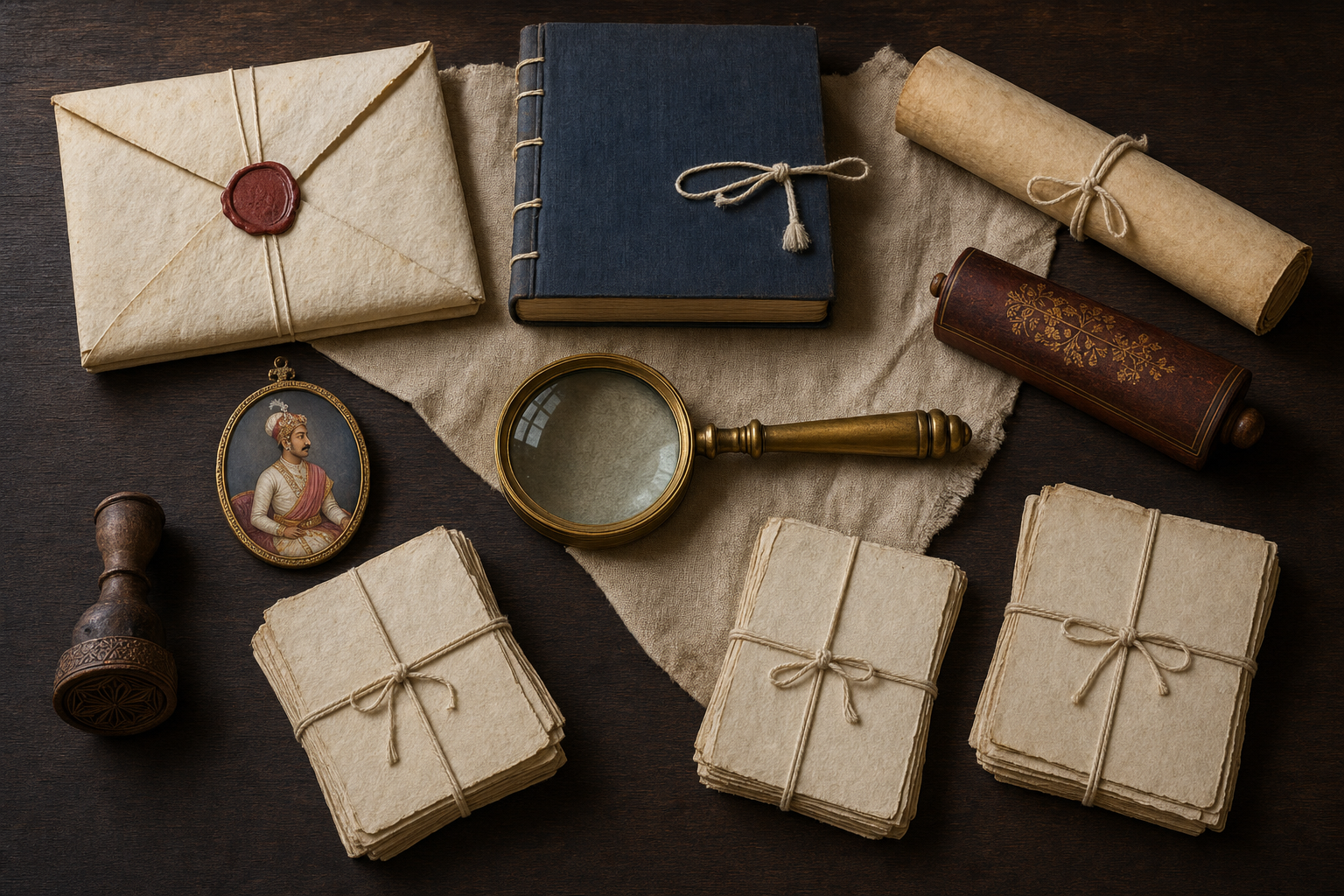
It is tempting to treat every old Maratha paper as interchangeable evidence. Parasnis’s work shows why that is a mistake. Each record type answered a different administrative need, and each therefore supports a different kind of historical question.
| Record type | What it can help you reconstruct | What you should check |
|---|---|---|
| Peshwa diaries and recorded decisions | Dated actions, offices involved and the sequence of administrative business | Compare an entry with related orders, correspondence and despatches rather than treating a brief notation as the entire decision |
| Sanads, treaties and agreements | Grants, recognised rights, obligations and formal political relationships | Look for the issuing authority, date, recipients, seals, signatories, attestations and provenance |
| Kaifiyats | Local narratives, contextual accounts and chronologies | Identify when and for whom the account was prepared, especially when it narrates events retrospectively |
| Yadis | Lists, memoranda and administrative sequences | Determine the purpose of the list and whether missing items reflect loss, selection or the original scope |
| Agents’ and envoys’ despatches | Diplomatic intelligence, reporting chains, negotiations and communication rhythms | Read consecutive reports and pair them with instructions or replies from Poona where available |
| Personal and religious correspondence | Relationships connecting political actors, patrons, advisers and religious figures | Separate the correspondent’s perspective from the wider machinery of government |
A sanad, for example, is not simply an old letter. It is a formal deed or charter that may confer a right or privilege. Its seals and attestations belong to the evidence. A kaifiyat supplies narrative context and chronology, while a yadi generally works as a list or memorandum. Parasnis published these categories alongside diaries, decisions, letters, treaties and agreements, making it possible to compare formal authority with administrative practice and reported events.
His extended work with the Peshwas’ Daftar in the Land Alienation Office at Poona was especially important. Under the broad guidance of M. G. Ranade, he indexed and excerpted records that included diaries, orders, despatches, kaifiyats and sanads, much of the material being written in Modi script. Some early compilations appeared under better-known names, but Parasnis later issued selections under his own name.
Among those publications were two volumes of Selections from the Peshwas’ Diaries covering Shahu and Balaji Baji Rao, as well as Decisions from Shahu’s and Peshwas’ Daftars. He also brought out Sanads and Letters; Kaifiyats, Yadis, etc.; Treaties, Agreements, and Sanads; Life and Letters of Brahmendra Swami; The Royal House of Tanjore; and three privately circulated volumes of historical papers relating to Gwalior State.
If you are using one of these editions for research, follow a disciplined sequence:
- Define the question before choosing the collection. A question about a formal grant calls for a sanad; a question about diplomatic awareness calls for envoys’ despatches.
- Record the full editorial trail: editor, collection, volume, page, document date, stated place of origin and any supplied catalogue number.
- Identify whether you are reading a transcription, translation, summary or editorial extract. These are not equivalent forms of access.
- Note the original language and script whenever the edition provides them. Modi, Marathi and Persian material can contain terms whose administrative meaning is narrower than a convenient modern rendering.
- Cross-check across record types. A diary can date a decision, a sanad can formalise it, and correspondence can disclose the negotiation that produced it.
- Consult an image or the original whenever your conclusion depends on a seal, correction, endorsement, handwriting feature or physical sequence absent from the printed text.
Editing became his practical technology of preservation
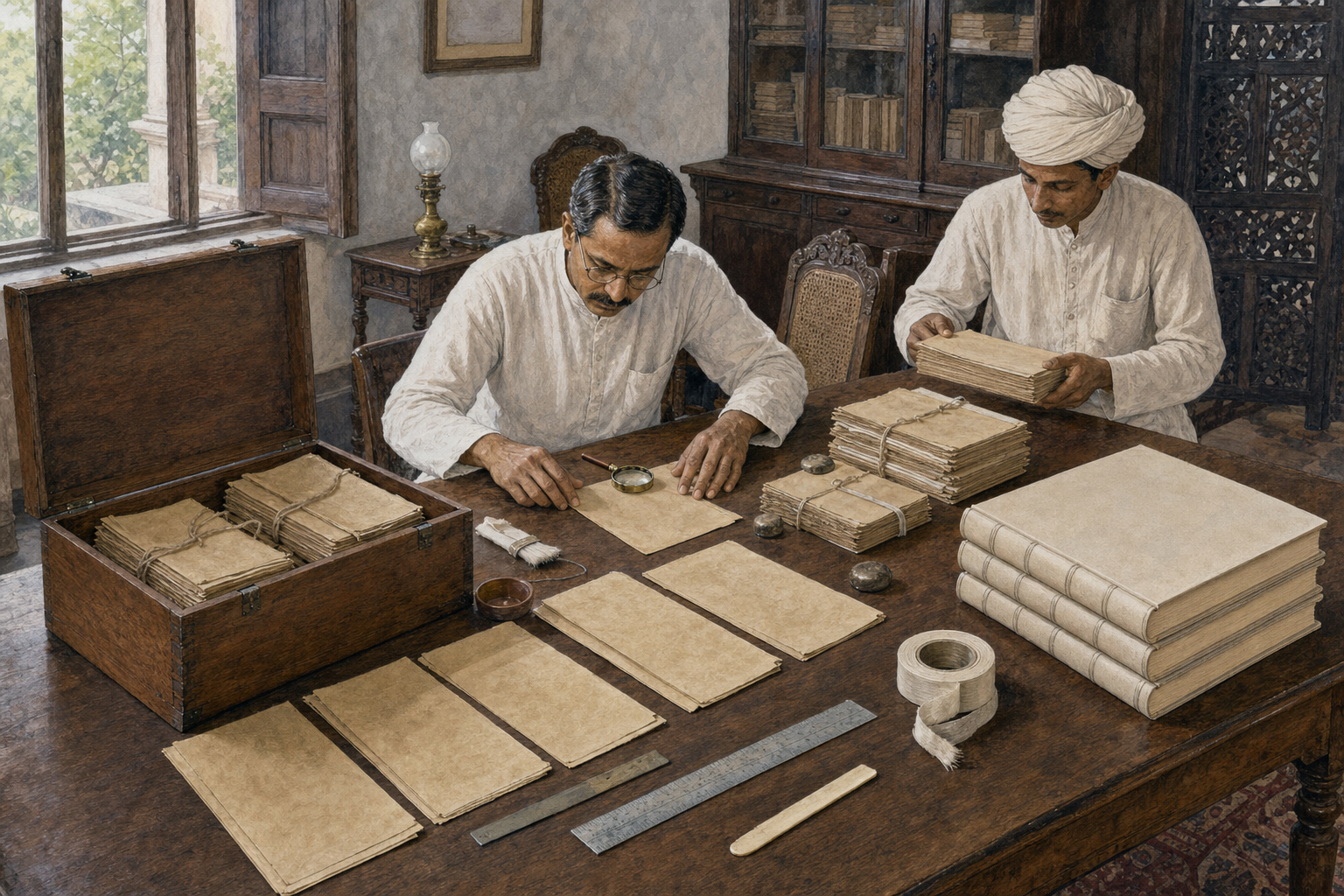
Parasnis recognised early that preservation without circulation left records exposed. A manuscript might survive in one cupboard yet remain unknown to almost everyone capable of interpreting it. Editing and publication created additional points of survival while widening the circle of readers.
He developed that method gradually. Born on 27 November 1870, Dattatreya Balawant Parasnis studied at Satara High School up to Matriculation and pursued historical reading beyond his prescribed lessons. He began editing a monthly magazine while still young and later started the Marathi periodical Maharashtra Kokil. His Life of the Rani of Jhansi appeared in 1894, when he was still in his early twenties.
In 1898 he began Bharatvarsha. Its run lasted only two years, but its twenty-four issues carried rare records and historically grounded reconstructions. In 1908 he launched the more ambitious Itihas Sangraha, which continued for seven years before financial arrears stopped it. The periodical form let him release material in manageable groups instead of waiting for every collection to become a finished monograph.
That choice matters. A perfect edition that remains indefinitely unfinished preserves nothing for the public. Parasnis established a working rhythm: secure access, select a coherent body of records, transcribe it, add the context needed for use and publish it. Modern archivists have better imaging and storage tools, but the operational principle remains sound. Stabilisation, description and access must proceed together.
Publication, however, did not produce a neutral duplicate. Every editor decides what to include, how to order it, which names to standardise and how much context to provide. A transcription preserves linguistic content but may flatten visual evidence. An extract may save the passage judged important while omitting the routine wording that later researchers need for comparison. You can honour Parasnis’s achievement without pretending that any historical edition eliminates the need for editorial scrutiny.
His collaboration with C. V. Kincaid makes another kind of hidden labour visible. Kincaid composed the three-volume History of the Maratha People, while Parasnis supplied documentary materials. Parasnis’s name therefore marks an archival contribution as well as formal co-authorship. When you cite historical scholarship, look beyond the writer of the narrative and identify the editors, cataloguers and collectors who made its evidence available.
Acharya Jadunath Sarkar understood the scale of that service. He remembered a quiet, disciplined scholar devoted to collecting, preserving and publishing records of the Maratha Empire. Parasnis died on 31 March 1926 at the age of fifty-five, but the editions outlived the vulnerable circumstances in which many of their underlying records had been found.
His collections reveal the information order behind Maratha power
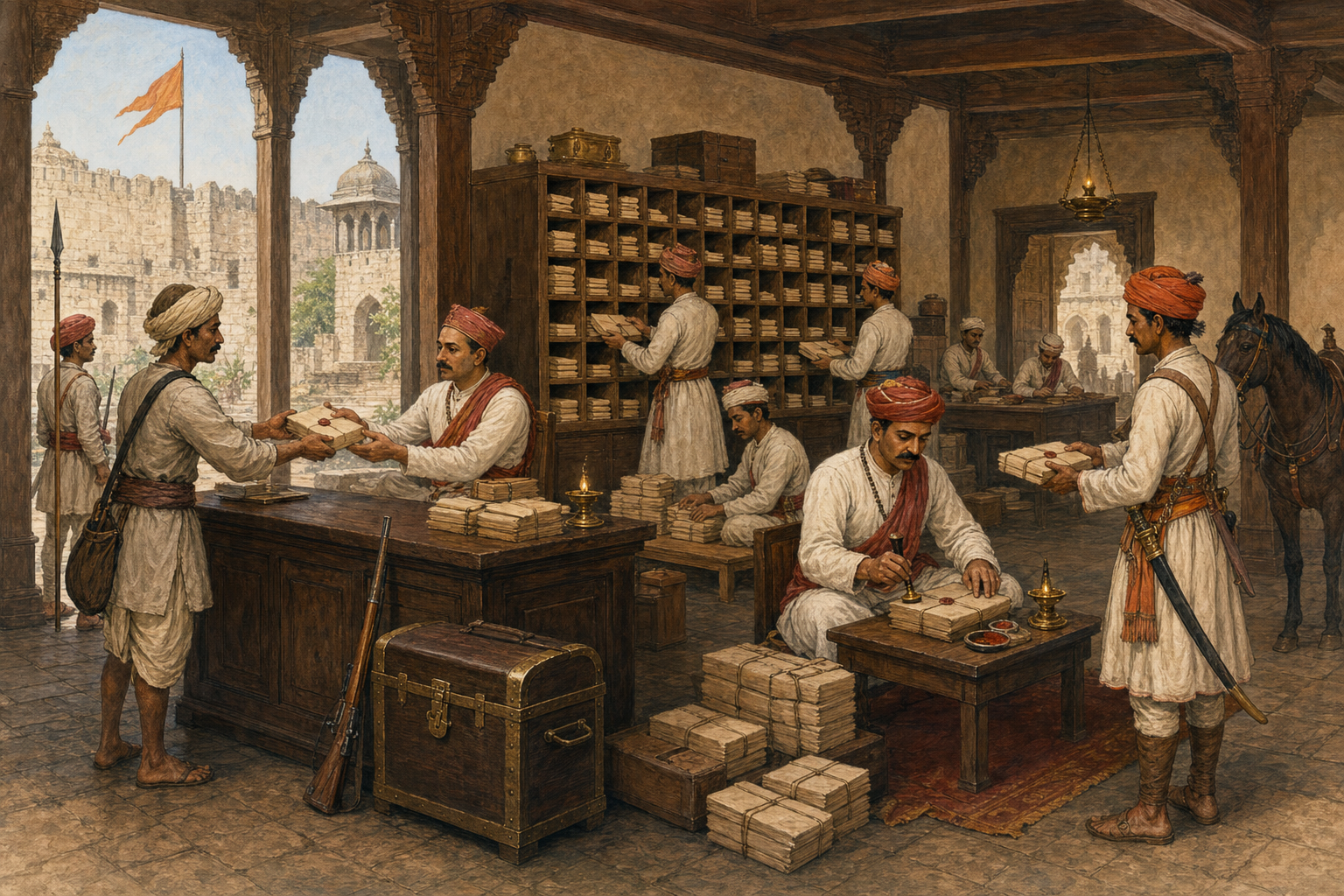
If you read Maratha history only through battles, territorial change and the lives of rulers, you will miss the administrative nervous system that connected those events. Parasnis’s published despatches make that system visible.
Through Bharatvarsha, he made room for the substantial Patren Yadi bagaire collection of letters and memorials contributed by Kashinath N. Sane. Under his editorship, Itihas Sangraha carried two large collections of reports sent to Poona by the Peshwa’s agent at Ahilyabai Holkar’s court and two more collections of letters from Maratha envoys at the Mughal court in Delhi. He also published smaller groups from agents stationed at Calcutta, Seringapatam, Jaipur, Jodhpur and elsewhere.
This geography corrects a common distortion. Maratha power was not sustained only by armies moving across a map. Agents observed courts, reported negotiations, conveyed instructions and maintained political relationships across distant centres. Poona operated as a nodal point within that flow of information, while Delhi, Malwa, the Deccan, eastern India and southern polities formed active fields of attention.
To read these despatches well, track four things:
- Position: Where was the reporting agent, and whose court or administration was being observed?
- Direction: Was information moving toward Poona, or were instructions moving outward?
- Sequence: What changed between one report and the next, and did a later decision answer an earlier warning?
- Vocabulary: Which terms describe intelligence, obligation, rank or negotiation, and do they retain the same meaning across offices?
This method lets you reconstruct more than isolated incidents. You can see how quickly a concern entered official awareness, how several political theatres competed for attention and how local observation became central decision-making. A chronological run of letters can therefore reveal the tempo of government in a way that a retrospective narrative cannot.
Parasnis also grounded biography in correspondence. His life and letters of Brahmendra Swami became an important body of evidence for the reign of Baji Rao I, while his work on Baija Bai of Gwalior and the Rani of Jhansi connected individual lives to documentary records. The useful distinction is between biography built around memorable incidents and biography tested against dated correspondence. Parasnis moved toward the latter.
What archival duty looks like after Parasnis
Calling Parasnis a guardian of Maratha history should lead to practice, not ceremonial admiration. His example gives families, institutions and independent researchers a concrete order of work.
- Preserve context before rearranging anything. Photograph bundles, labels, shelves and existing order before separating papers for scanning or conservation. The arrangement may preserve evidence that no individual page contains.
- Capture both image and text. A searchable transcription improves access, while a high-quality image retains handwriting, seals, corrections and layout. Neither should be treated as a substitute for the other.
- Write down provenance immediately. Record the custodian, location, ownership history and circumstances of access. Memory becomes unreliable long before a collection appears in print.
- Describe records by type. Do not catalogue every item merely as a letter or manuscript. Identify sanads, yadis, kaifiyats, diaries, treaties, orders and diplomatic reports so that researchers can find the right evidence.
- Invest in script competence. Collections written in Modi remain inaccessible when institutions possess images but lack readers who can transcribe and interpret administrative usage.
- Publish in coherent stages. A carefully described group of related records can become usable while work on the wider archive continues. Parasnis’s periodicals demonstrate the value of sustained, incremental release.
- Credit archival labour. Name collectors, custodians, transcribers, editors and cataloguers. Historical knowledge depends on their decisions, even when another scholar writes the final narrative.
For a Dharmic civilisation, recovering historical agency requires more than repeating inherited conclusions. It requires the ability to read the grants, orders, correspondence and local accounts through which people recorded their own institutions. Parasnis strengthened that ability for Maratha history by carrying evidence across the dangerous gap between a disintegrating political world and a future community of readers.
The next time you find his name attached to a selection of records, do one practical thing: note the exact collection and record type, then trace the document’s date, office, place and editorial history. That small act turns commemoration into continued archival work.