
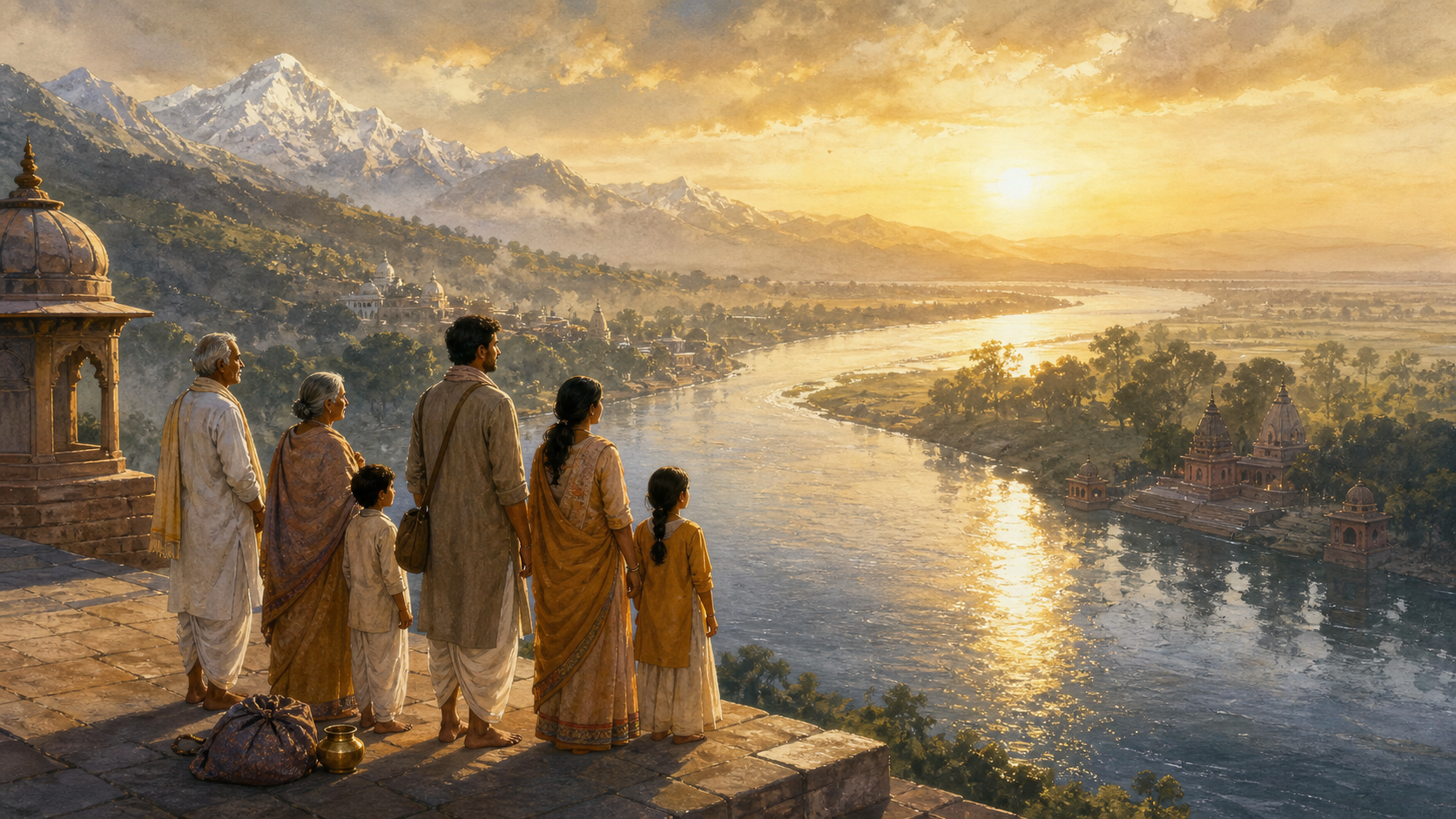
You can plan Yamuna Pushkaram as a search for the most famous ghat, or you can treat it as a journey through the sacred geography of Bharat. The second approach leads to better decisions. You choose a place because its meaning fits your sankalpa, your sampradaya, and your physical capacity—not because a crowded itinerary labels it compulsory.
That matters especially in 2026, when the available calendar reckonings do not fully agree. Before booking travel or copying a ritual formula, you need to settle three things: which dates your local tradition accepts, which face of Yamunaji you wish to encounter, and how your snana will become an act of responsibility rather than another burden on the river.
Key takeaways
- Use 2–13 June 2026 as a working Pushkaram window, but confirm the accepted transit, phase, local muhurta, and sankalpa wording with a regional panchang and the administration of your chosen tirtha.
- Choose a ghat by spiritual intention and physical capacity. Yamunotri, Braj, an urban Yamuna ghat, a tributary sangam, and Prayagraj express different dimensions of the same sacred river.
- A notified, safely managed ghat is preferable to an unregulated bank, even when the latter appears quieter or more picturesque. Never enter a barrage, canal, fast current, or closed bathing area.
- A coherent observance joins sankalpa, snana, arghya, japa, appropriate tarpana, dana, and seva. Collecting rituals without a clear intention only makes the day busier.
- Plastic-free worship, careful disposal of offerings, respect for aquatic life, and clean-ghat seva are part of Pushkaram dharma, not optional activities added after worship.
Confirm the calendar before you commit to a date
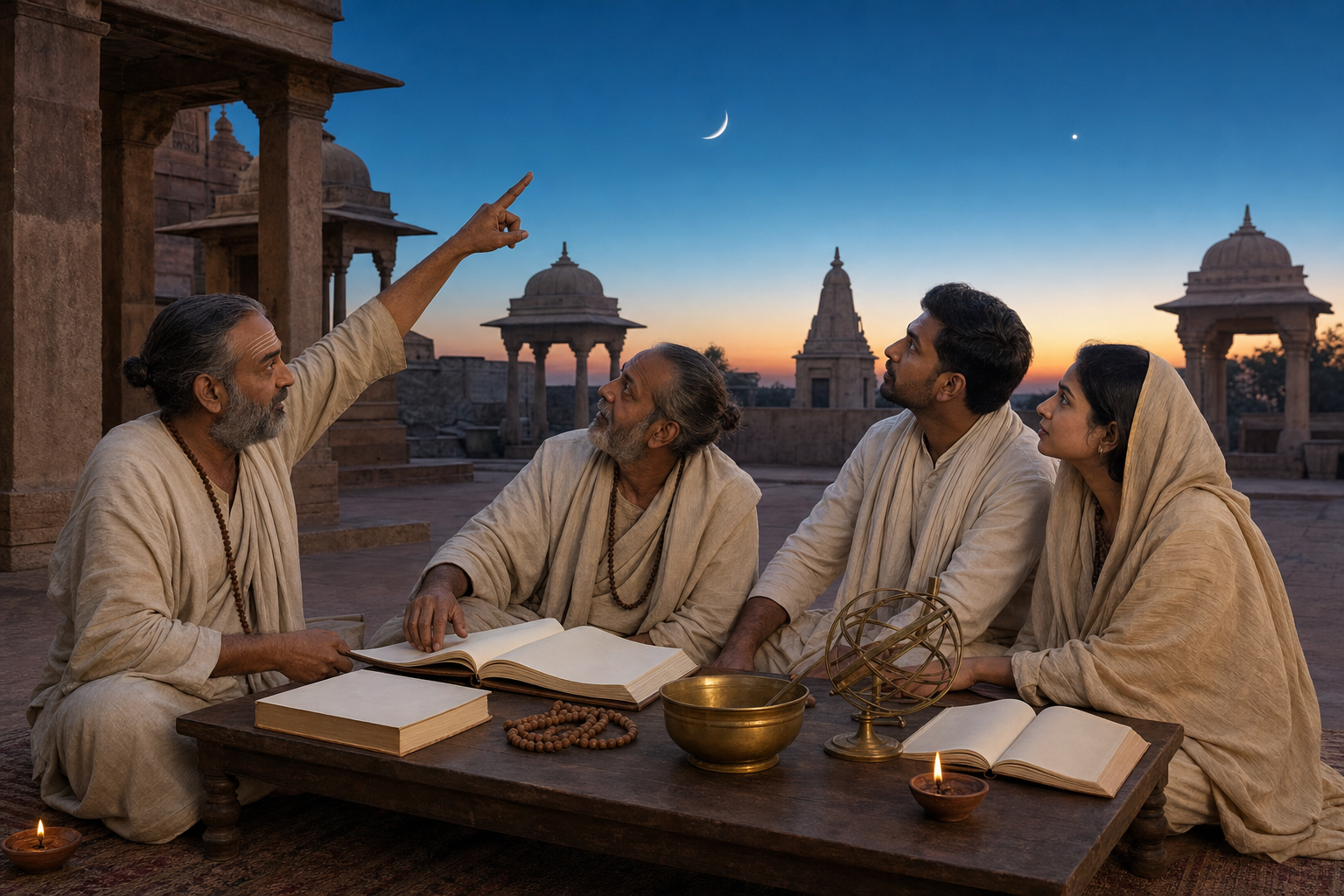
One 2026 reckoning places the principal observance from 2 June through 13 June. It identifies the opening as Guru entering Karkataka Rashi in Punarvasu Nakshatra’s fourth pada and treats the twelve days as Adi Pushkaram. In that framework, Jupiter is exalted in Karkataka, while the symbolism of Punarvasu—renewal and a return to light—gives the pilgrimage a natural theme of restoration.
You may also encounter an incompatible reckoning that associates Yamuna Pushkaram with Guru in Mithuna and describes 2026 as Antya Pushkaram, the concluding twelve-day period before Jupiter leaves that sign. This is not a harmless difference in terminology. The assigned rashi, the phase of Pushkaram, the opening instant, and the wording of the sankalpa are connected.
Do not solve the discrepancy by combining both explanations. Nor should you let a forwarded calendar image become your ritual authority. Use this sequence instead:
- Ask which Pushkaram reckoning is followed by the temple, matha, priestly lineage, or regional community with which you will actually worship.
- Check a panchang calculated for the location of your snana. Sunrise and planetary ingress occur at local times; a timetable prepared for another city is not automatically your muhurta.
- Match the panchang with notices from the relevant temple administration, Endowments Department, district authority, police, or civic body. These notices determine whether a ghat is open and how pilgrims may enter it.
- Obtain the sankalpa wording from a qualified local purohit if you intend to state the rashi, nakshatra, tithi, or Pushkaram phase formally.
- Keep an alternative time or ghat. Crowd control, weather, unsafe flow, or a closure takes precedence over an elective bathing time.
If your tradition adopts the 2–13 June window, three practical priority dates emerge: the inaugural snana on Tuesday, 2 June; the Guru Nakshatram observance on Tuesday, 9 June, when Purvabhadra is highlighted as a nakshatra ruled by Guru; and the concluding day on 13 June. Some pilgrims bathe on all twelve days, while others choose one or more of these landmarks. Sunrise is the customary preference, but an orderly bath during an approved window is better than forcing your way into a dangerous crowd for a more desirable muhurta.
Choose the stretch of Yamuna that matches your sankalpa
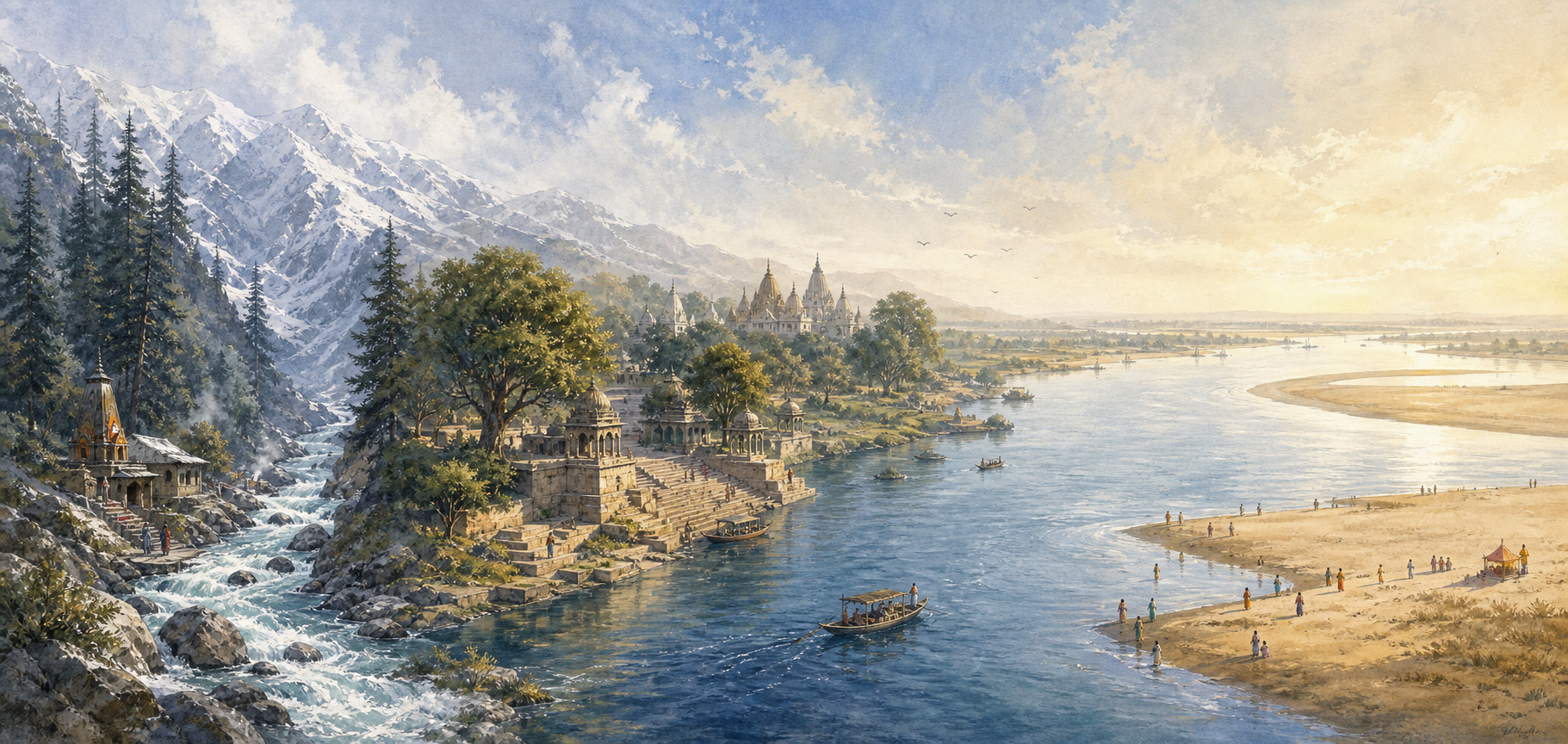
Sacred geography does not make every place interchangeable. A tirtha is a crossing point: physical water meets divine memory, disciplined action, inherited story, and the pilgrim’s intention. Yamunaji’s course of roughly 1,376 kilometres from the Garhwal Himalaya to Prayagraj therefore offers a sequence of spiritual encounters rather than a ranking of superior and inferior ghats.
| Place or river stretch | Sacred emphasis | Well suited to | Decision you must make |
|---|---|---|---|
| Yamunotri | Origin, austerity, and the primal presence of Yamuna Devi | Pilgrims prepared for a Himalayan yatra and a trek from Janki Chatti | Confirm registration, weather, accommodation, approved transport, and your ability to manage altitude and changing conditions |
| Mathura and Vrindavan | Krishna-lila, bhakti, kirtana, aarti, and Braj parikrama | Families and Vaishnava pilgrims seeking a devotional rather than mountaineering-centred route | Choose notified access at Vishram Ghat or Keshi Ghat and plan around dense festival crowds |
| Delhi and Haryana | The continuity of a sacred river through an urban and heavily managed landscape | Devotees who need a local or short-distance observance | Use only officially designated ghats; avoid barrages, canals, closed banks, and unmonitored stretches |
| Paonta Sahib | Sikh historical memory, sangat, Gurbani, and seva beside the Yamuna | Sikh pilgrims and dharmic families exploring the river’s cross-traditional landscape | Respect the distinct discipline of the gurdwara rather than treating it as an interchangeable Hindu ritual site |
| Bateshwar and the middle-Yamuna confluences | Shiva worship, Jain heritage, tributary sangams, and the wider river basin | Pilgrims who want a quieter, regionally rooted circuit | Check local access carefully, especially near the Chambal, Betwa, Ken, and other dynamic confluences |
| Prayagraj | Completion at Triveni Sangam, with snana, dana, and ancestral remembrance | Families for whom tarpana or the symbolism of confluence is central | Follow the regulated bathing and boat arrangements rather than seeking an unofficial approach to the current |
Yamunotri is the clearest choice when your sankalpa concerns origin, tapas, or gratitude to Yamuna Devi at her Himalayan source. The temple is situated at about 3,293 metres, and the final approach from Janki Chatti involves a trek of several kilometres. Early June can bring rapidly changing mountain weather. Carry identity documents, rain protection, layered clothing, and footwear suited to a wet trail. Pony or palanquin services may be available for elders and pilgrims with mobility constraints, but their availability should be confirmed rather than assumed.
Mathura and Vrindavan are the stronger choices when your inner vocabulary is Krishna-bhakti. At Vishram Ghat and Keshi Ghat, the river is encountered within the living topography of Vasudeva’s crossing, Kaliya Mardana, rasa-lila, temple darshan, kirtana, and parikrama. Here the sensible plan is often one deliberate snana, one unhurried period of japa, and one carefully chosen temple or parikrama route. Trying to cover every celebrated place in a single morning can turn Braj into a transport problem instead of a pilgrimage.
Prayagraj gives the journey a different grammar. At Triveni Sangam, Yamuna joins Ganga and the traditionally understood subterranean Sarasvati. Choose this destination if confluence, ancestral remembrance, or the completion of a longer yatra is central to your vow. If your main concern is accessibility, a regulated plains ghat may be more appropriate than Yamunotri. Physical difficulty is not a measure of the sincerity of your bhava.
A local observance is also legitimate when travel is beyond your means or capacity. A notified Yamuna ghat near home allows you to honour the actual river without pretending that distance alone creates merit. When even that is not possible, a sunrise home observance may include clean water in a kalasha, Yamuna-dhyana, Yamunashtakam or nama-japa, a lamp, dana, and manasa-snana. Add a future tirtha-yatra sankalpa only if it is a real commitment, not a phrase you will forget when the twelve days end.
Let each ritual act answer the place
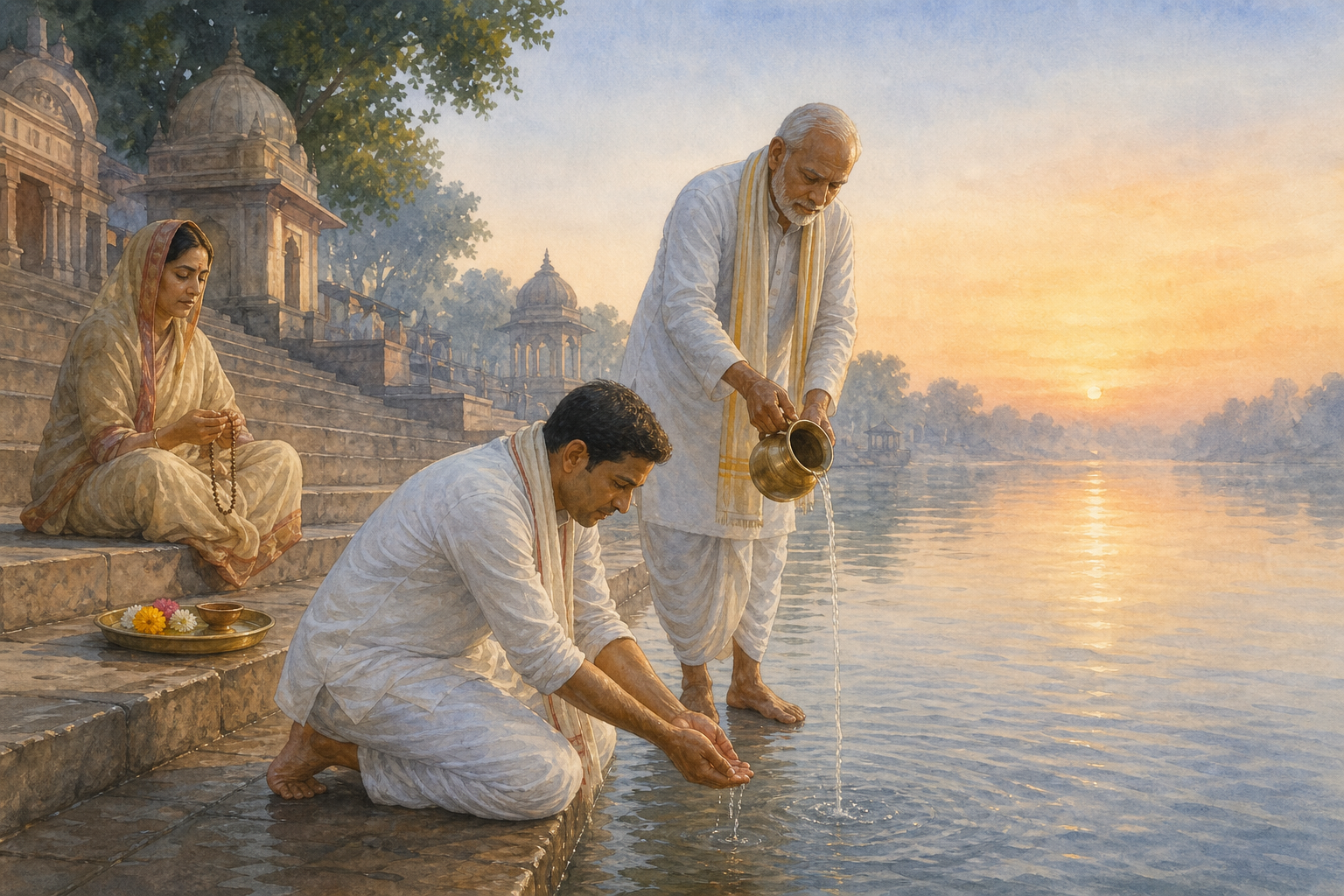
The river should shape the rite. At the source, restraint and gratitude may dominate. In Braj, Krishna-smriti and kirtana may lead. At Prayagraj, tarpana may be the centre. At an urban ghat, protecting the water and helping other pilgrims may become the most truthful expression of reverence. A simple sequence can hold these differences without reducing Pushkaram to a checklist.
- Arrive before the ritual begins. Find the designated entry, exit, changing area, priestly area, and collection point for offerings. Read safety notices before approaching the water.
- State one clear sankalpa. Name the place, date, deity, and purpose in the form accepted by your tradition. Purification, gratitude, remembrance of ancestors, a vrata, and river seva are coherent intentions; piling every possible wish into one formula weakens attention.
- Undertake snana without bravado. Enter only where bathing is permitted and remain within the controlled area. A symbolic application or limited immersion is preferable when the current, depth, crowd, or your mobility makes a full dip unsafe.
- Offer arghya to Surya and remember Yamuna Devi. The act carries particular resonance because Yamuna is remembered as Yami, daughter of Surya and sister of Yama. Keep the offering simple and prevent vessels or packaging from entering the river.
- Perform tarpana only in a form you understand. If ancestral rites are part of your lineage, arrange them with an appropriate priest and ask in advance what materials are required. Do not improvise a formal rite from a short online clip at a crowded ghat.
- Choose focused recitation. Yamunashtakam, nama-japa, Vishnu Sahasranama, Bhagavad Gita, Srimad Bhagavatam, or the text prescribed by your sampradaya can anchor the period. One text followed attentively is more useful than several recitations rushed between travel commitments.
- Make dana specific. Anna-dana, vastra-dana, support for pilgrims, temple service, first-aid assistance, and verified river-cleaning work turn private merit-seeking toward public good. Give through an accountable channel and do not obstruct the ghat while distributing items.
- Close with seva. Remove everything you brought, use the designated waste system, and join a clean-ghat effort where one is organised. The condition in which you leave the bank is part of the ritual’s result.
Do not separate sacred bathing from river care
Pollution does not make Yamunaji less sacred; it makes the devotee’s duty more immediate. Avoid single-use plastic, synthetic colours, oil-rich residues, and non-biodegradable decorations. Use the smallest practical quantity of puja material. Place flowers and other biodegradable offerings in the collection system provided by the ghat rather than assuming that anything called natural belongs in the water.
Safety belongs to the same ethic. Hathnikund and other barrage areas should not be treated as bathing ghats unless authorities designate a specific safe point. Confluences near the Chambal ravines and other middle-Yamuna stretches can carry changing currents. In Delhi, use only notified access such as whatever regulated arrangements the civic and police authorities announce for the festival. No private muhurta justifies entering a prohibited bank or bypassing crowd barriers.
You can make the ecological component measurable without turning worship into a publicity exercise: carry no disposable plastic, remove all personal waste, contribute a fixed portion of your dana to a transparent river or community initiative, and give a defined period of time to ghat seva. Quiet discipline is enough. Photographs of the service are not its proof.
The Yamuna is a dharmic corridor, not a single-site shrine
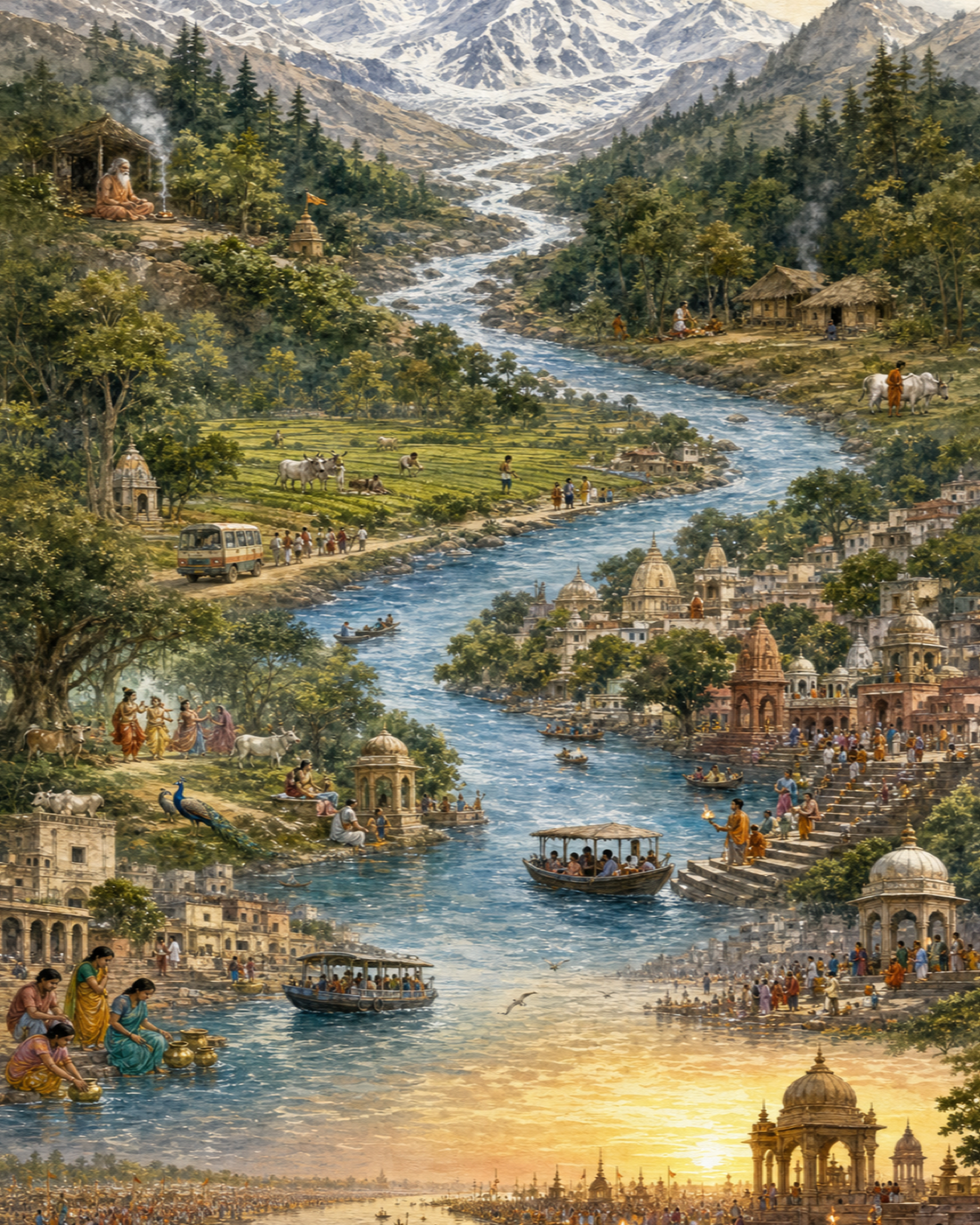
Yamunaji’s sacred geography begins in Hindu theology but cannot be understood through one episode alone. She is remembered as Yami and Kalindi, as the sister of Yama, and as a river named among the ancient waters of Vedic memory. The Bhagavata Purana places Krishna’s childhood lila along her banks. The Mahabharata associates the Yamuna landscape with Indraprastha and the political imagination of the Kuru world. At Prayagraj, she completes the Triveni. These are not detached legends laid over a neutral waterway; they are the memory through which generations have inhabited the river corridor.
The same corridor also preserves distinct Buddhist, Jain, and Sikh histories. The Yamuna-nourished Mathura region became important to Buddhist sacred art. Ancient Kosambi near the river retains the memory of the Buddha’s presence. Jain remains at Kankali Tila attest to a sustained Jain community in Mathura, while Bateshwar combines a remarkable Shiva temple landscape with Jain heritage. On the upper river, Paonta Sahib recalls a formative period associated with Guru Gobind Singh and continues the disciplines of sangat and seva beside the Yamuna.
This shared geography should not be flattened into a claim that all dharmic paths have identical theology or ritual. Yamuna Pushkaram is Hindu in its astronomical framework, deity invocation, and customary snana-vidhi. The wider civilizational lesson is more precise: different dharmic communities have created places of worship, learning, compassion, renunciation, and service within the same river basin.
You can honour that plurality without borrowing practices carelessly. A Hindu pilgrim at Paonta Sahib can observe gurdwara maryada and participate in seva. A Sikh visitor need not perform a Hindu sankalpa to respect the river. A Jain may emphasise ahimsa, aparigraha, jiva-daya, and cleanliness; a Buddhist may choose mindful walking, metta, or lineage-appropriate recitation. Common care for the river works best when each path retains its integrity.
Before you leave home, write down four decisions: your confirmed date and local muhurta, your notified ghat and access route, one sentence expressing your sankalpa, and the dana or seva you will actually complete. If any of the four remains vague, settle it before adding another temple to the itinerary. Then your movement along the Yamuna can become what sacred geography asks of you: not the consumption of holy places, but a disciplined relationship with river, memory, community, and dharma.
References
- DharmaRenaissance Blog — Yamuna Pushkaraalu 2026: Definitive Guide to Sacred Bathing Dates, Rituals, and Key Ghats
- DharmaRenaissance Blog — Yamuna Pushkarams 2026: Auspicious Dates, Sacred Rituals, and Jupiter in Karkataka Rashi
- DharmaRenaissance Blog — Religious Significance of the Yamuna River: Mythology, Pilgrimage, and Dharmic Ecology
- DharmaRenaissance Blog — Yamuna Pushkaralu 2026: Definitive Pilgrim’s Guide to Sacred Ghats, Temples, and Cities