
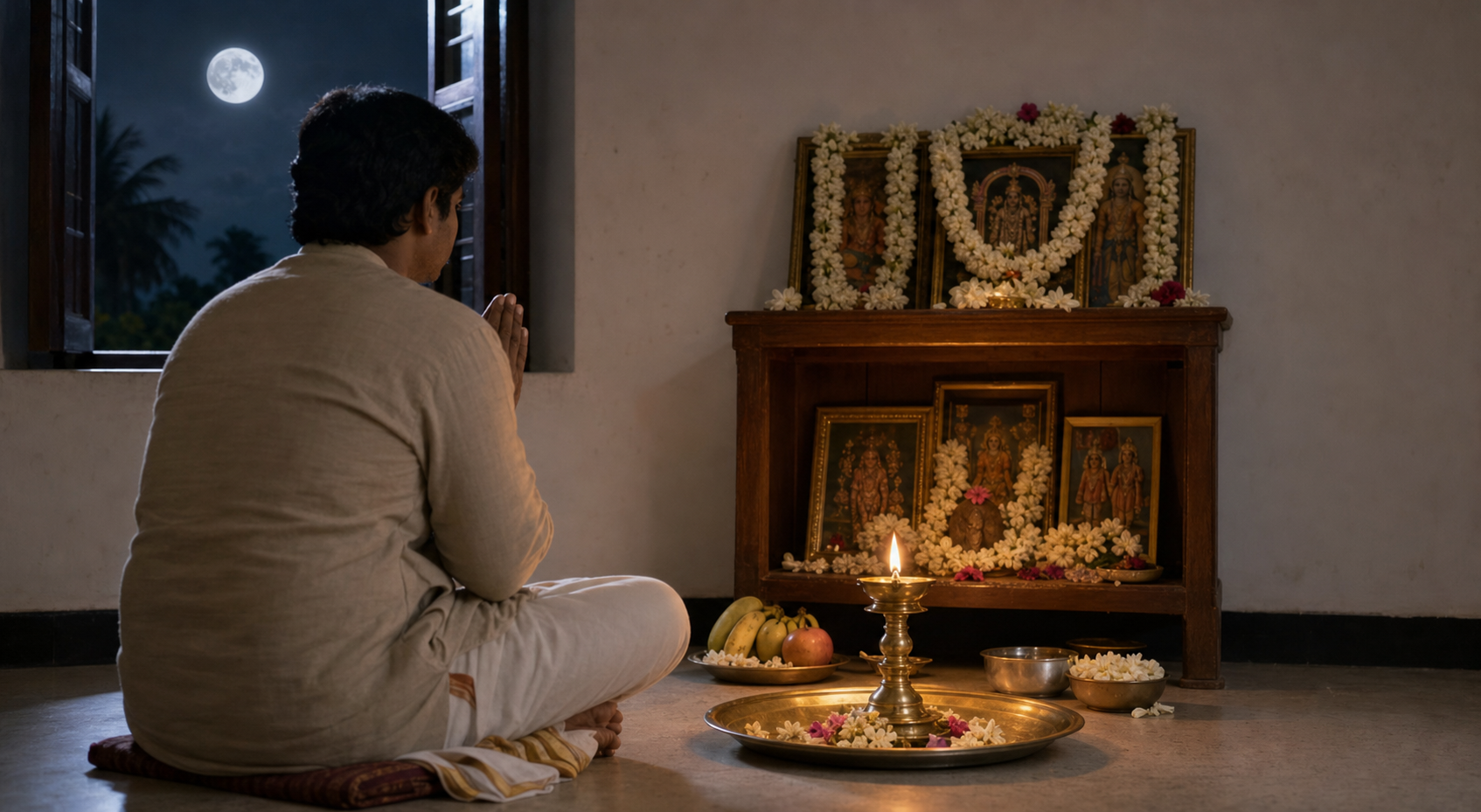
You want to observe Pournami Deepa Puja at home, but the instructions around lamps, wicks, directions and mantras can make a simple act feel unnecessarily complicated. You do not need to reproduce a temple ceremony. One safely placed lamp, a clear sankalpa and a period of undistracted prayer can form a complete household observance.
The details still matter, but they serve attention rather than display. This guide shows you how to choose the time and materials, perform the puja in a coherent order, adapt it to your family tradition and protect the sanctity of the rite through ordinary fire safety.
Begin with the tithi and a clear sankalpa
Pournami, or Purnima, is the full-moon tithi. It is not merely the night on which the moon looks round. A lunar tithi does not always begin and end with a civil calendar day, so consult a panchang calculated for your location. If your regional calendar or family priest gives a particular observance window, follow that guidance.
Households commonly perform the puja during pradosha, around sunset, or near the locally listed moonrise. Choose one of those periods that falls within the Purnima tithi and allows you to worship without rushing. The local tithi is the ritual marker; physically seeing the moon is not a condition of validity. Clouds, rain, tall buildings or an apartment without a suitable view do not cancel the observance.
Before arranging the altar, decide why you are lighting the lamp. A sankalpa need not be elaborate. You might dedicate the puja to clearer judgement, harmony in the household, gratitude to your ishta-devata, the well-being of someone in difficulty, or sarva-bhuta-hita, the welfare of all beings. Keep the wording honest and short enough to remember while you worship.
The spiritual logic of the lamp is more important than claims about mysterious lunar forces. In a familiar interpretation, the wick represents the limited self, the oil or ghee represents accumulated tendencies, and the flame represents consciousness that transforms what feeds it into light. You can use that image as a question for the evening: what habit, resentment or confusion should be offered into steadier awareness?
This symbolism begins with a much older Dharmic reverence for light. The Rig Veda opens with an invocation to Agni, who bears the offering and connects human worship with the divine. In later puja traditions, the lamp becomes an upachara offered to the deity and then received through arati. The flame illuminates the murti outwardly while asking the worshipper to become more perceptive inwardly.
The language of illumination also travels across the wider Dharmic family without making every tradition identical. Buddhist Purnima observances can include lamp offerings associated with wisdom and compassion. Jain practice gives the lamp a prominent place as a sign of victory over karmic darkness. The Sikh language of jyot points toward divine light, and gurdwaras are illuminated during Bandi Chhor Divas. You can recognize this shared grammar while respecting the distinct theology and discipline of each path.
Choose a lamp and arrangement you can tend properly
What you actually need
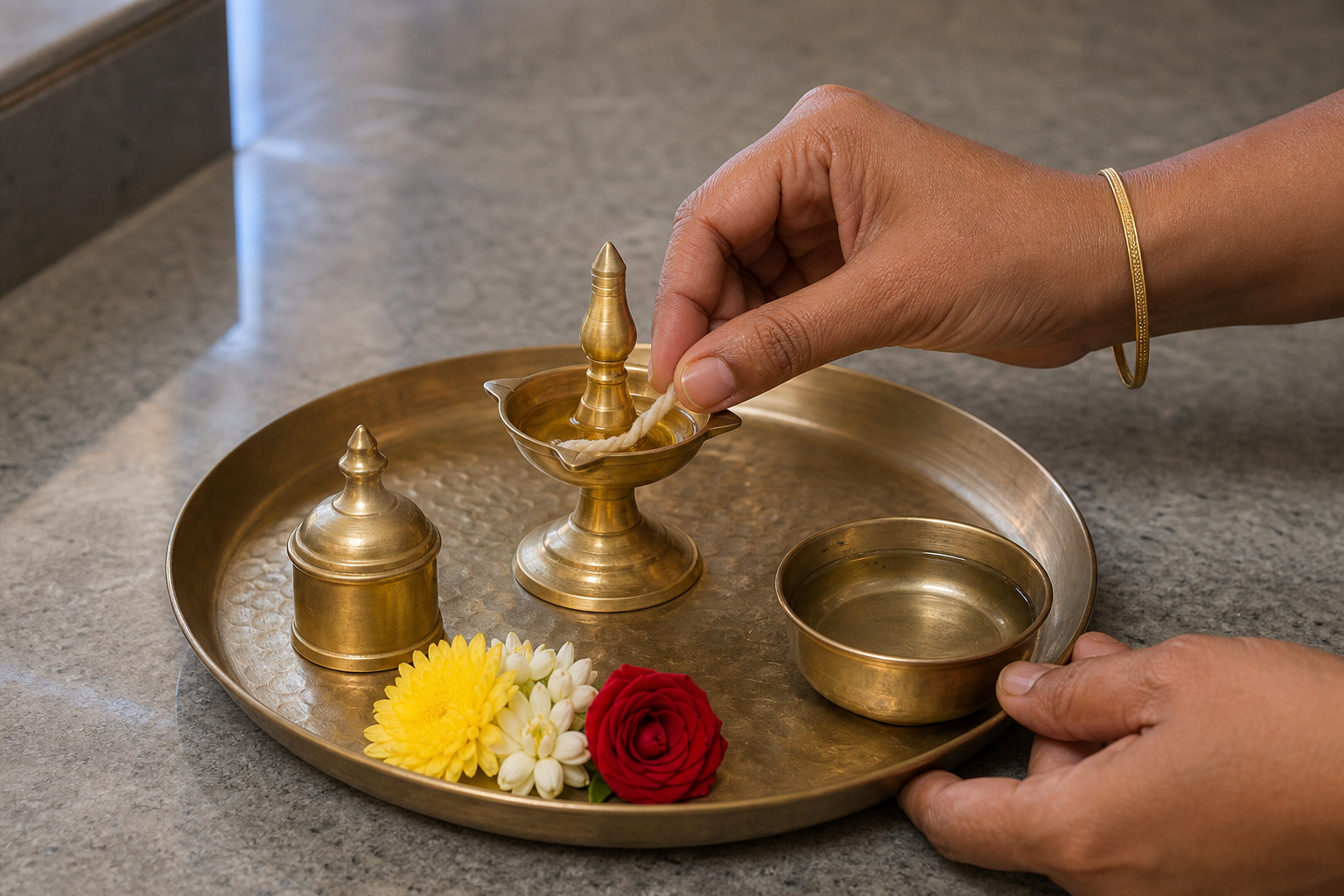
A modest household puja requires only a few items. Prepare them before the observance begins so that you do not have to leave a burning lamp unattended.
- An earthen diya or a clean metal lamp made of brass, bronze or copper.
- Clean ghee or sesame oil.
- A cotton wick suited to the size of the lamp.
- A stable, heat-resistant plate or tray beneath the lamp.
- Matches or a lighter kept out of children’s reach.
- Water for ritual offering, flowers, incense if appropriate, and a simple naivedya or food offering.
- A bowl of sand nearby for fire control. Never pour water into burning oil or ghee, because it can spit and spread the burning fuel.
Do not add materials merely to make the altar look abundant. Every additional flame, garland and vessel creates something else to manage. If the arrangement divides your attention or makes the space unsafe, simplify it.
Ghee, sesame oil and the number of wicks
Ghee is commonly preferred when a lamp is offered directly to a deity. Sesame oil is also a venerable choice for household lamps and is associated in many lineages with steadiness and auspiciousness. Neither choice should become a cause of anxiety. Use clean fuel, follow your sampradaya or family custom where one exists, and avoid scented or improvised liquids that are not intended for a lamp.
One wick is sufficient for a complete puja and suits a quiet, meditative observance. Two wicks are associated in many households with saubhagya, or wholesome prosperity. A five-wick or panchamukhi lamp is more often used for special worship and temple-style arati. These are traditional ritual associations, not arithmetic guarantees that more flames will produce more grace.
If you are beginning the practice, start with one wick. A single steady flame is easier to tend, produces less heat and gives your attention one natural center. You can adopt a more elaborate arrangement later if your family tradition calls for it.
Placement and direction
Place the lamp on a level, non-flammable surface where it cannot be knocked by a sleeve, child, pet or opening door. Some Vastu-influenced customs favor the east or northeast side of the altar for the principal lamp. Treat that as a lineage-shaped convention, not a reason to put the flame in an unsafe corner. A secure position takes precedence over a preferred direction.
Keep the lamp away from curtains, paper decorations, dried flowers, books, electrical cords and drafts. Secure loose hair, dupattas, sari pallus and wide sleeves before lighting it. If several people will participate, leave enough clear space for everyone to receive arati without leaning across the flame.
Follow a simple sequence from invocation to silence
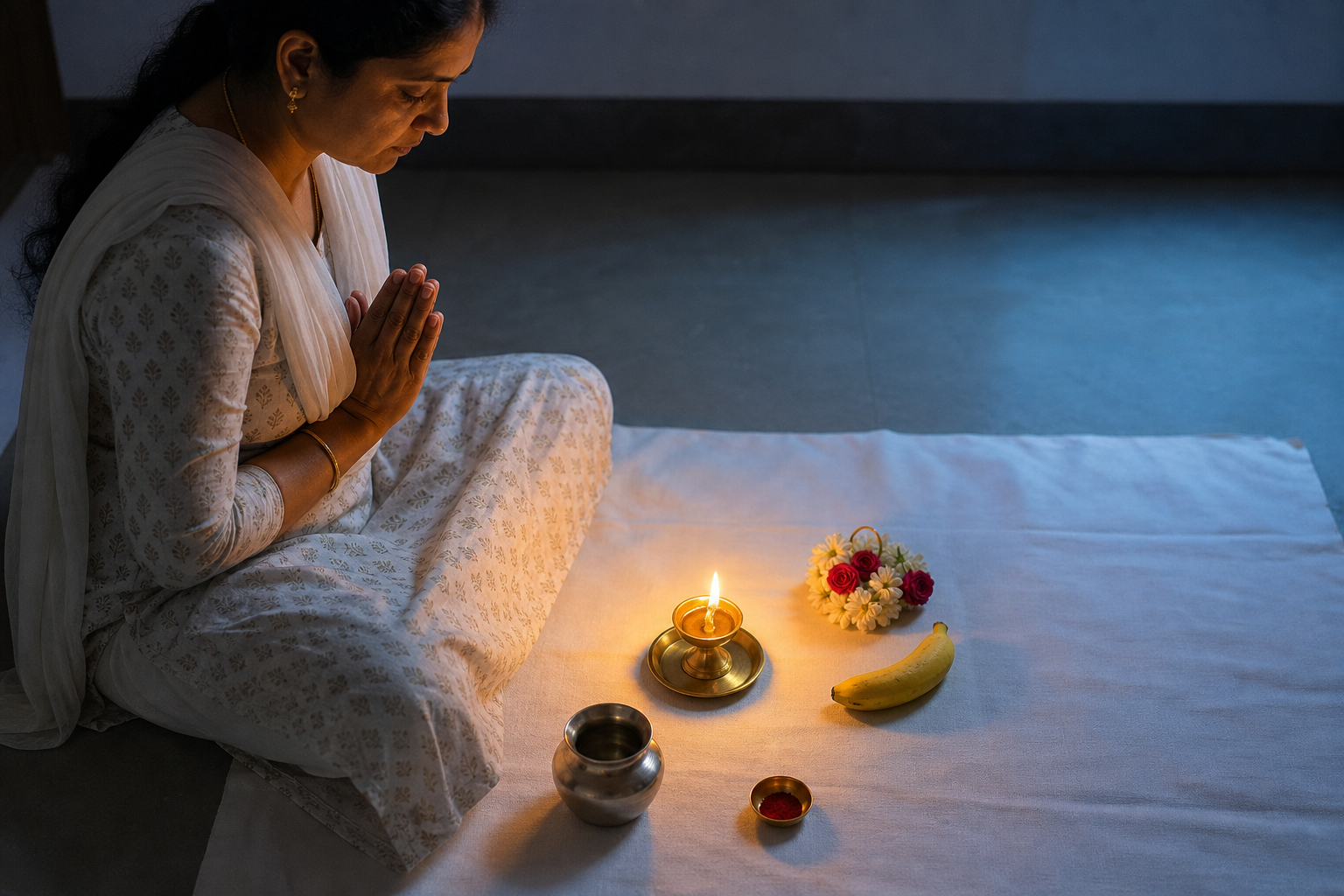
The following sequence is deliberately compact. It gives the puja a recognizable beginning, middle and completion without pretending that every household follows one universal manual. Where your kula, guru, temple or regional tradition gives a different order, that inherited practice should guide you.
- Prepare the place. Clean the altar and surrounding floor. Arrange the lamp, offerings and fire-safety materials before bringing children or guests into the space.
- Settle yourself. Sit or stand comfortably, allow the breath to become even, and put away the phone. The transition matters: you are moving from household activity into deliberate worship.
- State the sankalpa. Name the Purnima observance, the deity or divine form being honored, and the intention of the puja. Include the welfare of others rather than reducing the rite to a private request.
- Invoke Ganesha. Offer a brief prayer to Sri Ganesha for the removal of obstacles. A familiar family mantra is enough; elaborate recitation is not required.
- Remember Chandra and your ishta-devata. Offer flowers or a simple namaskara. If the moon is visible and it is safe to step outside, you may acknowledge it directly. If it is not visible, remain at the altar.
- Light the lamp. Hold the intention clearly as the wick catches. Wait until the flame becomes stable before moving the lamp or beginning further offerings.
- Offer the other upacharas. Present flowers, incense and naivedya according to your custom. If smoke troubles anyone in the household or ventilation is limited, omit incense rather than treating it as indispensable.
- Recite or chant. You may use Gayatri Mantra, Mahamrityunjaya Mantra, Sri Suktam or a mantra of your ishta-devata. Choose a text you can recite respectfully. One prayer said with attention is preferable to a long sequence read at speed.
- Perform arati. Wave the lamp according to your custom without bringing it close to clothing, garlands or the murti. Set it back on the heat-resistant tray before receiving the light with your hands.
- Sit in silence and conclude. Let the flame remain the center of attention for a short period. Offer gratitude, dedicate any merit to the welfare of beings, bow, and distribute prasad. Continue supervising the lamp until it is safely extinguished or has gone out.
A widely used verse for the moment of lighting is:
Deepa Jyothi Parabrahma, Deepa Jyothi Janardhana, Deepo me hara tu paapam, Sandhya deepam namostute.
Traditional lamp-lighting prayer
The prayer salutes the lamp as a manifestation of the Supreme and asks its light to remove wrongdoing or darkness. If you do not know the verse, do not mumble through an unfamiliar text merely to complete a checklist. Offer a simple prayer in a language you understand, learn the traditional words carefully, and add them in a future observance.
Use flame-gazing as an optional discipline
Trataka can follow the offerings when you want a contemplative element. Sit at a comfortable distance and look gently toward the upper part of the flame. Keep the gaze relaxed rather than straining to prevent blinking. After a short interval, close your eyes and notice the afterimage without trying to hold it. Repeat only while the eyes remain comfortable.
This is a dharana practice for gathering scattered attention, not a contest of endurance and not a medical treatment. Stop if you experience pain, marked irritation or persistent visual discomfort. You can meditate with closed eyes instead; the puja loses nothing because you decline an optional ocular exercise.
Key questions before you light the lamp
Must I see the full moon for the puja to count?
No. Observe the locally applicable Purnima tithi and hold the sankalpa at your altar. The moon may be hidden by weather or buildings, but the calendrical observance remains available to you. Do not move the lamp onto an unsafe balcony, windowsill or roadside merely to obtain a direct view.
Should I use ghee or sesame oil?
Use ghee when you want the common choice for direct deity worship. Use sesame oil when that is your household practice or when you are tending a traditional home lamp. Both have established uses. Cleanliness, suitability for the lamp, fire safety and continuity with your lineage matter more than turning the choice into a rivalry.
How many lamps or wicks do I need?
One lamp with one wick is enough. Use two wicks or a five-wick lamp when your family observance specifically calls for it and the setting can safely accommodate the additional flame. Do not equate a larger display with a deeper puja. The lamp must help you remain attentive, not keep you occupied with fuel levels and unstable wicks.
Can I use an electric lamp?
A living flame retains a distinctive ritual role because fuel, wick, light and offering come together in one act. Where open flames are permitted and safe, many households keep one ghee or oil lamp on the altar and use electric lights only for wider decoration. Where a lease, venue rule, medical need or fire regulation prohibits flame, obey the restriction and use an electric lamp. Dharma is not served by endangering people or violating a building’s safety rules.
Protect the flame, then extend it through seva
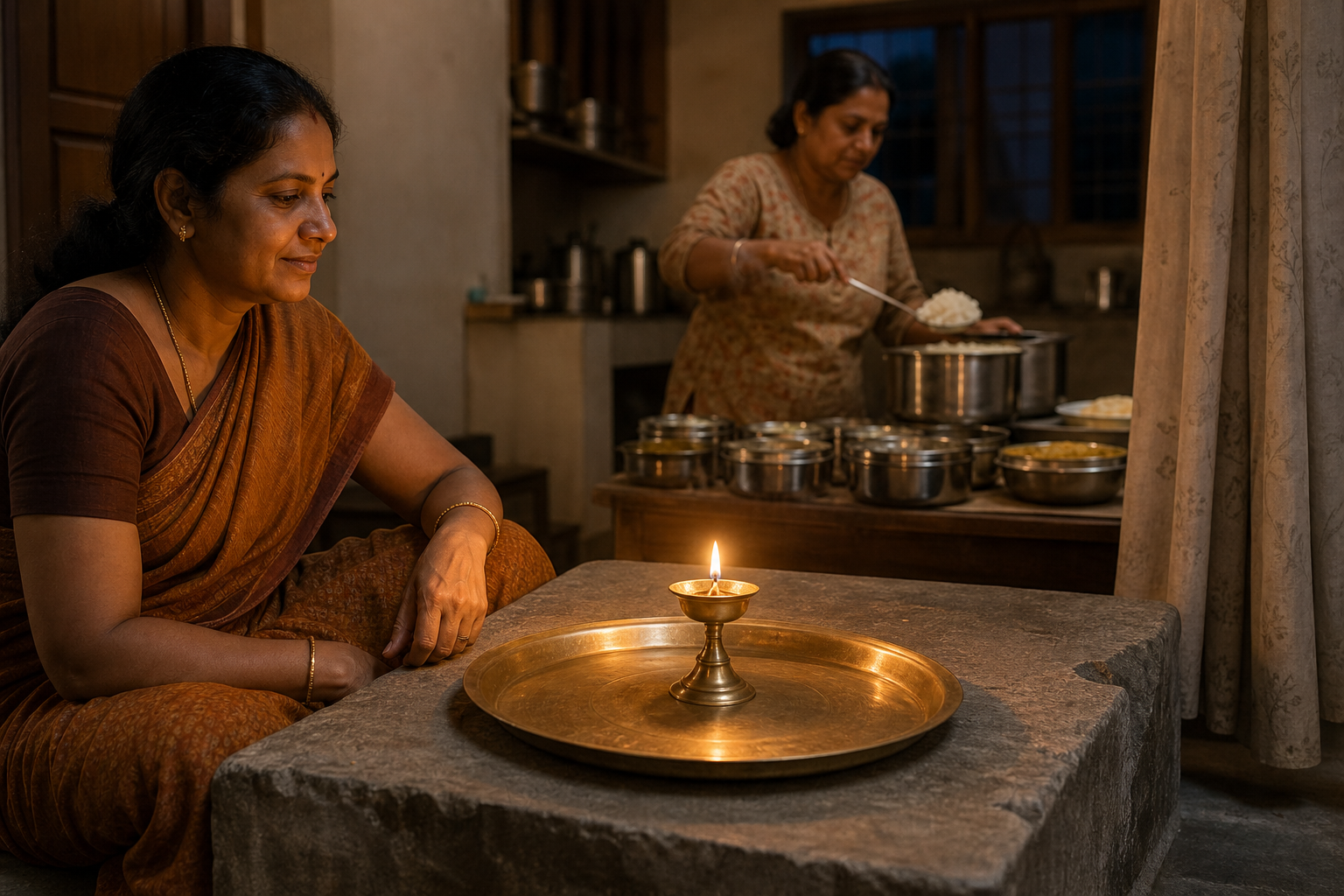
Fire safety is part of the puja, not an interruption to it. A sacred flame still behaves like fire. Before lighting it, make the following checks:
- The lamp sits flat on a heat-resistant plate and cannot slide or tip.
- Curtains, paper, dried decorations and loose cloth cannot reach the flame.
- The room has ventilation but no strong draft across the wick.
- An attentive adult remains present while the lamp burns.
- Children participate from a safe position and never carry or refuel the lamp.
- Extra ghee or oil remains capped and away from the flame.
- Sand is accessible, and you know how to smother the flame without splashing fuel.
- The lamp is cool before you clean, move or store it.
Clean fuel and a correctly sized cotton wick also reduce unnecessary smoke. If the lamp begins to soot heavily, do not keep adding fuel in the hope that it will settle. Safely extinguish it, allow it to cool, shorten or replace the wick, and improve ventilation before relighting. Earthen diyas can often be cleaned and reused if they remain sound; metal lamps should be cleaned only after they have cooled completely.
The observance need not end at the altar. Purnima is well suited to a modest act of seva: share food with someone who needs it, take prasad to a neighbor, support a temple or community kitchen, or include an isolated relative in the evening prayer. When children participate, give them a real but safe responsibility such as arranging flowers, placing unlit diyas or distributing prasad. That is how a monthly rite becomes embodied family memory rather than an occasional performance.
For your next Pournami, prepare only three things in advance: verify the local tithi, choose one secure place for the lamp, and write one sentence of sankalpa. At the appointed time, light a flame you can tend with care and leave enough silence for its meaning to reach beyond the ritual itself.