
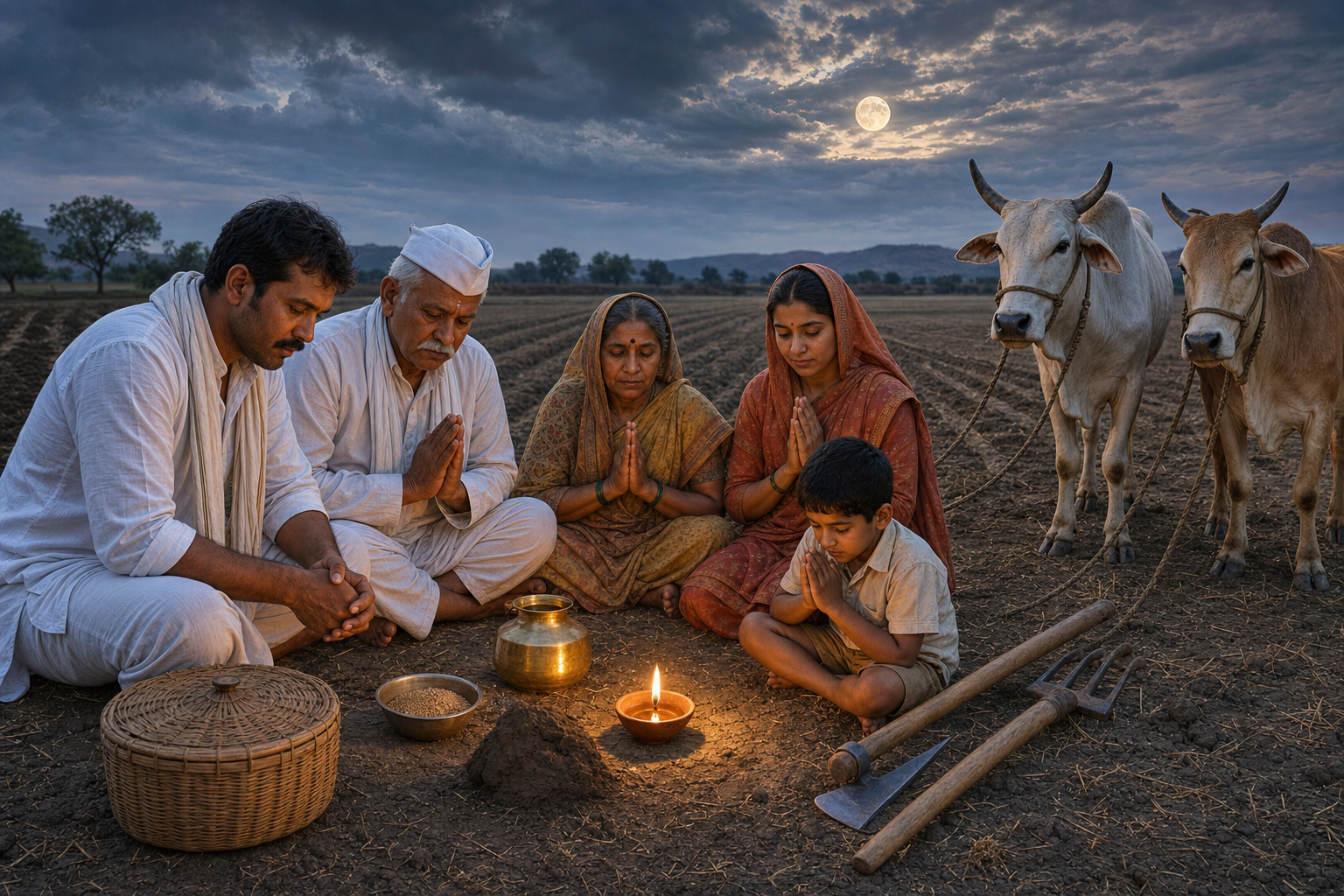
You may be trying to answer two questions at once: How should your family observe Jyeshtha Purnima, and does the full moon mean you should sow that day? Keep the questions separate. The tithi can gather the household around a sacred intention, but rainfall and soil conditions must decide when seed enters the field.
That distinction protects both dharma and the crop. You can bless the earth, cattle, tools, water, and seed even when the responsible farming decision is to wait. The most useful observance is therefore neither a decorative puja nor a rigid sowing deadline. It is a seasonal rite that turns gratitude into readiness.
Settle the local date before planning the ritual
Jyeshtha Purnima is a lunar observance, not a fixed date in the Gregorian calendar. A tithi is calculated from the changing longitudinal difference between the Sun and Moon, with each tithi covering 12 degrees of relative motion. Festival practice commonly follows the tithi prevailing at local sunrise, so the applicable day or ritual window can vary with location. A calendar prepared for another city is not the final authority for your village or temple.
Check a regional panchang and, where relevant, the calendar issued by your temple or sampradaya. This becomes especially important in a year containing Adhik Maas, when a tradition may distinguish Adhik Jyeshtha from Nija Jyeshtha. In 2026, Jyeshtha Purnima fell on Monday, 29 June in many regional panchangs. Do not carry that civil date into another year; determine the tithi again.
The observance also changes emphasis by region. In Andhra Pradesh and Telangana, Eruvaka Purnima or Eruvaka Punnami is closely associated with ploughing, cattle, tools, and the opening of monsoon fieldwork. Vrishabha Pooja places the bull or ox at the center of thanksgiving. Vata Purnima in parts of western and southern India centers on the banyan tree and the Savitri-Satyavan vrata, while Odisha observes the ceremonial bathing of Jagannath, Balabhadra, and Subhadra on Deva Snana Purnima. These customs share a seasonal setting, but they are not interchangeable names for one standardized ceremony.
If your family has an inherited paddhati, begin there. If it does not, use a simple sequence that honors the day without pretending to reproduce every regional custom. In Andhra Pradesh and Telangana, the Amanta calendar and local panchang convention should guide Eruvaka timing.
Build the rite around soil, water, animals, tools, and seed
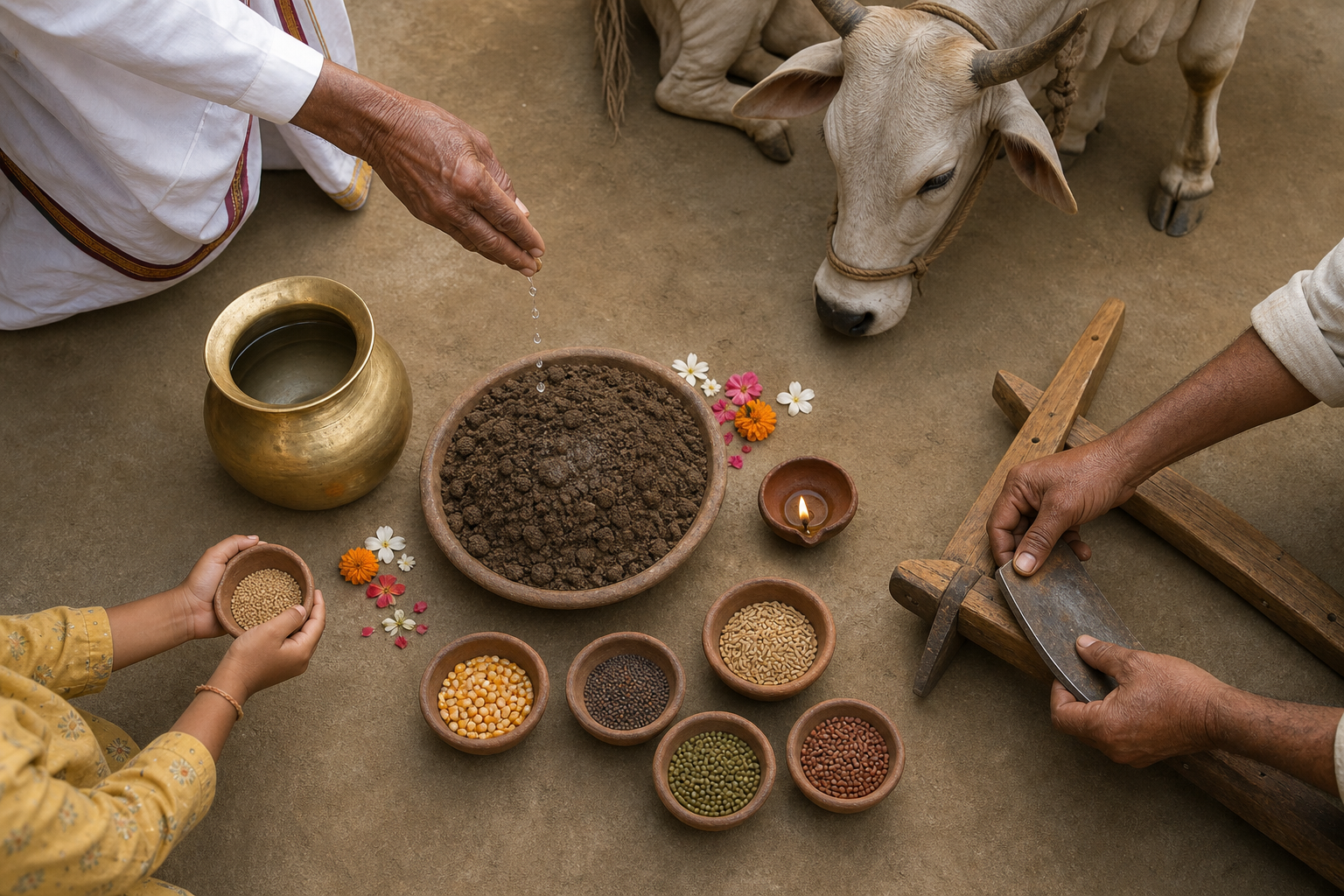
A workable household observance does not require an elaborate temporary altar. Its integrity comes from joining the sacred act to the actual responsibilities of the season. Before lighting the lamp, clean the place where food production begins: the field edge, cowshed, tool area, seed room, courtyard garden, or balcony planter.
- Prepare and inspect. Sweep the puja area, clean the cattle shelter, and remove soil and rust from implements. Set aside damaged equipment instead of consecrating it and returning it to service unchanged. If a tractor or other machine has replaced the plough, include it; the rite honors the means of livelihood, not only an older technology.
- Take sankalpa. State the place, tithi, family intention, and purpose in the form customary to your household. Pray for timely rain, sufficient rather than excessive water, healthy animals, safe labor, sound germination, and food that can be shared. Ganesha, the Kuladevata, and other family deities may be invoked according to tradition.
- Honor Bhoomi Devi and water. At a clean spot near the field or garden, offer flowers, turmeric, kumkum, and akshata as locally practiced. Ask forgiveness for the disturbance caused by tillage and resolve to prevent avoidable damage to soil and water. The prayer becomes concrete when you repair a breached bund or blocked channel after the puja.
- Honor the vrishabha and other cattle. Bathe or groom them gently, clean their resting area, provide potable water and shade, and decorate only if they remain calm. A Nandi image can receive sandal paste, flowers, bilva leaves, archana, and abhisheka. A living animal should never be treated like an unfeeling ritual object.
- Consecrate the implements. Place the plough, yoke, hoe, sickle, seed drill, or safely parked machinery near the puja space. Apply a small tilaka where appropriate, offer flowers, and perform aarti without bringing flame near fuel, dry fodder, animals, or moving equipment.
- Bless and test the seed. Keep representative seed baskets or packets before the altar. For ankurarpanam, place a small quantity of pre-soaked seed in clean, moist soil. Use the occasion to start a counted germination sample so that the symbolic sprouting also produces information you can use.
- Mark the beginning without forcing the season. If the field is ready, a first furrow or first small line of seed can ceremonially open the agricultural cycle. If moisture is inadequate, let ankurarpanam remain the symbolic beginning and postpone field sowing.
- Close through sharing. Offer simple seasonal food and distribute prasada to family, workers, and neighbors. Annadana, seed exchange, help for a goshala, or service at a village water structure gives the sankalpa a social form.
Mantras can be as brief as Om Namah Shivaya, or can include the Mahamrityunjaya mantra, Sri Rudram, Prithvi prayers, and family recitations where those belong to the household tradition. More recitation is not automatically more meaningful. A short rite followed by attentive animal care and honest field preparation is preferable to a long ceremony that exhausts people or cattle.
Vrishabha worship is governed by ahimsa. Avoid heavy ceremonial loads, forced processions, loud fireworks, and toxic colors on horns or skin. Keep animals watered and shaded. Use panchamrita for a Nandi murti rather than pouring sticky offerings over a living bull. The thanksgiving loses its meaning when the animal is distressed.
Let field readiness, not ritual pressure, decide sowing
Jyeshtha Purnima is a sensible preparedness marker because it arrives around the monsoon transition in many parts of Bharat. The Southwest Monsoon generally supplies about 70 to 80 percent of India’s annual rainfall between June and September. That broad seasonal pattern does not guarantee that your particular field has received enough effective rain.
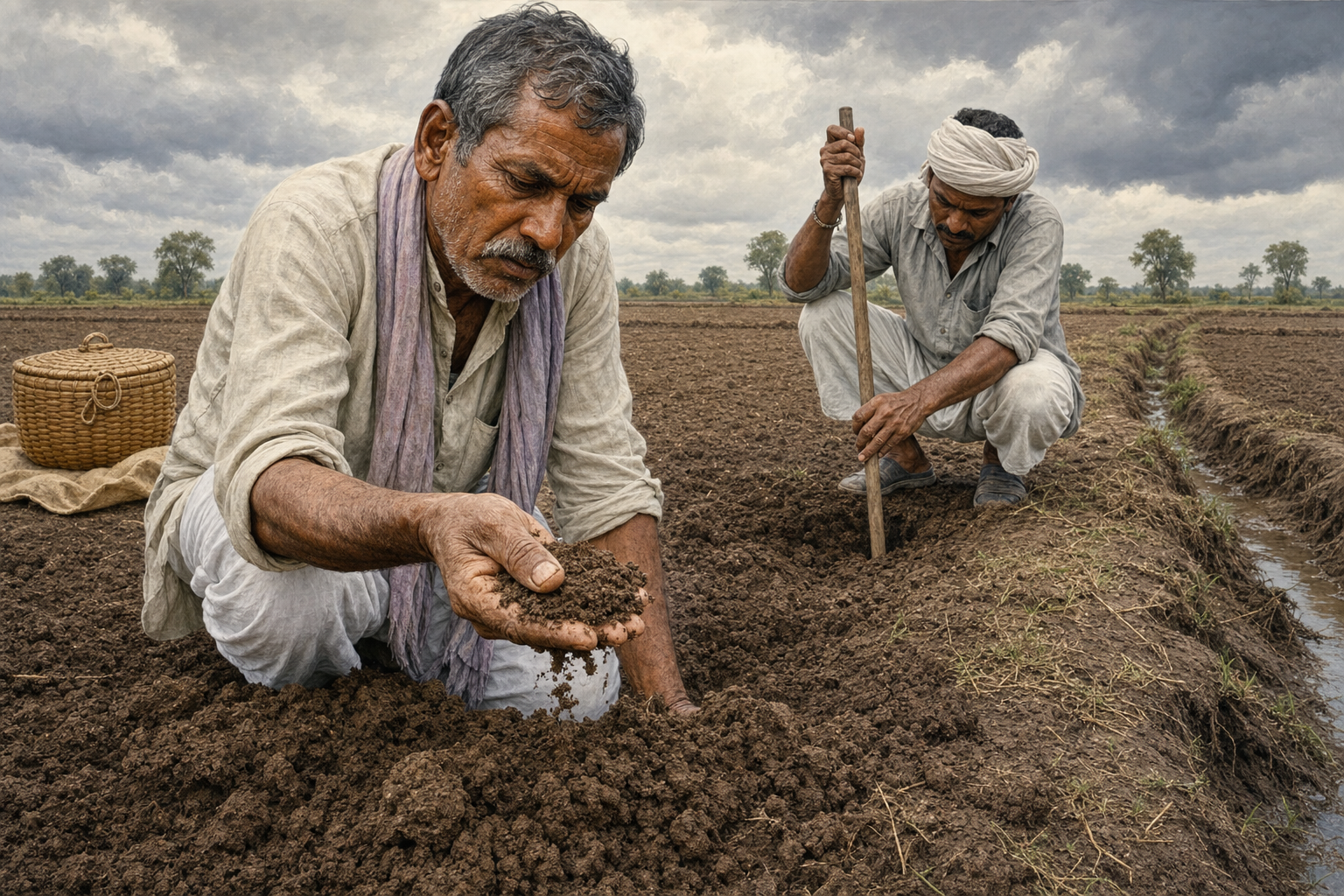
The first shower can darken the surface and produce the smell of wet earth while leaving the sowing layer dry. Seed placed into that temporary moisture may germinate unevenly or begin germination and then fail during a dry interval. Conversely, tilling or driving across saturated ground can compact the soil and damage its structure. The festival date should prompt a field check, not replace one.
- Rainfall: Look for at least one or two effective rainfall events rather than treating an isolated shower as proof that the monsoon has stabilized. Use local forecasts and agro-advisories alongside your own field observations.
- Seedbed moisture: Examine soil at the intended sowing depth in several parts of the field. Suitable soil should be moist and friable. If it smears when worked or remains dry below a damp surface, postpone the operation.
- Seed quality: Germinate a counted sample on a clean, moist medium and record how many seeds emerge. Do not guess an acceptable percentage across all crops; compare the result with the applicable seed standard or local agricultural recommendation.
- Sowing depth: Match depth to seed size and field conditions. Small-seeded millets and pulses are generally placed more shallowly, while crops such as maize and cotton can be placed somewhat deeper. Use crop- and soil-specific regional guidance rather than a single depth for every seed.
- Seed treatment: Use only the crop-specific bio-priming method or approved protectant recommended for your region. More treatment is not necessarily better, and an unsuitable product can damage germination or expose people and animals unnecessarily.
- Rainfall risk: Where rainfall is uncertain, consider staggering sowing across plots, intercropping, and choosing locally suitable early- or medium-duration cultivars. This avoids placing the whole season on one rainfall event.
Puja timing and field timing do not have to occupy the same hour. Perform the sankalpa while Purnima tithi prevails in the locally recommended muhurta, then enter the field when the soil is safe to work. Rahu Kaal and auspicious windows vary with local sunrise and sunset, so a generic time copied from another city can mislead you. Your local panchang should govern the ritual clock; field moisture should govern the agricultural one.
Turn the puja into a monsoon-readiness day
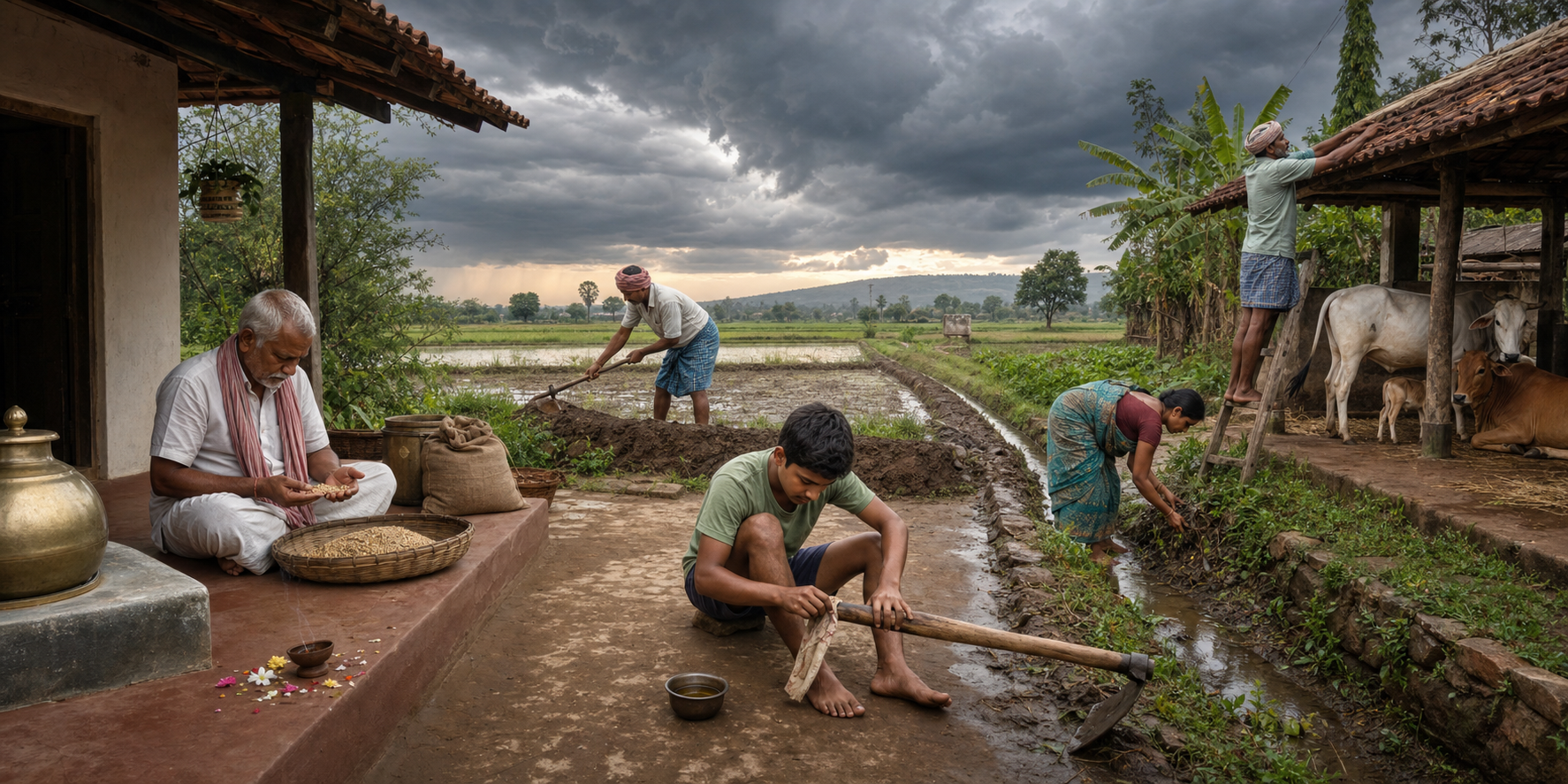
The rite becomes genuinely useful when every offering produces a practical follow-through. Assign the tasks before the household disperses. Otherwise the cleaned plough, blessed seed, and prayer for water can remain symbols while the loose yoke, weak bund, or blocked channel survives into sowing week.
- For cattle: Check hooves, yokes, harness contact points, drinking water, feed, and shaded rest space. Arrange veterinary guidance for vaccination, deworming, injury, lameness, or other health concerns rather than improvising treatment during peak fieldwork.
- For tools and machinery: Identify worn or loose parts, complete normal maintenance, and keep unsafe equipment out of use until repaired. Consecration should begin a safe working season, not certify a defective implement.
- For water: Walk the bunds and channels. Close breaches, remove obstructions, review tank or pond maintenance, and decide where contour bunding, mulching, or other moisture-conservation work is needed. In a shared system, agree on water access before scarcity creates conflict.
- For seed: Record the variety, storage condition, germination result, intended plot, and planned sowing window. Exchange saved seed only with clear identification and attention to seed health. Keep resilient local lines available for buffer plots where that fits the farming system.
- For the soil: Plan compost, green manure, and site-specific fertilizer as parts of integrated nutrient management. Do not use ritual language to excuse excess input. The purpose is to sustain fertility and organic matter while meeting the crop’s actual needs.
- For pest management: Begin with field observation and habitat care. Use interventions judiciously when locally applicable thresholds are crossed instead of treating routine spraying as the definition of preparedness.
- For people: Confirm labor availability, safe work arrangements, meals, and the sequence of sowing across holdings. Community meals and cooperative work matter most when smallholders and workers are included rather than treated as background to the ceremony.
Keep a modest seasonal record: the Purnima date, rain received, soil condition, variety, actual sowing date, and early emergence. Families already preserve cloud signs, wind directions, sayings, and memories of the first rain. Writing down the measurable parts allows that inherited observation to become a more useful record next season.
The explicit rites are Hindu, but their ethical field is wider than one regional festival calendar. Nandi represents disciplined strength and service in Shaiva tradition, while Rishabhanatha bears the bull as his emblem in Jain memory. Buddhist attention to compassionate livelihood, Jain ahimsa, and Sikh commitments to honest labor, sharing, and Sarbat da Bhala resonate with care for animals, fair work, and shared food. These are genuine convergences in dharmic responsibility, not a claim that every tradition performs the same puja.
If you live in a city or outside Bharat, do not stage a farm you do not have. Perform bhoomi puja at a community garden or clean planter, sow a small ankurarpanam pot, and learn where your food comes from. You can then support a farmer through fair procurement, contribute to a credible watershed effort, help an animal shelter, or fund practical work in your ancestral village. A balcony ritual becomes substantial when it changes one relationship in the food system.
Key takeaways
- Confirm Jyeshtha Purnima through a local panchang; never reuse another year’s Gregorian date or another city’s muhurta.
- Center the rite on five living responsibilities: soil, water, animals, tools, and seed.
- Use ankurarpanam or a ceremonial first furrow when the field is not ready; sacred timing does not require premature sowing.
- Sow only after effective rain has produced adequate, friable moisture at the intended seed depth.
- Finish the day with assigned work: animal care, equipment repair, seed testing, water maintenance, rainfall recording, and community sharing.
For the next observance, place four things beside the lamp before beginning: the local panchang, a seed sample, the rain record, and the maintenance list. Complete the puja with devotion, then ask one final field question: has the soil actually received enough moisture? If the answer is no, wait without feeling that the rite is incomplete. Restraint can be as dharmic as the first furrow.
References
- DharmaRenaissance Blog – Krushi Purnima 2026 Guide: Monsoon’s Dawn, Sacred Purnima Rituals, and Smart Kharif Sowing
- DharmaRenaissance Blog – Vrishabha Pooja on Jyeshtha Purnima 2026: Sacred Bull Worship, Rituals, and Farming Blessings
- DharmaRenaissance Blog – Eruvaka Purnima 2026: Sacred Monsoon Festival Empowering Farmers in Andhra and Telangana