
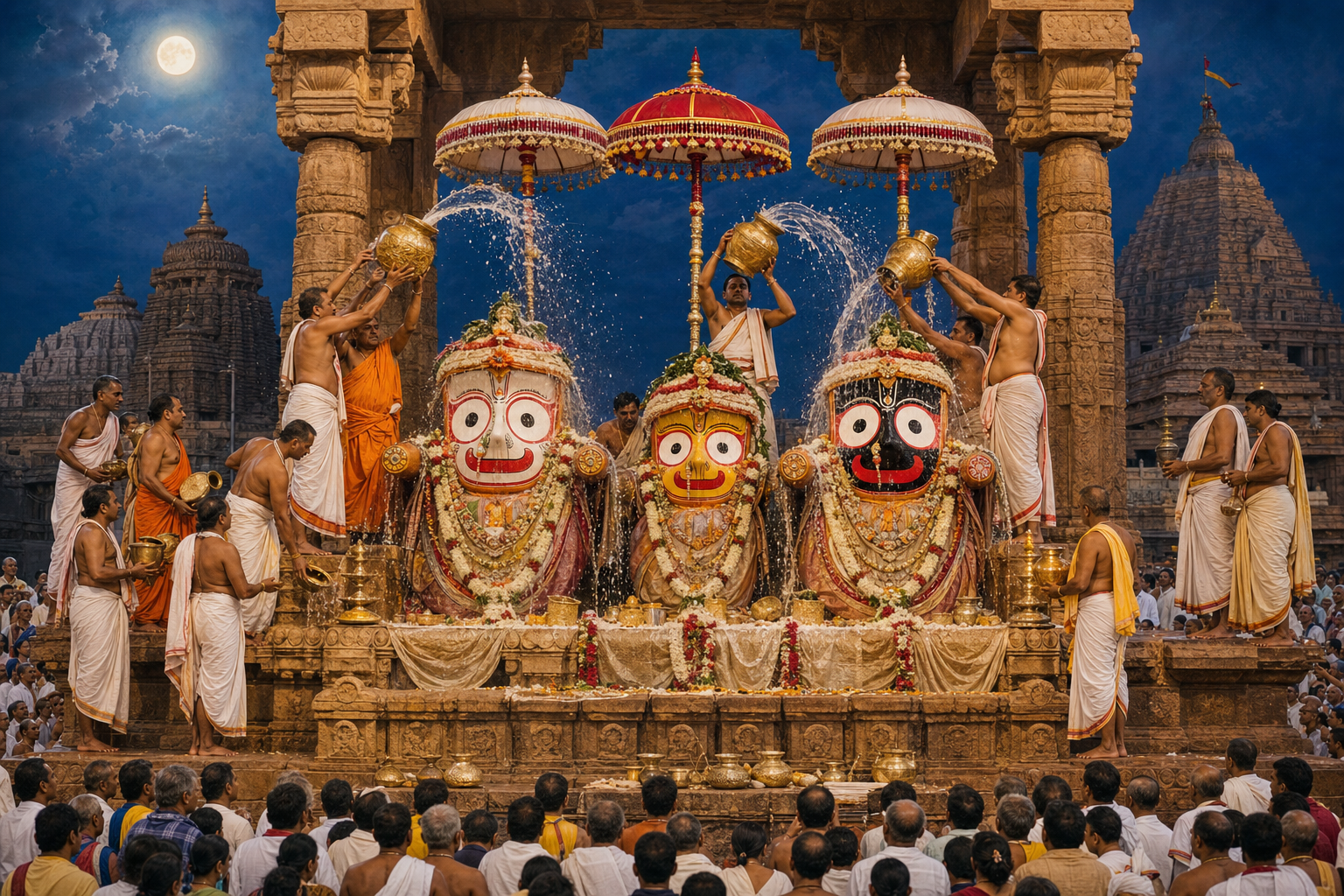
You may know Jyeshtha Purnima as a day for fasting and Full Moon worship, yet see the same date announced as Deva Snana Purnima, Jagannath Snana Yatra, or Vat Purnima. Are these names interchangeable, and which observance should you actually follow?
The simplest answer is to separate the lunar occasion from the traditions observed on it. Jyeshtha Purnima is the Full Moon tithi. Snana Yatra is Sri Jagannath’s great public bathing festival on that tithi. Vat Purnima, Satyanarayana Puja, fasting, charity, and household worship may also belong to the day, but they are not all parts of the Srimandir ceremony.
First, separate the tithi from the festival schedule
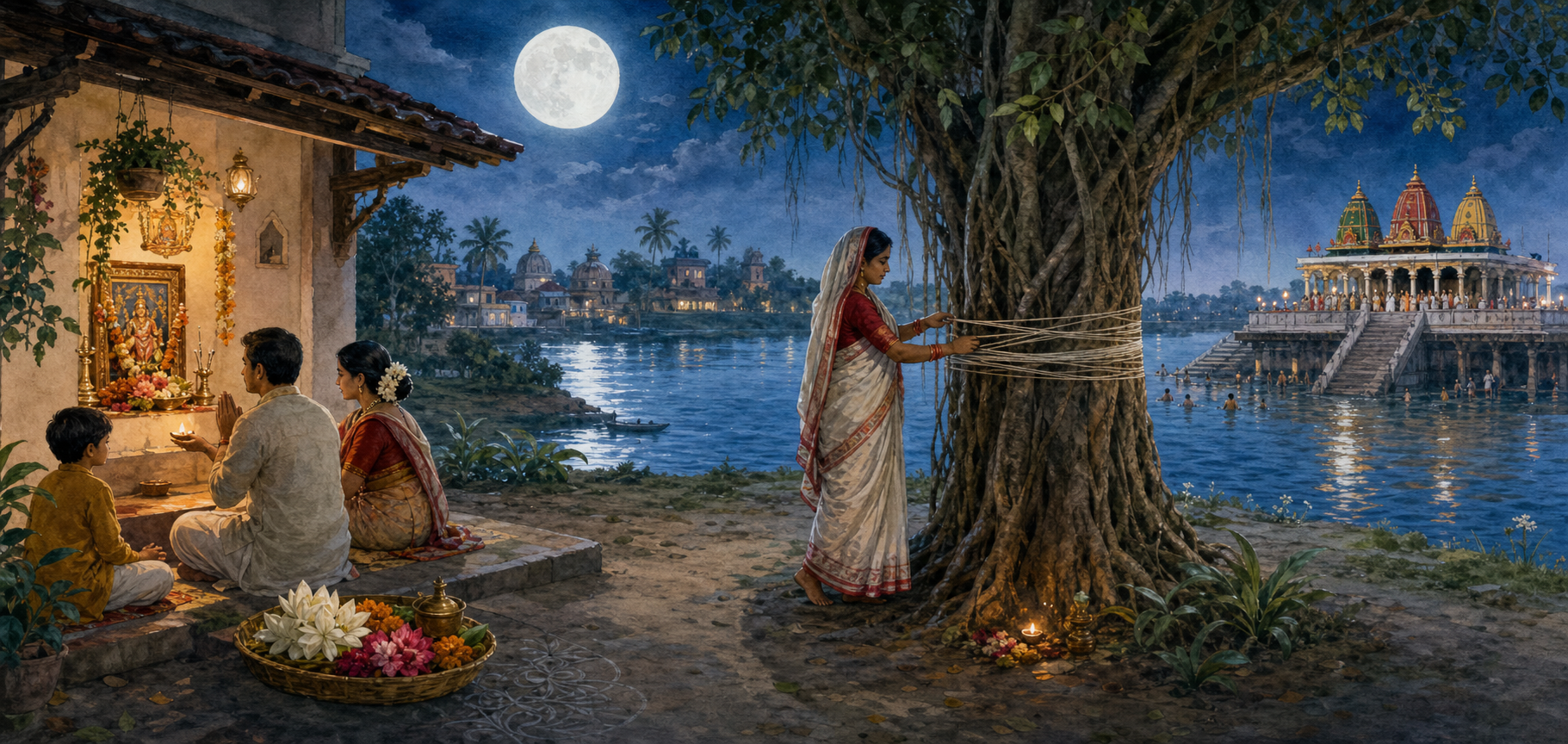
For the 2026 observance, Jyeshtha Purnima and Deva Snana Purnima fall on 29 June 2026 in India. That civil date is useful for planning, but a Hindu vrata is governed by the active Purnima tithi rather than by midnight on a modern clock.
This matters most if you live outside India. Depending on your time zone, the relevant Purnima period may overlap 28 or 29 June locally. Check a Panchang calculated for your city, including the tithi interval and local moonrise. Do not merely convert an Indian puja time or copy the date printed by a temple in another country.
The Amanta and Purnimanta systems count lunar months differently, but that does not create two separate Full Moons. Some 2026 almanacs may also use an Adhik Jyeshtha designation because of an intercalary month. If the labels appear confusing, identify the active Purnima tithi first, then follow your regional parampara and community temple calendar. For the rites at Puri, the Shree Jagannath Temple Administration and the temple’s operative panji determine the final schedule.
Key takeaways
- In India, plan the 2026 observance for 29 June, then confirm your city’s tithi and moonrise if you are keeping a vrata.
- Outside India, use a local Panchang rather than treating Indian Standard Time as your ritual clock.
- Moonrise is especially relevant to the completion of a Purnima fast; it does not determine the entire Srimandir Snana Yatra schedule.
- Vat Purnima, Satyanarayana Puja, and Jagannath worship can share the date without becoming one composite ritual.
- If your family tradition differs from a general online calendar, follow the established regional parampara unless your temple gives different guidance.
What to watch during the Snana Yatra sequence
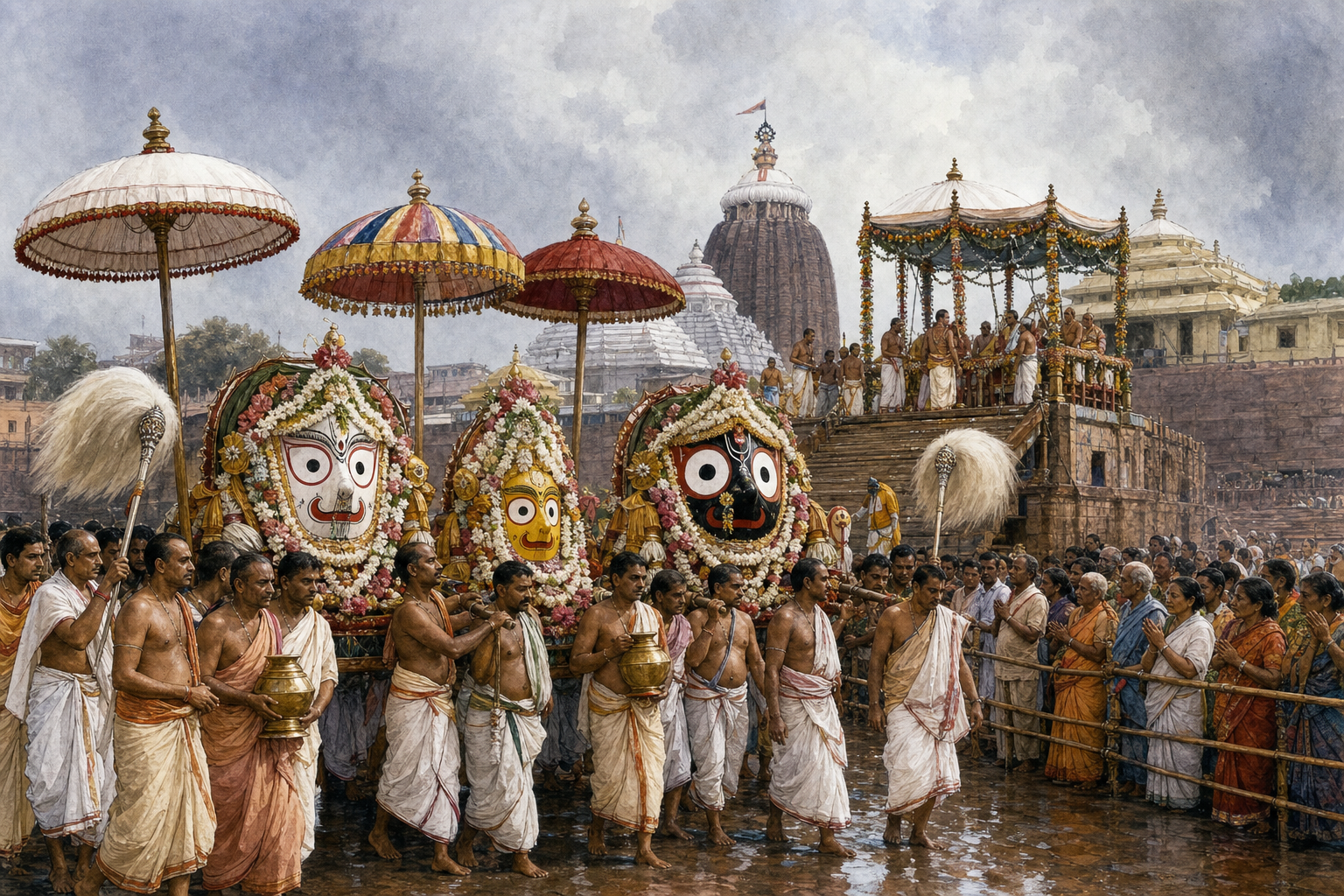
Snana Yatra is not an isolated abhisheka added to an ordinary temple day. It opens a carefully ordered movement from public revelation to seclusion and then renewed darshana. Knowing that sequence changes what you notice, whether you are in Puri or watching an authorized broadcast.
- Preparatory nitis are completed before the deities emerge. Sri Jagannath, Sri Balabhadra, Devi Subhadra, and Sudarshana are then brought in the ceremonial pahandi procession to the Snana Bedi, where the public can behold them.
- The deities receive jalabhisheka with 108 consecrated pitchers of water. The water is traditionally drawn from the temple’s sacred well and sanctified with mantra and fragrant substances. The number 108 marks ritual completeness across many Dharmic settings.
- After the bath comes Hati Vesha, also called Gajanana Besha. The elephant form recalls Sri Ganapati and the auspicious threshold of a new ritual phase. It is a brief darshana, not the deities’ regular adornment.
- The deities then enter Anavasara, or Anasara, for roughly a fortnight. Public darshana is suspended while designated sevakas attend to the vigrahas and renew their outward form. Devotional language describes this interval as convalescence after the extensive bath.
- The withdrawal ends with Netrotsava and Nava Yauvana Darshana, when the deities appear renewed. Their return leads directly toward Ratha Yatra, when Jagannath, Balabhadra, and Subhadra journey outward among the people.
Do not mistake Anavasara for an interruption or an inconvenient gap between festivals. It is one of the festival’s central movements. If you plan a Puri visit immediately after Snana Purnima, understand that the customary public darshana of the principal deities will not be available. Many devotees turn instead toward Alarnath at Brahmagiri during this period.
Darshana on the Snana Bedi also carries a different meaning from simply seeing a spectacle. In the Dharmic understanding of darshana, sacred beholding is an encounter that asks something of the beholder. Watch the measured order, the seva of the ritual specialists, and the deities’ movement into seclusion. The disappearance after such an abundant public appearance is part of what the day reveals.
A faithful home observance does not copy Srimandir
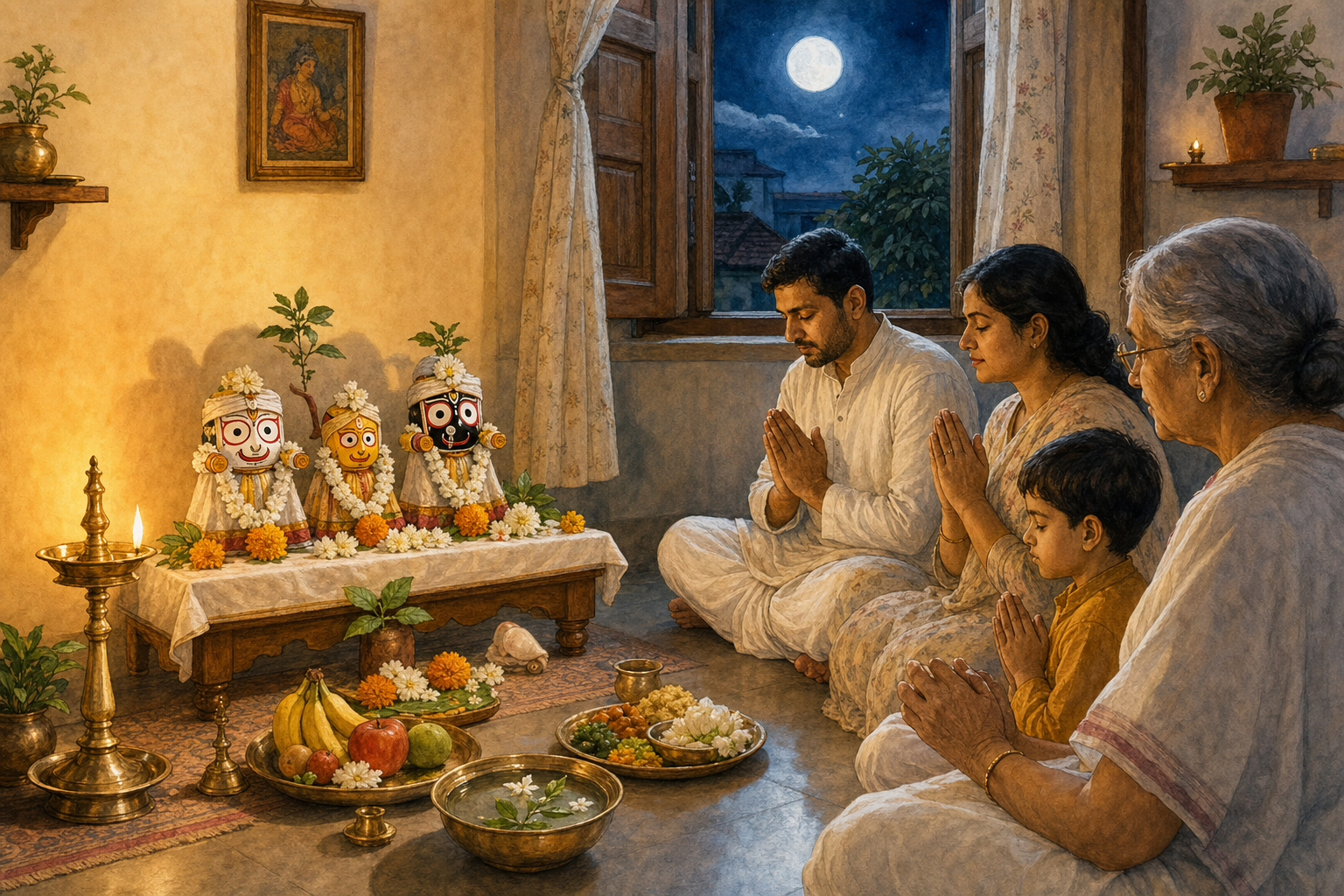
You do not need temple vessels, elaborate decoration, or a reconstructed Hati Vesha to observe the day sincerely. Srimandir’s niti belongs to a specialized, inherited system of seva. Household upasana should align with its devotional current without pretending to reproduce its protocols.
- Check the local Purnima tithi before choosing your worship time. If you also want to watch Puri’s ceremony, record the temple broadcast time separately so that the two schedules are not confused.
- Begin with your own morning snana, clean the worship space, and make a clear sankalpa. Keep it concrete: remembrance of Jagannath, purification of conduct, gratitude, or a specific act of seva.
- Light a deepa and place clean water, flowers, and seasonal fruit before an image of Jagannath or Sri Krishna. Simple, sattvik offerings are sufficient.
- Unless your established family practice and the material of the vigraha permit abhisheka, offer water in a clean vessel instead of pouring it over the image. A painted or otherwise delicate image can be damaged by an unnecessary imitation of the temple bath.
- Choose one recitation you can perform attentively: Jagannath Ashtakam, Vishnu Sahasranama, or japa of “Om Namo Narayanaya.” A shorter recitation done without distraction is preferable to rushing through several texts.
- Offer a simple naivedya, perform arati, and share prasada. Complete the observance with a useful act of dana or seva directed toward a genuine need.
If you watch the Snana Yatra remotely, treat the viewing period as darshana rather than background media. Prepare the altar first, silence unrelated notifications, and sit through the part of the ritual you have chosen to witness. The point is not to reproduce the crowd at Puri inside your home; it is to make your attention available.
If you keep Purnima vrata
A common pattern is to fast from sunrise and complete the vrata after local moonrise. If a complete fast is unsuitable for your health, keep a moderated sattvik observance rather than turning upavasa into physical strain. The discipline is meant to support clarity, restraint, and compassion.
Families who perform Satyanarayana Puja often choose the evening while Purnima tithi remains active and conclude after moonrise. That puja is a valid Purnima practice, but it is not a compulsory component of Jagannath Snana Yatra. Likewise, Vat Purnima is widely observed in Maharashtra, Goa, and parts of Gujarat, while some other regions associate the Savitri vrata with Jyeshtha Amavasya. Follow the form received in your own tradition rather than combining every observance attached to the month.
If you are going to Puri, plan for darshana rather than proximity
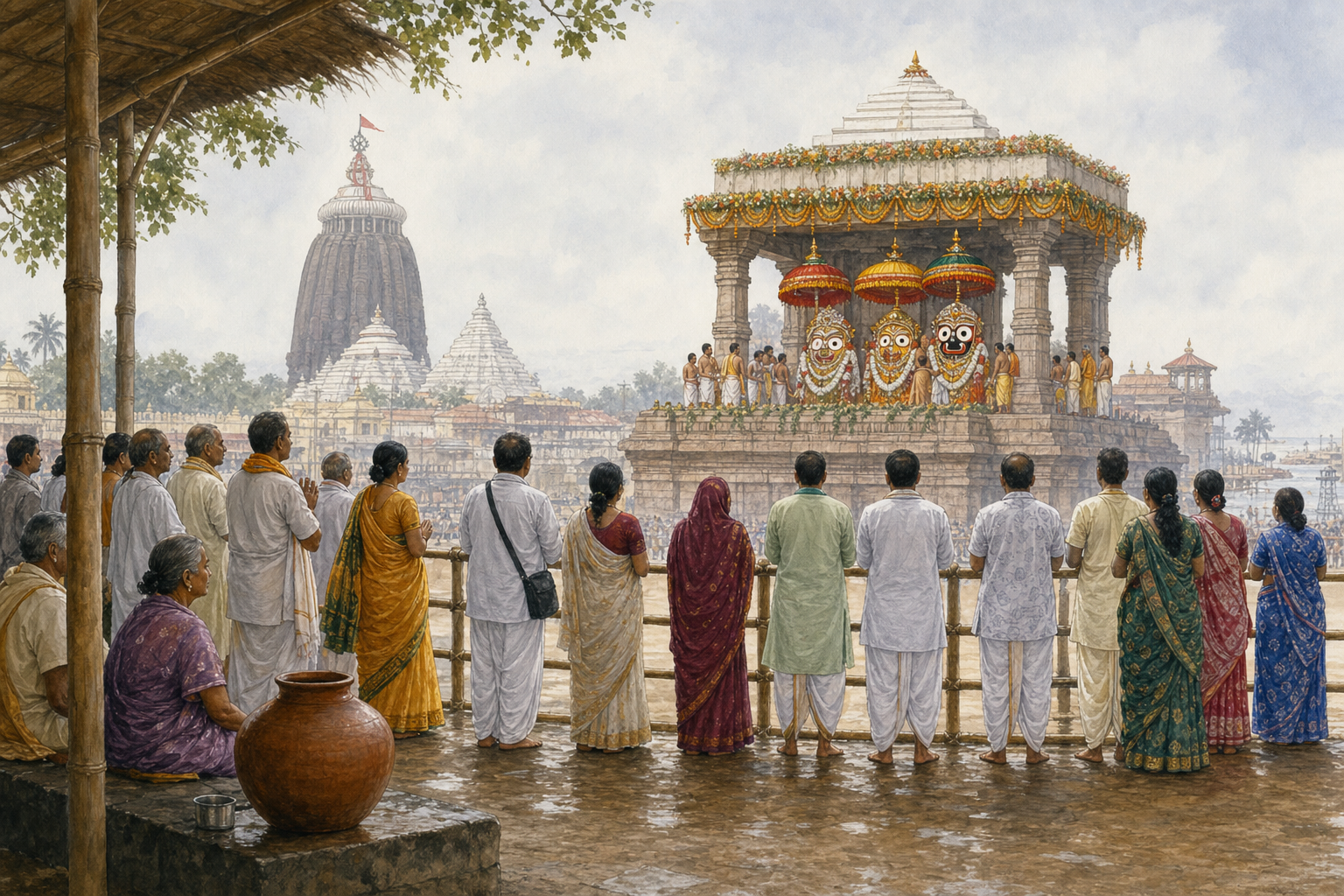
The most common planning mistake is to equate being in Puri with obtaining a close, uninterrupted view. Snana Yatra draws heavy crowds from before dawn, while access and vantage points around the Snana Bedi are regulated. Decide in advance whether participating in the sacred atmosphere is enough for you even if your physical view is brief or distant.
- Verify the final ritual and access schedule close to the date. The temple administration may adjust public movement to protect ritual order and manage the crowd.
- Plan transport, meeting points, and accommodation around pre-dawn congestion. Members of your group should know where to regroup if crowd controls separate them.
- Wear modest, practical clothing and carry only what local rules permit. Follow barriers, phased entry, and sevayat or administration instructions without arguing for a better position.
- Do not build the entire pilgrimage around one expected sightline. Make room for nama-japa, temple-area worship, dana, and quiet remembrance if access changes.
- Use biodegradable offerings where permitted, avoid unnecessary single-use plastic, and keep prasada packaging under your control until it can be disposed of properly.
- If dense crowds would make participation unsafe or unmanageable for you, an authorized broadcast paired with focused home worship remains a serious devotional option.
There is also a timing consequence that many pilgrims overlook: the deities enter Anavasara after Snana Purnima. If your journey extends into the following days, plan it with that withdrawal in mind. A visit built around ordinary public darshana will otherwise lead to avoidable disappointment.
The meaning is in the whole cycle, not the bath alone
Water in Snana Yatra is more than a cleansing substance. It carries mantra, fragrance, intention, and seva. Yet the bath does not produce endless public display. It is followed by rest, careful renewal, and a fresh appearance. The complete pattern is revelation, withdrawal, restoration, and return.
You can carry that pattern into your own observance without claiming it as temple ritual. During the abhisheka, identify one habit or resentment that needs purification. During Anavasara, reduce one form of noise that keeps you from regular sadhana. When the deities return for Nava Yauvana Darshana and Ratha Yatra, renew one outward act of seva. These are personal disciplines inspired by the cycle, not additions to Srimandir’s niti.
The festival also opens a careful way to recognize kinship across Dharmic traditions. Hindu abhisheka, Jain jalabhisheka, Buddhist Full Moon disciplines, and Sikh emphases on isnaan and seva each give water, ethical clarity, or service an important place. Their theologies and ritual forms are not identical. The honest language is one of resonance: shared regard for purification, restraint, compassion, and care for the sacred without erasing the boundaries of a sampradaya.
Your next step is practical. Check the Panchang for your location, decide whether you are keeping a vrata, performing home upasana, viewing the Puri ceremony, or travelling for darshana, and write down the relevant times. Then let the calendar serve devotion rather than replace it. Meet Jagannath with full attention during the public bath, and let the discipline continue when the visible darshana withdraws.
References
- DharmaRenaissance Blog – Deva Snana Purnima 2026: Witness Jagannath’s Sacred Bath at Puri, Date, Rituals, Meaning
- DharmaRenaissance Blog – Jyeshta Purnima (29 June 2026): Date, Puja Timings Guide, Dev Snan and Vat Purnima Insights