
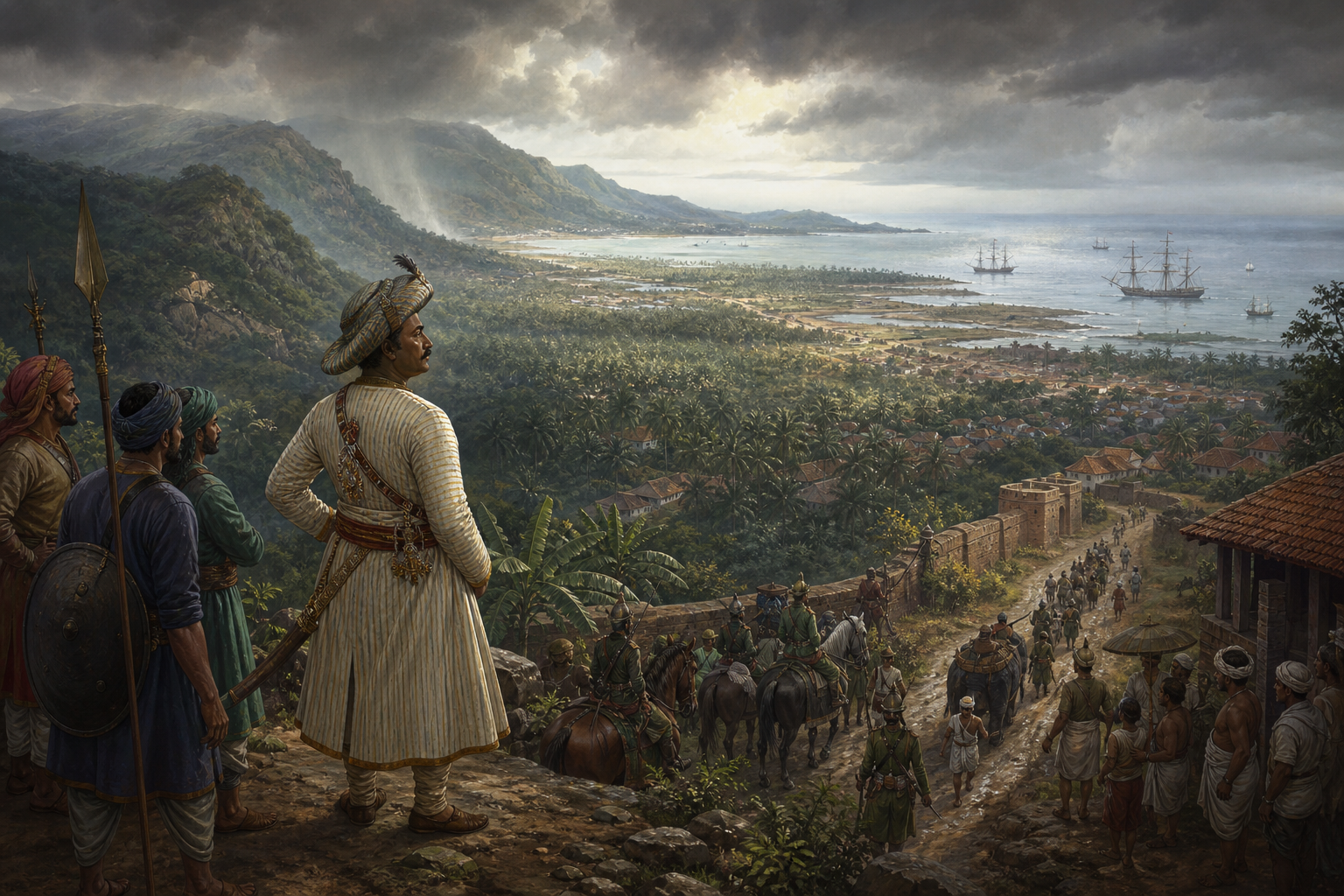
If you reached this question through a schoolbook, a commemorative speech, or an angry social-media thread, you were probably handed a verdict before the evidence: Tipu Sultan as either a secular patriot or a uniquely evil invader. Neither label tells you how to judge what happened in Malabar.
You need a stricter test. Separate Tipu’s conduct from his administrative capacity, distinguish opposition to the British from commitment to Indian nationhood, and examine human, cultural, and economic consequences independently. That approach will help you recognize both whitewashing and exaggeration.
Separate the questions that political memory merges
A ruler can build roads and use them primarily to move soldiers. A government can collect revenue directly from cultivators and still make their lives harsher. A king can fight the British East India Company without fighting for a modern Indian nation. Once you allow these propositions to coexist, much of the argument around Tipu becomes easier to examine.
A. Sreedhara Menon treated direct revenue collection and road building as “modern and progressive” measures. He also connected the weakening of Brahmin, Kshatriya, and Nair dominance with an improvement in the relative standing of subaltern communities. That thesis deserves examination, but it contains an analytical trap: coercion that lowers one elite’s position does not automatically liberate everyone below it.
Test each part of Tipu’s legacy as a separate proposition:
- Military conduct: What happened to civilians, captives, places of worship, and settlements during the Malabar campaigns?
- Administration: Who benefited from direct taxation and road construction, who bore their costs, and what purpose did those measures serve during sustained warfare?
- Political purpose: Did opposition to the East India Company express a larger national project, or did it serve Mysore’s struggle for state power?
- Later memory: Which facts were emphasized, softened, or omitted when court praise, colonial hostility, school curricula, literature, and present-day politics shaped Tipu’s public image?
Do not let success in one category answer a charge in another. An efficient revenue system does not acquit an army of religious coercion. A wartime atrocity does not prove that every administrative measure lacked public benefit. Each claim must carry its own evidence.
Malabar makes the consequences impossible to hide
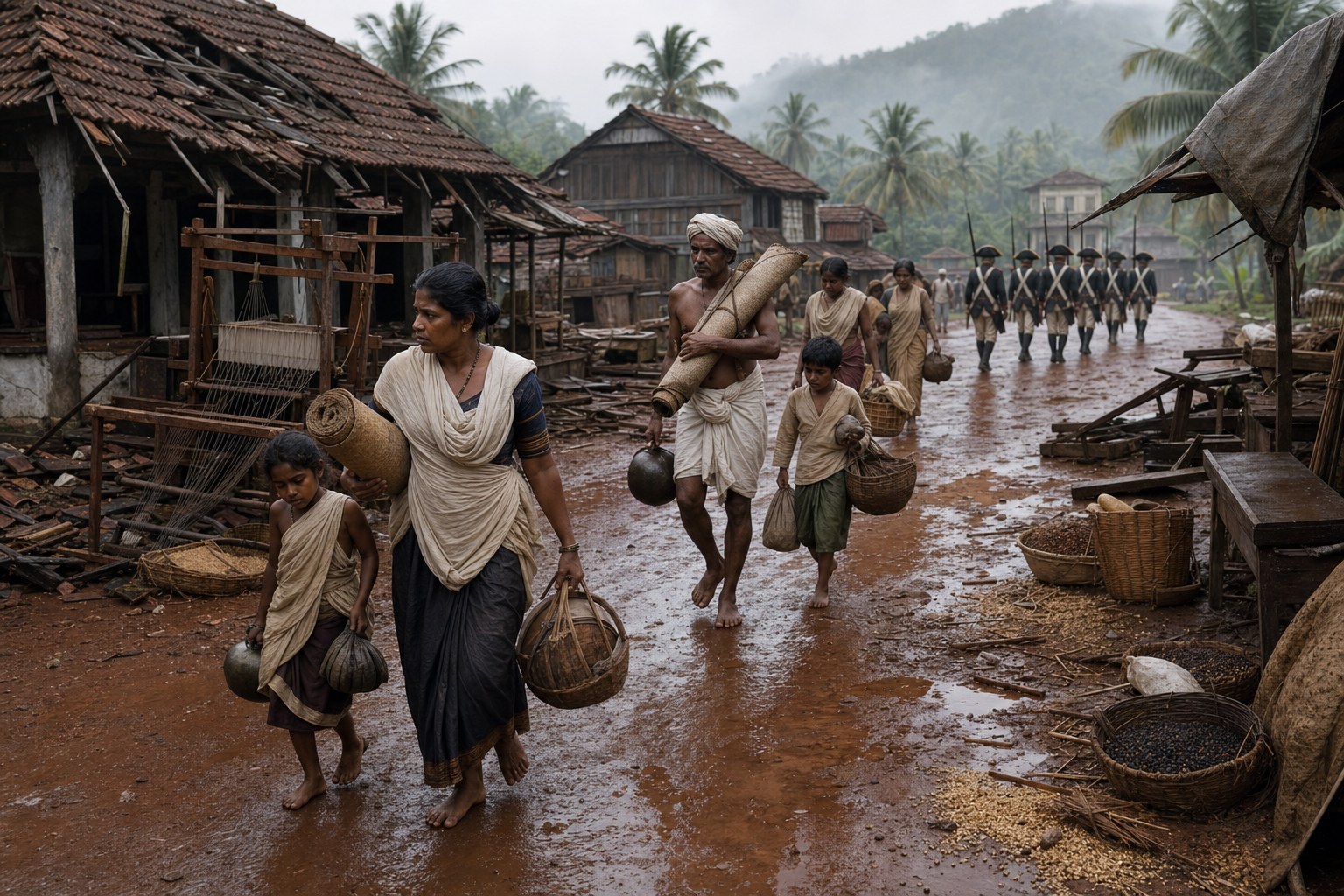
Malabar is the hardest test for celebratory portrayals because claims of administrative improvement sit beside severe wartime consequences. Roads may have connected difficult terrain, but their immediate value to an expanding military state is obvious. Direct tax collection may have reduced the role of local intermediaries, yet it also gave the state a more direct way to finance war.
Whatever adjective you apply to those policies, warfare disrupted black pepper cultivation, emptied ports, reduced foreign-currency inflows, and spread impoverishment. These effects matter because they reveal what institutional change felt like on the ground. A road can increase state capacity while the economy around it collapses.
The human and religious allegations are graver. They include indiscriminate killing, the destruction or desecration of temples and churches, forced marriages, compulsory conversion, and the circumcision of captives. For the charge of organized religious coercion, the case relies partly on passages in which Tipu is presented as praising mass conversion and congratulating commanders for circumcising or converting captives.
If authentic, accurately translated, and read in context, such language is evidence of intent at a level that later folklore cannot provide. But a dramatic quotation is not self-proving. Before repeating one, ask for the full passage, the original language, the manuscript or archival reference, the recipient, the campaign context, and a translation that can be checked against the original. A cropped English sentence circulating online is a lead, not a finished argument.
Keep three levels of a coercion claim distinct:
- Occurrence: Is there credible evidence that a particular killing, conversion, desecration, or displacement happened?
- Scale: Does the evidence establish one incident, a repeated pattern, or a region-wide number? Never turn evidence for an episode into an unsupported population estimate.
- Policy and command: Did commanders act locally, or did Tipu order, reward, celebrate, or institutionalize the conduct? Correspondence and administrative practice matter especially at this level.
Geography and economic evidence can test the narrative from another direction. Nair resistance eventually checked Tipu’s movement toward Travancore, but burned settlements, refugee movements, disrupted cultivation, and damaged maritime commerce had already imposed costs on Malabar. Those consequences do not prove every reported atrocity. They do make a bloodless modernization story very difficult to sustain.
Watch for category switching in public debate. If someone answers a forced-conversion allegation by pointing to road construction, the subject has been changed. If someone uses one letter to announce an exact regional total that the evidence does not contain, the claim has been inflated. Both moves replace historical reasoning with advocacy.
Fighting the British is not enough to establish a freedom fighter
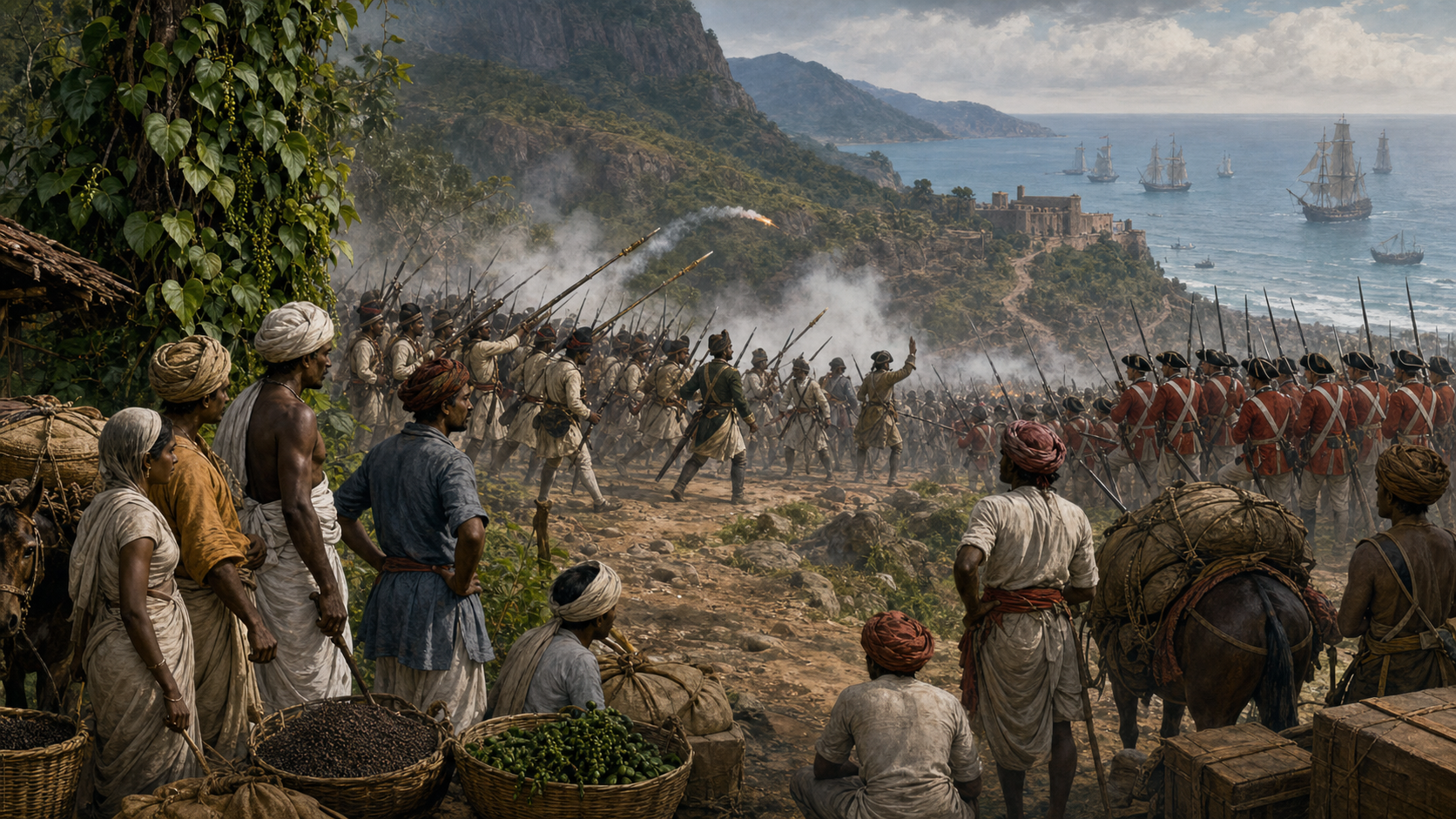
“Freedom fighter” is a moral and political category, not a synonym for anyone who fought the British. Tipu unquestionably opposed the East India Company. The harder question is what political order he sought and for whom.
His diplomacy included overtures to France, Napoleon Bonaparte, the Caliph, Zaman Shah of Afghanistan, and other foreign powers. He pursued coordinated action against shared enemies and reportedly offered France a territorial share from victories over the British. This is intelligible as statecraft. It does not, by itself, establish a project of popular Indian sovereignty.
Foreign alliances do not automatically disqualify an anti-colonial actor. Indian powers facing the East India Company naturally sought outside assistance, just as the Company relied on alliances within India. The relevant test is the political purpose behind the alliance, not the foreign identity of the ally.
Before accepting the freedom-fighter label, ask four questions:
- Was the political goal defined only by the enemy Tipu wanted to defeat, or by a wider community he intended to free?
- Who was expected to hold sovereignty after victory: the people of India, Mysore’s ruling state, or a coalition of rulers and external patrons?
- How did Tipu treat subjects who resisted his authority, especially communities in conquered territory?
- Did his plans and correspondence express a national principle, or primarily strategic, dynastic, and religious objectives appropriate to an eighteenth-century ruler?
The defensible description is narrower: Tipu was an anti-British ruler of Mysore who pursued state power through warfare and international alliances. Moving from that description to “Indian freedom fighter” requires positive evidence of a national project. British hostility alone cannot supply it.
Use this six-check method before accepting a historical claim
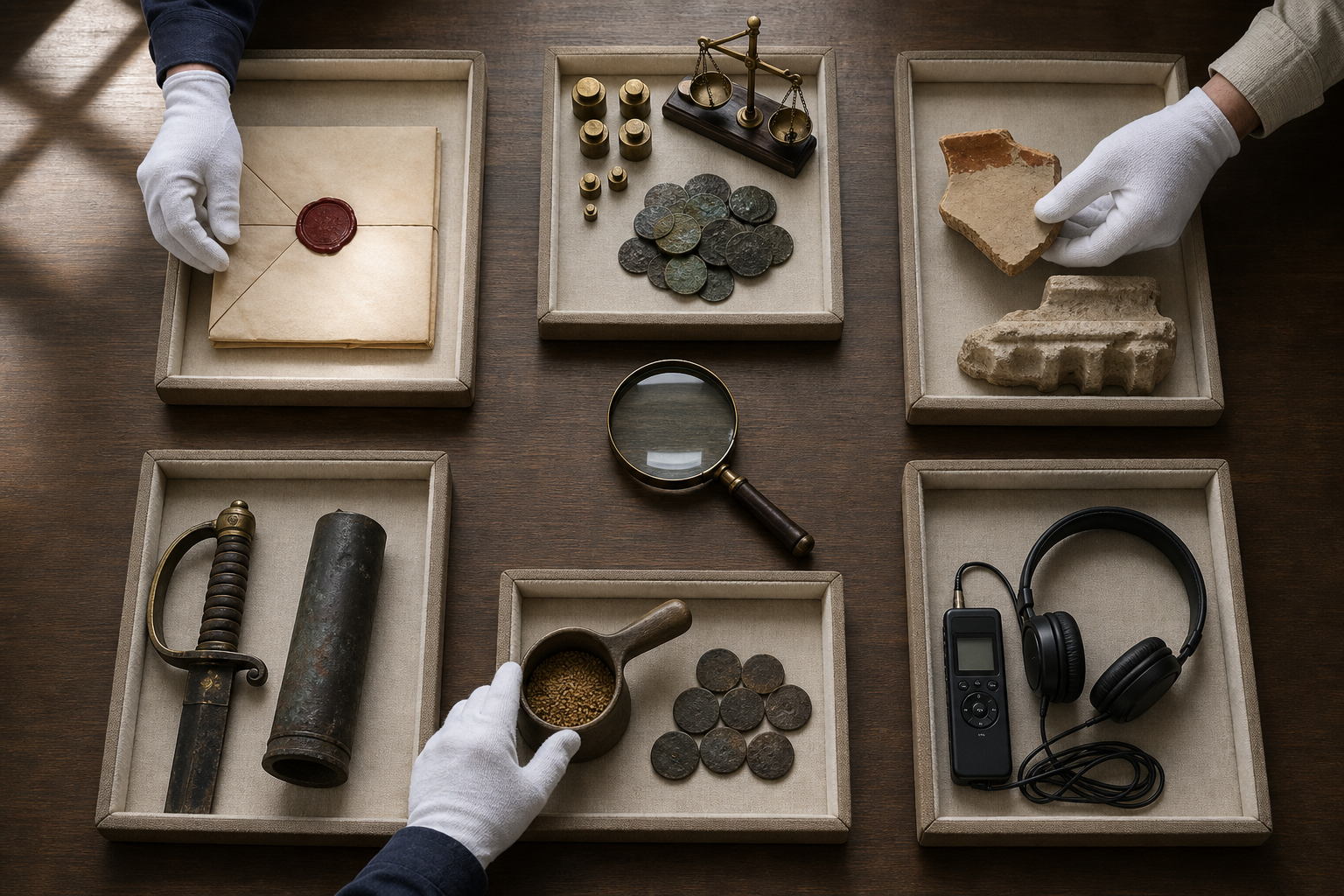
You do not need to become a professional historian to evaluate a claim responsibly. You do need a repeatable method, especially when a quotation or image arrives already wrapped in communal anger.
- Rewrite the claim so it can fail. “Tipu was tolerant” and “Tipu was a tyrant” are verdicts, not testable claims. Replace them with something precise: a named force damaged a named temple during a particular campaign; captives in a named place were compelled to convert; a road served a documented military or civilian purpose.
- Demand provenance proportional to the charge. A claim about mass coercion deserves more than an unattributed translation. Look for the author or issuing authority, recipient, date if available, archival location, chain of transmission, and enough surrounding text to identify context.
- Check language and translation. The relevant archive spans Persian, Kannada, Malayalam, British, and French material. Ask whether a disputed word has been translated consistently, whether honorific or polemical language has been flattened into literal prose, and whether ellipses hide a qualification.
- Triangulate independent evidence. Compare hostile and friendly testimony with court, temple, church, revenue, and local material. Oral histories can preserve the memory of displacement or desecration, but they should not carry precise numerical claims alone. Three modern retellings copied from one chronicle still represent one line of transmission, not three witnesses.
- Look for material footprints. Pepper exports, port traffic, coin hoards, land-revenue remissions, abandoned cultivation, refugee movement, and institutional repair can confirm or complicate literary testimony. Economic damage cannot identify every perpetrator, but it can test claims that a campaign produced general prosperity.
- Keep finding, scale, cause, and judgment separate. Evidence that an event occurred does not automatically reveal its regional scale. Evidence of economic decline does not by itself establish religious motive. Evidence of stronger administration does not prove public welfare. State capacity and human flourishing are different findings.
Bias is a warning label, not a delete key
British officials had wartime and imperial incentives to portray an enemy harshly. Court poets depended on royal favor and had incentives to praise their patron. Modern political movements have incentives to turn both victimhood and heroism into identity. None of those incentives makes every claim false or true.
Ask how bias could have altered the testimony: invention, omission, exaggeration, euphemism, selective translation, or a distorted estimate of scale. Then look for agreement on concrete details among witnesses or institutions that did not share the same interest. Independence matters more than the number of citations.
Apply the same discipline to your preferred conclusion. If you demand archival proof for temple destruction, demand comparable proof for sweeping claims of tolerance. If you reject every British description as propaganda, do not accept courtly praise merely because it points the other way. Method has value only when it can disappoint you.
Practice satya without turning memory into collective blame

Historical candor and present-day peace are not rivals. A dharmic approach holds satya and ahimsa together: truth must not be suppressed for political convenience, and truth must not be converted into inherited hatred.
Present-day Muslims do not acquire hereditary guilt for the actions attributed to an eighteenth-century ruler. Hindus and other descendants of affected communities are not required to accept euphemism about desecration, coercion, or displacement. The ethical line is clear: identify the ruler, force, order, institution, act, place, and evidentiary status as precisely as possible. Do not replace those particulars with accusations against an entire living community.
When you discuss or share a contested claim, use four safeguards:
- Label the confidence honestly: documented, strongly corroborated, reported, disputed, or unverified.
- Name the historical actor instead of using a timeless communal “they.”
- Link to checkable evidence rather than an inflammatory image or an isolated quotation card.
- Correct an exaggeration from your own side as readily as you challenge a denial from the other side.
Key takeaways
- Judge Tipu’s military conduct, administration, political purpose, and later reputation as separate questions.
- Roads and direct taxation can demonstrate state capacity without demonstrating public welfare.
- For Malabar, distinguish evidence that coercion occurred from claims about its scale and status as centrally directed policy.
- Opposition to the East India Company establishes an anti-British struggle, not automatically a modern Indian freedom movement.
- Test Persian, Kannada, Malayalam, British, French, institutional, economic, and oral material for independence and convergence.
- Tell the truth about historical perpetrators without assigning their guilt to present-day communities.
Your next move is simple. Take one disputed claim – a conversion letter, a temple desecration, a road-building achievement, or the freedom-fighter label – and run it through the six checks above. If it survives, state it precisely. If it does not, set it aside. Civilizational memory becomes stronger when it needs neither silence nor exaggeration.