
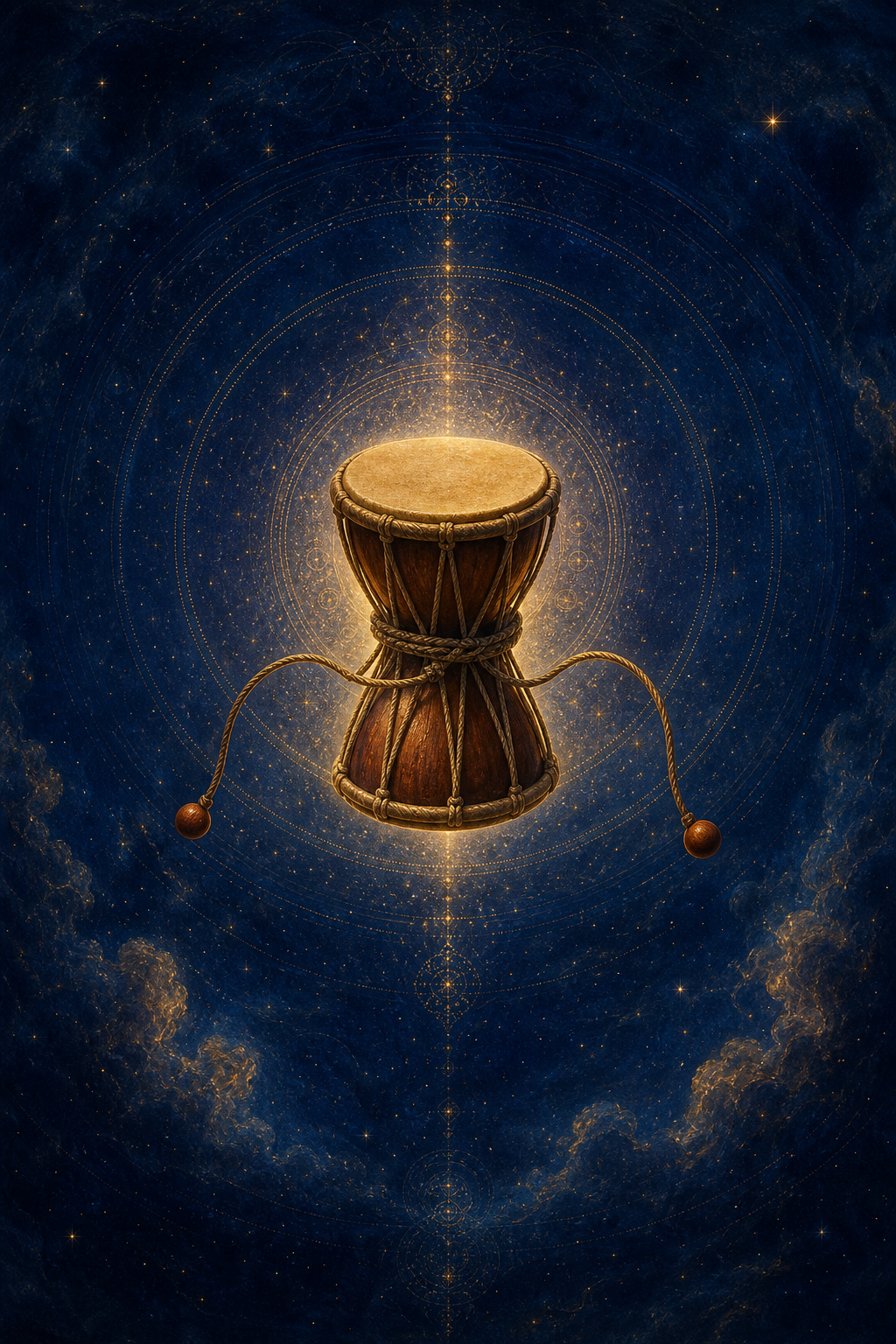
You may have noticed a drum in a murti, temple festival, or devotional performance and wondered whether it represents music, ritual, or something deeper. In Hindu symbolism, the drum can point beyond the instrument to the mystery of existence itself.
You can understand that symbolism without memorizing a catalogue of icons. Begin with what a drum actually reveals: an unseen vibration becomes audible, rhythm gives it order, and every beat emerges from silence.
The symbol begins with primordial sound
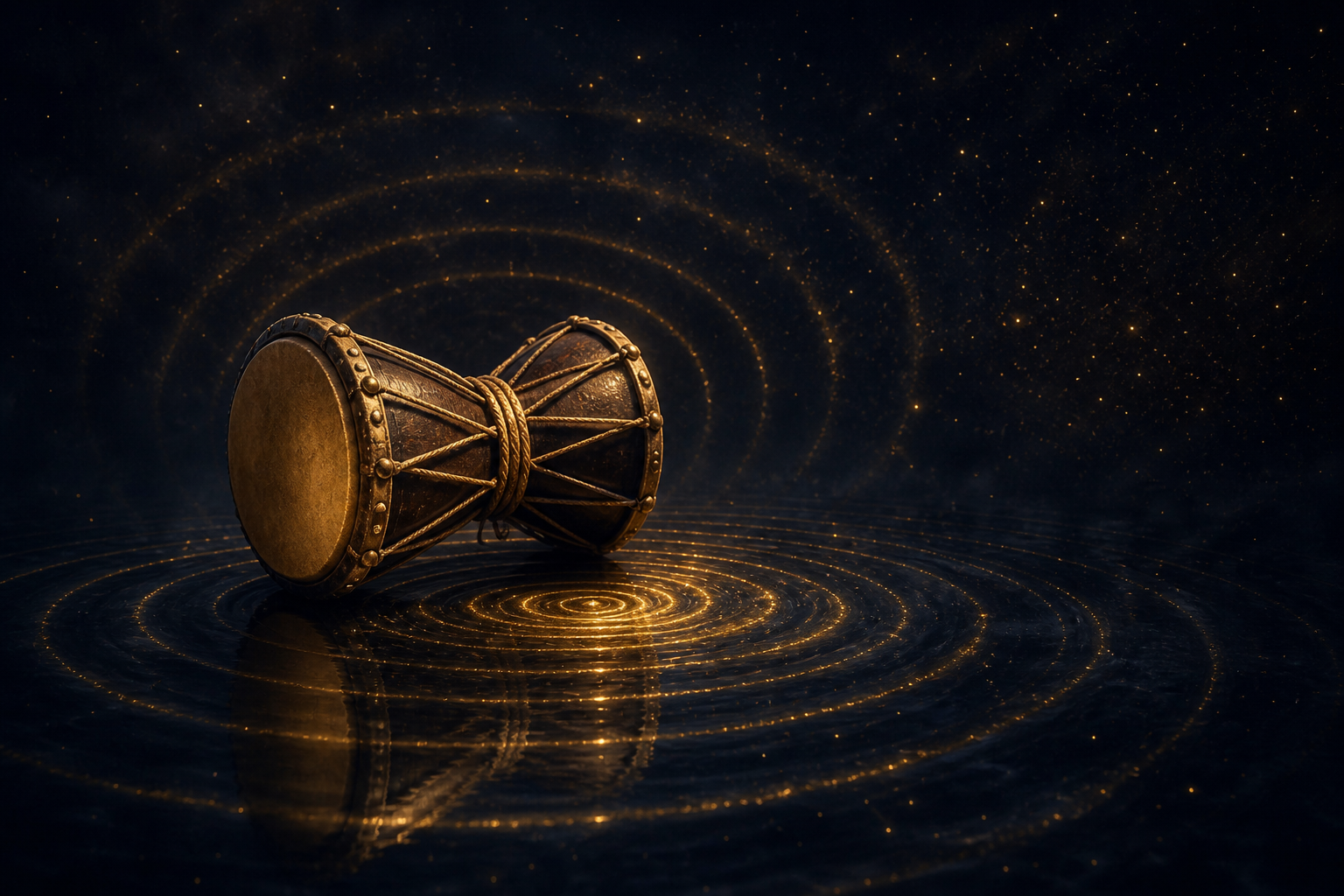
One Hindu understanding of creation begins with Nada, primordial sound. In this vision, sound precedes light and visible form. The cosmos does not begin as a finished collection of objects. It begins as vibration.
The drum makes that subtle teaching tangible. You cannot hold a sound after it has passed, yet you can hear it, feel it, and respond to it. The instrument therefore acts as a bridge between what remains unseen and what becomes present to the senses.
This does not mean that every drum automatically carries the same sacred meaning. The symbolism depends on its religious setting. But when a drum appears in Hindu sacred art or worship, Nada gives you a sound starting point: the object can embody the creative power of vibration rather than merely decorate the scene.
Rhythm makes cosmic order something you can experience
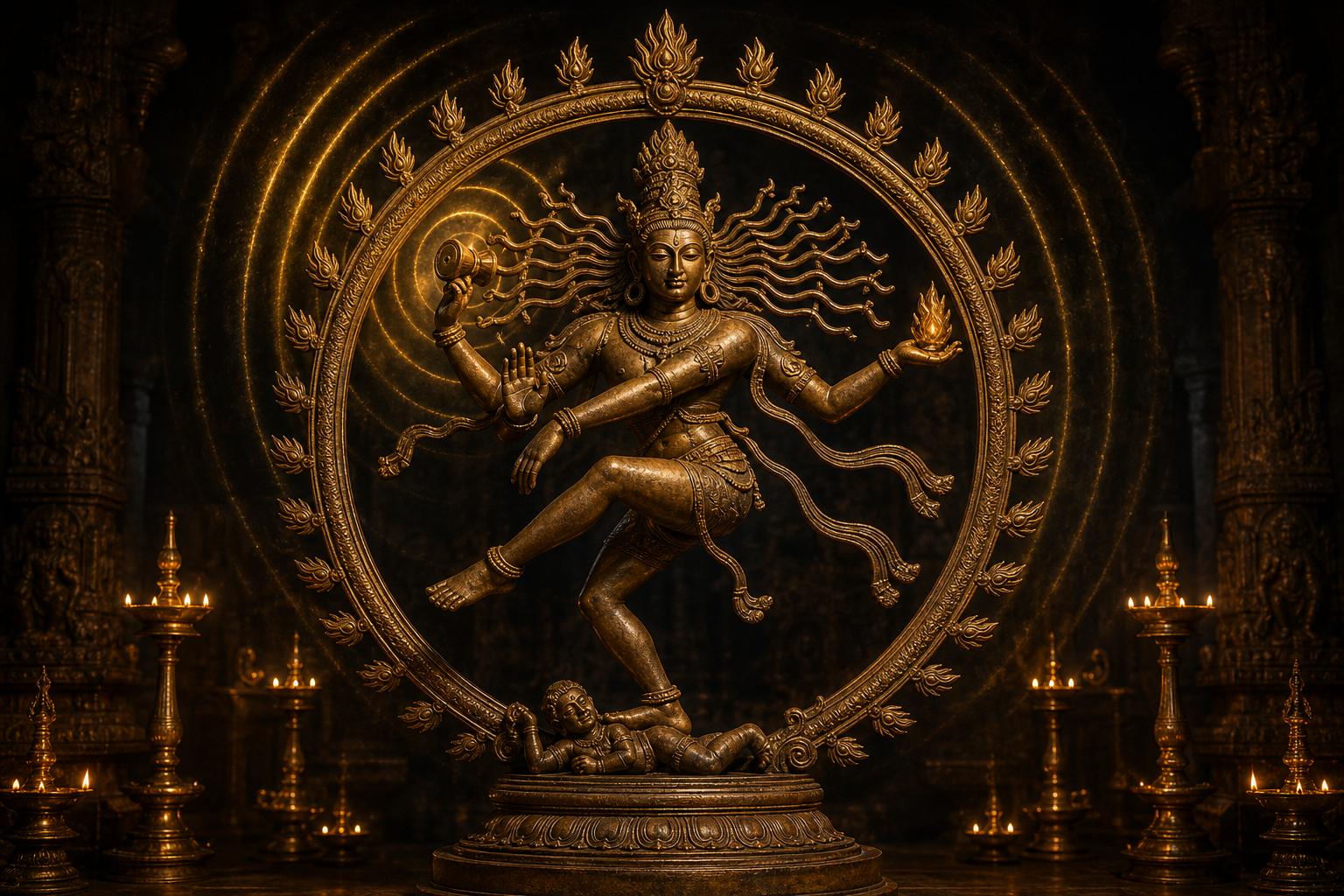
A single strike announces an event. A recurring beat creates a pattern. Each sound is new, but the rhythm continues through change. That makes the drum especially suited to a vision of the cosmos as living movement rather than inert matter.
You can notice this directly. A beat arises, remains audible for a moment, and fades. The next beat does the same, while the larger pattern holds them together. As contemplation, this can turn your attention toward continuity within change and order within movement.
Silence also matters. It is not merely the absence of the sacred sound. The interval allows one beat to be distinguished from another. Without that space, there is noise but no rhythm. The drum consequently invites you to notice a relationship: sound and silence make the pattern together.
How to interpret a drum in sacred art or worship
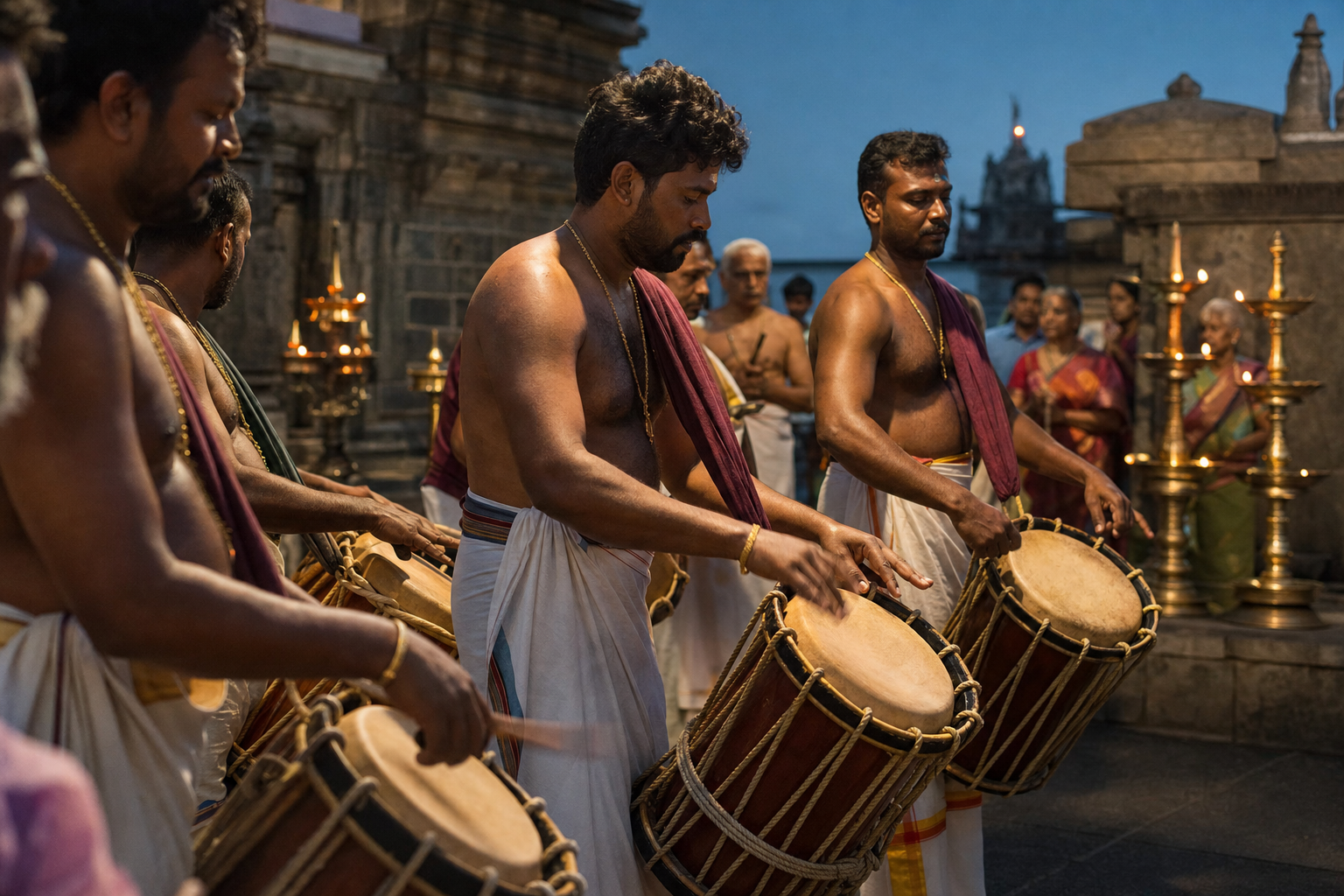
Hindu traditions are diverse, so a symbol should not be treated as a code with one meaning in every place. When you encounter a sacred drum, work outward from its actual context.
- Identify the setting. Notice whether the drum appears with a deity, in a ritual, during dance, or in a public celebration. The setting tells you which aspect of the symbol is active.
- Watch what it does. A drum being played emphasizes action and vibration. A drum held in an image may condense that same idea into visual form.
- Notice what the rhythm organizes. Does it guide movement, gather attention, accompany devotion, or create a shared cadence? Its practical function can illuminate its symbolic function.
- Test your interpretation. A strong reading should connect naturally to sound, vibration, rhythm, or ordered movement. Be cautious about assigning an elaborate fixed meaning without tradition-specific support.
If you want to understand the usage of a particular temple or community, ask someone formed within that tradition. Local practice can add a layer that general symbolism cannot supply.
A simple way to contemplate the symbolism
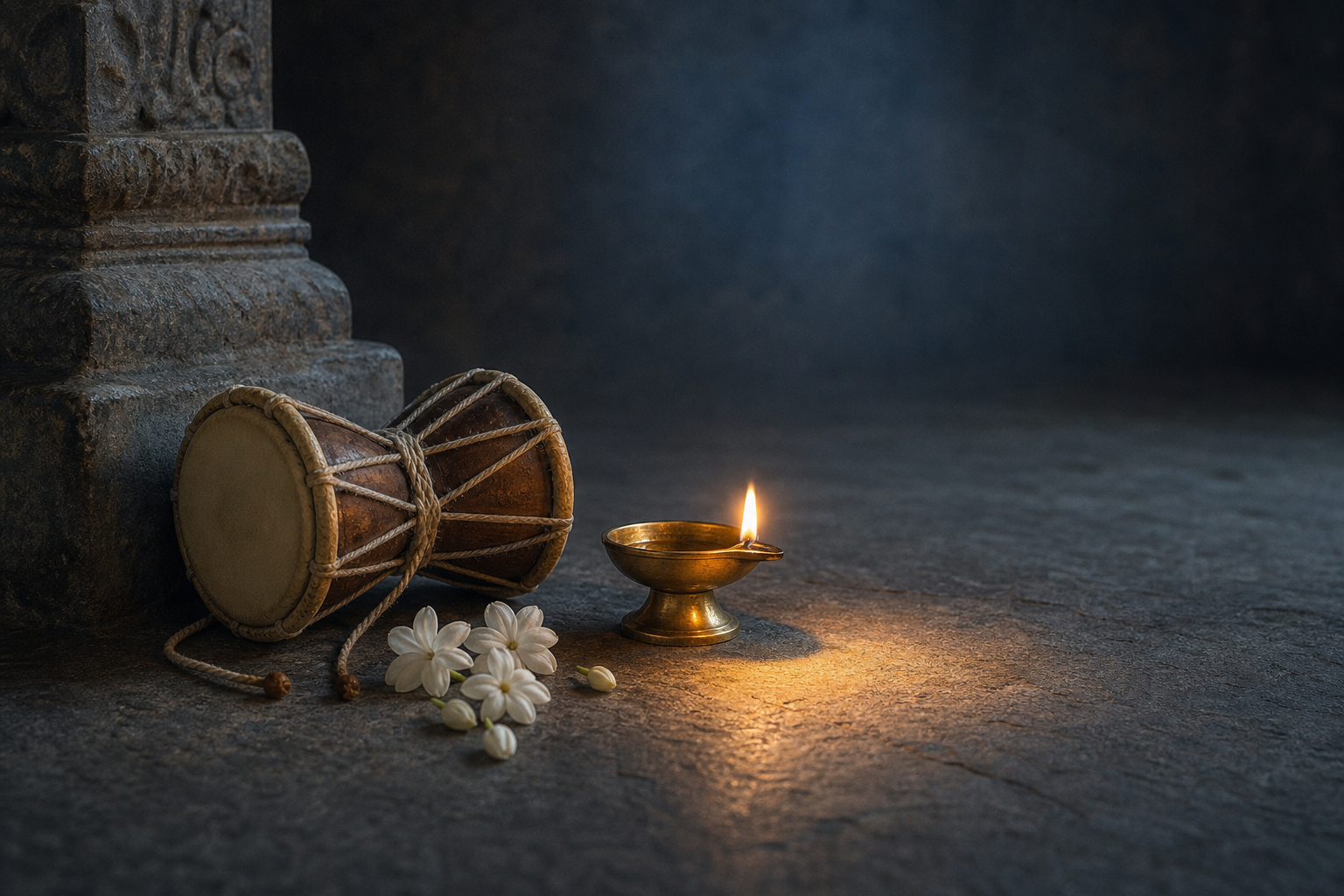
You can explore the drum’s meaning through attentive listening. Treat this as personal reflection, not as a formal ritual or a substitute for instruction from a guru or sampradaya.
- Listen to a simple, steady drum rhythm in a quiet setting.
- Notice the first strike as sensation before naming the instrument or judging the music.
- Shift your attention to the intervals. Observe how silence gives each beat its boundary.
- Follow the continuing pattern while individual sounds arise and disappear.
- After the rhythm stops, remain still long enough to notice the difference between fading resonance and complete silence.
This exercise lets the symbol do its work through experience. Instead of reducing the drum to a verbal definition, you encounter vibration becoming sound, sound becoming rhythm, and rhythm shaping awareness.
In a temple or communal observance, follow local etiquette rather than turning worship into a private exercise. Listening respectfully to how the drum functions there may teach you more than imposing an interpretation in advance.
Key takeaways
- The sacred drum expresses the Hindu idea that existence is rooted in Nada, primordial sound.
- It makes an unseen principle perceptible by turning vibration into an audible and felt presence.
- Rhythm holds continuity and change together, while silence gives each beat its form.
- The drum’s precise meaning depends on its deity, ritual, artistic, or community context.
- Attentive listening can deepen your understanding, but local traditions should explain their own practices.
The next time you encounter a sacred drum, pause before asking only what the object stands for. Watch, listen, and ask what its rhythm is making present in that particular moment.