
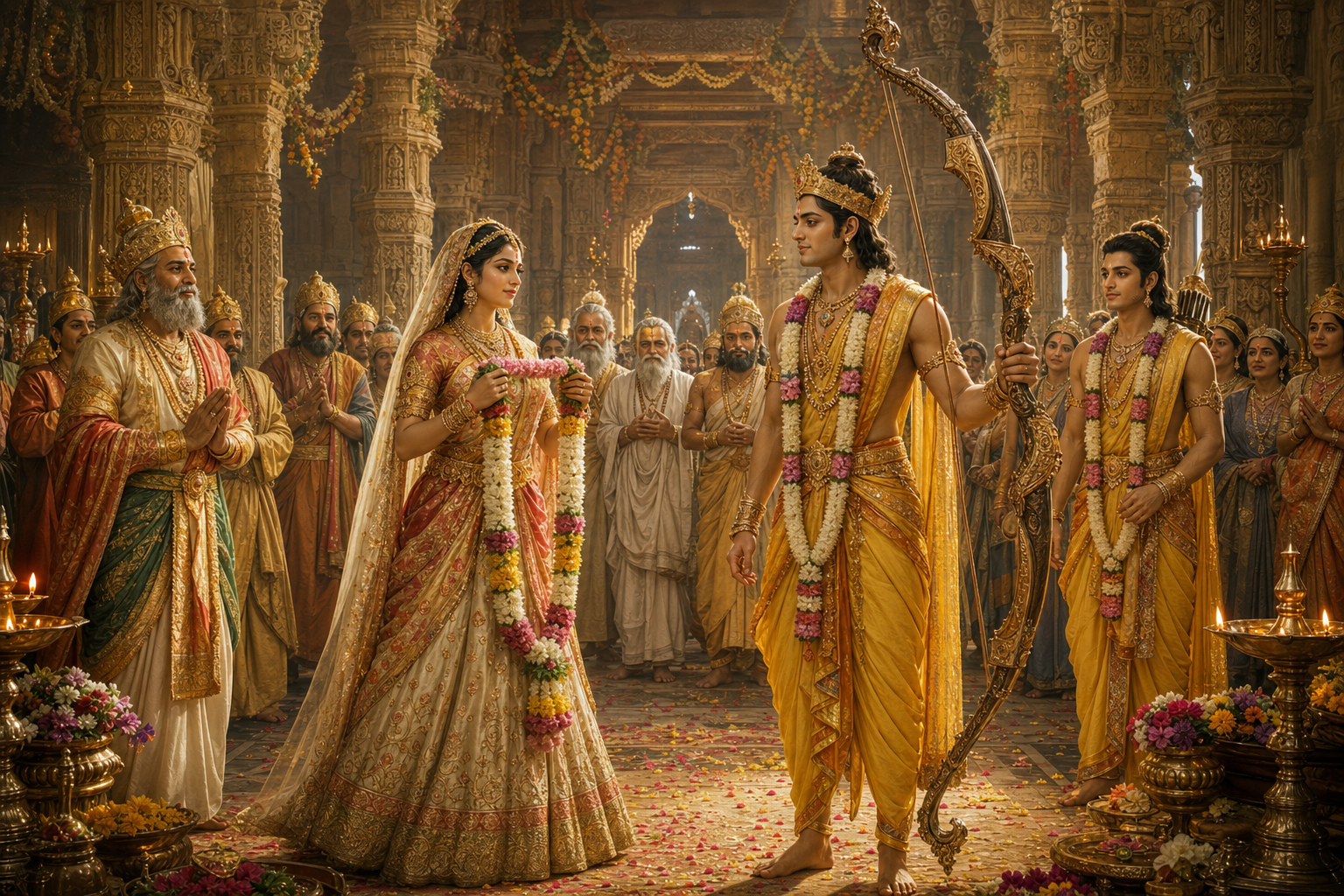
Sita’s marriage is often approached through a single familiar label, but the supplied sources show why that label is not enough. The episode belongs simultaneously to a discussion of ancient marriage customs and to a Ramayana tradition whose meaning has expanded across texts, languages, devotional settings, and performances.
Read together, the sources offer a useful method: first distinguish the social concepts of Swayamvara and Viryashulka, and then ask how a particular Ramayana tradition frames the characters, values, and purpose of the wedding. This prevents both customs and narratives from being flattened into one supposedly universal account.
One marriage episode, several interpretive frames
The two DharmaRenaissance articles examine Sita’s marriage at different scales. The article on the living Ramayana tradition includes Rama winning Sita’s hand as an early turning point in the widely recognized plot. The article on Swayamvara and Viryashulka moves closer to the event and asks what kind of marriage arrangement its bow challenge represents.
These perspectives are complementary rather than competing. The first establishes that Rama Katha is a family of narratives rather than a single literary object. The second shows that even within a familiar episode, different terms illuminate different features. One frame concerns the transmission and interpretation of the story; the other concerns the mechanism by which a husband becomes eligible.
This distinction matters because a literary episode can carry social, political, ethical, and devotional meanings at once. A name for the ceremony does not by itself settle questions about the bride’s agency, the suitor’s qualification, dynastic interests, or the theological status assigned to Rama and Sita in a particular telling.
Swayamvara and Viryashulka are not synonyms
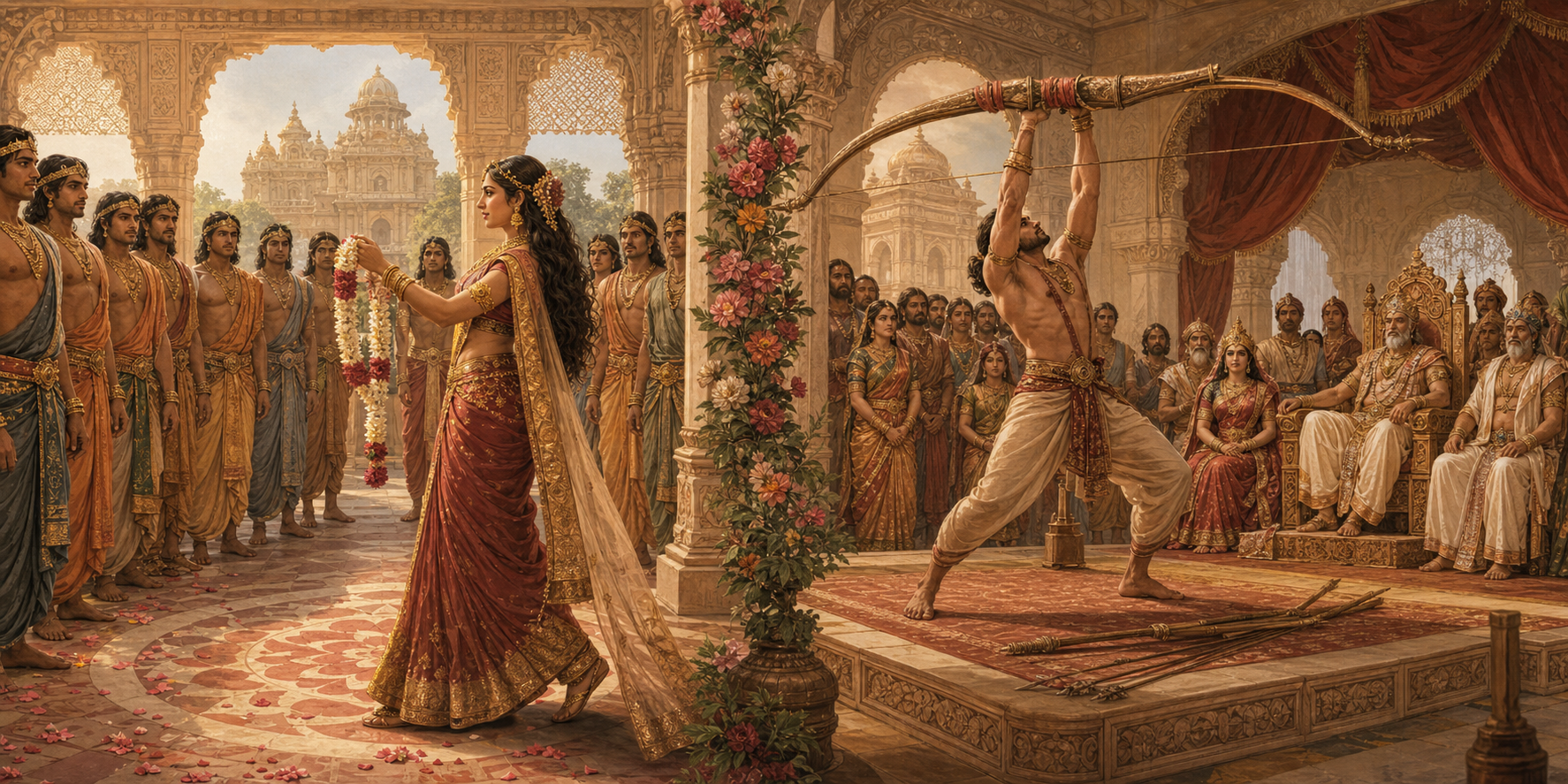
According to the marriage-custom article, Swayamvara centers on selection. It describes a formal setting in which an eligible woman, particularly in a royal or Kshatriya context, chooses a husband from among assembled suitors. Viryashulka centers instead on qualification: a suitor must satisfy a condition of prowess before receiving the bride’s hand.
| Concept | Primary focus | Decisive feature | Important caution |
|---|---|---|---|
| Swayamvara | The bride’s selection | A public choice among eligible suitors | The choice still operates within family, social, and dynastic constraints |
| Viryashulka | The suitor’s demonstrated worthiness | A test of strength, skill, courage, or heroic competence | It should not be reduced to a monetary bride-price |
The Sita episode illustrates why the distinction is consequential. The source reports that King Janaka makes the lifting and stringing of Shiva’s bow the condition for Sita’s marriage, and that Rama alone succeeds. On that account, Viryashulka describes the decisive mechanism more precisely: eligibility is established through a public feat. If the broader episode is discussed using Swayamvara language, that should not erase the special role played by the condition of valor.
Other epic examples clarify how the concepts can overlap or separate. The same source describes Draupadi’s assembly as a Swayamvara containing a Viryashulka-like archery test, whereas Damayanti’s choice of Nala is presented as a more choice-centered form without a comparable martial contest. These comparisons show that the useful question is not simply which label is correct, but which element carries the greatest weight in a particular narrative.
The article also places limits on the terminology. It explains that Swayamvara does not fit neatly as another formal type alongside the eight marriages discussed in Dharmashastra classifications. Viryashulka, meanwhile, should not be confused with the Asura form involving the transfer of wealth to the bride’s family. Its stated logic is demonstrated ability, not purchase.
Ramayana plurality changes the questions readers should ask
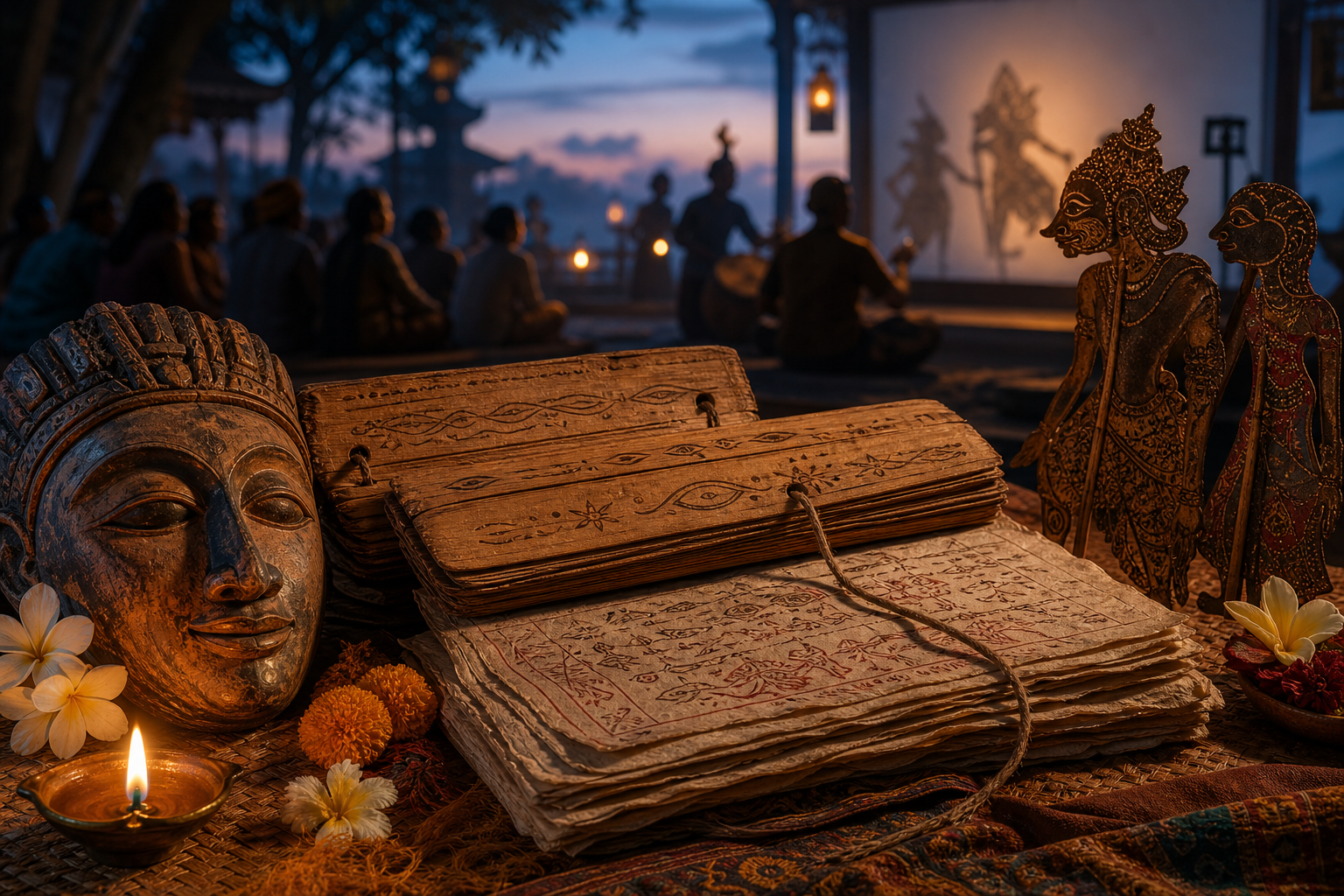
The living-tradition article identifies Valmiki’s Sanskrit Ramayana as foundational while emphasizing that it does not exhaust Rama Katha. It reports that Tulsidas’s Ramcharitmanas gives the story an accessible devotional and communal life; Kamban reimagines it through Tamil poetry, Srivaishnava devotion, and regional sensibility; and the Adhyatma Ramayana develops a more explicitly Vedantic interpretation. Oral storytelling, temple recitation, theatre, song, and household practice expand the archive still further.
These reports do not provide a catalogue of different wedding procedures in every Ramayana. It would therefore be unwarranted to invent scene-by-scene variations or claim that each tradition endorses a distinct marriage custom. Their relevance is interpretive: the broader emotional and theological priorities of a telling can influence what readers notice in a shared episode.
A reading attentive to Valmiki’s deeply human moral world may concentrate on duty, character, and difficult choices. A devotional reading shaped by the Ramcharitmanas may place the episode within a larger experience of Rama as the compassionate Lord. Kamban’s literary and regional setting invites attention to Tamil poetic and devotional expression, while the Adhyatma Ramayana can direct attention toward inward or metaphysical meaning. Applied cautiously, these are lenses for inquiry rather than licenses to insert unsupported details into the wedding narrative.
Plurality also has boundaries. The living-tradition source argues that enduring retellings remain accountable to a recognizable sacred grammar, including Rama’s commitment to dharma and Sita’s dignity. Variation, in this account, is disciplined continuity rather than arbitrary reinvention. A responsible discussion should therefore identify the version or performance under consideration before making broad claims about what “the Ramayana” says.
Marriage becomes a test of public and moral suitability
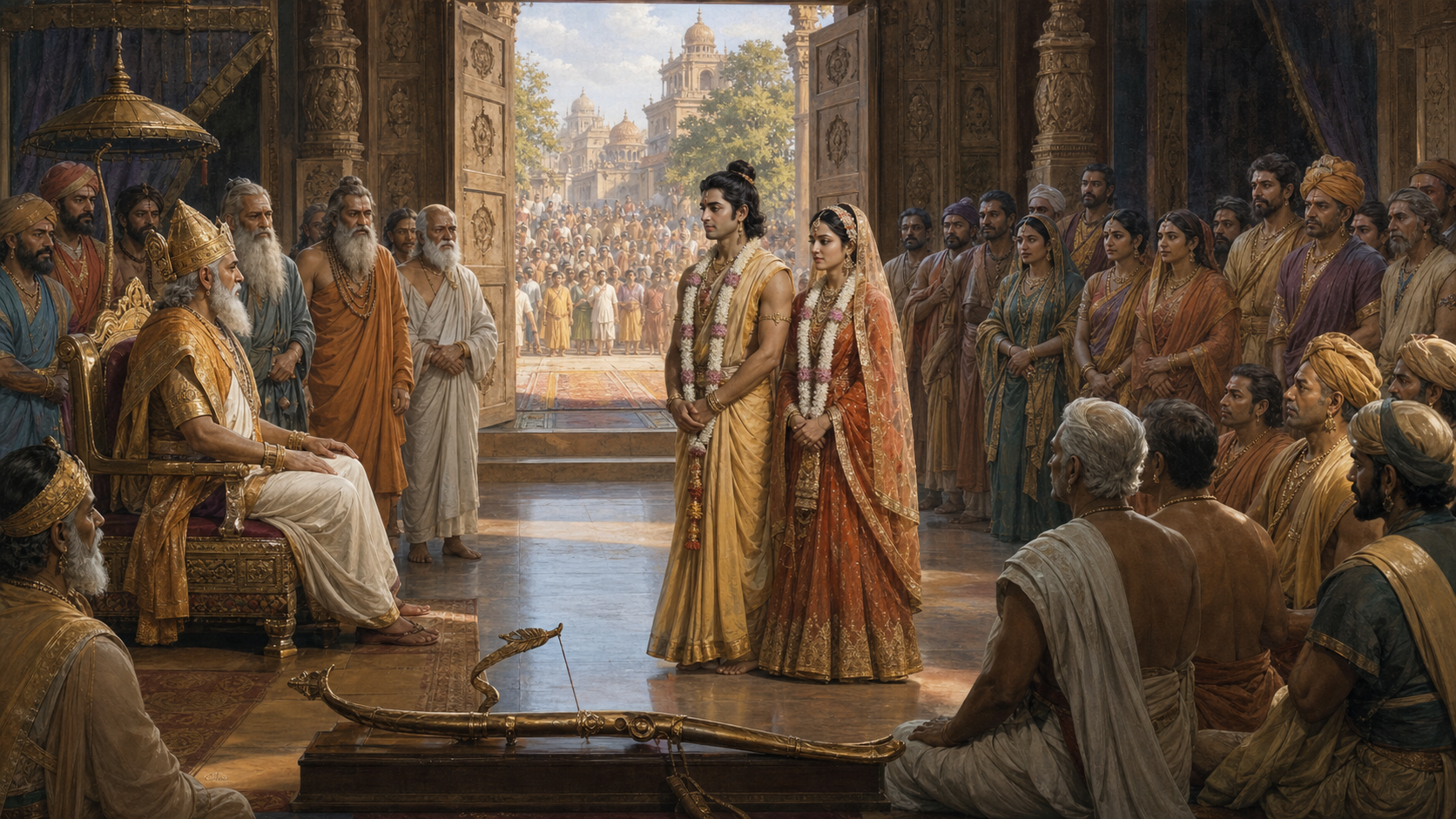
The marriage-custom article situates royal assemblies within concerns larger than private preference. A princess’s marriage could involve alliances, succession, regional stability, and royal prestige. Public demonstrations of martial competence were meaningful in that setting because a ruler was expected to protect society and uphold order. Viryashulka consequently presents prowess as evidence of possible public fitness, not merely as spectacle.
Yet the same source stresses that the epics do not treat brute strength as sufficient. Rama’s accomplishment is associated with humility, restraint, obedience, and dharmic character. The bow test establishes exceptional capability, but the narrative’s moral force depends on the kind of person who possesses that capability. Heroic eligibility and ethical suitability are related without being identical.
Swayamvara introduces another dimension by making the woman’s selection visible, although the article cautions against equating that structured royal choice with unrestricted modern individual autonomy. The distinction between the customs is therefore protective as well as descriptive: it prevents the general agency associated with Swayamvara from being automatically projected onto every Viryashulka narrative, and it prevents a feat of prowess from being mistaken for the whole meaning of marriage.
The living-tradition article adds a further layer by reporting that Rama Katha has entered local marriage customs, household vows, festivals, and moral instruction. This indicates cultural influence, but not a simple documentary relationship. Epic narratives preserve ideals, questions, and collective memories; as the marriage-custom source also cautions, they should not automatically be treated as administrative records of ordinary household practice.
Key takeaways
- Swayamvara primarily concerns the bride’s act of selection, while Viryashulka primarily concerns a qualifying test of the suitor’s prowess.
- The concepts can overlap, but the bow condition makes Viryashulka especially important for interpreting Sita’s marriage as presented by the marriage-custom source.
- Ramayana plurality requires readers to identify the text, performance, or devotional setting before turning one interpretation into a universal claim.
- Epic weddings illuminate ideals of agency, worthiness, character, lineage, and public responsibility, but they are not straightforward records of everyday marriage practice.
Future study can deepen this synthesis by comparing the exact wedding passages and performances of particular Ramayana traditions while keeping social terminology, literary interpretation, and historical evidence clearly distinguished.
References
- DharmaRenaissance Blog – Swayamvara vs Viryashulka: Ancient India’s Powerful Marriage Customs Explained
- DharmaRenaissance Blog – Why Every Ramayana Is Incomplete: The Powerful Living Tradition of Rama