
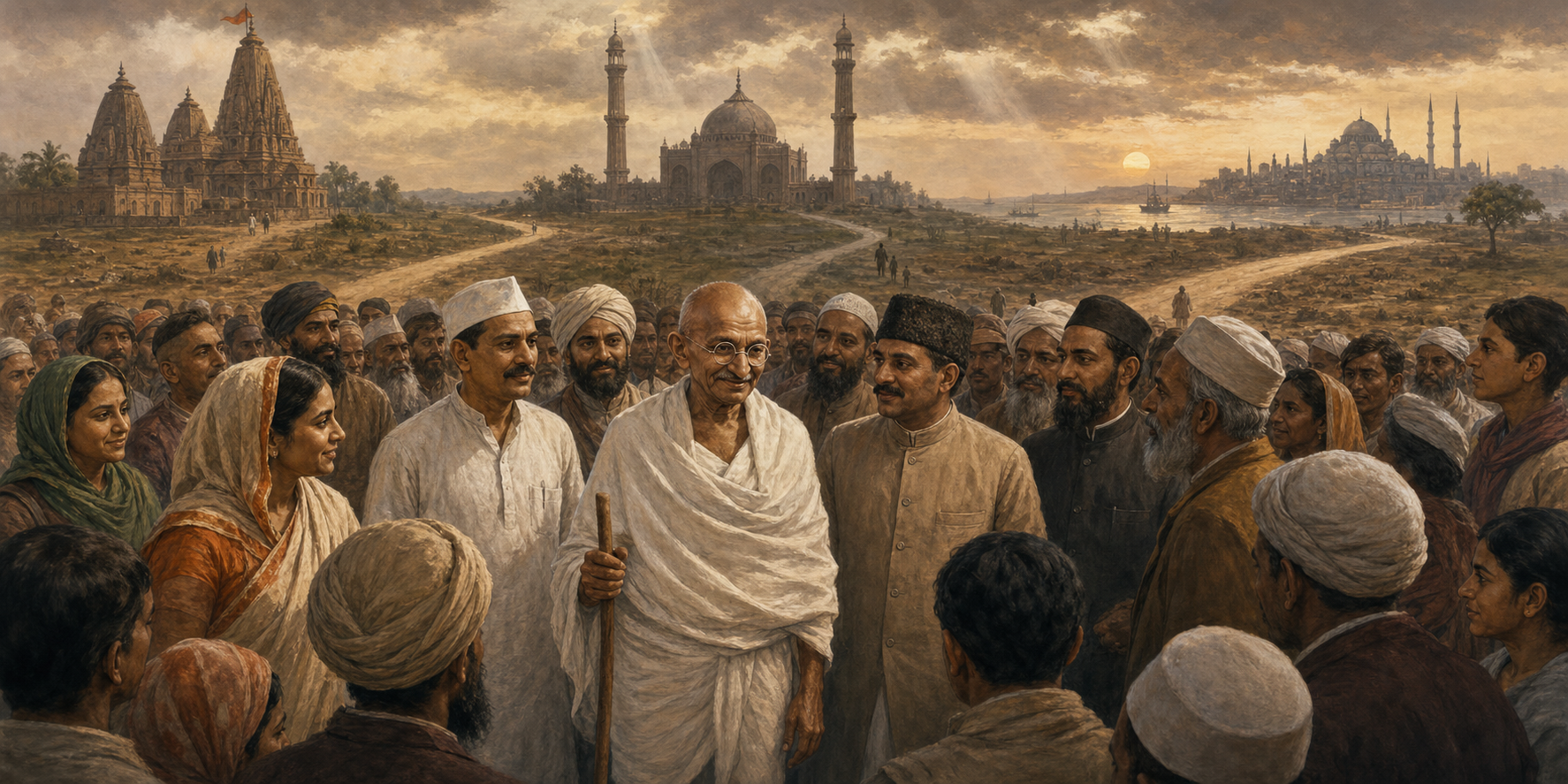
Gandhi’s support for the Khilafat Movement remains controversial because it joined an Indian anti-colonial campaign to a religious cause centred on the Ottoman Caliphate. The decision promised broader resistance to British rule, but it also raised a lasting question: can a tactical alliance create durable unity when its participants do not share the same political ends?
The controversy became still more complicated in 1941, when an anonymous tract accused Gandhi and Muslim leaders of involvement in a plan connected to Afghanistan. A careful assessment must distinguish Gandhi’s documented political choice, the tract’s disputed allegations, and the broader lessons later readers have drawn from both.
Why the alliance made sense, and why it carried risks
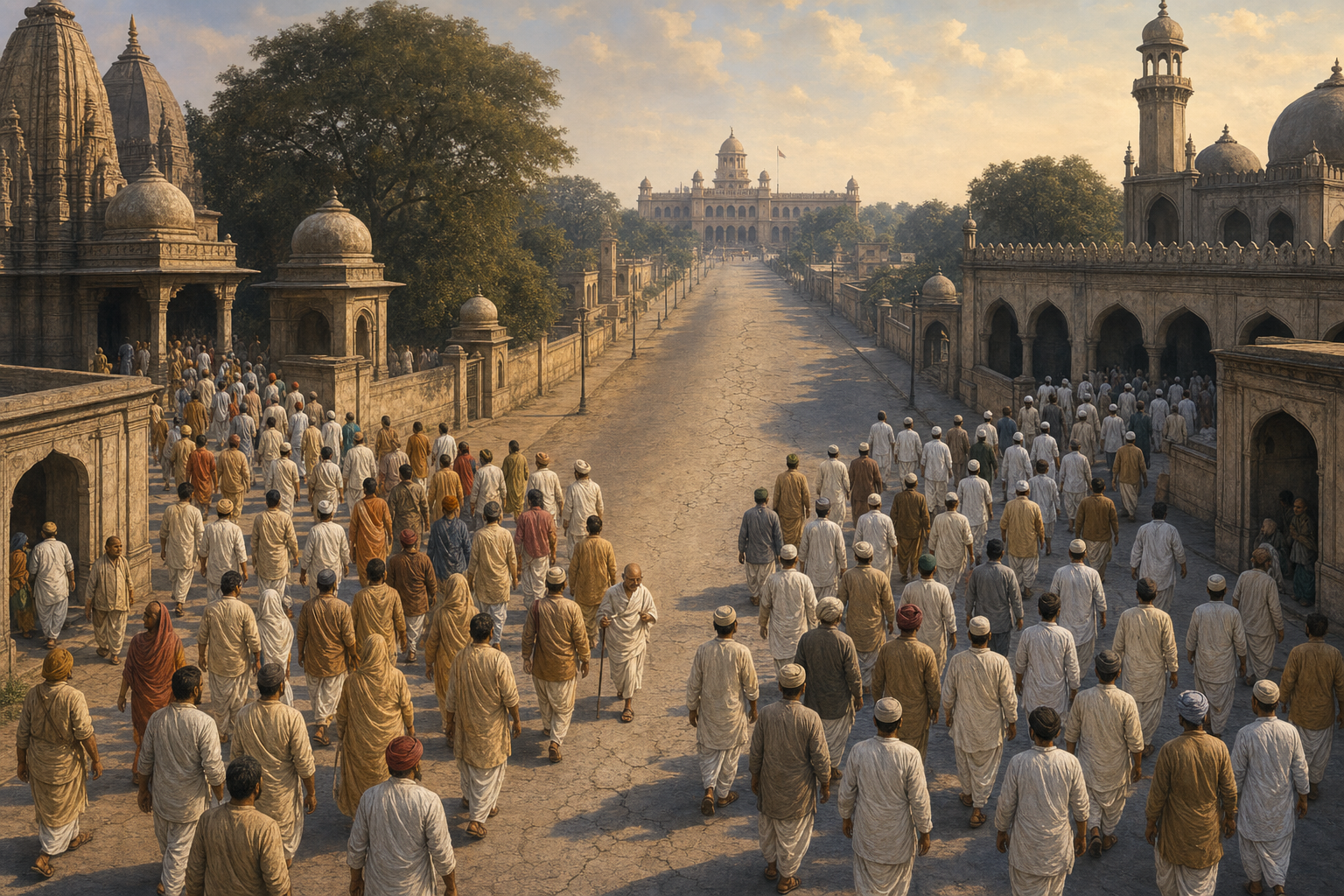
The source article describes the Khilafat Movement as a response to the post-First World War fate of the Ottoman Caliphate. Indian Muslim leaders, including Maulana Mohammad Ali and Maulana Shaukat Ali, mobilised around its defence. Gandhi supported their campaign and connected it to non-cooperation against British rule, regarding the partnership as an opportunity to bring Hindus and Muslims into a common mass movement.
That strategy can be interpreted in two different ways without treating either interpretation as self-evidently conclusive. Admirers see a serious attempt to widen the social base of the freedom struggle. Critics contend that it placed a pan-Islamic objective inside Indian nationalism and strengthened religious mobilisation as a method of politics. The central dispute is therefore not whether cooperation across communities was desirable, but whether this particular cooperation rested on sufficiently compatible principles.
The distinction matters. A coalition may agree on an immediate opponent while disagreeing about the constitutional order that should follow victory. Shared resistance is not necessarily a shared conception of citizenship, sovereignty or minority protection. Gandhi’s wager was that common action could cultivate unity; his critics feared that temporary alignment was being mistaken for a durable national settlement.
The 1941 accusation must be separated from the earlier events

According to the source article, Gandhi-Muslim Conspiracy was published in Poona in 1941 by R.D. Ghanekar and credited only to “A Hindu Nationalist.” Its authorship remains debated, although the article notes a common attribution to barrister and public figure Jamnadas M. Mehta, a critic of Gandhi’s Khilafat policy who later associated with the Hindu Mahasabha. That attribution should not be presented as established authorship.
The date of publication shaped the tract’s perspective. The article places it after the Congress ministries resigned in 1939 and after the Muslim League’s Lahore Resolution of March 1940, while the Second World War was intensifying political uncertainty. The Congress-Khilafat partnership was consequently being re-examined from a period in which communal and constitutional divisions had become much harder to ignore.
This creates three separate historical layers: the intentions and actions of participants in 1920-22; the anonymous author’s interpretation in 1941; and later judgments formed with knowledge of Partition. Collapsing those layers encourages hindsight to function as proof. The tract is valuable evidence of how one current of Hindu nationalist opinion remembered the Khilafat period, but its existence does not establish the truth of every allegation it made.
The Afghan claim turns on evidence, not insinuation

The tract’s most serious accusation, as reported by the source article, was that Gandhi and the Ali Brothers became connected to a wider plan involving the Amir of Afghanistan. It alleged that the plan contemplated an Afghan invasion and the establishment of Muslim political dominance following a British withdrawal. The source explicitly treats this as a claim requiring documentary investigation rather than a settled conclusion.
The article also reports the chronology on which the tract built part of its argument. A treaty with Afghanistan was agreed on 22 November 1921, received the assent of King George V on 6 February 1922 and became operative from that date. Two days earlier, on 4 February, a crowd at Chauri Chaura had attacked and burned a police station, killing policemen. Gandhi subsequently suspended the Non-cooperation Movement.
The familiar explanation emphasises Gandhi’s horror at the Chauri Chaura violence and his conviction that satyagraha required disciplined non-violence. The 1941 tract instead suggested that the Afghan treaty’s ratification influenced his reversal because the international situation had changed. Temporal proximity, however, does not by itself demonstrate motive or coordination. Establishing the tract’s interpretation would require records showing what Gandhi knew, when he knew it, how he understood the treaty and whether that knowledge affected his decision.
The broader Afghan context was real: the source notes Afghanistan’s importance in British Indian strategic thinking, the memory of Anglo-Afghan conflicts and anxieties surrounding the frontier. Yet a genuine geopolitical concern can become the setting for an unproven conspiracy claim. Sound historical analysis must keep contextual plausibility distinct from evidentiary proof.
What the controversy reveals about mass politics
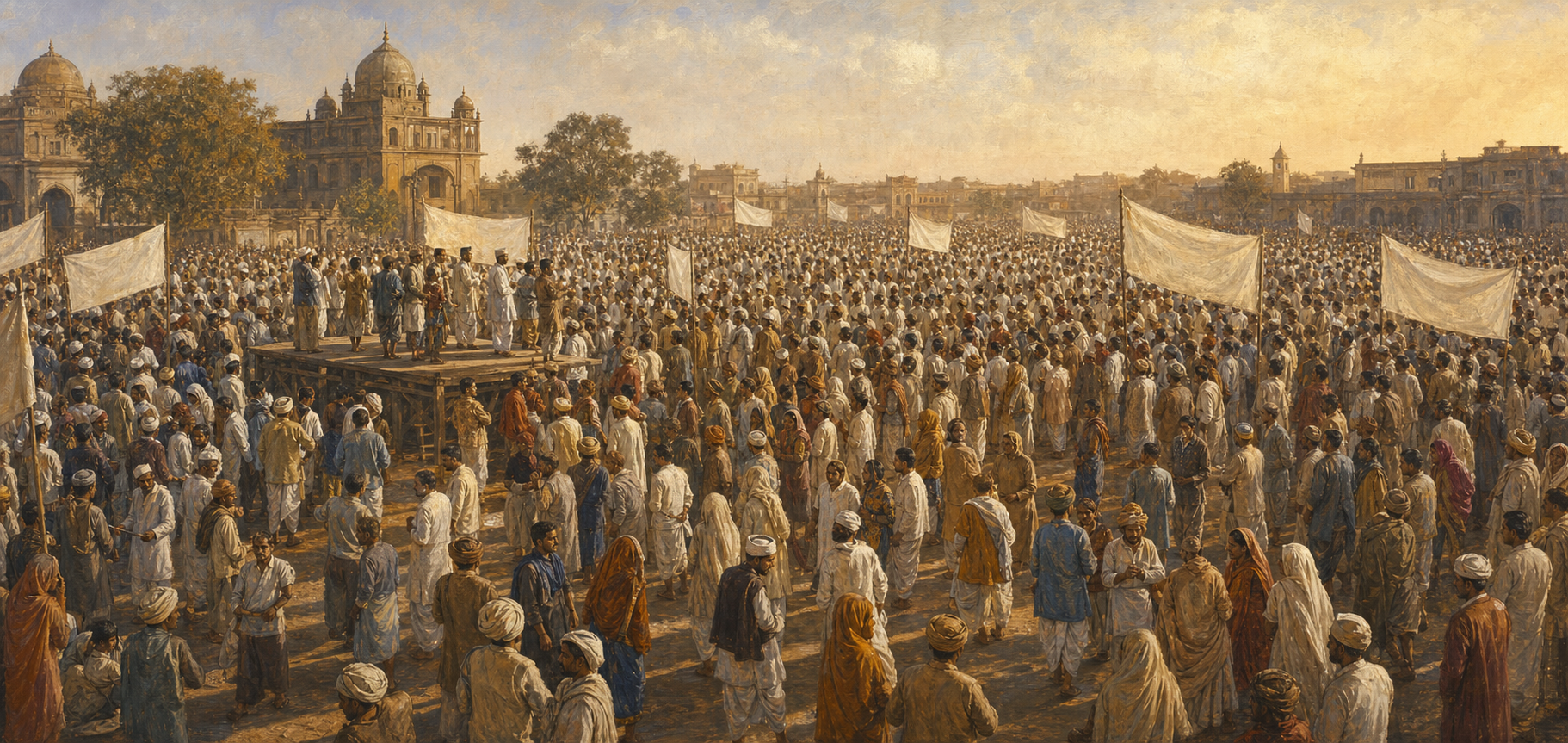
The episode exposes a tension within Gandhi’s political method. Non-violence was not merely a personal preference; it was the discipline on which his model of mass action depended. Chauri Chaura therefore confronted him with a practical question as well as a moral one: could a movement remain satyagraha if its participants could not be restrained from lethal violence?
His Khilafat strategy posed a parallel problem at the level of coalition-building. Mobilising communities through symbols carrying different meanings can rapidly expand a movement, but it can also leave disagreements unresolved beneath a display of unity. The relevant test is not whether leaders publicly affirm harmony. It is whether their coalition contains common commitments governing political succession, equal citizenship, religious freedom and the limits of collective power.
The source article also observes that Gandhi attracted criticism from opposing directions. Muslim League leaders challenged his claim to represent all Indians and portrayed Congress as Hindu-majoritarian beneath its national vocabulary. Some Hindu critics, meanwhile, believed that his search for unity produced unilateral concessions and insufficient protection of Hindu interests. Those competing accusations do not prove one another, but they show why Gandhi cannot be understood solely through either saintly commemoration or prosecutorial polemic.
The 1941 tract accordingly deserves neither automatic acceptance nor erasure. Read critically, it documents contemporary distrust of Gandhi’s statecraft and preserves questions marginalised by simplified national narratives. Read uncritically, it risks converting disputed inference into fact. Its proper place is among the evidence to be examined, not above that evidence as a verdict.
Key takeaways
- Gandhi’s Khilafat policy joined anti-colonial non-cooperation to a transnational Islamic cause in pursuit of Hindu-Muslim unity.
- The political wisdom of that alliance can be debated independently of the later allegation of an Afghan-linked conspiracy.
- The 1941 tract records an important contemporary criticism, but its anonymity, retrospective setting and disputed claims require careful scrutiny.
- The timing of the Afghan treaty and Gandhi’s suspension of non-cooperation raises a research question; chronology alone does not prove causation.
- The enduring issue is how a mass coalition converts temporary solidarity into shared constitutional commitments.
Further study should therefore centre on primary correspondence, official records and a precise reconstruction of the decisions surrounding 1921-22. That approach can preserve legitimate scrutiny of Gandhi’s choices while preventing an allegation, however consequential, from substituting for demonstrated history.