
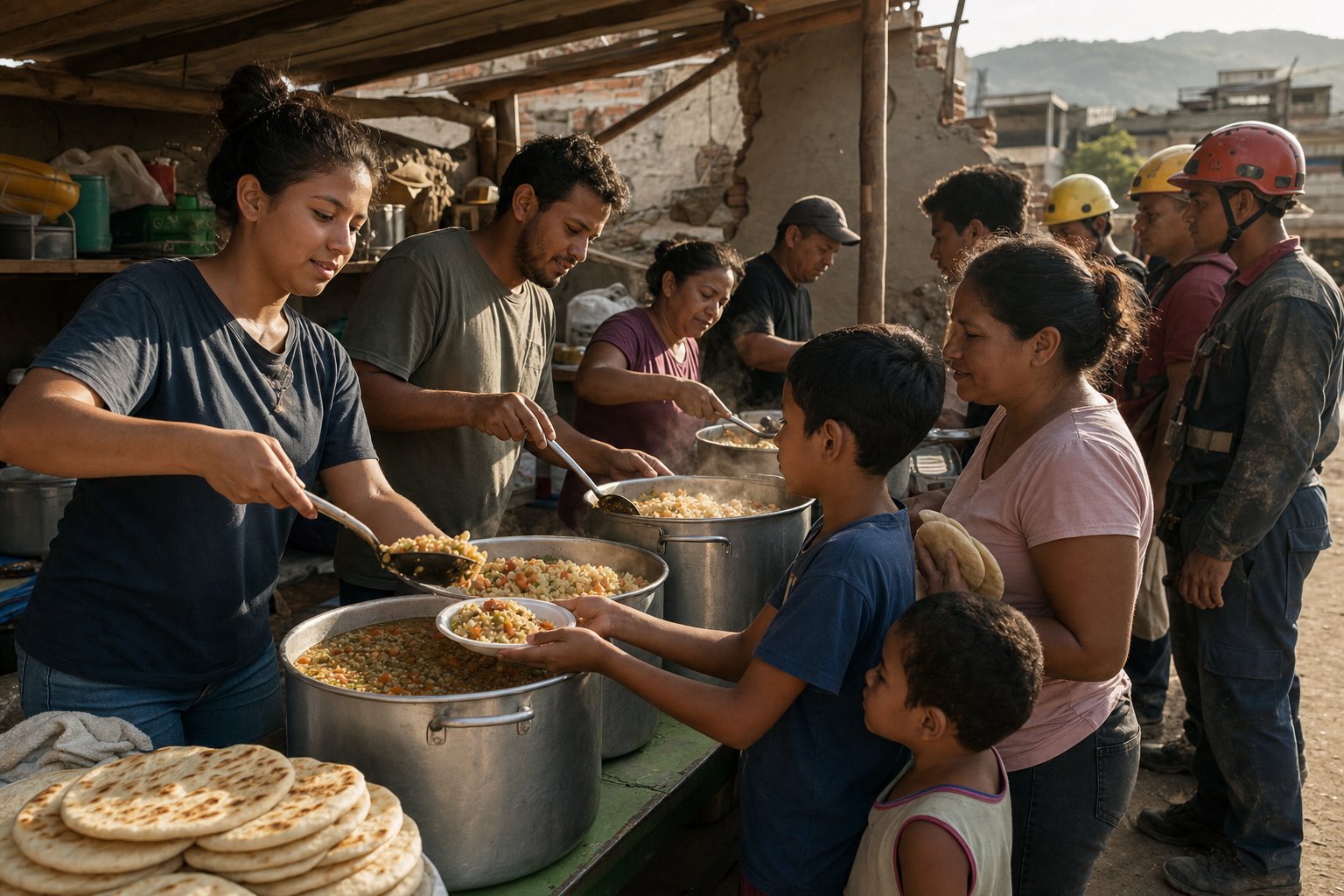
The available report places a community kitchen at the centre of the earthquake response in Venezuela. It says ISKCON Venezuela expanded its Food for Life service to provide free, hot and nutritious prasadam meals to affected families and emergency personnel involved in search-and-recovery work.
Viewed closely, the initiative is more than a food handout. It connects immediate nourishment, continuity for responders, community organisation and the Vaishnava ethic of seva. Because the supplied record contains only one report, however, its account should be understood as source-reported rather than independently corroborated.
Key takeaways
- Hot meals are especially useful when damaged homes, interrupted utilities or displacement leave people without safe places to cook.
- According to the report, ISKCON Venezuela served both affected families and emergency responders, supporting relief recipients and the people sustaining the wider response.
- Prasadam adds a devotional meaning to the meal, but its humanitarian value also depends on ordinary operational disciplines such as hygiene, transport and reliable distribution.
- The account illustrates how a religious community’s existing kitchens, volunteers and routines can be redirected towards disaster relief, although it does not document the intervention’s scale or outcomes.
Why a cooked meal matters after an earthquake
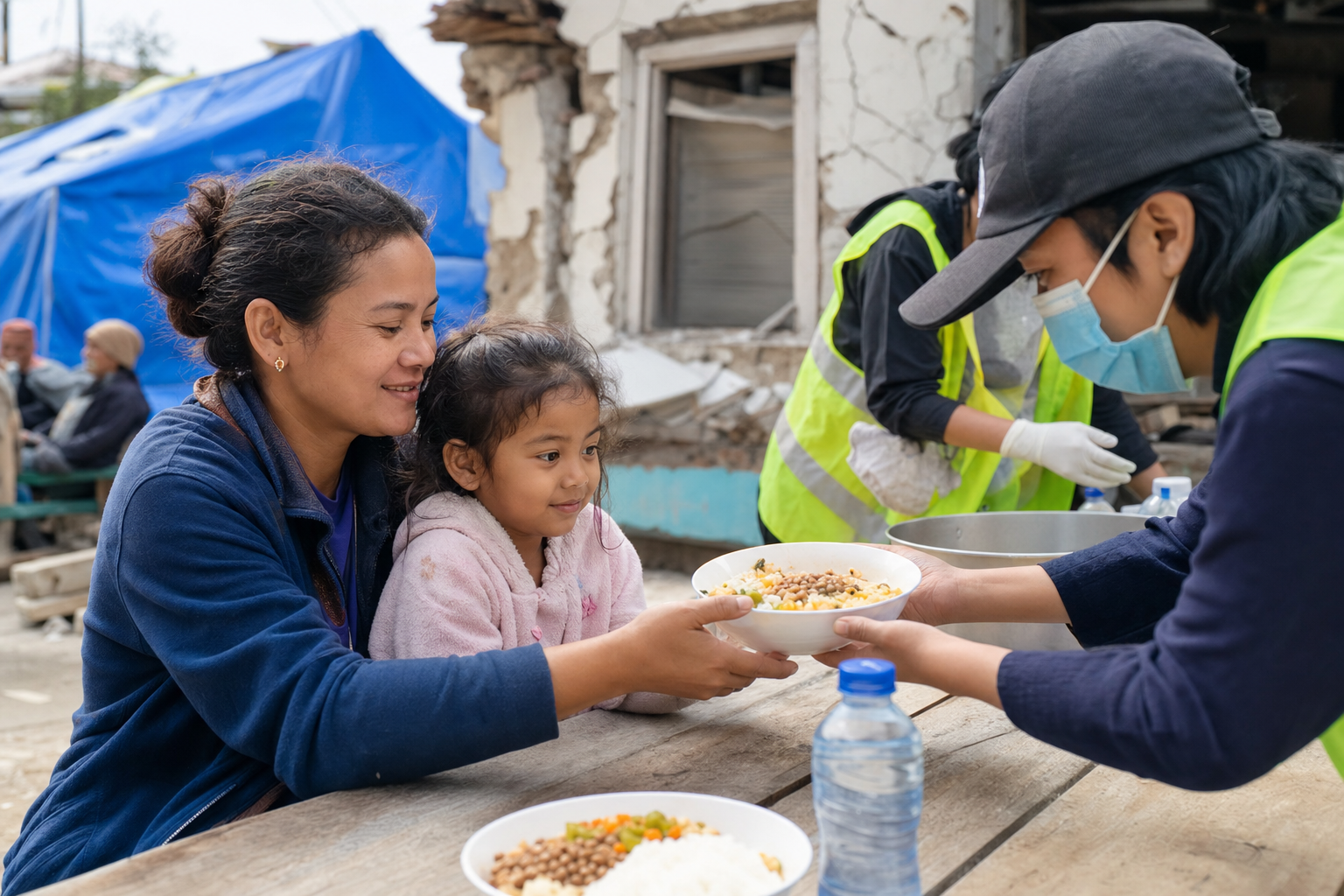
An earthquake can make food available in theory but unusable in practice. A family may possess dry ingredients yet lack clean water, electricity, fuel, utensils or access to a safe kitchen. A prepared meal removes those barriers: it can be eaten immediately and can serve children, adults and older people without requiring each household to rebuild a cooking arrangement first.
The source describes the meals as hot and nutritious, a distinction that matters in disrupted surroundings. Packaged food and dry rations remain valuable, but a cooked meal answers a different need. It temporarily restores an ordinary rhythm: people sit, eat and meet a basic need without having to solve the surrounding logistical crisis at the same time.
The report also gives food relief a psychological dimension. It presents a shared hot meal as a source of steadiness for families facing fear and uncertainty, with familiar food potentially helping children settle and easing the immediate burden on parents. These are plausible functions of communal feeding, although the source supplies no interviews or outcome data with which to measure them in this case.
Serving emergency personnel extends the intervention’s reach. Search teams, medical workers, police, civil-defence personnel and local volunteers can face long hours and intense pressure during disaster operations. Feeding them is not separate from assisting survivors: it can help maintain the human capacity on which rescue, care and coordination depend. The available report says ISKCON Venezuela included such responders among the meal recipients.
The relief kitchen as practical recovery infrastructure
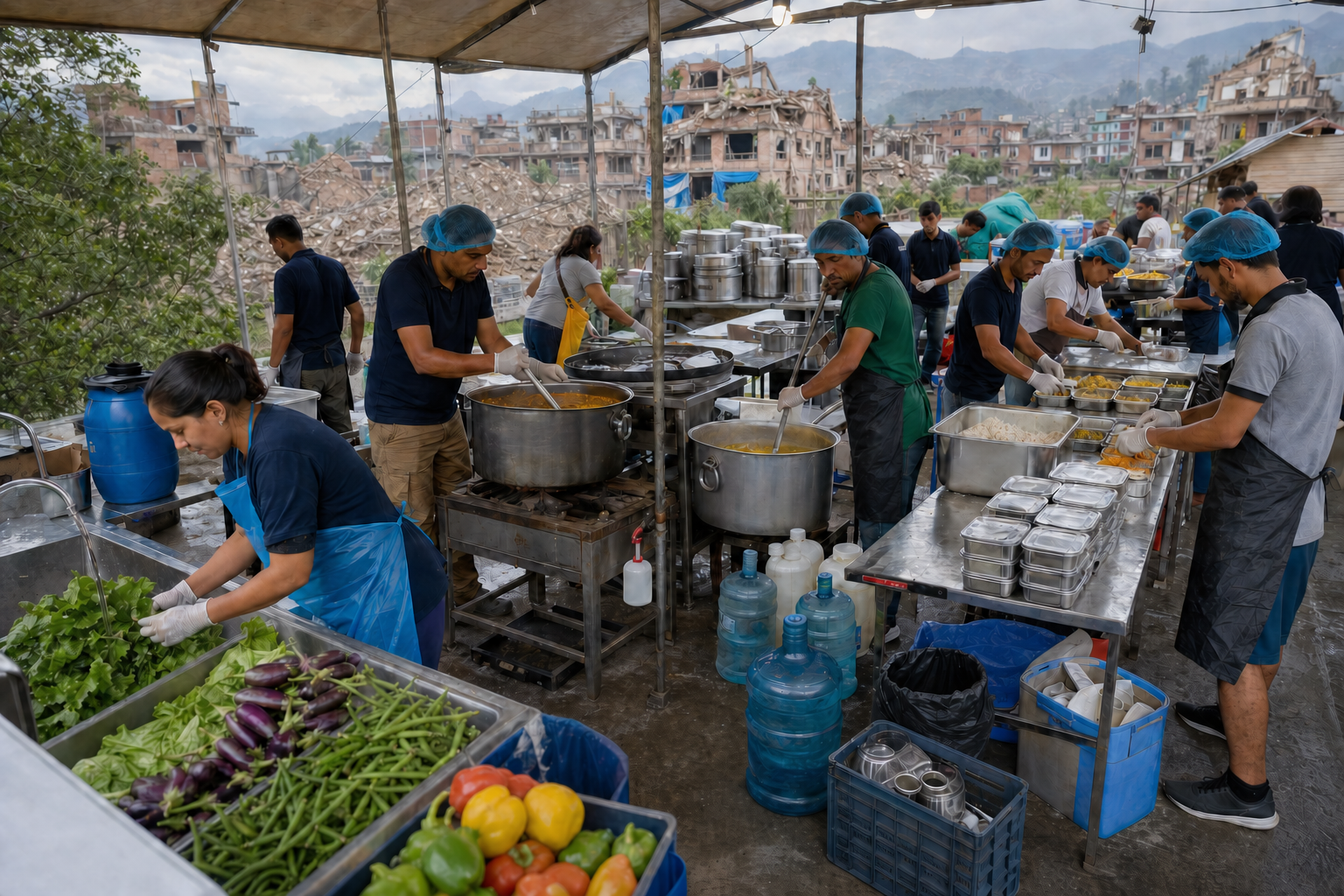
A hot meal reaches a recipient only after a chain of less visible tasks succeeds. Ingredients must be obtained, potable water and cooking fuel secured, preparation areas kept clean, food protected from contamination, vehicles or carrying teams organised, and serving points chosen with attention to access and safety. Damage to roads, power supplies or water systems can turn each link into a bottleneck.
This makes a functioning community kitchen a small piece of recovery infrastructure. It converts supplies and volunteer labour into something immediately usable while providing a regular point of contact between organisers and neighbourhoods. If coordinated with local authorities, community leaders and other relief groups, such a kitchen can complement rather than duplicate the broader response.
The Food for Life approach described in the source relies on vegetarian staples that can be cooked in large batches. Rice, lentils, grains and vegetables are generally suited to communal preparation, and avoiding many highly perishable animal products can simplify storage when refrigeration is unreliable. That does not eliminate food-safety risks: water quality, temperature control, clean utensils and safe handling remain essential.
ISKCON’s potential contribution also comes from capabilities that existed before the emergency. A temple community accustomed to collective cooking, cleanliness, scheduled offerings, volunteer coordination and food distribution possesses routines that can be adapted when a crisis occurs. The broader lesson is that disaster readiness is often embedded in ordinary institutions long before anyone labels it emergency capacity.
Prasadam joins nourishment with dignity
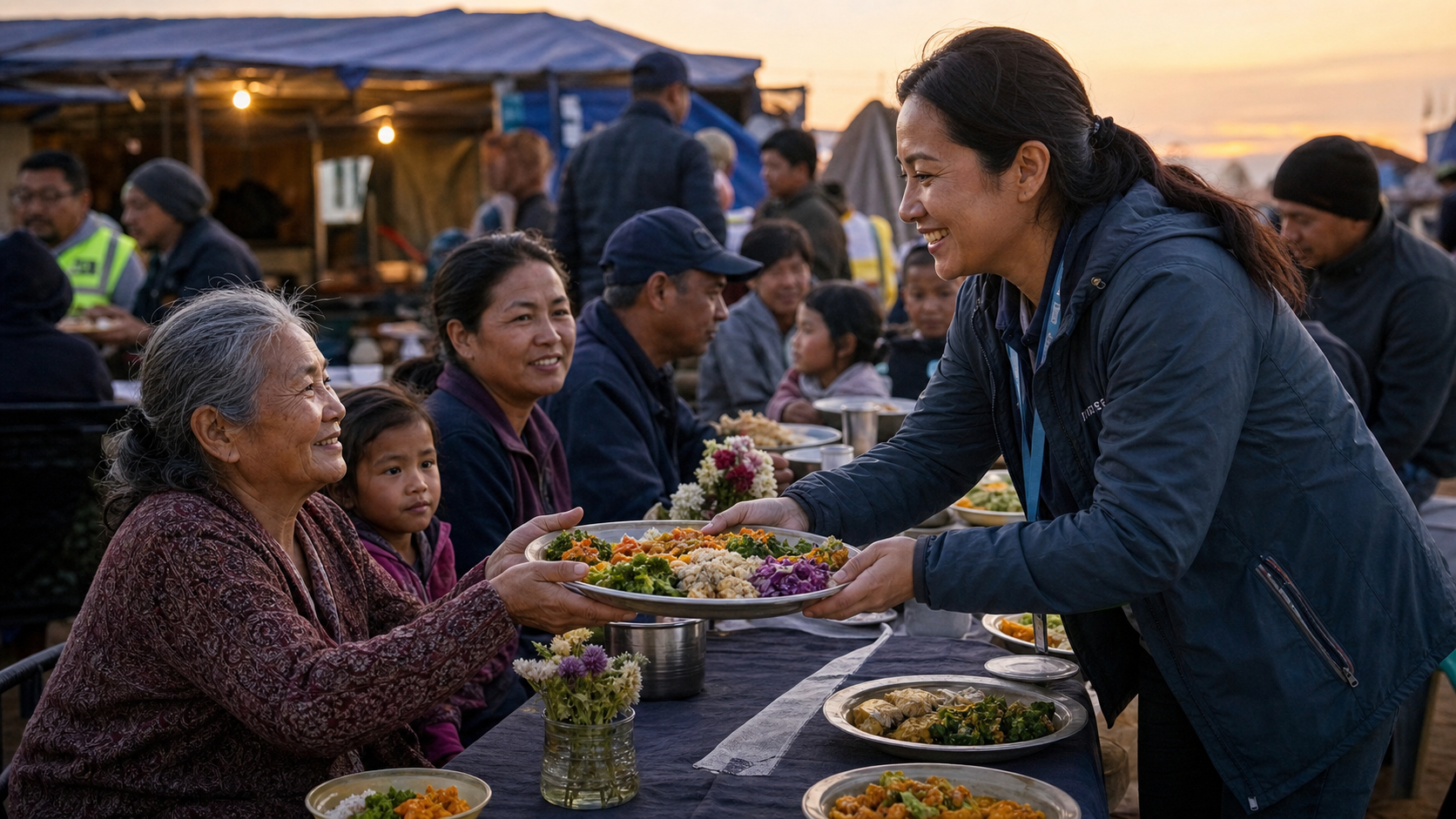
In Vaishnava practice, prasadam is food prepared devotionally, offered to Krishna and then shared as grace. In an emergency setting, that understanding changes the moral frame of distribution. The meal is not regarded solely as a commodity transferred from a benefactor to a victim; it is offered through seva, or service, with the recipient treated as worthy of care.
That spiritual meaning does not substitute for nutritional quality or sound logistics. Rather, it can shape how those practical duties are performed. Orderly queues, clean food, courteous service and attention to people who may struggle to stand or travel are concrete expressions of dignity. The ethical test is therefore not the devotional label alone, but whether the service reduces hardship without humiliation or spectacle.
The source situates this work within a wider dharmic ethic shared in different forms across several traditions. It points to the Sikh institution of langar, Jain commitments to ahimsa and Buddhist teachings on compassion as parallel reminders that spiritual practice can enter public life through organised care. The traditions are not interchangeable, but each offers a vocabulary for answering hunger with responsibility.
For a faith-based organisation, inclusiveness is central to humanitarian credibility. Assistance is most persuasive when need, safety and accessibility guide distribution, while religious identity neither becomes a barrier to receiving food nor a condition attached to it. The supplied article advocates this service-oriented ideal, but it does not provide operational detail about recipient selection or distribution policy in Venezuela.
What the report establishes and what remains unknown
The reported core
The source reports that a powerful earthquake struck Venezuela and that ISKCON Venezuela expanded a Food for Life response offering free, hot prasadam to affected families and emergency responders. It presents this activity as a combination of humanitarian assistance and devotional service.
Important limits of the available account
The supplied material gives no earthquake date, magnitude, precise location, casualty or damage figures, number of meals, distribution period, participating volunteer count, budget, named partner organisations or independent assessment. It therefore cannot support conclusions about coverage, duration, comparative effectiveness or the proportion of local need met. Those omissions do not invalidate the reported service, but they limit what can responsibly be inferred from it.
How future updates could demonstrate impact
A fuller account would document where and for how long meals were served, how recipients’ needs were identified, what food-safety controls were used, how local agencies and neighbourhood groups coordinated, and whether service continued as conditions changed. Transparent reporting on constraints would be equally useful, since shortages, transport interruptions and volunteer safety can reveal where preparedness needs strengthening.
Future updates that pair the devotional purpose of prasadam with verifiable operational information would make the relief effort easier to assess, support and improve. That combination can help a community kitchen remain responsive through recovery rather than functioning only as a brief emergency gesture.
References
- DharmaRenaissance Blog — ISKCON Venezuela Food Relief Brings Hot Prasadam to Earthquake-Hit Families