
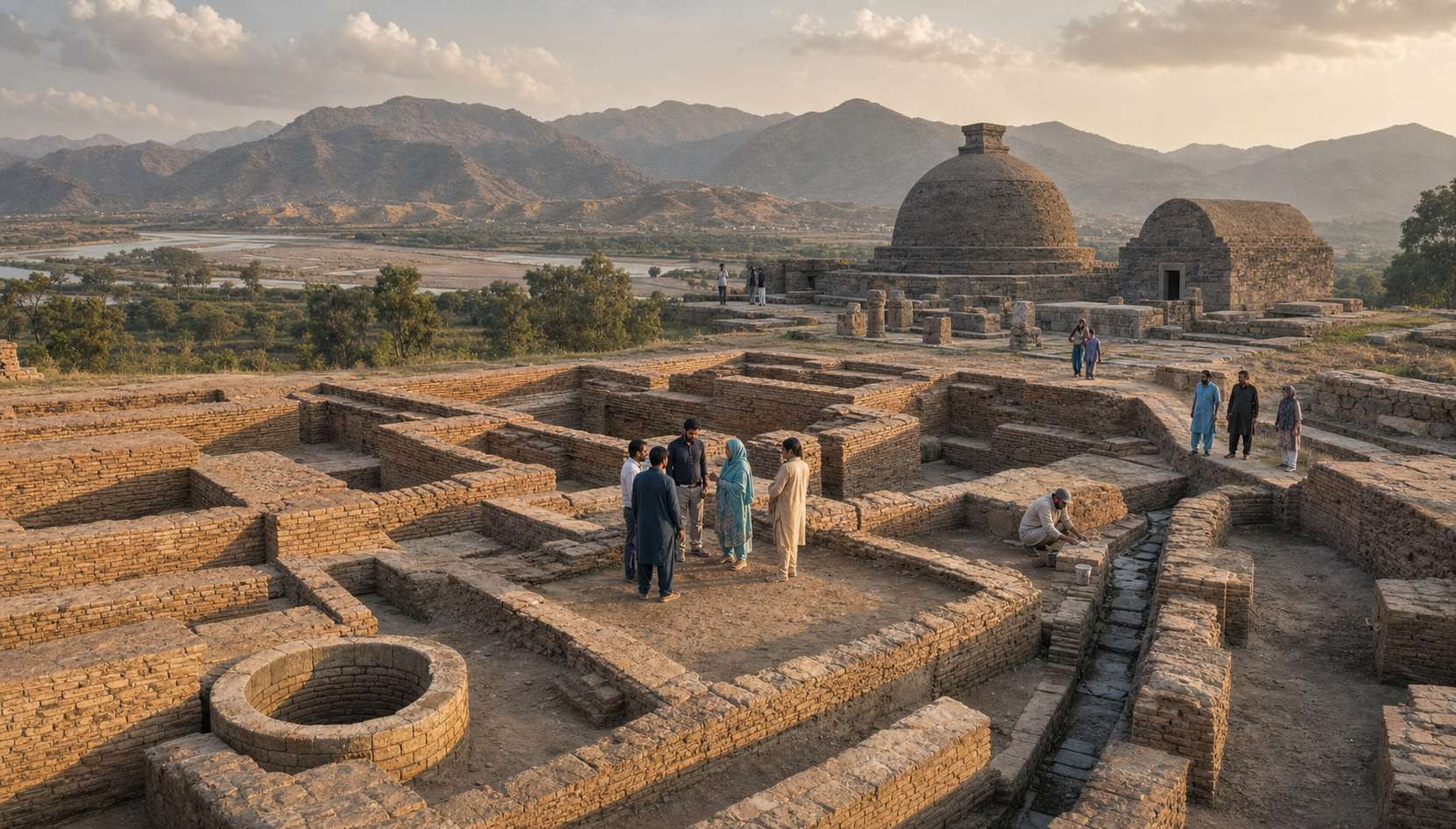
Pakistan’s territory contains some of South Asia’s most consequential ancient sites, yet the place of that inheritance within Pakistani national identity remains contested. The central question is not whether Harappa, Mohenjo-daro, Taxila, and Gandhara belong in the country’s history. It is what responsible belonging requires beyond control of the land on which they stand.
The available source portrays a growing interest in pre-Islamic figures and places, but it is an opinion article rather than a broad survey of institutions or public attitudes. Its examples therefore support a framework for evaluating the apparent shift; they do not establish how widespread or permanent that shift is.
Key takeaways
- Modern borders create responsibility for ancient sites, but not exclusive ownership of civilizations that preceded those borders.
- A credible heritage claim must preserve historical context, including the religious, linguistic, and intellectual worlds associated with a site or figure.
- Recognition of Harappan, Buddhist, Hindu, Jain, Sikh, and Sanskritic inheritances can deepen Pakistan’s national story without displacing its Islamic history.
- The strongest evidence of a genuine change would be found in education, conservation, interpretation, and the treatment of living heritage communities.
Two historical clocks within one national landscape
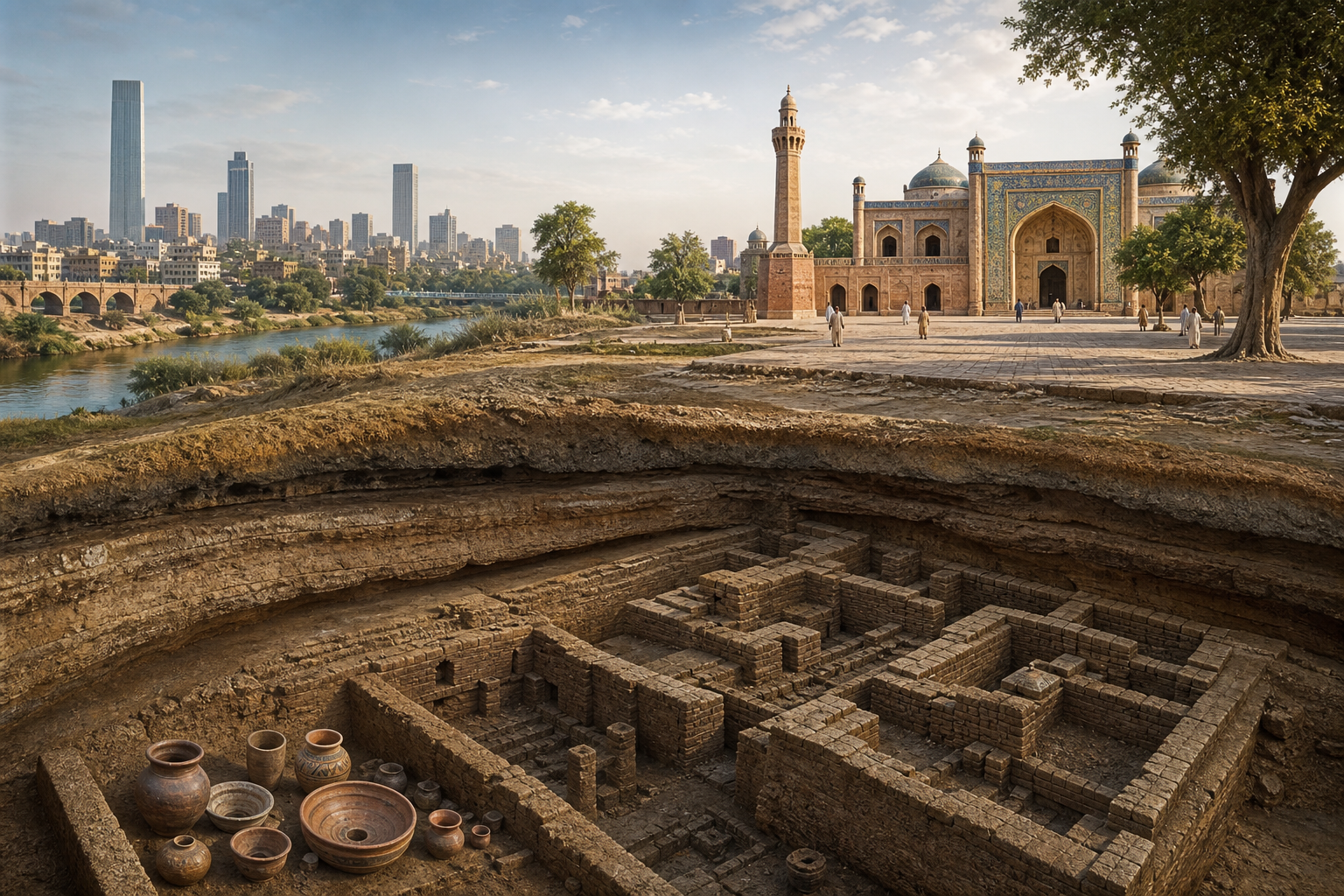
The DharmaRenaissance source describes a longstanding tension between Pakistan’s territorial chronology and its ideological chronology. It argues that state narratives shaped by the two-nation theory frequently treated the arrival of Islam in Sindh through Muhammad bin Qasim as the beginning of meaningful history. Earlier periods, according to that account, were often presented as foreign, pagan, marginal, or relevant only to archaeology.
The physical landscape tells a much longer story. The source points to Indus Civilization cities, Buddhist monasteries, Hindu temples, Jain traces, Sikh sacred geography, Sanskritic scholarship, and regional traditions within present-day Pakistan. These layers cannot be made chronologically dependent on the modern state or on the political argument through which it was created.
This need not produce a contest in which an ancient identity replaces an Islamic one. National memory can accommodate multiple periods, migrations, faiths, languages, and political orders. The deeper problem arises when one layer is treated as the country’s authentic self and the others as embarrassing preliminaries or detachable cultural assets.
The source also proposes several possible reasons for the apparent rediscovery: tourism, cultural diplomacy, economic pressure, identity fatigue, and a response to Bharat’s more assertive civilizational discourse. It does not quantify the influence of any of these factors. Evidence of an enduring change would therefore have to extend beyond promotional language to textbooks, museum interpretation, scholarship, preservation budgets, and public policy.
What the ancient places and personalities complicate
Urban heritage older than the modern border
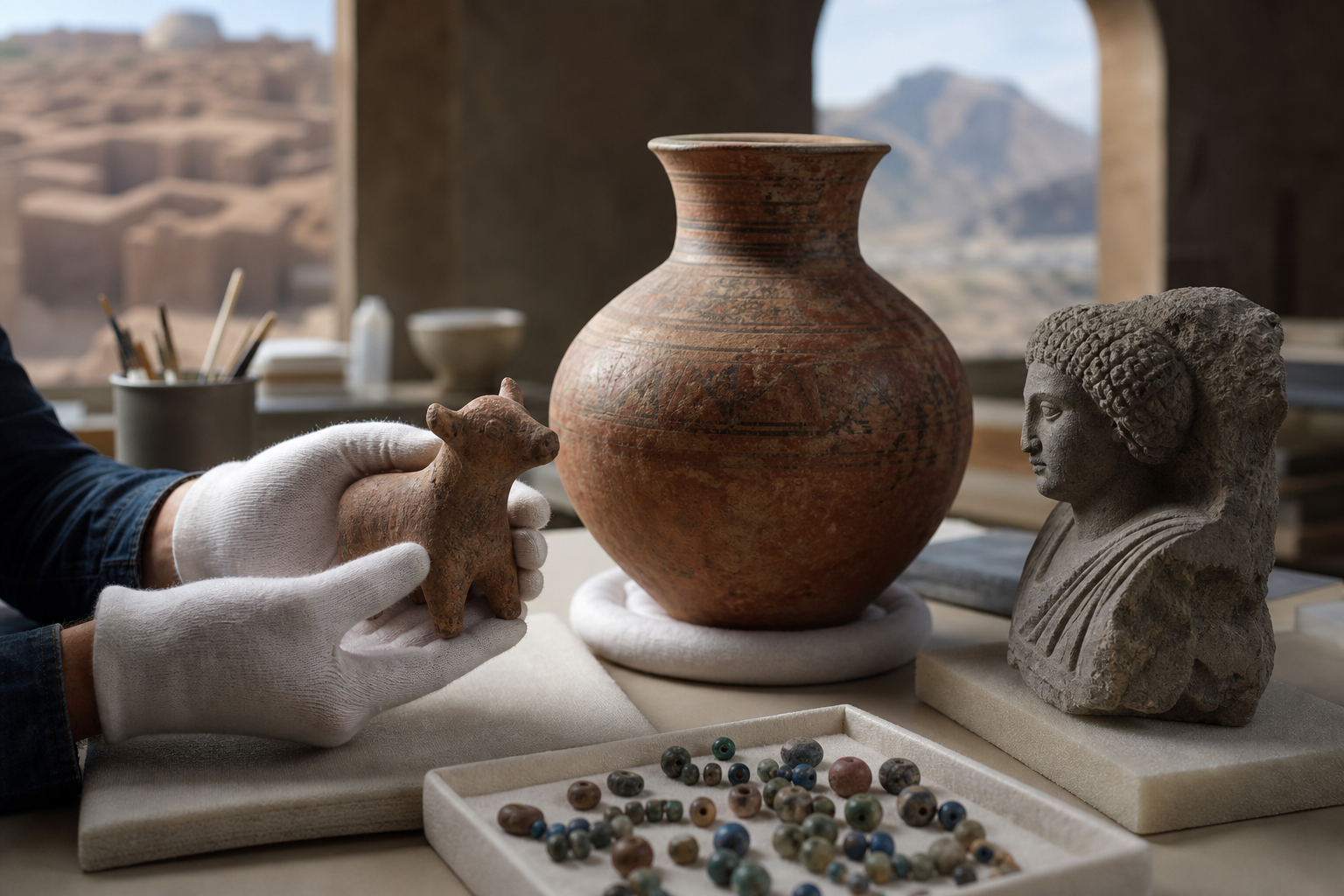
The source identifies Mohenjo-daro and Harappa as central to the question of inheritance. Summarizing UNESCO’s description, it presents Mohenjo-daro as a major Indus Civilization settlement built in the third millennium BCE, with planned streets, drainage, public architecture, and evidence of organized urban life. It also notes that the civilization extended across parts of both present-day Pakistan and northwestern Bharat.
These sites give Pakistan an important custodial role because they lie within its jurisdiction. Their wider historical meaning, however, is not confined by that jurisdiction. They illuminate an early South Asian urban world that existed millennia before either Pakistan or India became a modern state.
Taxila and Gandhara as crossroads
Taxila presents an even more visibly layered landscape. The source describes settlements, Buddhist monasteries, stupas, and later Islamic structures, while emphasizing the area’s place in trade and learning. It interprets the region as a meeting ground for Indic, Persian, Hellenistic, Central Asian, Buddhist, Hindu, and later Islamic influences.
Gandhara similarly exceeds the limits of a single national claim. According to the source, its Buddhist thought, institutions, and artistic traditions connected the subcontinent with Central and East Asia. Pakistan can properly present Gandhara as part of its territorial heritage while also recognizing it as part of a broader Buddhist and Indic inheritance. Those descriptions are complementary, not mutually exclusive.
Ancient people cannot be assigned modern passports
The article invokes Panini, Chanakya, and Porus to expose the limits of territorial nationalism. It associates Panini with the northwestern subcontinent and the Sanskrit intellectual world; Chanakya with statecraft and the Mauryan setting of ancient Bharat; and Porus with Punjab and resistance to Alexander’s campaign. Their historical geographies overlap land now administered by Pakistan, but their identities arose within cultural and political worlds that did not recognize today’s borders.
They may therefore appear within Pakistani public history without becoming exclusively Pakistani. The same figures can hold regional, Indic, linguistic, religious, and global significance at once. A historically serious account should explain those overlapping relationships instead of selecting whichever label offers the greatest contemporary prestige.
Four tests for a credible claim of inheritance
Territorial custody
Control of a site creates immediate duties: conservation, research, physical security, accurate presentation, and reasonable access. It gives a state legitimate standing as custodian, but custody is not the same as sole civilizational ownership.
Contextual honesty
Heritage loses meaning when separated from its intellectual and religious setting. Celebrating Panini while ignoring Sanskrit scholarship, or promoting Gandharan art while minimizing its Buddhist significance, would reduce history to branding. Honest interpretation identifies the networks of language, belief, learning, trade, and patronage through which the inheritance developed.
Respect for continuity
Archaeology is not isolated from living memory. Rituals, manuscripts, pilgrimage, music, family histories, and communities may preserve connections that museum displays cannot. The source’s argument is strongest when it asks whether celebration of ancient remains is accompanied by respect for people who still identify with related traditions.
Institutional consistency
A durable reassessment should appear across institutions rather than in occasional slogans. Useful indicators would include whether curricula give pre-Islamic history adequate context, museums name traditions accurately, researchers can study relevant languages and texts, sacred places receive protection, and minorities can maintain their heritage. These standards distinguish cultural integration from a temporary soft-power campaign.
From possession of monuments to stewardship of memory
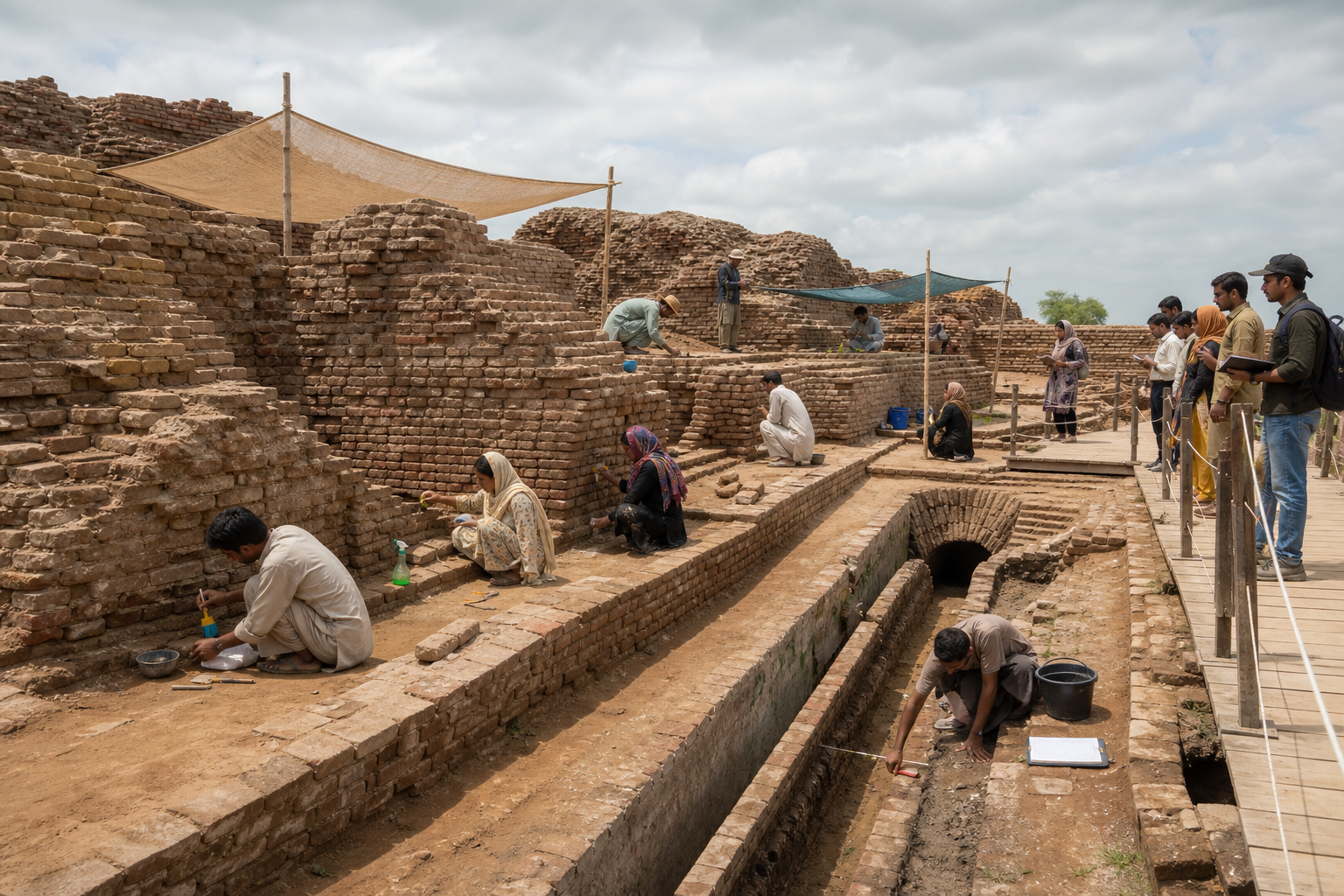
The source connects archaeological responsibility with the condition of living and sacred heritage. It cites Hindu temples in Sindh and Punjab, the Sikh sacred site of Nankana Sahib, the Buddhist remains of Gandhara, and memories of Jain communities. These examples differ in age, religious status, and present use, but together they show why heritage policy cannot stop at excavated ruins.
Stewardship would mean protecting structures while also interpreting them in terms recognizable to the traditions that produced or sustained them. It would avoid treating minorities as remnants of a closed historical chapter. The practical issue is not whether every ancient community survives unchanged, but whether the state protects the people, practices, scholarship, and places through which historical memory remains accessible.
Such an approach could also make regional identity less brittle. Present borders define citizenship and political jurisdiction; they need not impose a monopoly on premodern memory. Pakistan can describe Mohenjo-daro as Pakistani heritage and South Asian heritage, or Gandhara as Pakistani heritage and Buddhist heritage, without contradiction. Shared inheritance does not erase sovereignty, nor does recognition of an Indic context transfer political ownership to another modern state.
The source applies a related caution to Bharat, arguing that Pakistan’s selective rediscovery should prompt stronger scholarship, preservation, and public education rather than triumphalism. That principle offers the most constructive path for the region: ancient history should expand the range of acknowledged belonging instead of supplying another instrument for national rivalry.
The next phase of Pakistan’s engagement with antiquity will be credible to the extent that it moves from naming illustrious ruins and personalities to conserving their contexts, teaching their complexity, and safeguarding the communities that keep parts of their inheritance alive.