

The Seychelles-Bharat relationship is best understood not as a narrow defence arrangement, but as a partnership for governing a large and economically vital maritime space. The supplied source presents security cooperation, development finance, digital payments, legal coordination, cultural ties and environmental interests as interconnected parts of that task.
This wider view also offers a practical standard for judging the partnership: cooperation should increase Seychelles’ ability to exercise sovereignty, protect marine resources and participate in the regional economy without creating dependency or overriding domestic consent.
Key takeaways
- Seychelles’ strategic importance arises from the contrast between its small land area and the extensive ocean territory it must govern.
- Maritime security is inseparable from fisheries, tourism, environmental protection, trade routes and the blue economy.
- The reported addition of digital, legal and development instruments broadens the relationship beyond patrol assets and military training.
- Transparency, local relevance and respect for Seychellois sovereignty will determine whether cooperation produces durable trust.
Why a small archipelago carries disproportionate weight
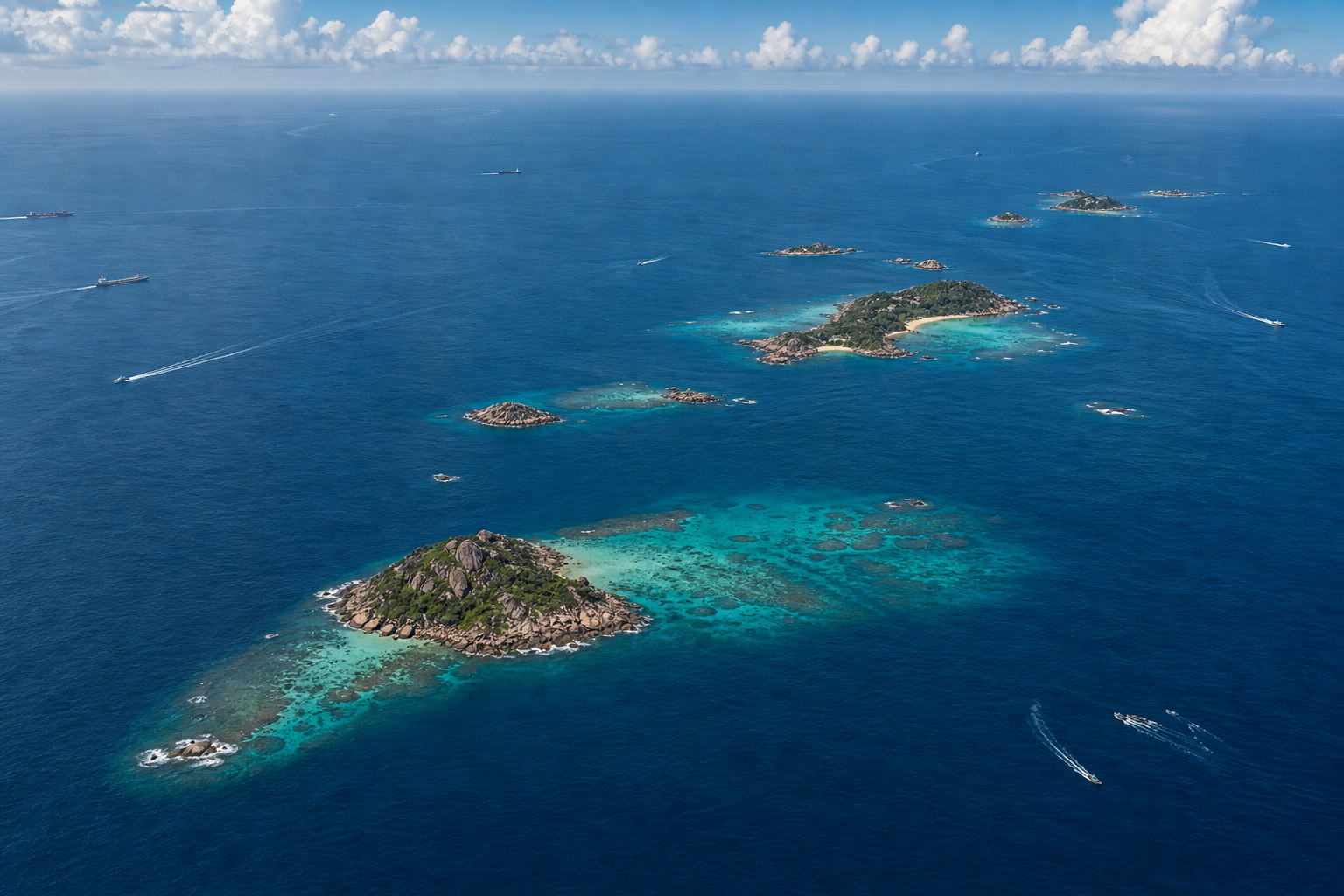
The DharmaRenaissance Blog article reports that Seychelles has a land area of roughly 460 square kilometres but an Exclusive Economic Zone of about 1.3 million square kilometres. That disparity explains much of the relationship’s strategic logic. An island state may possess limited territory and administrative resources while carrying responsibility for an enormous maritime jurisdiction.
The source places Seychelles near routes connecting the Persian Gulf, East Africa, the Mozambique Channel, South Asia and the wider Indo-Pacific. It also identifies commercial shipping, energy movements, fishing fleets, naval activity and submarine cables as interests converging in this oceanic space. The significance of Seychelles therefore lies less in the size of its islands than in the reach of its jurisdiction and the location of the waters surrounding them.
For Bharat, this makes Seychelles one part of a broader maritime network rather than an isolated strategic outpost. For Seychelles, the same geography creates demanding governance obligations. Maritime claims become effective only when authorities can observe activity, enforce law, coordinate patrols and respond to incidents across distant waters. The partnership is most valuable where it helps close that gap between formal jurisdiction and practical capacity.
The source also locates the relationship within a longer human history. It traces an Indian presence to the arrival of Indians aboard the Thelemaque at Saint Anne Island in 1770 and describes later migration from Tamil Nadu, Gujarat and other parts of Bharat. It credits the Indian community with contributions to commerce, religious life, cuisine and public culture. These reported connections give contemporary diplomacy a social foundation, although historical familiarity should complement rather than substitute for present-day accountability.
Maritime security protects an economy as well as an ocean
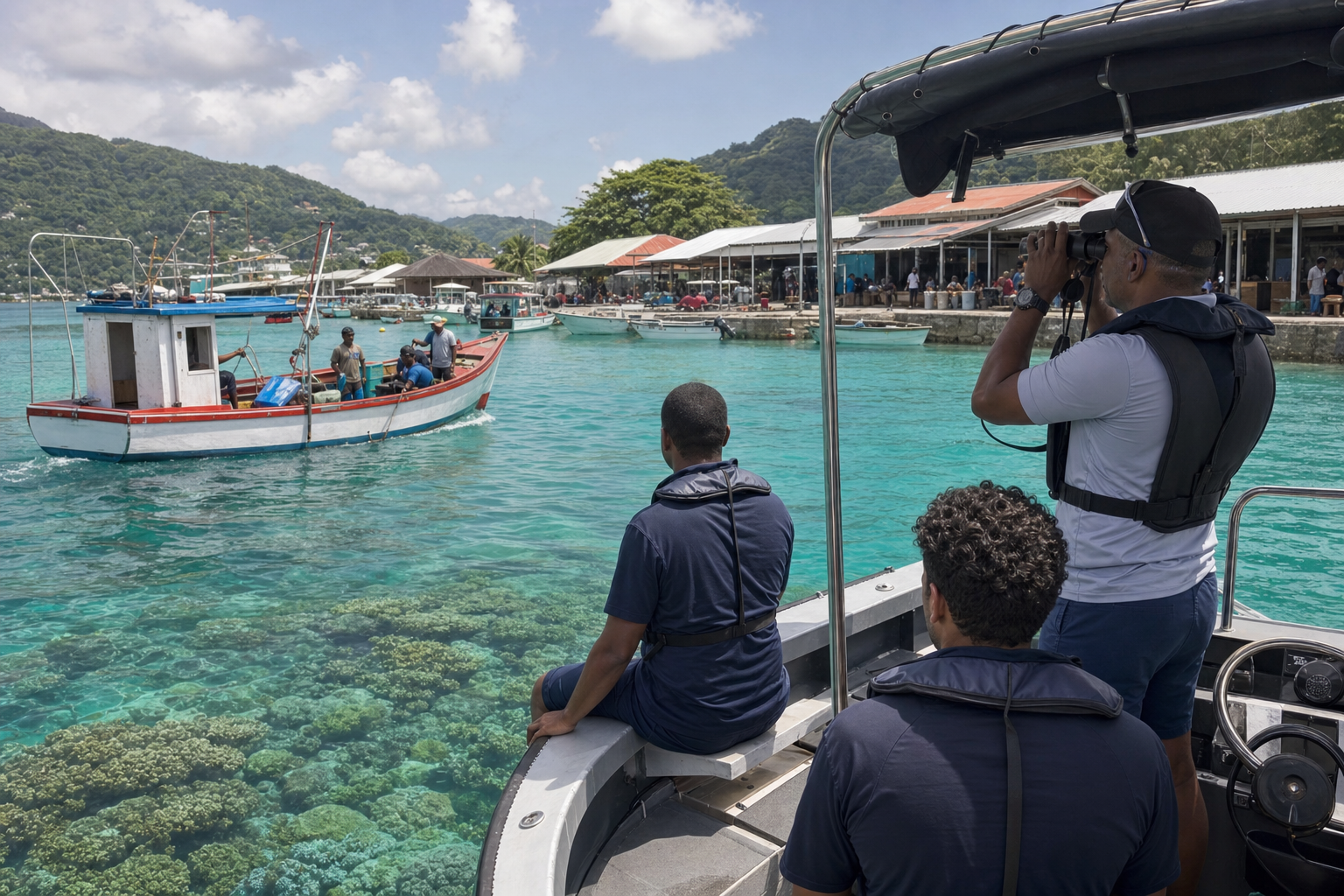
In the source’s account, the security agenda includes patrol assets, coastal surveillance, hydrographic assistance, training, capacity building and anti-piracy cooperation. Considered separately, these can appear to be conventional defence programmes. Considered together, they form the operating system required to administer a large Exclusive Economic Zone.
That distinction matters because maritime security has civilian consequences. The article identifies fisheries, marine biodiversity, tourism, coral reefs and ocean resources as central to Seychelles’ future. Illegal, unreported and unregulated fishing can erode public revenue, food security and livelihoods, while narcotics trafficking, arms movement and piracy can strain law-enforcement institutions and disrupt legitimate commerce. Surveillance and information sharing are therefore not ends in themselves; their public value depends on whether they help protect economic and ecological assets.
The source recalls the disruption caused by Somali piracy and points to newer concerns involving illicit trafficking, illegal fishing fleets, grey-zone activity and vulnerable undersea infrastructure. These risks differ in origin and legal character, so hardware alone cannot address them. Effective maritime governance generally requires trained personnel, reliable information, clear procedures, prosecutable evidence and coordination among civilian and security agencies. The reported areas of cooperation are strongest when they develop that complete chain of capability.
This interpretation also clarifies the relevance of India’s SAGAR framework, expanded in the source as Security and Growth for All in the Region. Security and growth are not parallel agendas for Seychelles: the ability to police waters, conserve marine wealth and maintain navigational stability is part of the economic foundation on which an island state depends.
Digital, legal and development links widen the partnership
The article describes Prime Minister Narendra Modi’s June 27-29, 2026 visit as coinciding with the 50th anniversary of Seychelles’ independence and 50 years of diplomatic relations between India and Seychelles. It reports that Seychellois President Patrick Herminie and Vice President Sebastien Pillay received Modi and that discussions covered development cooperation, maritime security, digital connectivity and institutional collaboration.
The post further reports an extradition treaty, the introduction of India’s Unified Payments Interface in Seychelles and a line of credit for priority development projects. Because the supplied material is a single account, these items should be treated as reported by that article rather than as independently corroborated here. Their importance lies in the pattern they create: the relationship is being framed as an institutional partnership, not only as a sequence of defence transfers.
Each instrument addresses a different layer of cooperation. An extradition framework can support rule-based handling of cross-border criminal matters. A digital payment connection can reduce transaction friction for tourism, services and small businesses if implementation fits local regulation and consumer needs. Development credit can support public priorities, but only completed, useful and maintainable projects turn financing announcements into lasting capacity.
The combination is more consequential than any component alone. Maritime surveillance may detect unlawful activity, legal cooperation can help authorities pursue cases, digital systems can facilitate legitimate exchange, and carefully chosen development projects can strengthen the infrastructure on which administration and commerce rely. The strategic opportunity is integration; the risk is a collection of disconnected initiatives that generates visibility without institutional depth.
Sovereignty, consent and delivery are the decisive tests
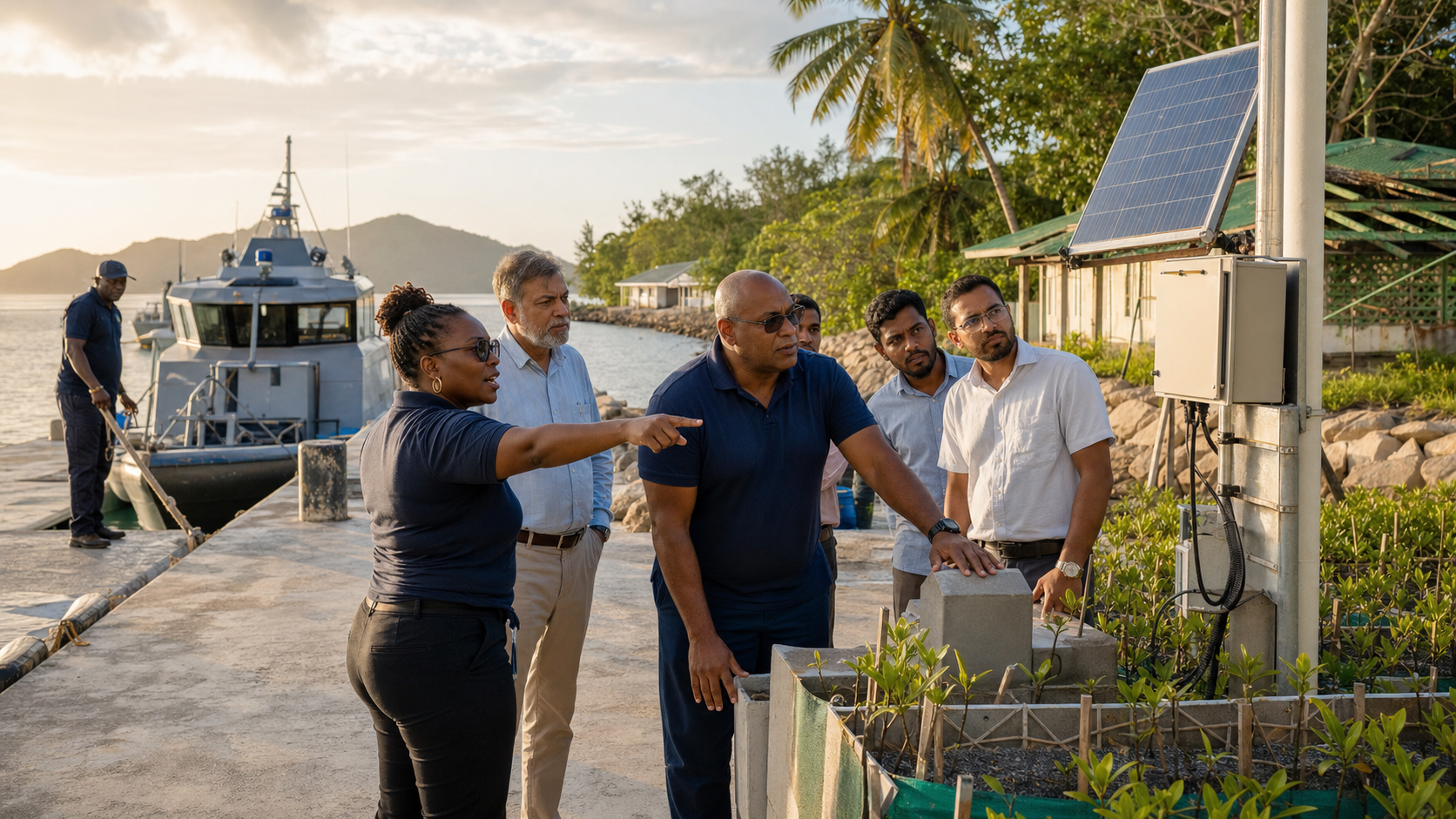
The large difference in national scale makes sovereign equality central to the partnership. The source cites the earlier debate over Assumption Island as evidence that security cooperation cannot be separated from domestic sentiment in Seychelles. Its lesson is broader than one proposal: arrangements involving strategic access, facilities or a foreign security role require transparency, mutual agreement and credible local consent.
This is not merely diplomatic etiquette. A project that lacks public legitimacy can become strategically brittle even when it appears operationally attractive. By contrast, cooperation designed around Seychellois priorities can reinforce both sovereignty and regional stability. Local participation, understandable terms, environmental safeguards and accountable institutions are therefore strategic assets.
Development cooperation faces a similar test. The article argues that lines of credit and project assistance should be assessed through execution, transparency, environmental sustainability and local relevance rather than announcement size. That standard is particularly important where tourism, reefs, fisheries and coastal livelihoods are closely connected. An infrastructure project can create economic value while also imposing ecological or fiscal costs; credible partnership requires those trade-offs to be visible and locally judged.
Cultural diplomacy must operate with the same restraint. The source presents Indian-origin family networks, festivals, food and places of worship as enduring bridges, while stressing coexistence in Seychelles’ multicultural society. Cultural affinity can deepen trust when expressed through service, reciprocity and respect. It becomes counterproductive if used to imply political entitlement or diminish the plural character of Seychellois identity.
The next phase should be measured by practical outcomes: stronger Seychellois maritime institutions, better protection of ocean resources, usable digital and legal connections, responsibly delivered projects and sustained public confidence. If those outcomes guide implementation, geography can become a basis for shared capacity rather than a reason for strategic competition over the islands.
References
- DharmaRenaissance Blog — Seychelles and Bharat: Powerful Partnership Shaping the Indian Ocean Future