
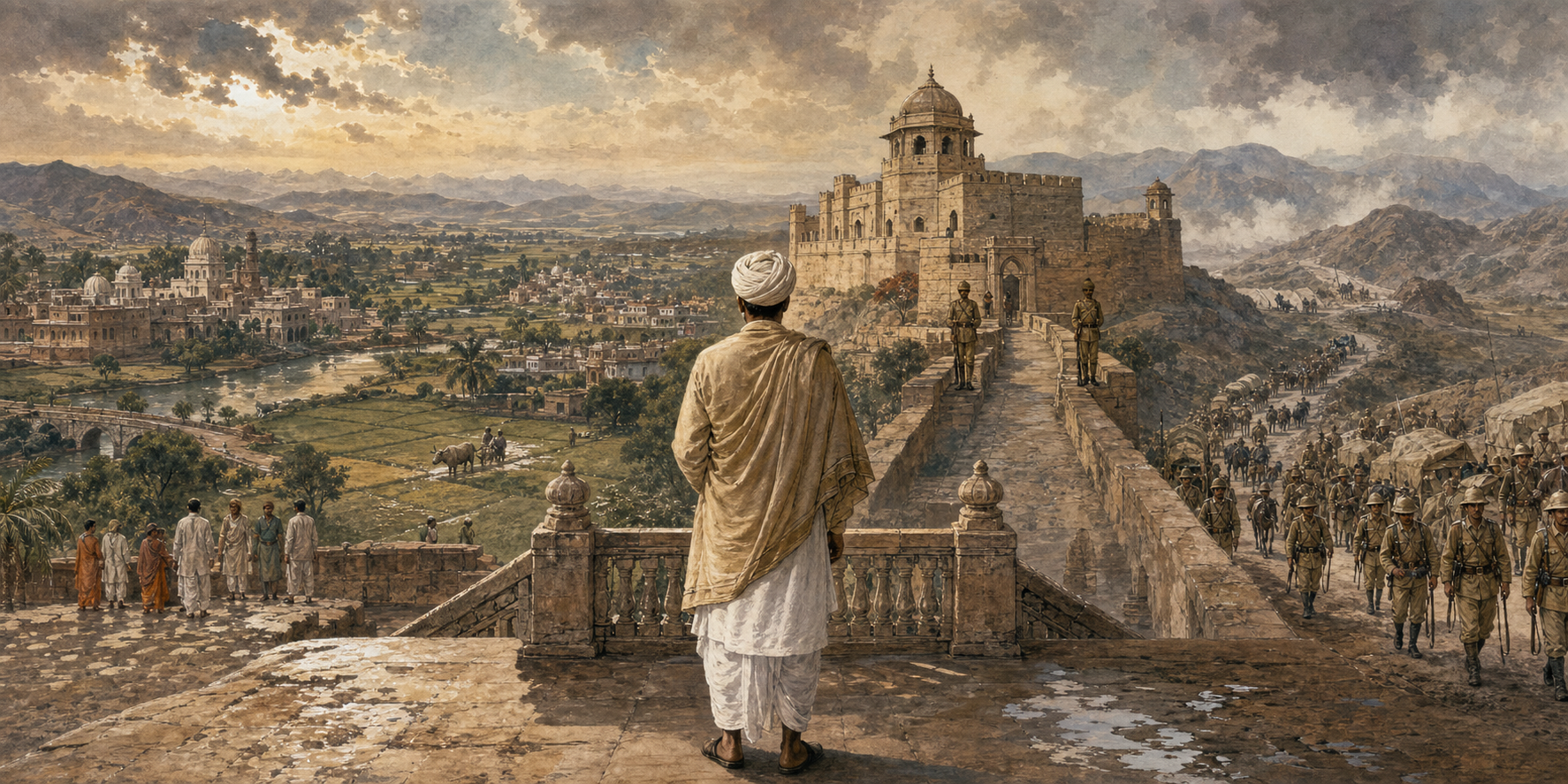
National defence under British rule posed a problem that neither loyalty nor betrayal can adequately describe. Indian leaders had to consider dangers to the country while confronting a government that exercised power without Indian democratic consent.
The central task is to separate defence of India from defence of British authority, then ask how political movements handled the overlap. The supplied material contains one source article, so its historical specifics are treated here as source-reported claims rather than independently corroborated facts.
Key takeaways
- India as a homeland, the British Indian state and the government in London were related but distinct objects of political obligation.
- The Khilafat and Non-cooperation dispute of 1921 should not be collapsed into the strategic circumstances of the Second World War.
- Cooperation with colonial authorities did not necessarily imply approval of empire, just as non-cooperation did not by itself provide a policy for protecting Indian society.
- Political responsibility is best assessed through consent, reciprocity and practical protection, without assigning one leader’s position to an entire religious community.
The defence question contained three different loyalties
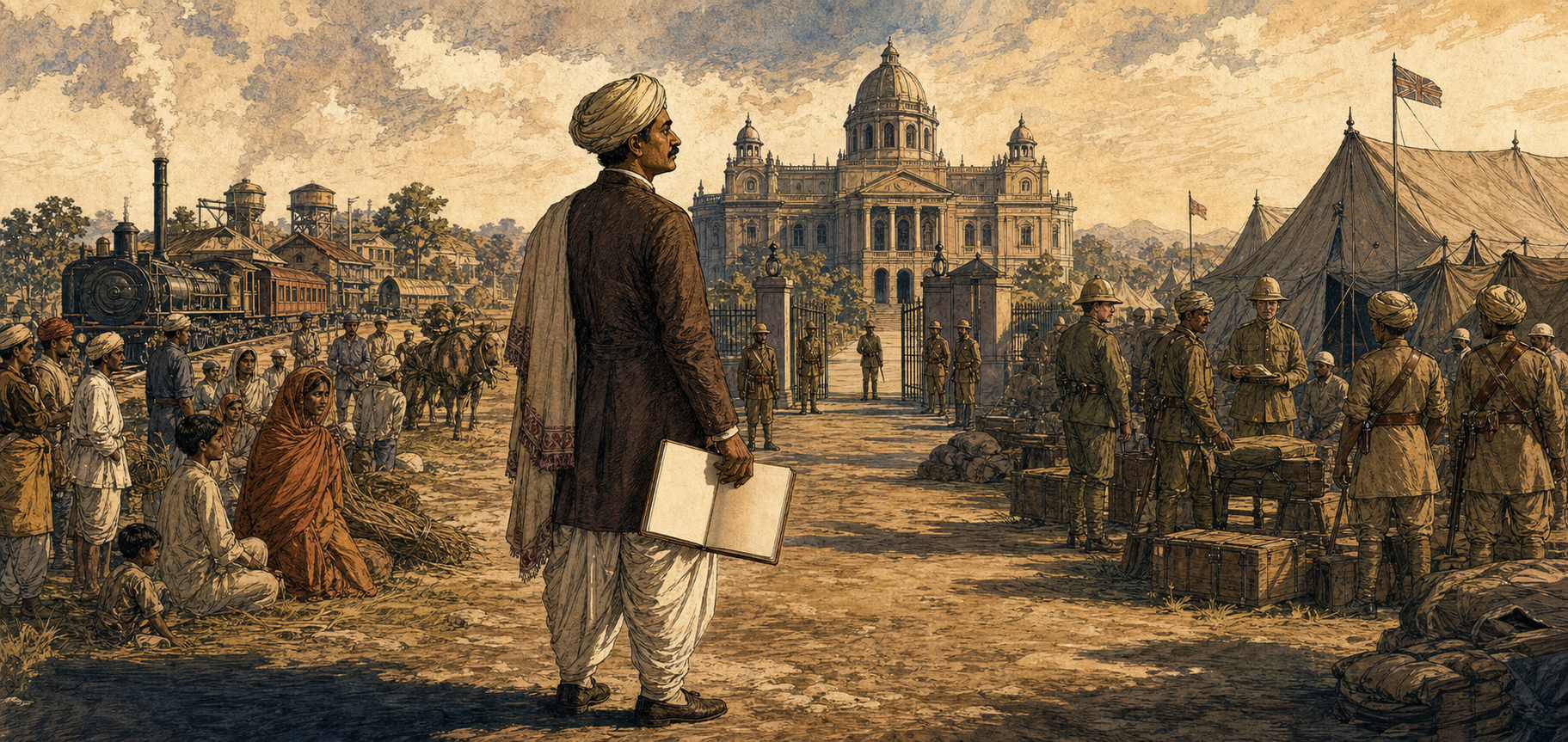
India as a homeland. The most direct national obligation concerned the security of the people and territory of India. An external power might claim to be striking Britain while conducting operations on Indian soil, but the distinction between its declared enemy and those exposed to violence could disappear in practice. Opposition to colonial rule therefore could not settle every question about an outside attack.
The British Indian state. Colonial institutions administered the country and organised its defence, yet they did not derive their ultimate authority from Indian consent. Helping those institutions could be necessary to protect the population, but it could also strengthen a political order that nationalists sought to replace. The same act could consequently have a protective purpose and an imperial effect.
The government in London. British strategic interests extended beyond India. A demand that Indians support an imperial war could therefore include objectives not chosen by Indians. Treating every objection to London as hostility to India’s security obscured this difference; treating every military threat to British power as irrelevant to Indians obscured it in the opposite direction.
This three-part distinction changes the historical question. The issue is not simply whether a leader cooperated with Britain, but what was being defended, who authorised the policy and what consequences the policy carried for India.
One argument joined two very different crises
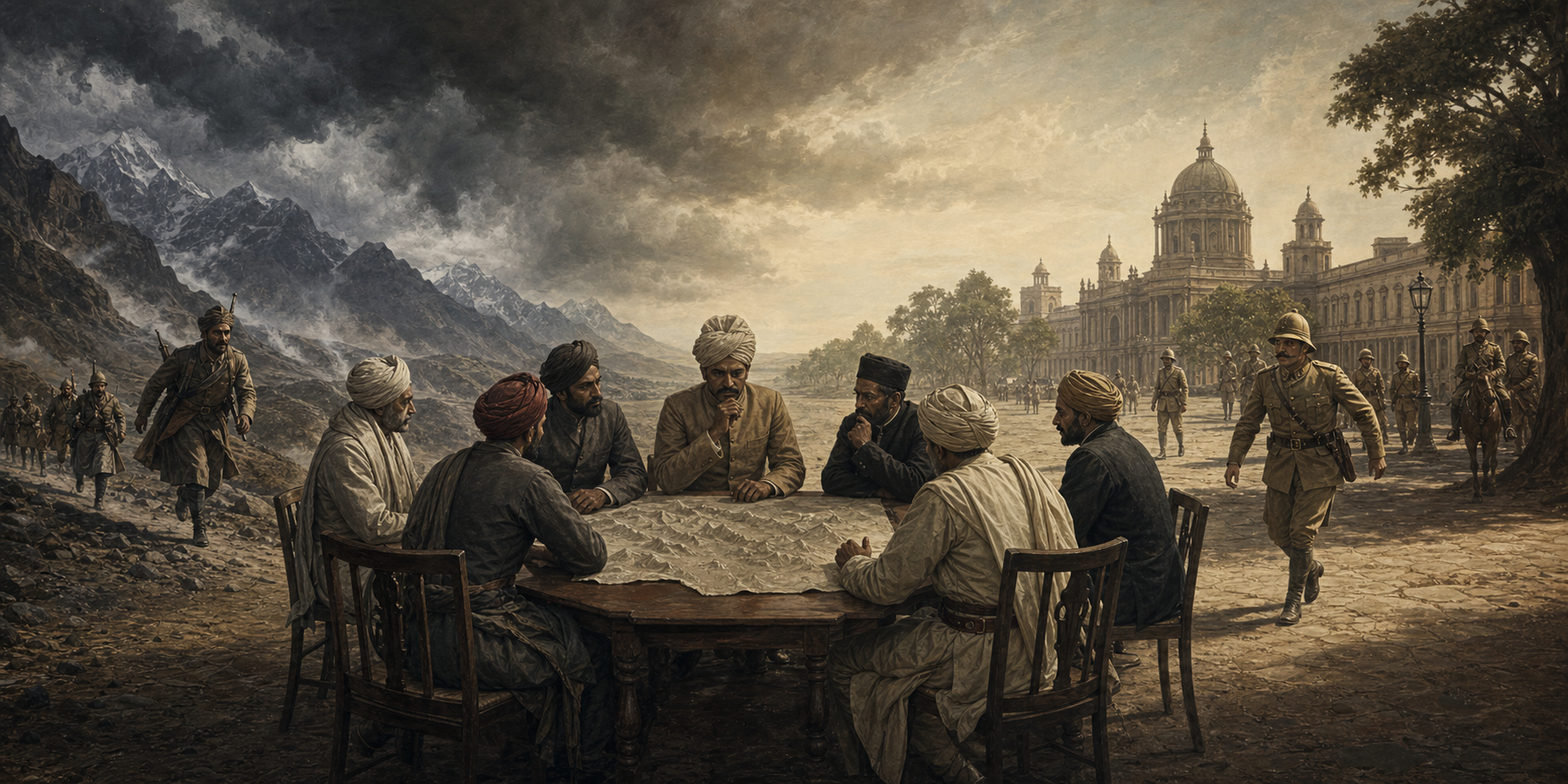
The source connects the Non-cooperation and Khilafat agitation of 1921 with controversies from the opening phase of the Second World War. It presents these moments as parts of a continuing dispute about sovereignty, but it also warns that they occurred under substantially different political and strategic conditions.
According to the source, a statement attributed to Maulana Abul Kalam Azad and dated 1 June 1921 described an attack under existing colonial conditions as an attack on the British government rather than on Indians themselves. The reproduced passage announces four possible circumstances but gives only the first. Without the complete text and its original setting, it cannot establish how Azad addressed an invader seeking territory, endangering civilians or replacing British domination with another form of conquest.
Chronology makes that limitation important. The source reports that Azad briefly held the Congress presidency in 1923 and served again from 1940 to 1946. It interprets references to a world war, Congress ministries, the Poona resolution and Muhammad Ali Jinnah’s followers as indications that later commentary used the 1921 statement to illuminate politics in the early 1940s.
That comparison can reveal a durable concern about assisting an unrepresentative government. It cannot, on its own, prove an unchanged position across two decades. The source itself notes that Germany, Italy and Japan presented military dangers different from the circumstances surrounding the earlier Khilafat agitation. Similar language across the two periods is a starting point for investigation, not sufficient evidence of strategic continuity.
Coalition politics complicated the meaning of national interest
The source reports that the Khilafat Movement developed after the First World War amid uncertainty about the Ottoman Empire and the Caliphate. It combined religious solidarity, opposition to British policy and anti-imperial mobilisation. Gandhi supported its convergence with Non-cooperation, which Congress endorsed in 1920, in the hope that a disciplined mass campaign would advance freedom and Hindu-Muslim cooperation.
The alliance expanded participation but joined a territorial independence movement to an international religious cause whose fate could not be determined in India. According to the source, Gandhi suspended Non-cooperation after the violence at Chauri Chaura in February 1922; the Ottoman sultanate was abolished in 1922, and the Turkish Republic abolished the Caliphate in 1924. The shared campaign consequently lost both its method and its external objective.
The strategic lesson is narrower than a condemnation of cross-community cooperation. A diverse national movement necessarily needs coalitions. Their durability depends on whether participants share a civic programme, accept reciprocal duties and state their different objectives honestly. A coalition becomes unstable when public unity conceals incompatible answers to the questions of sovereignty and political obligation.
The same caution applies to collective labels. The source describes varied Muslim constituencies rather than a single Muslim position, and it identifies disagreements within Congress over non-violence, citizenship and strategy. It also reports that the All India Muslim League had become a much stronger constitutional claimant by the later wartime setting. Neither Congress nor any religious community can therefore be treated as a unit with one continuous doctrine of defence.
From colonial loyalty to national responsibility
The authorisation test
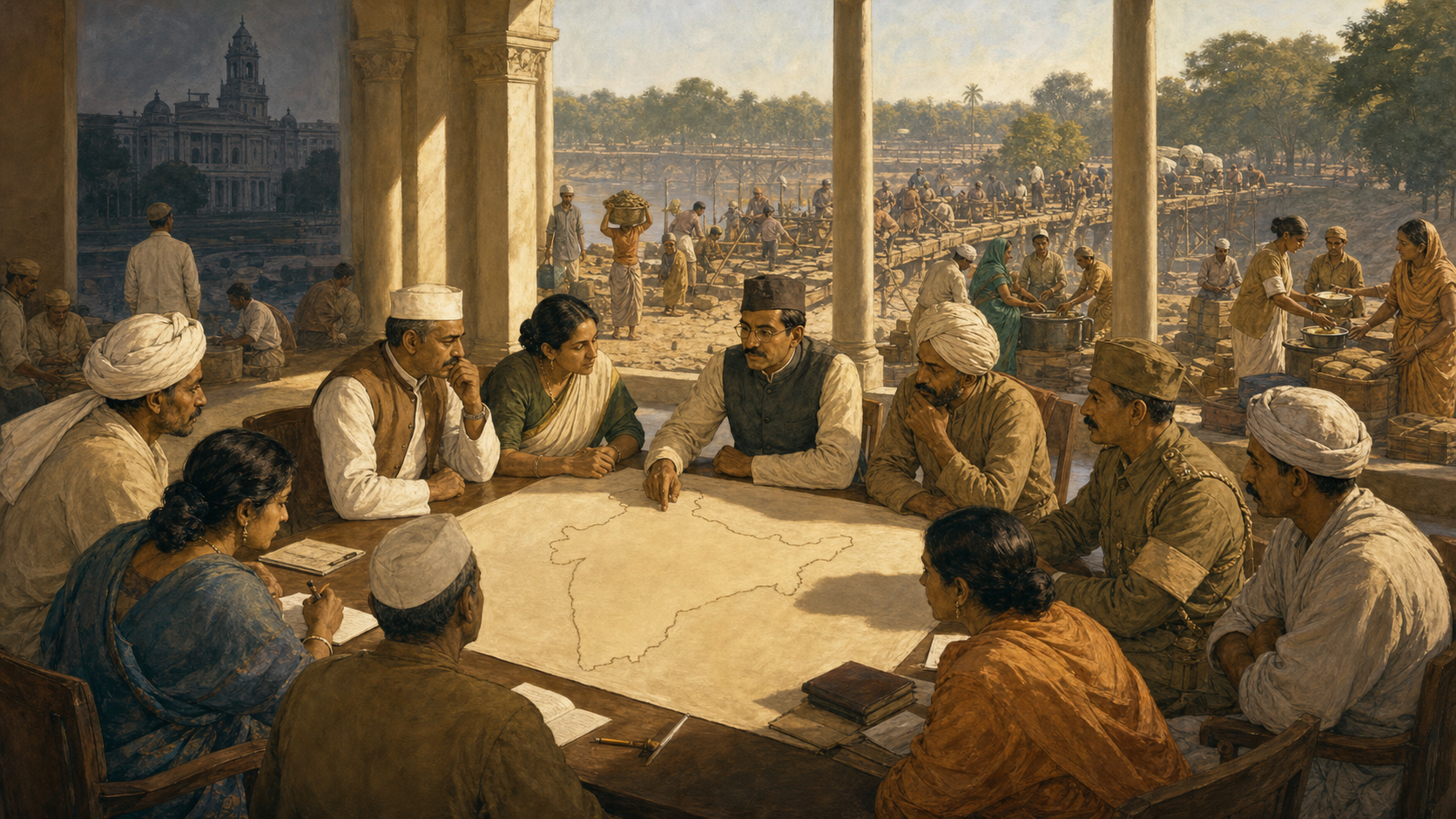
The source reports that Britain declared India to be at war in September 1939 without consulting elected Indian representatives. That decision exposed the constitutional core of the dispute: a government demanding national service had denied the nation authority over the commitment. Political bargaining over cooperation was therefore not automatically an evasion of defence; it could be an attempt to connect sacrifice with representation.
Consent, however, is not the only test. A movement can correctly challenge the legitimacy of a decision-making process while still failing to explain how it would respond to the danger involved. A credible claim to future national authority requires both an argument about who may decide and a practical account of how the country will be protected.
The protection test
Defence policy should be judged by its probable consequences for Indian territory and society, not only by the formal identity of the government directing it. Cooperation may be defensible when it prevents conquest or protects civilians, even if the cooperating party remains opposed to colonialism. Refusal may be defensible when imperial authorities seek unconditional support while withholding meaningful Indian agency, but refusal does not remove the obligation to address external aggression.
Non-violence adds a further distinction. The source reports that Gandhi sought to discipline mass action through non-violence and that prominent leaders differed over strategy. A moral discipline for resisting domestic authority is not automatically a complete doctrine for a government responsible for borders, civilians and institutions. Leaders claiming the right to govern must explain how their principles would operate under that responsibility.
A standard that avoids communal shortcuts
A fair assessment begins by identifying the object being defended: India, colonial institutions or Britain’s wider imperial position. It then considers the likely purpose and effects of an external attack, the degree of Indian authority over the response, the conditions attached to cooperation and the existence of a workable protective alternative.
The standard must also remain individual and institutional. Statements should be attributed to the leaders who made them, programmes to the organisations that adopted them and disagreements to the political circumstances in which they arose. Communal generalisation substitutes inherited identity for evidence and makes the underlying defence question harder, rather than easier, to answer.
Further historical work should recover the complete 1921 text attributed to Azad and compare it with authenticated wartime resolutions and statements from competing organisations. That evidence would allow continuity, change and political responsibility to be judged with greater precision than retrospective quotation permits.