
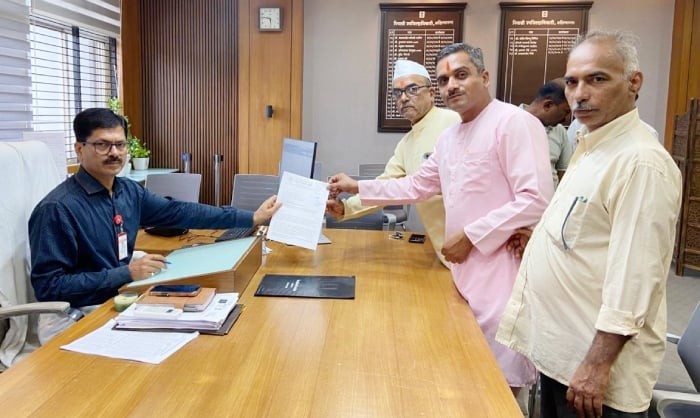
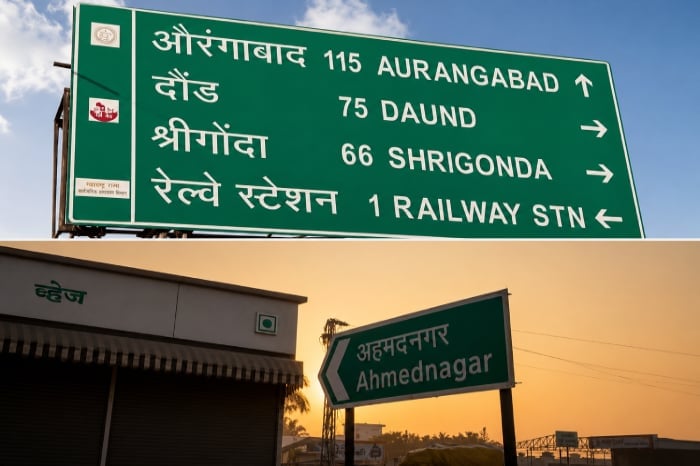
The Hindu Janajagruti Samiti has demanded the immediate replacement of highway and city signboards that continue to display the older names ‘Ahmednagar’ and ‘Aurangabad’, insisting that public signage should reflect the names ‘Ahilyanagar’ and ‘Chhatrapati Sambhajinagar’. The organisation has also warned that it may begin an agitation if the authorities do not act within seven days. At one level, this appears to be a straightforward demand about boards, arrows, road markers, and municipal labels. At a deeper civic level, however, it raises an important question about how quickly official decisions should be translated into visible public administration.
The issue is significant because place names are not only linguistic markers. They are administrative identifiers, historical statements, cultural references, and practical tools for everyday navigation. A highway sign is read by pilgrims, truck drivers, students, emergency responders, tourists, and local residents. When a city or district has been renamed, but older signage remains in public circulation, the result can be both symbolic inconsistency and practical confusion. The HJS demand therefore sits at the intersection of cultural heritage, public administration, transport governance, and civic accountability.
In the case of Chhatrapati Sambhajinagar, the renaming has a clear public history. The name honours Chhatrapati Sambhaji Maharaj, the second Chhatrapati of the Maratha Empire and a figure of enduring importance in Maharashtra’s historical memory. The renaming of Aurangabad to Chhatrapati Sambhajinagar was approved through official processes and later received judicial scrutiny, with the Bombay High Court validating the government notifications concerning the renaming of Aurangabad and Osmanabad in May 2024. This legal background makes the continued use of old signage a matter of implementation rather than merely opinion.
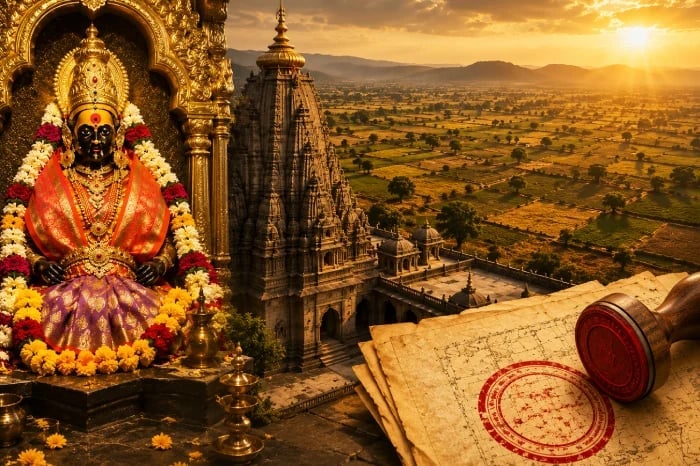
Ahilyanagar carries a different but equally powerful civilisational association. The name honours Punyashlok Ahilyadevi Holkar, the 18th-century ruler remembered for governance, public works, temple restoration, pilgrimage infrastructure, charity, and administrative discipline. Her memory occupies a respected place across many communities because her legacy was not confined to military power or court politics. It was expressed through restoration, welfare, justice, and the strengthening of sacred and civic spaces. For many residents, seeing Ahilyanagar on public signboards is therefore not a narrow political preference; it is recognition of a ruler whose public life continues to inspire discussions on dharmic governance and cultural stewardship.
From an administrative perspective, the HJS demand points to a familiar implementation gap. Governments often complete the formal act of renaming through cabinet approval, gazette notification, departmental communication, or judicial validation. Yet the visible ecosystem of the name change may lag behind. Road signs, municipal boards, railway references, digital databases, revenue records, maps, tourism brochures, school documents, transport permits, and emergency service directories must all be updated in a coordinated manner. If even one layer remains outdated, citizens encounter mixed signals from the state.
Highway signage deserves particular attention because it is part of a technical navigation system. Signs are not decorative objects; they guide movement, regulate safety, identify routes, and support rapid decision-making. A driver moving at highway speed cannot pause to interpret whether an old name refers to the same destination as the new official name. A logistics operator entering route data, a pilgrim following district markers, or an ambulance coordinating across jurisdictions depends on clarity. When old and new names coexist without explanation, the burden of interpretation shifts from public authority to ordinary citizens.
The most responsible solution is not disorderly removal or ad hoc repainting, but a time-bound, transparent, and technically sound replacement plan. Authorities can audit all signboards on highways, city roads, bus stands, municipal offices, district boundaries, public institutions, and major junctions. The audit should identify which boards require full replacement, which can be corrected through approved overlays, and which digital or multilingual formats need revision. Such a process would respect public money while ensuring that the official names Ahilyanagar and Chhatrapati Sambhajinagar appear consistently across the built environment.
There is also a language dimension. Maharashtra’s public signage often operates across Marathi, Hindi, and English, especially on highways and in areas with tourism, pilgrimage, and inter-state movement. Updating names therefore requires more than replacing one English word with another. Transliteration, spelling uniformity, font legibility, and placement hierarchy must be handled carefully. A single standard spelling for Chhatrapati Sambhajinagar and Ahilyanagar across departments would prevent confusion in records, search systems, and public communication.
The cultural argument behind the demand is rooted in memory. Public names influence how future generations understand a city’s identity. Children see names on school routes before they read archival history. Travellers first encounter a region through railway stations, toll plazas, airport boards, and highway signs. A name such as Ahilyanagar can invite curiosity about Ahilyadevi Holkar’s model of leadership. A name such as Chhatrapati Sambhajinagar can encourage deeper engagement with Maratha history, the Deccan, and the sacrifices associated with Chhatrapati Sambhaji Maharaj. In that sense, signage becomes a modest but constant form of public education.

At the same time, an academic and factual discussion must recognise that renaming debates often produce disagreement. Some citizens view name changes as acts of historical correction, while others worry that administrative energy may be diverted from infrastructure, water supply, roads, and employment. These concerns need not be treated as mutually exclusive. A capable administration can update signage and still remain accountable for development. Cultural recognition and material governance should be complementary duties, not competing obligations.
This is where the tone of public action matters. The HJS warning of an agitation reflects urgency and dissatisfaction with delay. In a democratic society, peaceful public pressure is a recognised form of civic participation. Yet the most constructive outcome would be a lawful, disciplined response from the authorities before escalation becomes necessary. A clear public schedule, department-wise responsibility, and visible progress on major routes would address the core grievance while preserving social harmony.
The broader dharmic perspective also encourages balance. Honouring Ahilyadevi Holkar and Chhatrapati Sambhaji Maharaj should strengthen cultural confidence without creating hostility toward ordinary citizens of any community. The objective of such public recognition is best understood as restoration of memory, not social division. Hindu, Buddhist, Jain, and Sikh traditions have long preserved names, places, teachers, pilgrimage routes, and sacred geographies as carriers of collective identity. That shared civilisational habit should guide the discussion with dignity and restraint.
For residents of Maharashtra, the emotional dimension is easy to understand. A place name is often tied to family journeys, festivals, markets, schools, ancestral stories, and pilgrimage routes. When an official name changes, people adjust gradually in speech, documents, and memory. Public signage plays an important role in that transition. It tells citizens that the state has completed the change not only on paper but also in the shared spaces where public life unfolds every day.
Technically, the transition should include coordination between municipal bodies, district administrations, the public works department, highway authorities, transport agencies, tourism offices, and digital mapping partners. Physical signboards should not be treated in isolation from digital infrastructure. Search engines, navigation applications, emergency databases, and government portals influence how people locate a city as much as roadside boards do. A modern renaming process must therefore combine physical signage correction with data standardisation.
The demand also raises a procurement and maintenance question. Public boards deteriorate, fade, and become outdated over time. Instead of treating this as a one-time political exercise, authorities could use the opportunity to improve signage quality, reflectivity, language consistency, and road safety compliance. If sign replacement is handled professionally, the result can serve both cultural recognition and public convenience. The names Ahilyanagar and Chhatrapati Sambhajinagar would then appear not as hurried corrections, but as part of a modern, legible, and well-maintained civic landscape.
The seven-day demand from Hindu Janajagruti Samiti should therefore be read as a call for administrative seriousness. Once a government has accepted a name in official usage, citizens are entitled to expect consistency in public infrastructure. Delay weakens confidence in implementation and leaves space for avoidable tension. Prompt action, by contrast, would show that cultural decisions are backed by competent governance.
The most constructive path is clear: authorities should immediately identify outdated boards, publish a replacement timeline, prioritise major highways and city entry points, standardise spellings across languages, and coordinate with transport and mapping systems. Such a response would address the HJS demand, reduce public confusion, honour Maharashtra’s cultural heritage, and demonstrate that administrative symbolism can be handled with technical precision and social responsibility.
Inspired by this post on Hindu Jagruti Samiti.
