Hindu Kesari Honour for Prabal Pratap Singh Judev: Seva, Sanatan Culture, and Plural Unity
·5 min read
At a function in New Delhi, Shri Prabal Pratap Singh Judev was conferred the ‘Hindu Kesari’ award for sustained contributions to social service, stewardship of Sanatan culture, and public leadership associated with the ghar wapsi Abhiyan. The recognition underscores an approach to community development that integrates seva (service), cultural continuity, and lawful, rights-based engagement with questions of identity and belonging.
The title “Hindu Kesari” evokes a classical ideal of courage guided by restraint and responsibilityan ethic that privileges service to society, protection of heritage, and the dignified exercise of conscience. In contemporary civic life, such an honour signals public trust in models of leadership that combine policy awareness, community empathy, and institutional accountability to strengthen social cohesion.
In public discourse, the phrase ghar wapsi Abhiyan is commonly used to describe voluntary returns to ancestral faith or cultural affiliation. Framed responsibly, it prioritizes free and informed choice, excludes any form of coercion or inducement, and upholds the constitutional guarantee of freedom of conscience. Read through this lens, ghar wapsi becomes less a “campaign” and more a process of community reintegration and identity restorationone that must remain grounded in law, ethics, and respectful dialogue.
The award’s emphasis on social service reflects a long-standing dharmic ethos of seva that advances education, health, livelihood support, and disaster relief as preconditions for human dignity. When cultural stewardship is aligned with tangible welfare outcomes, trust deepens between institutions and communities, reducing polarization and building a shared sense of purpose.
Sanatan culture, in its philosophical core, affirms plural pathways to the sacred through the principle of ishtarecognizing that spiritual journeys can be diverse yet harmonious. In practice, this fosters a civic culture where cultural preservation is not a zero-sum exercise but a public good: it safeguards languages, festivals, rites of passage, and local knowledge systems while nurturing social stability and ethical citizenship.
From a broader dharmic perspective, the values animating Hindu Dharma naturally resonate with cognate traditions in Buddhism, Jainism, and Sikhism. Each sustains its own disciplines of initiation, recommitment, or ethical rededicationbe it diksha in multiple sampradayas, pabbajjā/upasampadā in Buddhism, diksha in Jainism, or Amrit Sanchar in Sikhismunderscoring that conscious recommitment to a chosen path is integral to personal growth and community well-being. The unifying thread is voluntary assent, compassion, and nonviolence across all interactions.
The constitutional architecture of India provides the lawful framework for these questions. Article 25 protects freedom of conscience and the right freely to profess, practice, and propagate religion, subject to public order, morality, and health. Jurisprudencemost notably Rev. Stanislaus v. State of Madhya Pradesh (1977)clarifies that while sharing beliefs is protected, conversion by force, fraud, or inducement is not. Any initiative linked to identity or faith must therefore demonstrate unambiguous compliance with these standards.
Ethically robust community engagement rests on several pillars: transparent communication of purpose; independent facilitation or oversight; verifiable, written consent; zero tolerance for material inducements or social pressure; accessible grievance redressal; and assured freedom to reconsider choices without stigma. When such safeguards are institutionalized, citizen confidence grows and interfaith relations benefit through predictability and fairness.
Sociologically, the language of “homecoming” often resonates with families who have preserved fragments of ancestral practicefestivals, foodways, oral historieseven when formal affiliation lapsed. Relearning lullabies, liturgies, or ethical precepts can help bridge generational gaps, renew community bonds, and anchor young people in a continuum of values. Crucially, this is most constructive when framed as cultural enrichment rather than adversarial identity politics.
Program design benefits from a public-interest orientation. A clear theory of change, rigorous documentation, and outcome mapping (from inputs and activities to outputs and long-term social effects) allow stakeholders to evaluate whether initiatives truly advance community welfare. Metrics centered on education continuity, health access, livelihood resilience, and civic participation better capture social impact than counts of symbolic events alone.
Interfaith harmony is strengthened when leaders who receive cultural honours also invest in dialogue: acknowledging concerns, inviting scrutiny, and building platforms where dharmic and non-dharmic communities can meet as equals under the law. In the Indian context of Unity in Diversity, trusted leadership is measured not only by commitment to one’s own tradition but also by the capacity to reassure neighbours that their rights, dignity, and sacred spaces are secure.
As with any high-visibility theme, ghar wapsi Abhiyan can attract polarized narratives. The constructive path emphasizes three concurrent duties: affirm the right to choose or refuse any religious affiliation without fear; insist on strict, provable non-coercion; and prioritize social service that benefits all residents irrespective of identity. Such an ethic aligns Sanatan Dharma’s compassion with the constitutional promise of equal citizenship.
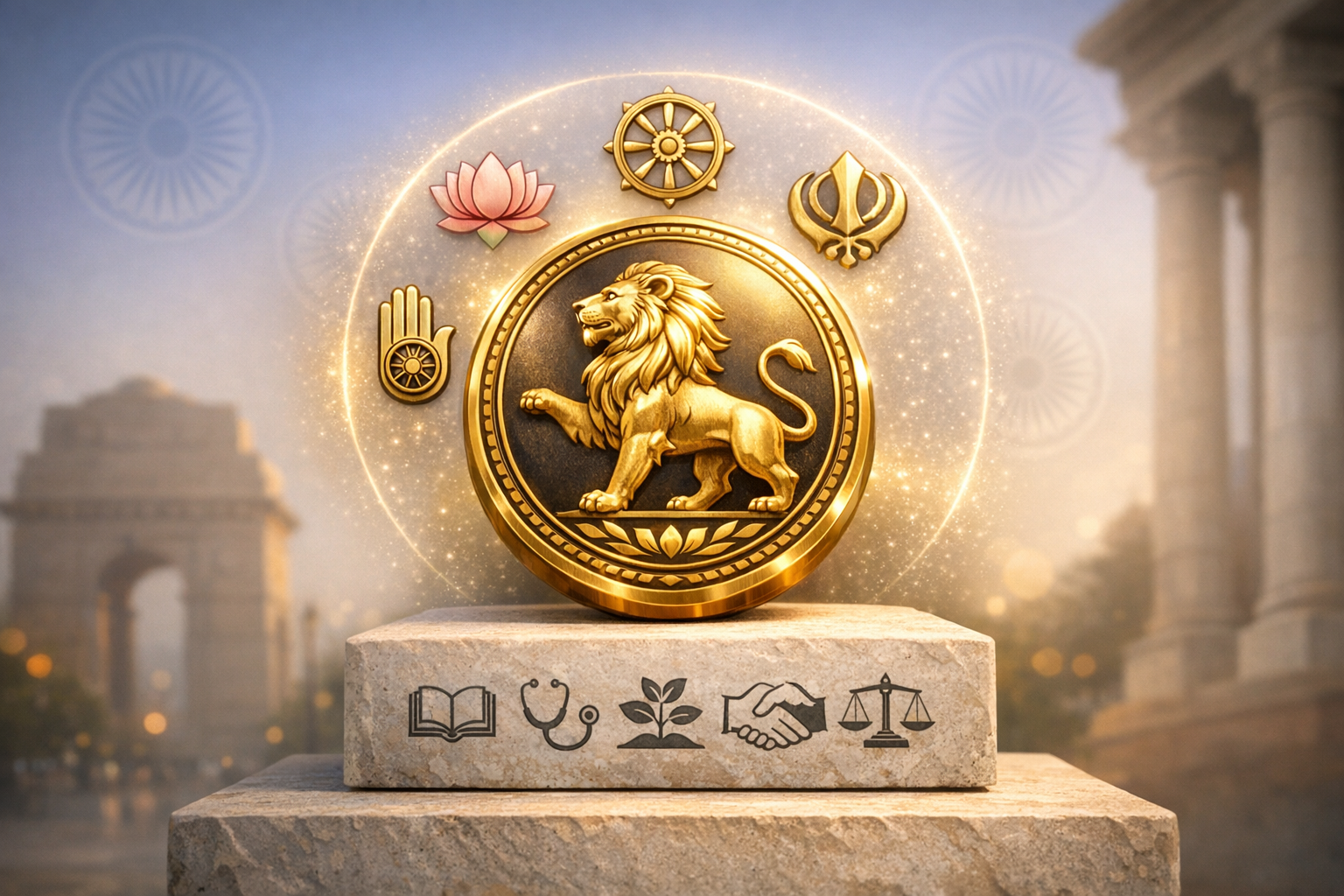
Against this backdrop, the ‘Hindu Kesari’ recognition for Shri Prabal Pratap Singh Judev may be read as an endorsement of service-led, law-aligned cultural stewardship. By centering seva, respecting conscience, and strengthening institutional safeguards, public leaders can model how cultural revival and Religious coexistence in India move in tandemadvancing a plural, confident society in which Hinduism, Buddhism, Jainism, and Sikhism flourish side by side.
Honours of this nature carry an implicit responsibility: to demonstrate, through transparent practice and measurable outcomes, that cultural leadership reduces social fragmentation and expands opportunities for all. When pursued in this spirit, recognition becomes more than ceremonialit becomes a civic instrument for deepening trust, amplifying welfare, and renewing the shared moral vocabulary that binds India’s dharmic traditions.
Why was Shri Prabal Pratap Singh Judev given the Hindu Kesari honour?
The article says he was honoured in New Delhi for sustained contributions to social service, stewardship of Sanatan culture, and public leadership associated with the ghar wapsi Abhiyan. It frames the recognition as a call to service-led, law-aligned, and plural-affirming cultural leadership.
How does the article define a responsible view of ghar wapsi Abhiyan?
The article presents ghar wapsi Abhiyan as voluntary return to ancestral faith or cultural affiliation when it is grounded in free and informed choice. It stresses that such initiatives must exclude coercion or inducement and remain rooted in law, ethics, and respectful dialogue.
What legal framework does the article connect to religious choice in India?
The piece points to Article 25, which protects freedom of conscience and the right to profess, practice, and propagate religion subject to public order, morality, and health. It also cites Rev. Stanislaus v. State of Madhya Pradesh (1977) to emphasize that conversion by force, fraud, or inducement is not protected.
What ethical safeguards does the article recommend for identity or faith initiatives?
It recommends transparent communication, independent facilitation or oversight, verifiable written consent, zero tolerance for inducements or pressure, accessible grievance redressal, and freedom to reconsider choices without stigma. These safeguards are presented as ways to build citizen confidence and interfaith trust.
How does seva relate to cultural stewardship in the article?
The article describes seva as a dharmic ethos expressed through education, health, livelihood support, and disaster relief. It argues that cultural stewardship gains public trust when it is paired with measurable welfare outcomes and social cohesion.
How does the article connect Sanatan culture with plural unity?
The article says Sanatan culture affirms plural pathways to the sacred and resonates with Hindu, Buddhist, Jain, and Sikh traditions of initiation, recommitment, or ethical rededication. It presents voluntary assent, compassion, nonviolence, and interfaith dialogue as foundations for religious coexistence in India.