
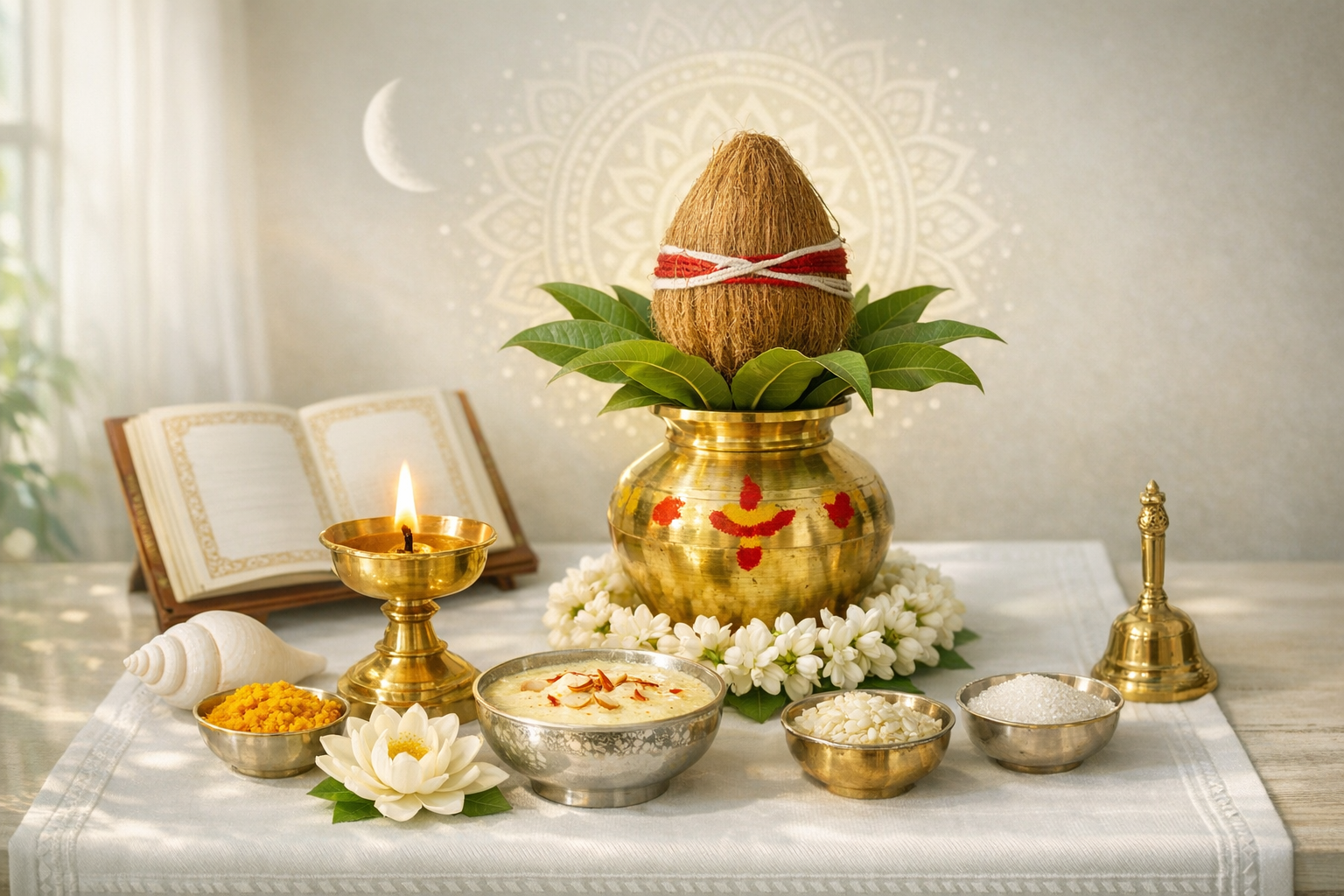
Shukla Devi Puja (Shukla Devi Aradhana) is observed each year on the eighth lunar day of the bright fortnight in Jyeshta month, aligning devotion with the auspicious ascent of the moon in Shukla Paksha. In 2026, this observance falls on 22 June according to the Hindu calendar used across most of India, when Jyeshta Shukla Ashtami is in effect. The day invites a focused vrata and puja celebrating the sattvic brilliance symbolized by the name Shukla, a reminder of purity, clarity, and inner illumination.
As a manifestation of Devi Shakti, Shukla Devi is contemplated in continuity with the living traditions that revere the Divine Feminine through lineages such as the Dashamahavidya and the Saptamatrikas. The terminology Shukla evokes radiance and the “white” luminosity of spiritual insight. The observance on Ashtami tithi further aligns with classical Devi upasana, where the eighth lunar day is traditionally held sacred for worship of the Goddess.
In 2026, Jyeshta Shukla Ashtami coincides with 22 June for most Indian locations; diaspora communities should confirm local tithi transitions since lunar days can shift by geography and time zone. The standard rule of observance is to keep the vrata on the civil day when Ashtami prevails at sunrise, as guided by the regional panchang. When in doubt, temples and trusted almanacs provide the most reliable local guidance.
The same lunar day is celebrated in Kashmir as the Khir Bhavani Mela, honoring the revered shrine of the Goddess at Tulmulla. Many households prepare kheer and other milk-based offerings in resonance with that regional tradition, harmonizing the pan-Indian Shakti upasana of Shukla Devi with the local devotional idiom of Khir Bhavani. Such convergence underlines the shared sanctity of Jyeshta Shukla Ashtami across diverse sacred geographies.
Beyond calendrical alignment, the theological arc of Shukla Devi Puja is compelling. Shukla, denoting luminous purity, is associated with sattva, mental clarity, and benevolence. Devotees commonly report a felt sense of quiet strength, renewed focus, and inner equilibrium when approaching this vrata with sincere sankalpa, study, and service. The observance thus becomes a practical sadhana to transmute agitation into steadiness and confusion into discernment.
Shukla Devi Puja is accessible to householders and renunciants alike, welcoming all who wish to cultivate purity of conduct and thought. Practitioners often undertake a simplified upavasa or a saatvik diet, reduce distractions, and engage in svadhyaya of core Devi texts. The vrata’s universal spirit naturally supports unity among dharmic traditions: Hindus, Buddhists, Jains, and Sikhs recognize and honor the qualities of wisdom, compassion, self-discipline, and service that this day magnifies.
Preparations typically begin with purifying the home altar or a clean space. A white cloth for the asana, a kalasha with sanctified water, akshata, gandha, flowers (preferably white), a ghee lamp, and milk-based naivedya are chosen to reflect the Shukla ethos. The sankalpa articulates the time, place, and intentseeking inner clarity, satya in conduct, and well-being for all beings.
Ghata-sthapana may be performed to invoke the presence of Shukla Devi. The kalasha is decorated with turmeric and kumkum, adorned with leaves, and capped with coconut. Simple Panchopachara (fivefold) worshipgandha, pushpa, dhupa, deepa, and naivedyacan be offered, while those following fuller procedure may perform Shodashopachara as guided by sampradaya and capacity.
Main puja emphasizes meditation on Devi as the pure radiance of sattva. Recitations widely observed in Shakti upasanasuch as Devi Mahatmyam adhyayas as feasible, Sri Suktam, Durga Suktam, Lalita Sahasranama, or select stotras favored in one’s traditionare all appropriate. The spirit of Shukla Devi Aradhana is sincerity over complexity: if elaborate procedures are impractical, a focused, mindful offering with mantra-japa and contemplation remains fully effective.
Offerings resonate with the Shukla theme: jasmine or white lotus where available, white rice, milk, curds, ghee, sugar, coconut, and especially kheer as naivedya. A steady ghee deepa symbolizes unwavering awareness. Eco-conscious choicesnatural wicks, minimal single-use plastics, and biodegradable flowershonor dharma through care for the environment.
Upavasa may be observed as full fasting, phalahara, or saatvik meals, depending on health and life stage. Many conclude the fast (parana) after evening arati, sharing prasad with family and neighbors. Dānagrains, milk, or essentialsextends the puja’s merits outward, translating inner refinement into tangible service.
Practitioners often adopt a contemplative theme for the day: setting aside time to reflect on habits that cloud the mind, acknowledging attachments that disturb composure, and committing to gentle, steady corrective practices. Shukla Devi Puja thus becomes a practical sadhana in cultivating sattvaclarity in thought, compassion in action, and integrity in speech.
At temples, collective recitations, homa, and special alankara may be arranged; at home, a shorter yet attentive puja remains fully sanctifying. Families frequently involve children in simple actslighting the lamp, offering flowers, helping prepare kheerso the ethos of purity and care becomes lived culture rather than abstraction.
From a broader civilizational lens, the day’s message is unifying. The aspiration toward wisdom and compassion is celebrated across dharmic traditions: the discipline of vrata and seva finds echoes in the ethical trainings of Buddhism and Jainism, while the Sikh heritage upholds courage, seva, and truthful living. Shukla Devi Puja on Jyeshta Shukla Ashtami thus serves as a shared cultural moment to honor values that sustain harmony and dignity for all.
Common practical clarifications help planning. This observance is distinct from the Ashtami of Sharad or Chaitra Navratri, though all honor Devi. The guiding principle remains the tithiobserve when Ashtami prevails by sunrise in one’s locale. Devotees in regions with differing lunar day transitions should consult local panchang or their temple for precise alignment in 2026.
In summary, Shukla Devi Puja in 2026 offers a profound opportunity to restore inner luminosity amid Jyeshta’s intensity. On 22 June, as Jyeshta Shukla Ashtami unfolds in most Indian almanacs, households and temples can align vrata, Panchopachara or Shodashopachara puja, and study of Devi scriptures with simple, dignified offerings. May the worship of Shukla Devi inspire clarity, courage, and compassionate action for the welfare of all beings.
Inspired by this post on Hindu Pad.
