
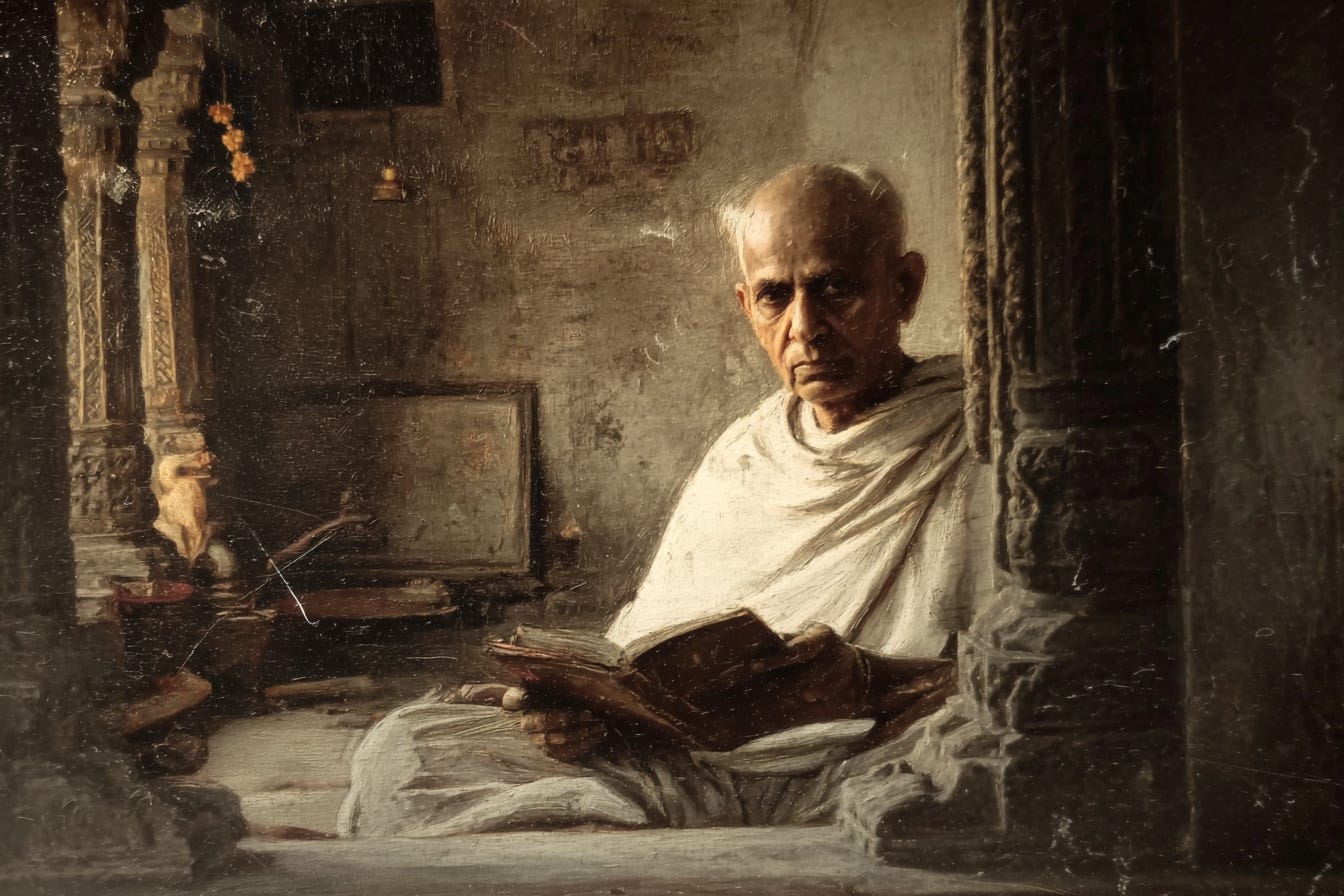
Along one of the roads leading to the Tirumala foothills in Tirupati stands a life-size bronze statue of Ganakalasindhu Sri Rallapalli Anantakrishna Sarma. Installed belatedly in 2008, decades after his passing, the statue has come to symbolize public recognition for a scholar-musician whose life’s work preserved and revitalized a crucial strand of India’s cultural heritage.
Rallapalli Anantakrishna Sarma was a consummate savant of Sanskrit and Telugu, as well as a teacher, musicologist, and spiritual practitioner. Most notably, he continued the painstaking archival seva of reviving the corpus of Tallapaka Annamacharya’s Kritis for the Tirumala Tirupati Devasthanam (TTD), a task earlier led by Sri Veturi Prabhakara Sastry until 1950. Beginning in October 1950, Sarma worked with methodical devotion, eventually bringing out the twenty-second volume by 1975, adding to the eight volumes produced by his predecessors. This effort, spanning twenty-five years, constituted a profound seva to Sri Venkateshwara and to the broader Bhakti Tradition.
Sarma’s undertaking was not a matter of routine devotion. It reflected a cultivated life honed through traditional Vedic learning, Sanskrit literature, music, pedagogy, and contemplative practicea pristine Sanatana cultivation watered, as he saw it, by the Seven Sacred Rivers (Saptasindhu). His formation reveals the coherence of the Guru-Shishya Relationship and the disciplined aesthetic sensibility that undergirded his scholarship.
Born in 1893 in the village of Rallapalli in Kalyanadurga Taluk, Anantapur District, Sarma experienced the rigors of a modest childhood common to many traditional Brahmanas of the period. Sent to Mysore at thirteen for further studies, he first stayed with relatives and then entered the Parkala Matha (Srivaishnava), an institution that served as Rajaguru to the Mysore Wodeyar royal family. The years he spent in this Matha decisively shaped his inner poise and scholarly pursuits.
His Guru, the eminent Vidwan Sri Krishnabrahmatantra Yatindra, was advanced in years with failing eyesight when Sarma became his disciple. At the time, the Guru was composing a challenging treatise, Alankaramanihara (The Gem-Studded Garland of Poetic Embellishment). During this period, he asked Sarma to locate a Ramayana verse he intended to cite as an illustration.
As Sarma turned the pages of the Ramayana and began reading nearby ślokas, the particular verse lay a few pages ahead. When he prepared to move forward, the Guru gently intervened: “Don’t stop. Read the same portion you’re now reading.”
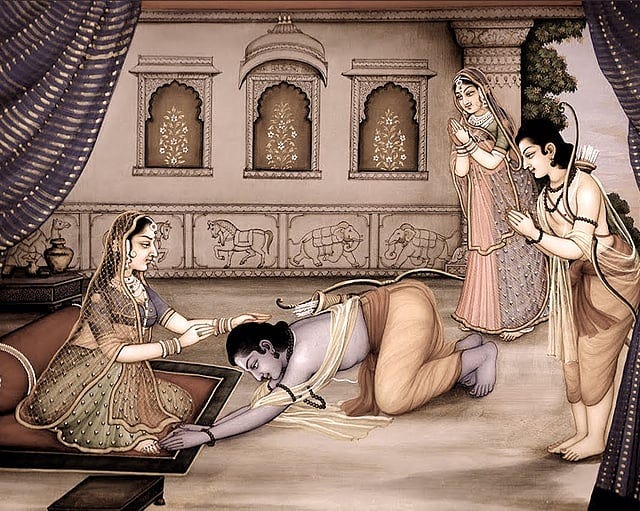
The passage described Sumitra consoling Kausalya, who was weeping upon hearing of Sri Ramachandra’s exile. Sarma read slowly and steadily. When he paused, he noticed that the Guru’s eyes had filled with tears. The scene recurred on many occasions thereafter: the Guru would set aside his work to savor the Rasanandapoetic joy experienced in the innermost recesses of the Atmanremarking that the task could wait, but this joy was rare and precious.
This habituated savoring of poetry and dharmic aesthetics decisively molded Sarma’s inner and outer lifean education in rasika discernment as essential as formal study. It is this inner radiance that drew Sri P.T. Narasimhachar to offer a memorable tribute:
“Mother Saraswati Devi has generously fed him from both her breasts and nurtured Sri Rallapalli Anantakrishna Sarma as a radiant Being. The moment I remember him, I recall the experience of moonlight – he has the same glow, the same tranquility, the same purity of joy.”
Sarma’s conviction in Sanatana culture and the arts extended beyond aesthetics into ethical clarity. A well-known Telugu writer, later in life, lamented that some attributed his blindness to earlier writings that cast venerable Mahabharata figures in a disparaging light. Sarma responded by inviting serious reflection on the responsibilities that accompany public speech about sacred narratives. Without imputing punitive destiny, his stance emphasized reverence, accountability, and the need to uphold dignity toward revered figures across dharmic traditionsan ethic that strengthens cultural cohesion and mutual respect.
Across decades, the consistent markers of Sarma’s life included unremitting self-study, rigorous engagement with music and literature, the avoidance of ostentation, and a Himalayan contentment. He distilled his life-philosophy in a concise Sanskrit prayer from his Nyaasakalaanidhistava:
anirvedamasiddheṣusādhiteṣvanahaṅkṛtim |anālasyam ca sādhyeṣukṛtyeṣvanugṛhāṇa naḥ ||
“Let me not be unhappy about that which I have been unable to accomplish. Let me not be proud of that which I have accomplished. Let me not be lazy about that which I am capable of accomplishing.”
For readers and practitioners across Hinduism, Buddhism, Jainism, and Sikhism, this triad of equanimity, humility, and diligence resonates as a shared ethical grammar. It exemplifies how the Guru-Shishya Relationship, the study of Sanskrit literature, and the devotional currents of the Ramayana can nurture a unifying sensibility: reverence for wisdom, ethical speech, and a commitment to preserving knowledge as a collective trust.
In this light, Sarma’s archival service to Annamacharya’s Kritis for TTD is more than recovery of texts; it is a model of cultural stewardship. The work binds scholarship, music, and devotion into a disciplined practice that strengthens civilizational memory. The statue in Tirupati is thus not merely commemorative; it gestures to a living pedagogy where careful reading, contemplative listening, and responsible teaching sustain India’s plural and interconnected cultural heritage.
For further biographical depth, two authoritative profilesby Dr. S.R. Ramaswamy (Divatigegalu) and Prof. S.K. Ramachandra Rao (Purushasaraswati), a direct discipleprovide valuable insight. Their studies inform and substantiate the present understanding of Rallapalli Anantakrishna Sarma’s life and legacy.
Inspired by this post on Dharma Dispatch.
