
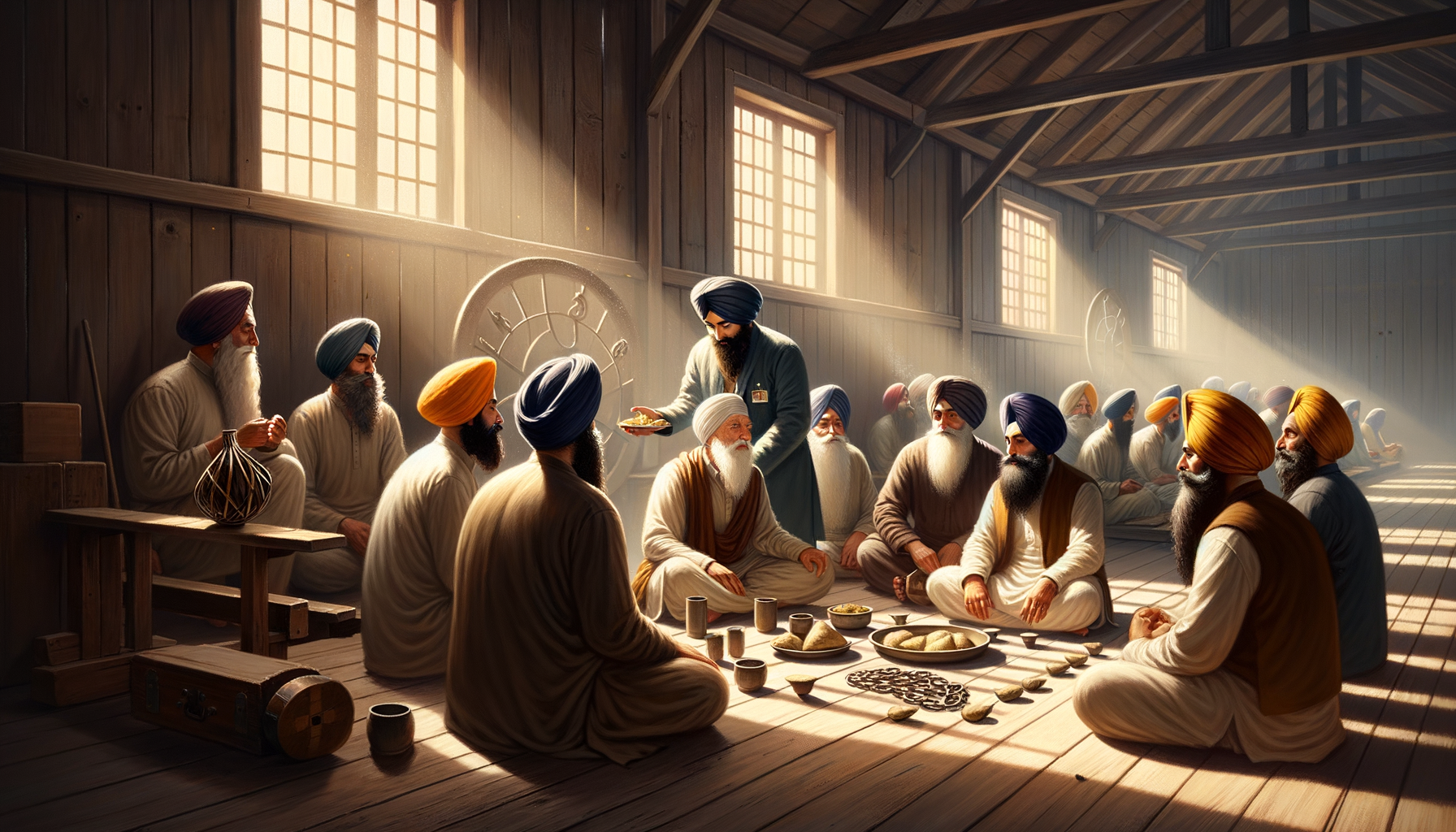
Across conflicts and generations, accounts repeatedly describe the unwavering loyalty of Sikh brothers who upheld duty and dignity even under wartime captivity. Their conduct illustrates the sant-sipahi (saint-soldier) ethos, in which courage is inseparable from compassion, and strength is governed by ethical restraint. In spaces defined by scarcity and fear, principled leadership emerged not through rank alone, but through consistent service, fairness, and faith.
Principled leadership under captivity began with order and care: establishing daily routines, sharing rations, organizing quiet prayer and simran, and protecting the most vulnerable among prisoners. This practical discipline stabilized morale and reduced conflict. It made room for dignity in circumstances designed to strip it away. Small actsan improvised langar, a rotating watch to ensure rest, a mediated conversation between divided groupsbecame a moral compass when formal systems failed.
Their loyalty was never blind adherence; it was fidelity to dharmaa commitment to truth, duty, and compassion. Grounded in hukam and guided by the principle of Sarbat da Bhala (welfare of all), Sikh brothers refused betrayals or coerced collaboration while extending kindness to fellow prisoners and even to guards when possible. Such conduct echoed shared dharmic values across Hinduism, Buddhism, Jainism, and Sikhism: restraint (ahimsa in intent), self-discipline, service, and the cultivation of inner steadiness under pressure.
Oral histories and letters often recall the emotional texture of those days: soft kirtan in dim barracks, whispered shabads before rest, and the quiet relief of a fair ration shared without preference. Many families remember elders describing how these practices renewed resolve and softened hard hearts. In these memories, unity outweighed divisionHindu, Buddhist, Jain, and Sikh prisoners found common ground in prayer, silence, and care for one another.
Resilience practices were deliberately simple and inclusive. Simran and dhyana anchored attention; breath-led calm helped manage fear; collective chores replaced helplessness with agency. The emphasis was not on ritual complexity but on steady presence, ethical clarity, and mutual respectqualities recognizable across dharmic traditions. This coherence between inner practice and outer conduct modeled a portable constitution of character.
Ethical decision-making defined leadership moments: resisting reprisals against weaker prisoners, declining privileges that bred division, and maintaining truthful testimony even under duress. The dharma-yuddha ethicfight when just, endure when bound, uphold truth regardlessguided choices. Contemporary observers and later chroniclers note that such integrity often improved camp-wide morale and reduced cycles of retaliation.
The saint-soldier ideal also affirmed interfaith solidarity. In captivity, identity became a bridge, not a boundary: a Sikh’s steadfastness inspired a Hindu’s patience, a Buddhist’s equanimity steadied a neighbor’s grief, and a Jain’s commitment to non-harm reframed choices under stress. Shared dharmic roots turned coexistence into coordinated care. Unity did not dissolve differences; it gave them a common moral horizon.
For modern leadershipmilitary, civic, or organizationalthis history offers clear lessons: value-based discipline outlasts coercion; service builds trust faster than slogans; and inner practice (simran, prayer, mindful breathing) sustains judgment when external controls collapse. The example of Sikh brothers in captivity shows that unbreakable loyalty is not merely allegiance to a sideit is allegiance to principles that protect every side from losing its humanity.
Remembering this legacy strengthens a shared civilizational ethic. It invites renewed commitment to dharmic unityHindu, Buddhist, Jain, and Sikh communities standing together for compassion, courage, and truth. In honoring that unity, the story of unwavering loyalty becomes more than history; it becomes a living guide for turbulent times.
Inspired by this post on SikhNet – News.
