
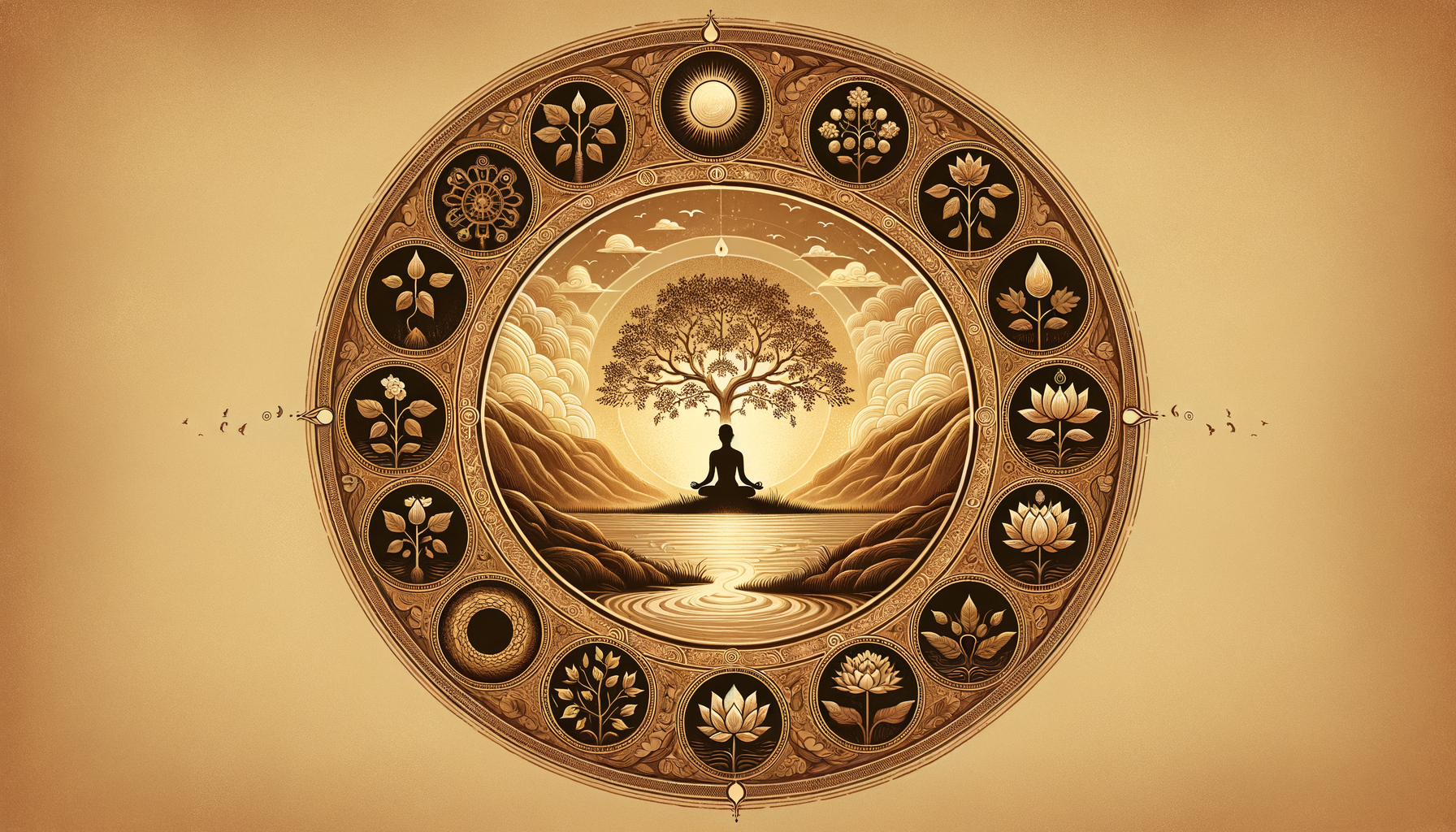
The statement, “There is no escape from the process of birth, growing, flowering, fruiting, decaying, and transforming,” expresses a central insight of Hindu thought: the rhythm of existence known as Samsarathe cycle of birth, death, and rebirth. In this view, life unfolds as a continuum of emergence, maturation, decline, and renewal, a pattern observed in nature and mirrored in human experience. This perspective, articulated across Hindu scriptures and philosophical traditions, presents a universal truth that invites lucidity, humility, and purposeful living.
The imagery of growing, flowering, fruiting, and decaying operates as both biological description and spiritual metaphor. Just as a seed becomes a tree, offers fruit, and returns to soil, so too do human lives evolve through stages of learning, contribution, loss, and transformation. Recognizing this cadence cultivates equanimity: joy is appreciated without attachment, and change is accepted without despair. The metaphor guides a reflective engagement with impermanence and continuity.
Within Hindu philosophy, Samsara is ethically shaped by karma (action and consequence) and oriented by dharma (responsibility aligned with cosmic order). Texts such as the Upanishads and the Bhagavad Gita analyze how wisdom, ethical action, and inward discipline refine one’s journey through this cycle. The ultimate horizon is mokshaliberation from compulsive rebirthattained through self-knowledge, devotion, and steadfast practice. In this framework, transformation is not merely decline; it becomes the gateway to insight and freedom.
Convergences with other dharmic traditions strengthen this understanding. Buddhism emphasizes impermanence (anicca) and dependent origination, illuminating how clinging generates suffering within cyclic existence. Jainism details karmic accumulation and its purification as pathways to moksha through ahiṁsā, self-restraint, and right knowledge. Sikhism speaks of hukam (divine order) and freedom from janam-maran (the cycle of birth and death) through remembrance of the Divine Name and righteous living. These perspectives, while distinct, harmonize around shared principles: ethical integrity, inner discipline, and compassionate action within an ever-changing world.
Everyday experience confirms these teachings. Many witness the seasons turning, families welcoming new life, and communities grieving losseseach moment a lesson in impermanence and continuity. Such observation often fosters empathy: recognizing that all beings traverse similar arcs encourages patience with others, tenderness in relationships, and resilience during personal trials. The cycle, once understood, becomes a teacher of balance and perspective.
Practically, this insight translates into steady conduct and spiritual clarity. Cultivating dharma anchors decisions; awareness of karma deepens responsibility; practices such as dhyāna (meditation), japa, and seva (selfless service) stabilize the mind and widen the heart. Accepting transformation as natural encourages sustainability, gratitude, and ethical stewardshipchoices that benefit both self and society. In times of uncertainty, the wisdom of Samsara nurtures composure and purposeful action.
Affirming the unity of dharmic traditionsHinduism, Buddhism, Jainism, and Sikhismstrengthens interfaith harmony and shared learning. Each tradition offers tools to navigate the cycle of becoming with dignity and compassion. Together, they illuminate a coherent vision: to live responsibly within change, to transform insight into service, and to approach liberation with humility and hope. In that shared endeavor, the cycle of life is not a prison; it is a path.
Inspired by this post on Hindu Blog.
