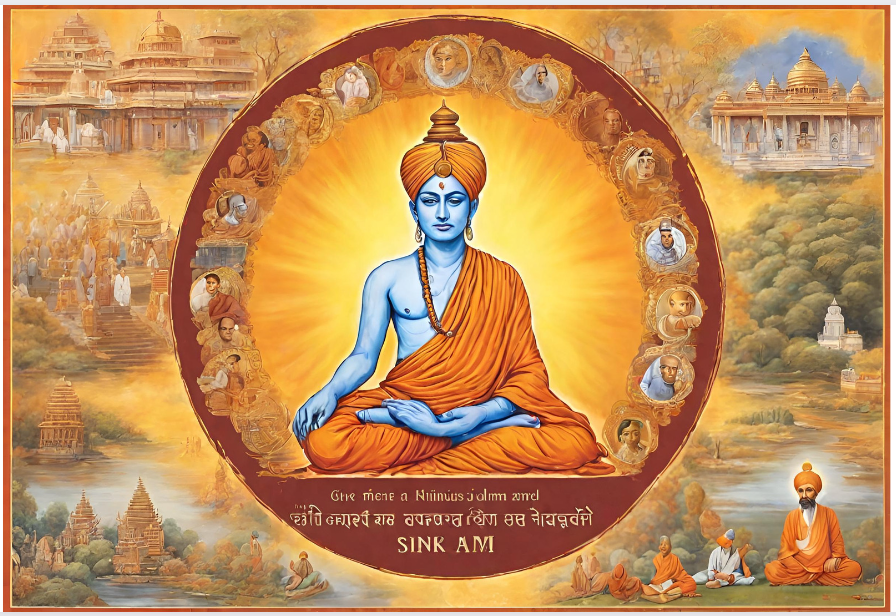
Tag: Dharma concept

  • Bhuridakshinaya Bhairava: Guardian of Dharma, Southern Direction, and Sacred Abundance

    Bhuridakshinaya Bhairava: Guardian of Dharma, Southern Direction, and Sacred Abundance

    Bhuridakshinaya Bhairava unites fierce guardianship with ethical generosity, drawing on the multiple meanings of dakshina as offering, right-hand propriety, and the southern direction. The epithet’s Vedic resonance with bhuri-dakshina illuminates a moral economy in which right giving completes right worship. In Shaiva Tantra, Bhairava’s role as Kshetrapala aligns with directional theology, temple architecture, and observances…

  • Dharma Unveiled: The Living Code of Virtue Guiding Daily Life Across Dharmic Traditions

    Dharma Unveiled: The Living Code of Virtue Guiding Daily Life Across Dharmic Traditions

    Dharma is presented as a living, context-sensitive code of virtue shared across Hinduism, Buddhism, Jainism, and Sikhism. The article clarifies its scope—from universal virtues like ahiṃsā and satya to role-specific duties—and shows how it governs the pursuit of prosperity and well-being without compromising conscience. It draws on classical sources (Dharmashastras, the Bhagavad Gita, Buddhist canons,…

  • The Curse of Immediacy: Reclaiming Kshama and Dhairya for Deep Focus in a Digital Age

    The Curse of Immediacy: Reclaiming Kshama and Dhairya for Deep Focus in a Digital Age

    Modern life rewards speed yet quietly punishes impatience with poor judgment, anxiety, and brittle relationships. This essay examines Kshama (forbearance) and Dhairya (steadfast patience) as precise antidotes drawn from Hindu philosophy and aligned with Buddhist, Jain, and Sikh insights. It clarifies the terms linguistically and textually, situates them within the Bhagavad Gita, Vedānta’s preparatory disciplines,…

  • Karya in Hindu Thought: How Actions Shape Destiny, Ethics, and Liberation

    Karya in Hindu Thought: How Actions Shape Destiny, Ethics, and Liberation

    Karya, derived from the Sanskrit root “kr” (to act), encapsulates “that which is done” and unites Hindu philosophy, ethics, and daily practice. It connects intention with outcome across traditions—from Sāṅkhya’s satkāryavāda and Nyāya’s causal clarity to Mīmāṁsā’s duty and Vedanta’s purifying karma yoga. The Bhagavad Gita’s “kāryam karma” frames action as an obligation performed without…

  • Timeless Vedic Discipline: Living Below Your Means for True Wealth and Inner Freedom

    Timeless Vedic Discipline: Living Below Your Means for True Wealth and Inner Freedom

    Living below one’s means is presented as a disciplined, dharmic path to true wealth, rooted in Vedic wisdom and reinforced across Buddhism, Jainism, and Sikhism. The post explains how artha flourishes under dharma, reframing wealth as stewardship rather than accumulation. It outlines practical steps—ethical earning, mindful spending, consistent saving, and regular giving—that build both financial…

  • Embracing Samsara: The Unavoidable Cycle of Life and Transformation in Hindu Thought

    Embracing Samsara: The Unavoidable Cycle of Life and Transformation in Hindu Thought

    The insight that life moves through birth, growth, flowering, fruiting, decay, and transformation reflects Hinduism’s vision of Samsara as a meaningful cycle shaped by karma and oriented by dharma toward moksha. This piece explains how the metaphor of nature clarifies impermanence while cultivating equanimity and ethical responsibility. It highlights scriptural coherence found in the Upanishads…

  • Break Free from Social and Religious Guilt: Dharmic Wisdom for Calm, Authentic Living

    Break Free from Social and Religious Guilt: Dharmic Wisdom for Calm, Authentic Living

    This article examines how Dharmic wisdom helps individuals release social and religious guilt without rejecting tradition. It explains how context-sensitive dharma and intention (bhava) guide ethical choices more reliably than fear-driven conformity. Drawing on Hinduism, Buddhism, Jainism, and Sikhism, it highlights inclusive practices such as karma yoga, mindfulness, pratikraman, ahimsa, ardas, and seva. Readers learn…

  • Unifying Threads in Dharmic Religions: A Contemporary Exploration

    Unifying Threads in Dharmic Religions: A Contemporary Exploration

    Explore the profound unifying threads that run through the Dharmic religions of Sanatana Dharma, Sikhism, Jainism, and Buddhism in this enlightening blog post. In a rapidly changing and interconnected world, these ancient traditions offer timeless wisdom and guiding principles that resonate with contemporary challenges and opportunities. From the central concept of “dharma” and the practice…