
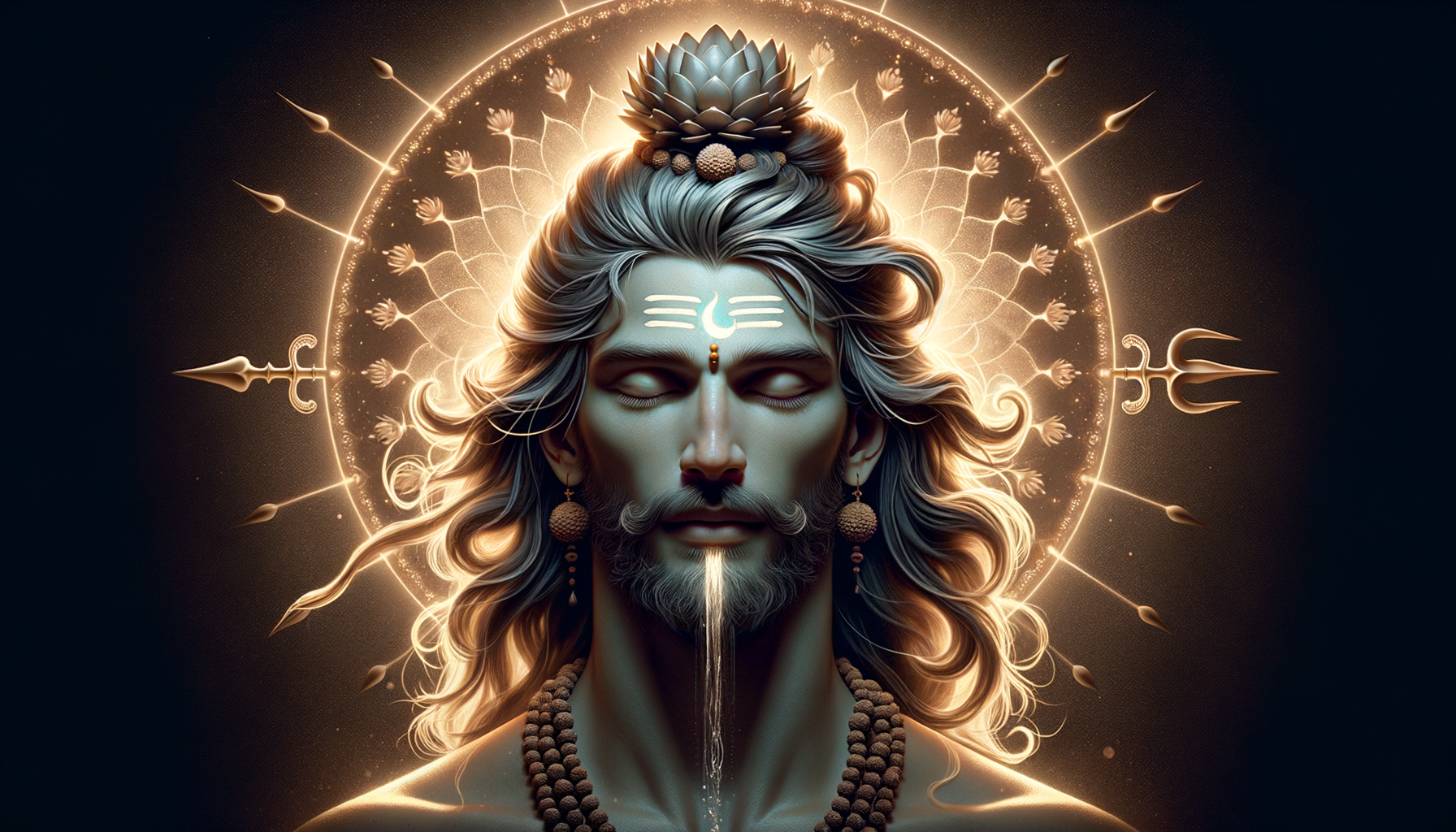
In Hinduism, Jatamandala denotes a distinctive arrangement of matted hair, most closely associated with Lord Shiva in Hindu iconography. Etymologically, it derives from the Sanskrit terms “jata” (matted hair) and “mandala” (circle or halo), signifying a circular, radiant formation around the head. This visual grammar conveys concentrated spiritual energy (tapas) and the harmonizing order of the cosmos, both central concerns of Shaivism and broader Hindu philosophy.
Art-historically, the motif appears vividly in sculptural bronzes and painted depictions, especially in the figure of Nataraja. The strands fan outward in a halo-like arc, sometimes streaming dynamically within the dance circle, while also supporting familiar attributes such as the crescent moon and the descent of the Ganga anchored in Shiva’s “jata.” The circular sweep of the hair suggests both containment and distribution of shaktian image of spiritual force ordered yet expansive, serene yet potent.
Philosophically, the Jatamandala operates as a lived mandala: a disciplined, embodied circle of power that mirrors the cosmic mandala. It signals ascetic mastery, control of the senses, and the stilling of mental fluctuations necessary for yoga. Read alongside yogic ideas of prana, it evokes the upward movement of vitality and the integration of awareness near the sahasrara, where clarity and compassion emerge. In this sense, the Jatamandala marks the union of inner austerity and universal orderan elegant synthesis at the heart of Hindu spirituality.
Resonances of this symbolism can be recognized across dharmic traditions. In certain Buddhist and Himalayan tantric depictions, ascetic hairstyles and the “jata-mukuta” appear as signs of tapas and sacred power. Early Jain representations of Rishabhanatha occasionally show long locks, signaling venerable antiquity and ascetic identity, even as most Tirthankaras are portrayed with shaven heads to emphasize renunciation. In Sikh tradition, kesh (unshorn hair) is honored as a divine trust and a discipline of integrity. Across Hinduism, Buddhism, Jainism, and Sikhism, reverence for hair as a marker of spiritual commitment underscores a shared ethic of inner purity, restraint, and remembrance of the sacredan inclusive thread of unity in spiritual diversity.
Classical sources reinforce the iconographic logic of Jatamandala. Shaiva Agamas and Puranic narratives refer to Shiva’s “jata” as the locus for cosmic events, most famously the reception of the Ganga. The Shilpa Shastras formalize hair types and crownssuch as the jata-mukutaand detail proportional canons for sculptors and painters. Chola bronzes of Nataraja and Himalayan stone sculpture render this circular hair halo with remarkable consistency, allowing viewers to read spiritual energy and cosmology through an instantly recognizable visual code.
Devotionally, many viewers experience the Jatamandala as a protective aura and a reminder of moral clarity. During Mahashivaratri and other observances, meditating upon the circular flow of the locks can function as a contemplative aid, encouraging inwardness and ethical steadiness rather than as a prescriptive ritual. In temple circumambulation (pradakshina) or quiet viewing in museums, attending to this halo-like hair helps cultivate focus, gratitude, and reverence for the interconnectedness of lifequalities shared across dharmic paths.
In contemporary study and appreciation of Hindu art and culture, recognizing the Jatamandala enriches engagement with paintings, bronzes, and temple sculpture. It illuminates how Sanskrit etymology, Shaiva theology, and yogic practice converge in a single iconographic detail. At the same time, noting parallel values in Buddhist, Jain, and Sikh traditions supports an integrative outlook: a respectful, plural understanding of sacred symbols that fosters unity among India’s dharmic families.
Ultimately, Jatamandala operates as both symbol and experiencean academic key to Hindu iconography and a contemplative reminder of cosmic balance. By situating it within shared dharmic sensibilities, the motif invites broader cultural literacy, inter-traditional empathy, and renewed appreciation for how visual forms convey spiritual wisdom.
Inspired by this post on Hindu Blog.
