-
Decoding Dakshinakali: The Powerful Tantric Meaning of Jackals in Cremation-Ground Iconography

Tantric depictions of Dakshinakali with jackals in the cremation ground form a precise symbolic language that teaches fearlessness, compassion, and inner integration. The jackals signify liminality, time’s change, and the recycling of what is discardednothing lies outside the Goddess’s compassionate gaze. This iconography affirms ecological and ethical interdependence by revering even life’s overlooked processes. Parallels…
-
Before the Final Breath: Mastering Mind and Bhakti for a Peaceful, Dharmic Transition

The Bhagavad Gita teaches that the mind’s final state determines the next destination, making inner training essential rather than optional. A Bhakti-centered disciplinesupported by japa, kirtan, seva, and ethical livingconditions attention to rest in the Divine, so remembrance arises naturally at life’s threshold. Parallel practices across Buddhism, Jainism, and Sikhismmindfulness, anupreksha, and simranaffirm a shared…
-
Unveiling the Supreme Goal: A Dharmic Journey Through Knowledge, Yoga, Service, and Unity

This reflection presents a Dharmic synthesis of the human spiritual journey, grounded in Vaishnava scripture and open to inter-traditional harmony. It explains how knowledge, sacrifice, yoga, austerity, and action converge on the realization of Sri Krsna, the Personality of Godhead. It integrates these insights with the broader spirit of Sanatana Dharma, affirming unity across Hindu,…
-
Steadfast Devotion Through Life’s Trials: Cultivating Faith and Resilience in Bhakti

Spiritual growth demands steadiness through both adversity and achievement. This reflection presents a practical framework for deepening faithaligning daily choices with sadhana, cultivating abhyasa, and renewing commitment after setbacks. It explains how desires shape decisions and how satsanga, japa or meditation, study, and seva gradually realign intention with dharma. The approach is grounded in the…
-
Gujarat ATS Foils Temple Prasad Poisoning Plot, Safeguarding Devotees and Dharmic Unity

Gujarat ATS disrupted an alleged plot to poison temple prasad, arresting three suspects and averting a potential public health and security crisis. The development highlights how proactive counterterrorism and intelligence-sharing protect devotees and sacred spaces. The report explains why prasad safety matters and offers practical, dignity-preserving ideas for temple protection. It emphasizes responsible communication to…
-
Shocking Allegations: Temple-Funded Doctors and Delhi BlastsLessons for Ethics and Unity

Former J&K DGP S.P. Vaid voiced shock over allegations that doctors educated through Mata Vaishno Devi devotees’ donations turned against Hindu pilgrims in the wake of the Delhi blasts. The post examines why such claims trigger deep moral concern, given the social covenant formed by temple donations and community-supported learning. It frames the issue through…
-
Decoding Gopurams: Three Awe-Inspiring Gateway Types That Shape South Indian Temple Space

Gopuramsmonumental gateways of South Indian templesshape how devotees and visitors experience sacred space. This article explains three principal types by position and scale: the inner gopuram for quiet orientation, the intermediate gopuram for communal rhythm, and the raja gopuram as a civic and spiritual landmark. Tracing their historical evolution from Chola clarity to Vijayanagara–Nayaka grandeur,…
-
Kurukshetra Within: How the Mahabharata’s Battlefield Guides Courageous Spiritual Growth

Kurukshetra in the Mahabharata can be read as the inner field of Dharma where ethical dilemmas, emotional turbulence, and spiritual aspiration meet. The Bhagavad Gita’s counsel reframes conflict as an opportunity for clarity, courage, and disciplined action. Arjuna’s hesitation mirrors modern experiences of doubt and responsibility, while Krishna’s guidanceKarma Yoga, Jnana, and Bhaktioffers practical tools…
-
Padma’s Sacred Power: How the Divine Lotus Unites Hindu, Buddhist, Sikh, and Jain Paths

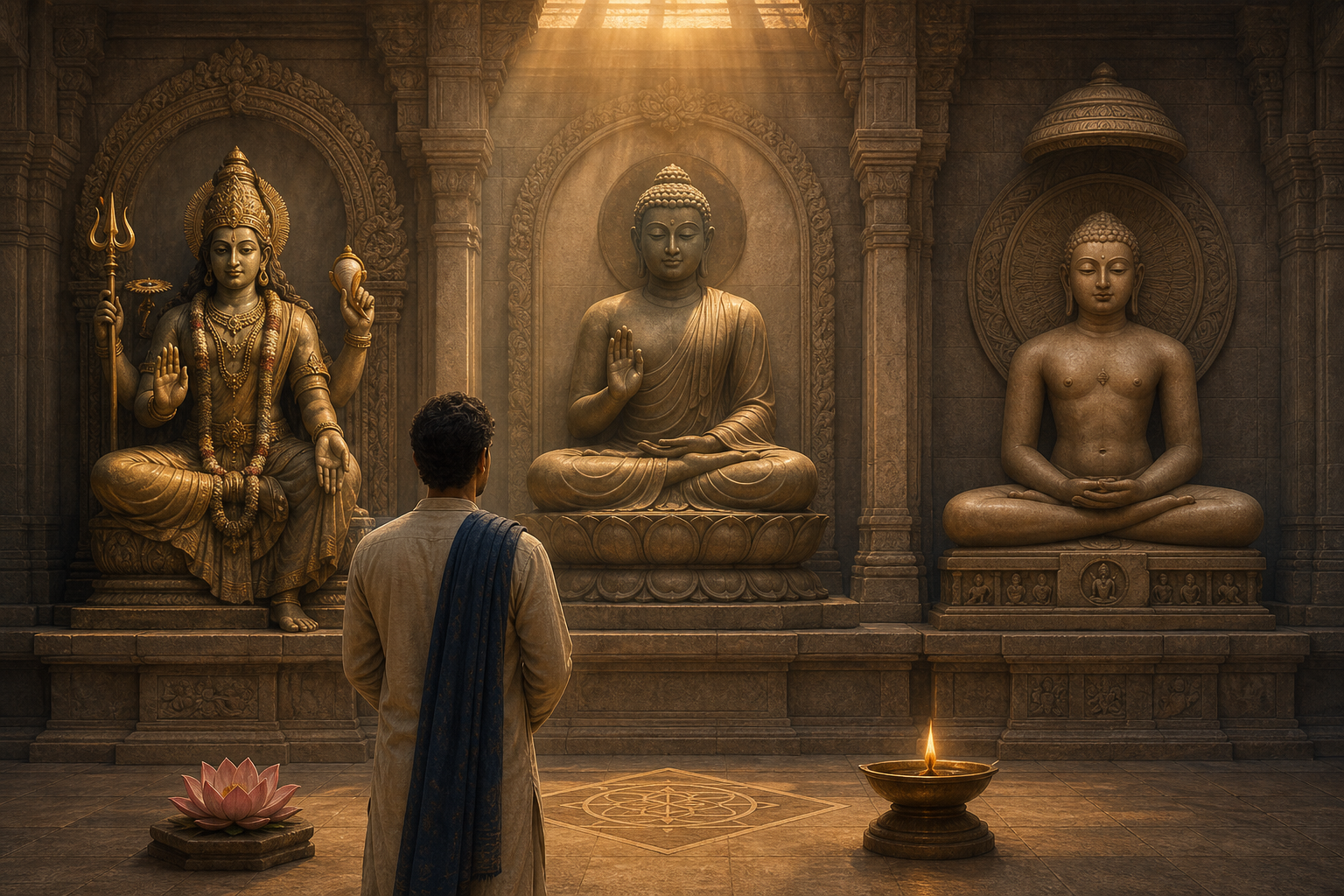
Padma, the divine lotus, is a shared sacred symbol across Hinduism, Buddhism, Sikhism, and Jainism that embodies purity, resilience, and spiritual awakening. In Hindu practice, it serves as the seat of Mata Lakshmi Devi and is offered in puja to Lord Vishnu and Ma Lakshmi, signifying prosperity and auspiciousness. Buddhist teachings present the lotus as…
-
Ghati Subramanya Temple, Karnataka: Awe‑Inspiring Swayambhu Subramanya and Lakshmi Narasimha

Ghati Subramanya Temple near Doddaballapur, about 60 km from Bengaluru, is a renowned Karnataka shrine dedicated to Lord Subramanya. Its Swayambhu (self-originated) Subramanya idol enhances the site’s spiritual significance, complemented by the consecration of Lord Lakshmi Narasimha. The tranquil rural setting and contemplative worship rhythms make the temple ideal for reflective visits and day trips…
-
19th Warkari Maha-adhiveshan: Urgent Call to Protect Dharma and Sacred Warkari Heritage

Ahead of the 19th Warkari Maha-adhiveshan, Rashtriya Warkari Parishad and HJS issued a focused call to protect Dharma and the Warkari tradition. The message stresses community-led preservation, intergenerational transmission of knowledge, and respectful dialogue with policymakers. It highlights how Warkari values of bhakti, seva, and humility align with shared dharmic principles across Hinduism, Buddhism, Jainism,…
-
Rutgers Controversy: Alleged Anti-Hindu Framing, Taliban Reference, and a Call for Dharmic Unity

Reports of a Rutgers University conference allegedly juxtaposing professors’ names with a Taliban reference triggered debate over anti-Hindu bias, academic freedom, and responsible framing. The incident highlights how scholarship on Hindutva can be misconstrued as commentary on Hindu identity, with real consequences for campus climate and student belonging. Critics fear stigmatization of dharmic communities, while…
-
Empathy Over Control: Dharmic Wisdom for Advice that Respects Autonomy and Dignity

This reflection explores a core dharmic principle: advice should empower, not control. Drawing on the Bhagavad Gita and parallel insights from Buddhism, Jainism, and Sikhism, it shows how empathy, autonomy, and compassion guide ethical counsel. The discussion connects ancient Hindu teachings to modern contextsfamily, workplace, and communitywhere respectful guidance builds trust and accountability. It outlines…
-
Karna’s Locked Room of Loyalty: Mahabharata Lessons on Dharma, Choice, and Courage

Karna’s unwavering loyalty to Duryodhana in the Mahabharata offers a powerful lens on modern ethical dilemmas. This analysis shows how gratitude and honor can become a self-imposed confinement when they eclipse discernment. Drawing on Hindu philosophy and the Bhagavad Gita, it outlines how viveka and non-attachment keep loyalty aligned with dharma. The piece connects these…
-
Sacred Meaning Revealed: Why Hands Are Wiped Before Chandikeswarar in Tamil Nadu Shiva Temples

In Tamil Nadu Shiva temples, the hand-wiping gesture before Chandikeswarar is a concise ritual rich in meaning. It signals non-possession, affirming that no temple property is taken after worship. The act also embodies karmasamarpanaoffering one’s actions to Shivaby symbolically removing the residue of ego. Rooted in Shaiva Siddhanta and Agamic practice, the custom complements broader…
-
November 21, 2025 Panchang: Shukla Pratipada to Dwitiya TithiAuspicious Starts and Shared Harmony

November 21, 2025 marks Shukla Paksha Pratipada in the Hindu Calendar until 1:09 PM, then transitions to Shukla Paksha Dwitiya. This shift signifies renewal moving into steady growth during the waxing lunar fortnight. Because Nakshatra, Rashi, and shubha muhurta vary by region, consulting a local Panchang ensures precise timing. Observances can remain simple and inclusive:…
-
WSN September 2025: Inspiring World Sankirtan Milestones and Top Temple Rankings

The September 2025 World Sankirtan Newsletter highlights inspiring global milestones that advance unity in spiritual diversity. Large templesMayapur, Mumbai-Juhu, and Bhaktivedanta Manorled with robust bhakti programming and community outreach. Medium centers in Ahmedabad, Bengaluru-South, and London-Soho showcased effective urban and diaspora engagement. Small temples in Chandigarh, Surat, and Toronto demonstrated agile, volunteer-driven growth, while Calgary,…
-
Upanishads Unveiled: Timeless Sanskrit Wisdom at the Heart of Vedanta and Dharma

The Upanishads, late Vedic Sanskrit texts, crystallize the essence of the Vedas into profound spiritual teachings at the heart of Vedanta. They transform rituals and fire sacrifices into pathways for inner inquiry, clarifying the relationship between ātman and brahman. These Hindu scriptures serve as a backbone of philosophical and ethical reflection, shaping Yoga, meditation, and…