
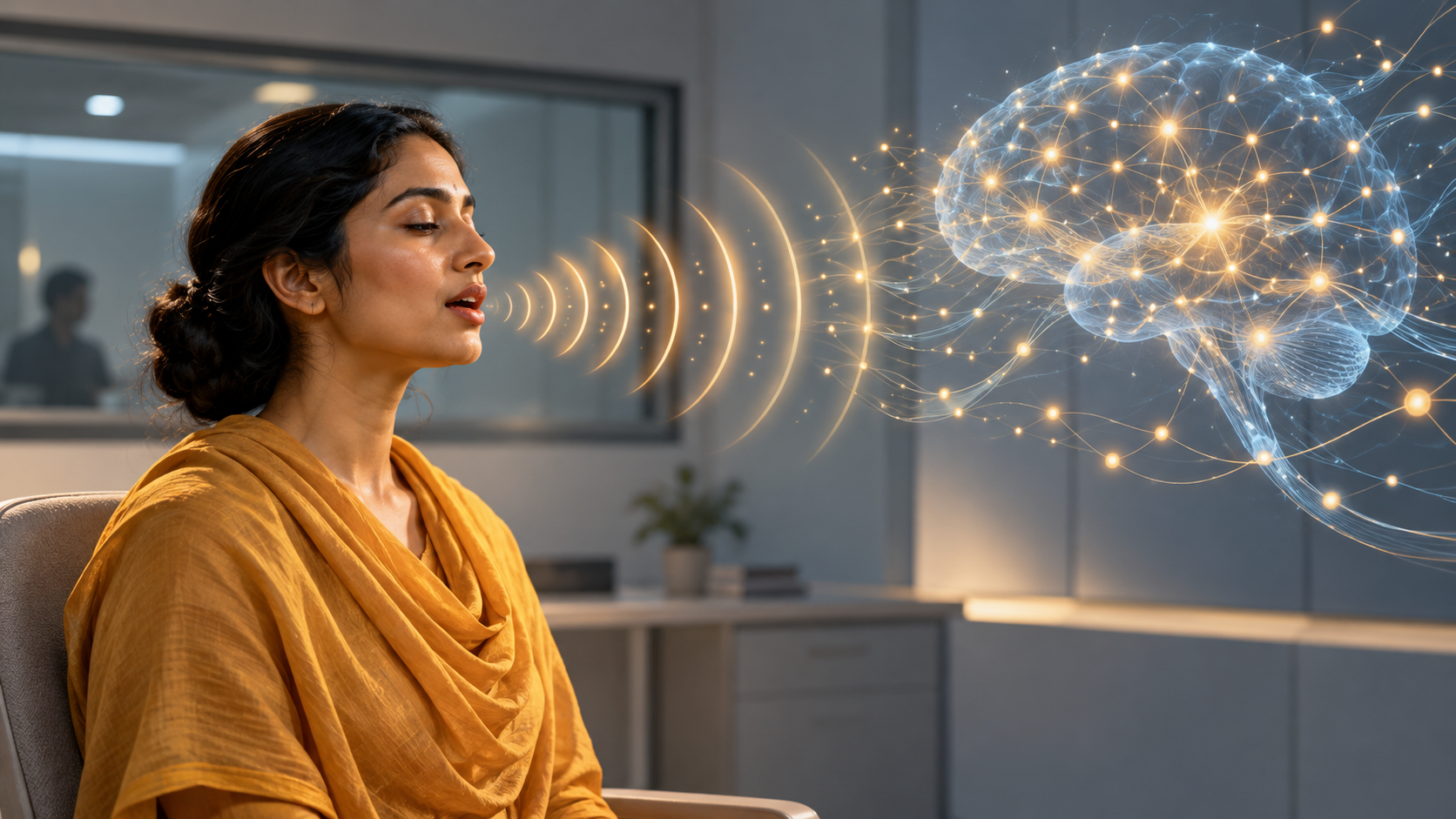
If you are deciding whether audible japa offers something that silent meditation or an arbitrary repeated phrase does not, there is now a controlled human result worth considering. The useful answer is narrow but meaningful: audible repetition of the Hare Krishna mantra produced a greater improvement in a measure of cognitive processing than either a rhythmically matched sham mantra or silent contemplation.
That finding gives you a reason to take mantra specificity seriously. It does not prove that chanting treats illness, permanently restructures the brain, or validates every claim made in the name of sacred sound. Knowing exactly where the evidence stops is how you can respect both the experiment and the sadhana.
A fair sound test must separate three different effects
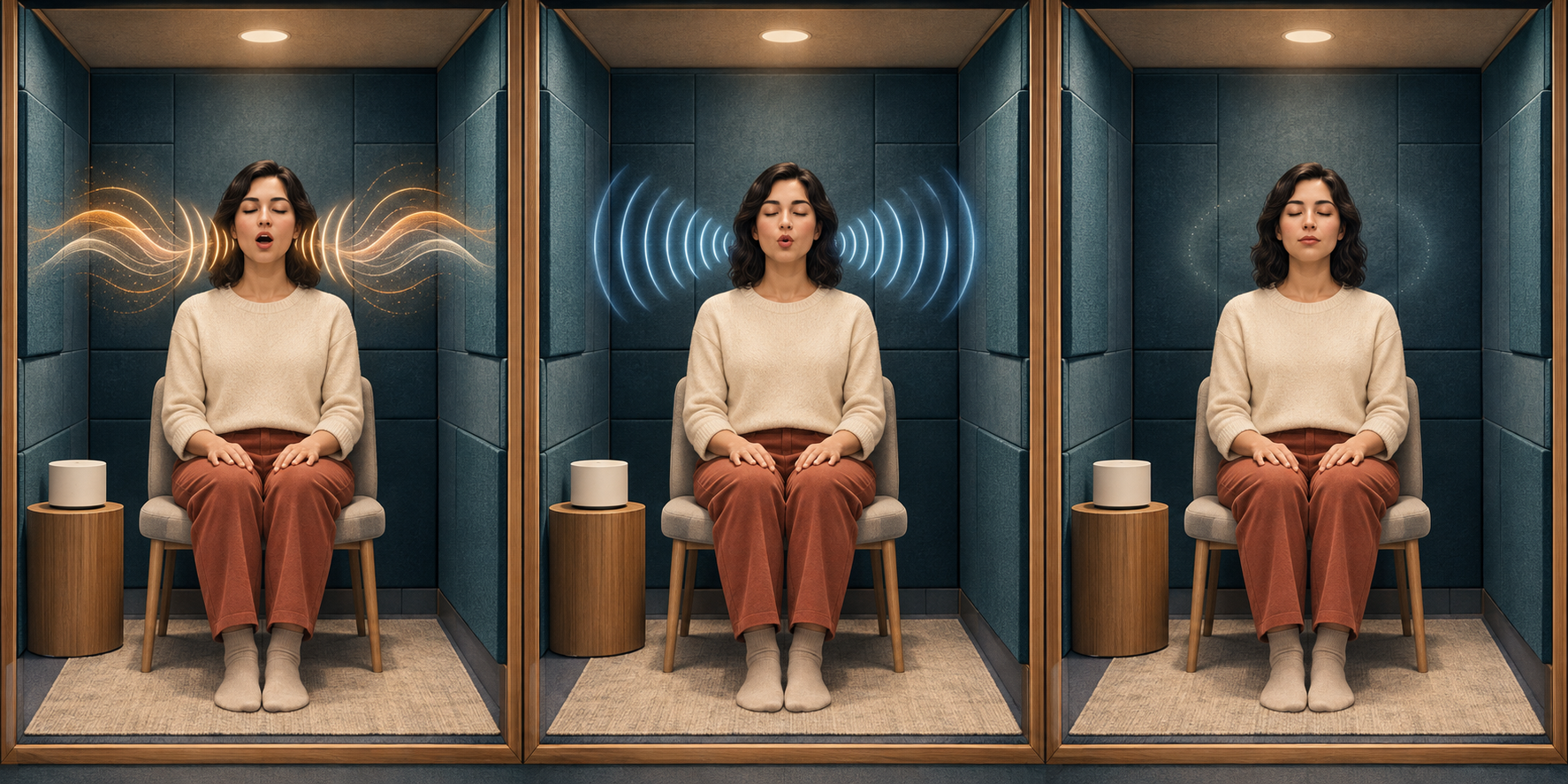
A person may feel calmer after chanting for several reasons. They have paused their ordinary activity. Their breathing and vocal rhythm may have become steadier. Repetition may have narrowed attention. The particular mantra may also matter. A simple before-and-after comparison cannot tell these possibilities apart.
The randomized three-group crossover design addressed that problem by placing the Hare Krishna mantra beside two deliberately different controls:
| Practice condition | What it helps distinguish |
|---|---|
| Audible Hare Krishna mantra | The complete practice being tested: its particular sounds, recognized sacred identity, meaning, rhythm and repetition |
| Audible sham mantra | Generic vocal repetition, with a made-up phrase matched to the real mantra in rhythm and syllable structure |
| Silent contemplation | Quiet meditative time without an audible sound pattern |
Thirty-nine people who were new to meditation participated. The protocol included four weeks of audible Hare Krishna mantra repetition and a two-week break intended to allow prior effects to fade before comparison practice. The named comparison groups included 13 people using the sham mantra and 12 using silent contemplation.
This is more informative than comparing experienced chanters with people who never chant. Long-practising devotees could differ in lifestyle, expectations and attention before any measurement begins. Novices reduce some of that background difference. They also create an important limit: a short experiment with novices cannot tell you what years of disciplined japa may do.
The sham condition is especially valuable. If any repeated syllables had produced the same result, generic cadence or regulated vocalization would have been the simpler explanation. If silence had matched the mantra, setting aside contemplative time might have been enough. Beating both comparators makes the specific mantra condition harder to dismiss as repetition alone.
Even so, 39 participants constitute a preliminary evidence base, and the two explicitly described comparison groups were smaller still. The two-week washout was meant to reduce carryover, but a washout cannot guarantee that every learned attentional effect disappears. Larger trials with carefully balanced practice order are needed before treating the result as settled.
The clearest result concerns cognitive processing, not a cure

Four kinds of outcomes were examined. Heart rate variability, or HRV, tracked the small changes in time between heartbeats and served as an indirect estimate of vagal regulation. The P300 brain response measured an electrical signal recorded from the scalp during information processing. The Stroop test examined attention and mental flexibility. Questionnaires assessed self-regulation in thought and behaviour.
The decisive between-practice finding was the P300 response. The Hare Krishna condition improved it significantly more than the sham-mantra and silent conditions. In practical language, the brain signal associated with recognizing and processing relevant information became faster and sharper under the real-mantra condition than under either control.
P300 is useful because it is not merely a participant saying that they felt better. It is an electrophysiological measurement. But it is still a marker, not an intelligence score, a diagnosis or proof of better performance in every part of daily life. A statistically significant difference also does not tell you, by itself, how noticeable the effect was to the participant. No effect-size figure is supplied in the material available here, so the everyday magnitude remains unresolved.
Keep the other measurements in their proper place. HRV was measured, but the inclusion of HRV in the protocol does not by itself establish that the mantra produced a superior vagal effect. The same rule applies to the Stroop test and self-regulation questionnaires. A list of endpoints must never be converted into a list of positive results. The strongest claim available from this trial is the comparative P300 finding.
Nor should the word clinical be mistaken for proven treatment. These participants were novice meditators, not a patient group receiving treatment for a diagnosed illness. A change measured over several weeks is not evidence of permanent structural change, and phrases such as rewires the brain run ahead of what was actually measured.
Sound-specific does not yet mean sound alone

The experiment supports mantra specificity: the particular Hare Krishna practice outperformed a matched invented phrase and silence. A more ambitious claim—that its acoustic properties alone caused the difference—has not yet been isolated.
The real and sham practices differed in more than their waveforms. One was a recognized sacred mantra with spiritual meaning; the other was deliberately made up. Their syllable count and rhythm could be matched while their meaning, familiarity, emotional salience and the expectations they evoked still differed. Any of those features could contribute to attention and cognitive response. The comparison narrows the explanation, but it does not reduce it to phonetics alone.
This distinction also prevents an unwarranted leap from one mantra to every recitation in the Dharmic traditions. The result concerns audible Hare Krishna mantra repetition under this particular protocol. It does not establish an identical P300 effect for every Hindu mantra, Buddhist recitation, Jain mantra, Sikh practice of naam, silent japa, kirtan or scriptural chanting. Each would require an appropriate test rather than an assumption.
For a Dharmic reader, that boundary need not feel like a concession. An electrode can measure a scalp response; it cannot adjudicate the sacred status of a mantra, the reality of Bhagavan, or the spiritual fruit of nama-sadhana. In the other direction, a theological claim cannot supply a missing effect size or turn a small trial into a medical treatment. Science and sadhana can meet without either being forced to impersonate the other.
Key takeaways and a disciplined way to try it

Key takeaways:
- The best-supported conclusion is that the specific audible Hare Krishna condition improved P300 cognitive processing more than a matched sham chant or silent contemplation.
- The result weighs against the idea that any rhythmic syllables or quiet meditation must produce the same response.
- It does not prove that acoustics alone caused the difference, because sacred meaning and other psychological features were not identical across conditions.
- It does not demonstrate a cure, permanent brain restructuring or the same outcome for every mantra.
- The small sample and short practice period make larger replication necessary.
If you want to use this evidence when deciding how to practise, keep your personal observation modest and specific:
- Decide which question you are asking. Spiritual practice may be directed toward remembrance, devotion or purification. A personal observation might ask whether audible chanting helps you return attention to a task. Do not confuse that limited question with whether the practice treats a health condition.
- Use the practice that was actually tested. Choose audible repetition of the Hare Krishna mantra if your aim is to approximate the experimental condition. Silent repetition is a different condition, even if it remains valuable within your own tradition.
- Keep the form stable. Avoid changing the mantra, switching repeatedly between audible and silent practice, or altering the routine whenever your mood changes. If you have received guidance from a guru or sampradaya, preserve that guidance rather than redesigning your sadhana to mimic a laboratory.
- Use four weeks as an observation window, not a prescription. Four weeks was the tested Hare Krishna phase. That does not make it a proven minimum, maximum or ideal duration, and no universal daily minute count is established by this evidence.
- Record adherence and one observable outcome. Note whether you completed the practice and whether the chosen outcome was lower, unchanged or higher under comparable circumstances. This can help you judge whether the routine fits your life; it cannot turn a personal diary into a controlled clinical result.
- Keep medical care unchanged. Mantra practice may complement care, but this trial does not justify stopping medication, delaying an assessment or substituting chanting for medical or psychological treatment. If your real concern is a symptom or diagnosed condition, take that concern to an appropriately qualified professional.
You do not need to choose between uncritical enthusiasm and automatic dismissal. If audible Hare Krishna chanting belongs in your practice, use the form that was tested, observe it over the same four-week window, and describe any personal benefit as personal. Meanwhile, the scientific question should move toward larger replications, clearer outcome-by-outcome reporting and trials in the particular populations for whom health claims might eventually be made.
References
- PubMed — Enhancement of Vagal Tone, Cognitive Processing, and Self-Regulation Through Short-Term Audible Mantram Repetition Practice in Novice Meditators
- Dandavats — Does the Sound of a Mantra Matter? A New International Clinical Study Suggests It Does

Leave a Reply
You must be logged in to post a comment.