
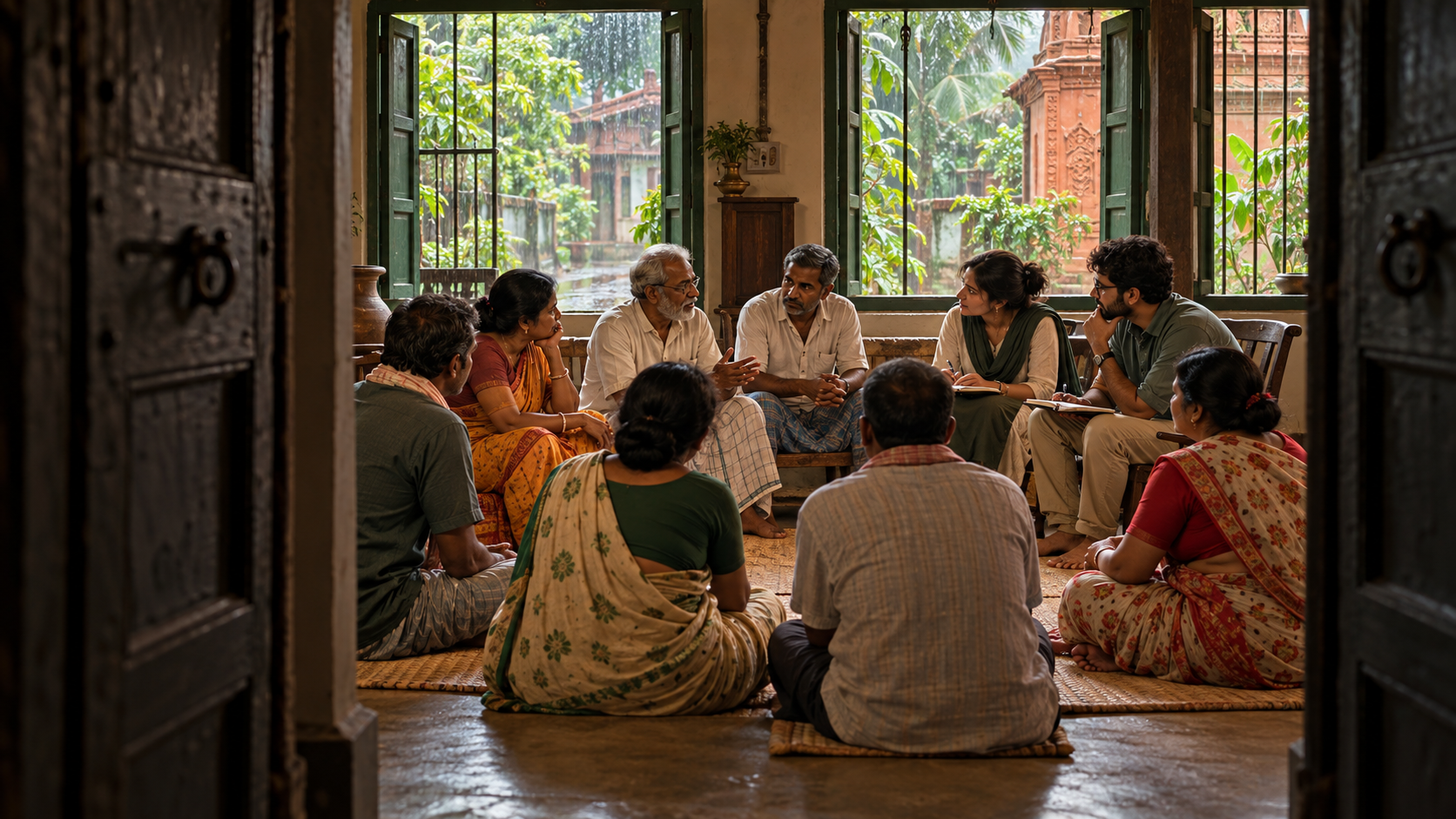
If you have heard that Hindu Rashtra outreach is underway in Bengal, the useful question is not simply whether a meeting occurred. You need to know what the meeting establishes, what remains uncertain, and what you should ask before lending your time, name, venue, or organisation to the effort.
Hindu Janajagruti Samiti (HJS) has publicly reported that its East and North-East India State Coordinator, Shambhu Gaware, met representatives of various Hindu organisations in Bengal through the Hindu Rashtra-Jagruti Sampark Abhiyan. That establishes a reported round of contact. It does not, by itself, establish a coalition, a shared programme, or an endorsement by the organisations represented.
The verified development is narrower than the slogan

The confirmed development is organisational outreach: an HJS coordinator met people representing multiple Hindu bodies in Bengal. The identities of those bodies, the authority carried by their representatives, the positions discussed, and any agreed next steps are not established by the facts available here.
That distinction matters because attendance can mean many things. A representative may come to understand a proposal, maintain cordial relations, express personal interest, or seek cooperation on a limited issue. None of those actions automatically commits the representative’s organisation to the wider idea of Hindu Rashtra.
For now, classify this development as contact-building. Do not call it a Bengal-wide alliance unless participating organisations publicly identify themselves and state what they have accepted. This is not excessive caution. It protects everyone involved from having a courtesy meeting converted into an endorsement they never gave.
Hindu Rashtra must be defined before support can be meaningful

The phrase “Hindu Rashtra” is not self-defining. One listener may understand it as civilisational renewal. Another may hear a programme of cultural education, social service, political mobilisation, or changes to public law. Agreement with the words therefore tells you less than agreement on their operational meaning.
If the intended work is cultural, organisers should identify the activity: teaching history, preserving temples and traditions, supporting festivals, developing Bengali-language materials, or coordinating community service. If the intended work is political, they should state the proposed policy, the lawful means of pursuing it, and the protections owed to people who disagree. Cultural solidarity and political endorsement are different commitments; no participant should be manoeuvred from one into the other.
A serious definition must also answer how internal Hindu diversity will be treated. Bengal’s Vaishnavas, Shaktas, Shaivas, reform movements, temple communities, local associations, and people with mixed or non-institutional practices cannot simply be treated as a single administrative bloc. A movement that invokes Hindu civilisation should be able to accommodate debate among Hindus without labelling every disagreement as disloyalty.
The place of non-Hindus must be equally clear. A positive Hindu public vision should be capable of describing its own responsibilities, not merely identifying opponents. Ask what dignity, security, freedom of worship, and equal civic treatment would mean under the proposed vision. An answer built only from slogans is not yet a programme.
Key takeaways for anyone asked to participate
- Treat the development as reported contact, not collective endorsement. A meeting becomes cooperation only when the participating organisations affirm that relationship themselves.
- Ask who was represented. You need the organisation’s name, the attendee’s role, and whether that person had authority to make commitments.
- Request a written purpose. Clarify whether the proposal concerns cultural work, community service, issue-based advocacy, electoral politics, or a combination of these.
- Separate personal attendance from institutional consent. Do not allow a photograph, greeting, or private discussion to be presented as an organisation-wide decision.
- Insist on lawful, peaceful, and transparent methods. Refuse anonymous accusations, coerced participation, inflated claims of support, or language that turns neighbours into collective enemies.
- Judge the effort by follow-through. Look for openly stated responsibilities, local participation, completed work, and an honest account of disagreements rather than publicity alone.
A meeting becomes cooperation through visible stages
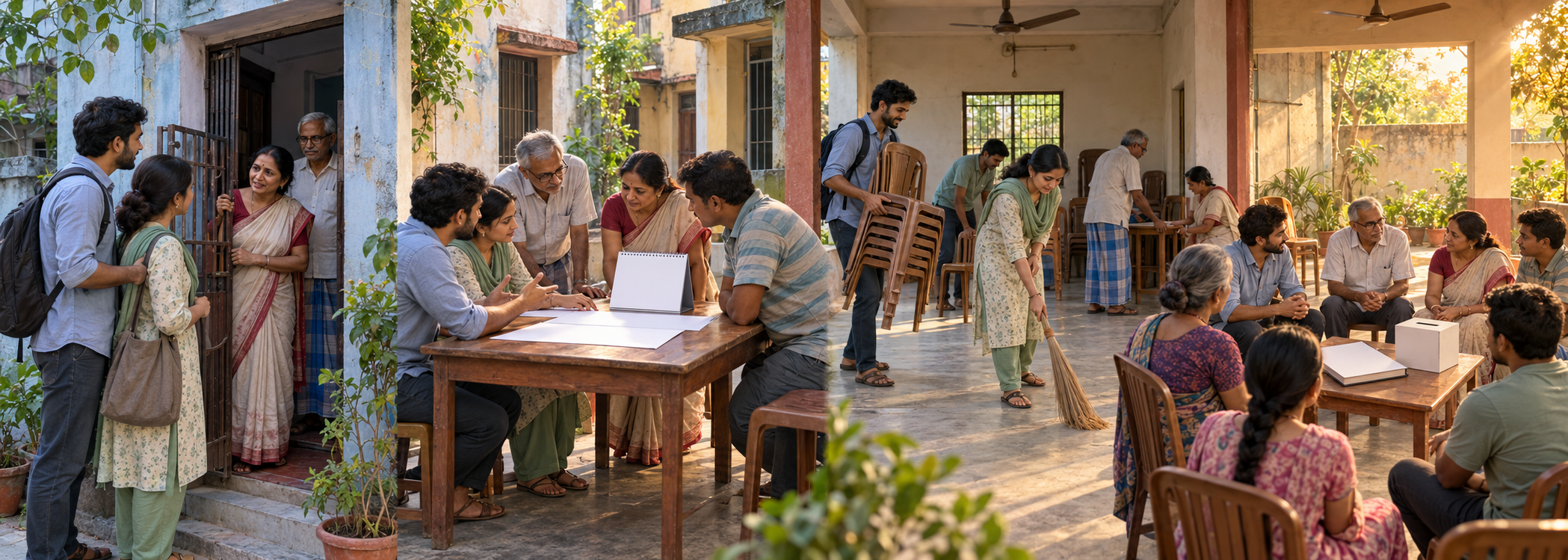
Contact is not consent
The first meeting should establish whether further conversation is worthwhile. It should not be used to manufacture an impression of agreement. If photographs or names will be published, obtain explicit consent and describe the occasion accurately.
Consent is not coordination
An organisation may agree with a broad civilisational concern while declining a particular campaign. Coordination begins only when the parties choose a defined task, identify who is responsible, and settle how decisions will be made. Without that structure, a network remains a contact list.
Coordination is not delivery
Meetings and declarations are inputs. The result must be observable in the community: a completed educational programme, a service initiative, an accurately documented public representation, or another stated objective brought to completion. The relevant question is not how many banners appeared, but whether the promised work occurred and whom it served.
This progression gives you a fair way to evaluate outreach without either dismissing it prematurely or granting it more significance than the evidence supports. Ask what stage has actually been reached and require the language used in public to match that stage.
The method must be as Dharmic as the declared end
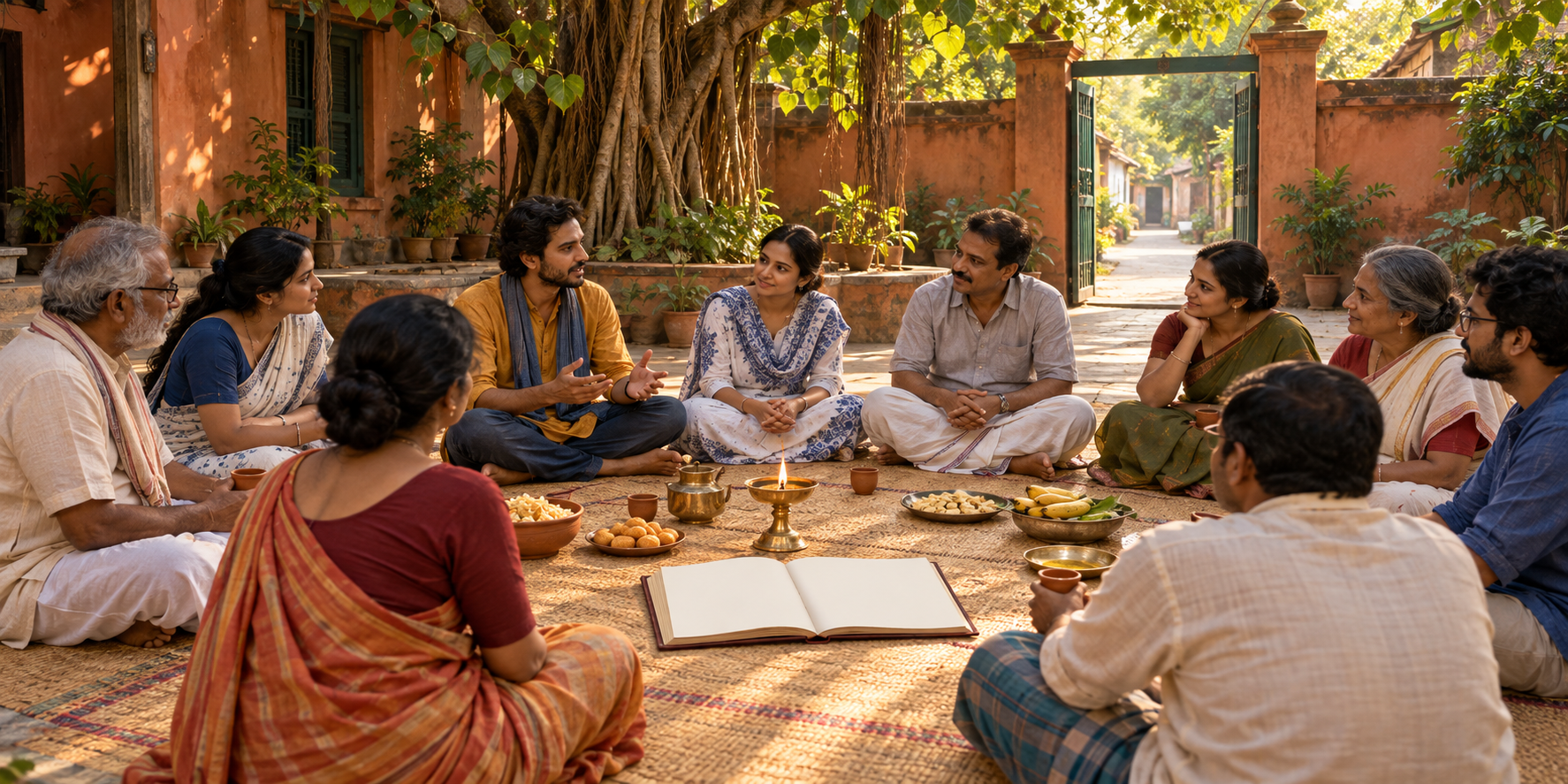
For a movement speaking in the name of Dharma, conduct is not a secondary public-relations question. Satya requires accurate claims about participation and support. Ahimsa rules out intimidation and dehumanisation. Seva directs attention toward useful work. Reasoned dialogue requires enough confidence to hear criticism without treating every critic as an enemy.
These principles have immediate organisational consequences. Do not place an organisation’s name on promotional material without permission. Do not edit a participant’s remarks into a stronger endorsement. Do not conceal a political purpose behind the language of a cultural gathering. Do not collect or circulate personal details beyond the purpose for which they were given.
Local leadership also matters. A coordinator can open a door, but durable cooperation cannot be imposed from outside the community. Bengali organisers must be able to frame priorities in language that local Hindus recognise, correct misunderstandings, and decline proposals that do not suit their circumstances. Outreach earns trust when it listens before it speaks for people.
Disagreement should be recorded honestly rather than hidden. A limited agreement on temple protection, cultural education, or service does not imply agreement on every constitutional or political question. Preserving those boundaries allows different organisations to cooperate where they genuinely agree without surrendering their independence.
What you should look for next
If you are invited to participate, ask for a written objective, the names and roles of the organisers, the intended use of your name or image, and the specific responsibility being offered to you. Give consent only to what has actually been explained. If your organisation is involved, make sure any public claim of endorsement reflects its real decision-making process.
If you are watching from outside, wait for evidence of named participation, clearly defined aims, and completed local work. Hindu Rashtra outreach in Bengal will gain credibility not by making the largest claim at the earliest moment, but by building truthful relationships that can bear the weight of public scrutiny.
References

Leave a Reply
You must be logged in to post a comment.