
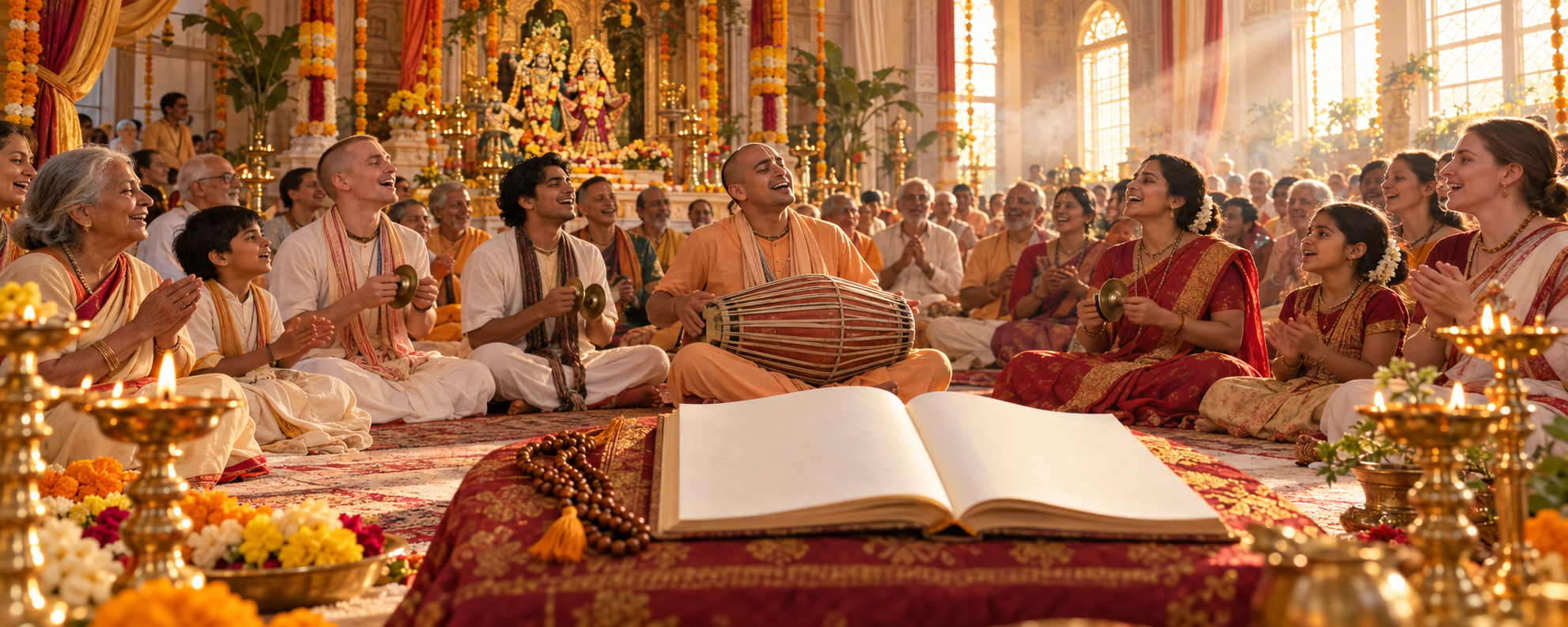
You can leave a Golden Jubilee celebration moved by the kirtan, grateful for the devotees who built the temple, and still return to exactly the same spiritual routine. The decisive question is therefore not whether the anniversary felt inspiring. It is what you will hear, practise, serve, or transmit differently because you attended.
On its third day, 25 October 2026, the Golden Jubilee observance featured a special address, while Sarvabhauma Prabhu spoke on Srimad-Bhagavatam 11.5.28. That combination points to the right way to receive a jubilee: honour the history, then let shastra test what the community is carrying forward.
A Golden Jubilee should be an audit of inheritance
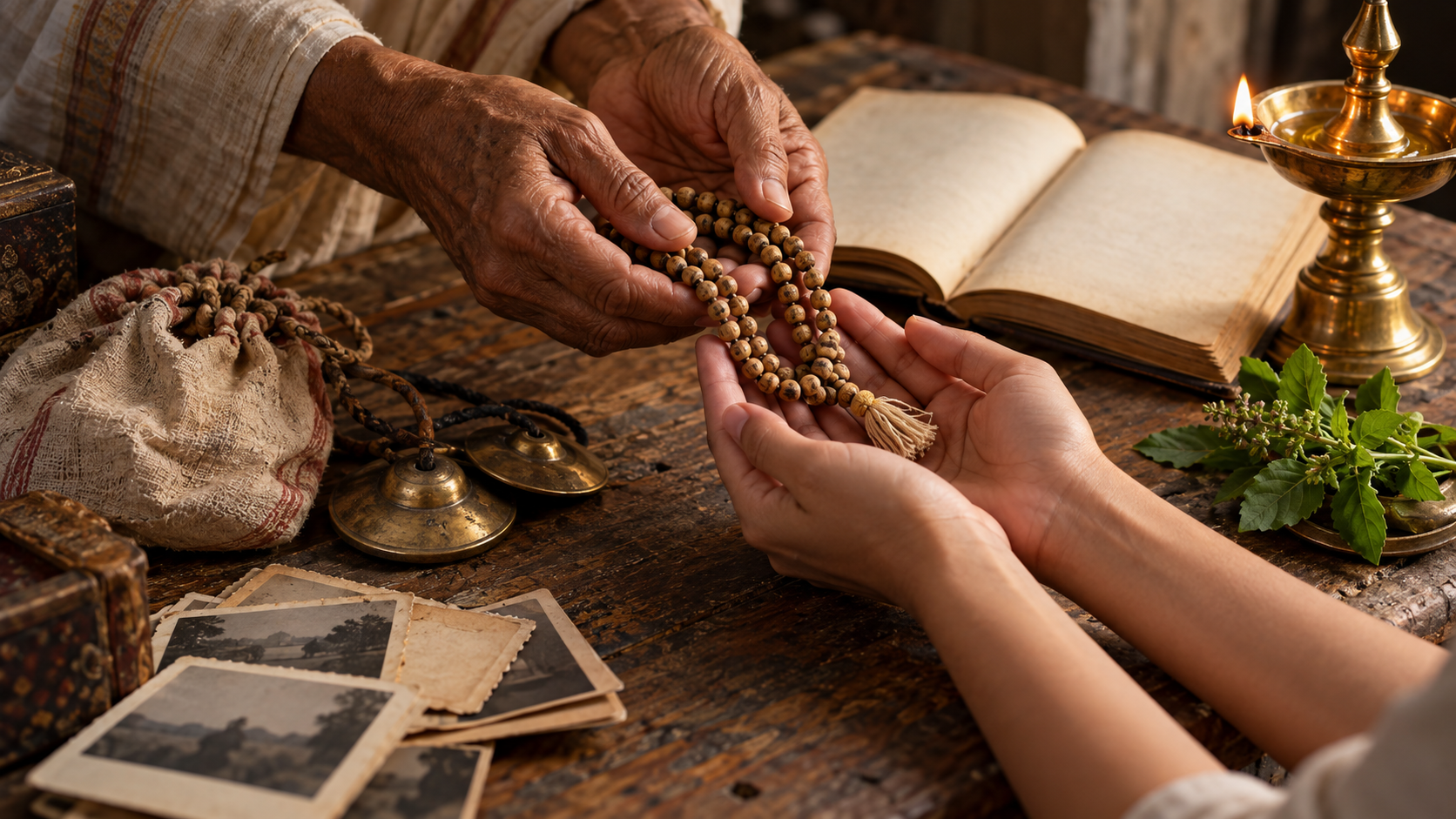
A golden jubilee marks fifty years, but duration alone does not explain what has endured. Buildings may survive while habits weaken. A crowded festival may preserve affection without transmitting understanding. Conversely, a modest congregation can carry a tradition faithfully when members know why they worship, maintain dependable sadhana, serve together, and teach newcomers without diluting the siddhanta.
For devotees shaped by the mission of A.C. Bhaktivedanta Swami Prabhupada, gratitude becomes credible through continuation. Admiration for the founding generation matters, but imitation of its seriousness matters more. The practical test is whether remembrance produces hearing, chanting, deity worship, study, service, compassion, and responsible transmission.
Use the jubilee to examine four layers of inheritance:
- What was received: Can you name the teachings, disciplines, books, forms of worship, and standards of conduct that gave the community its character?
- What is embodied: Which of those teachings can someone actually see in your daily or weekly life?
- What is being transmitted: Could a newcomer learn the meaning of the practices rather than merely copy their outward form?
- What needs repair: Where has routine replaced attention, or celebration replaced steady service?
This is not an invitation to judge earlier devotees from a comfortable distance. It is a way to accept your portion of the responsibility. Write down the practice you inherited, the condition it is in now, and the next action required to preserve it. An anniversary becomes useful when gratitude acquires a task.
Srimad-Bhagavatam 11.5.28 teaches you how to see
Srimad-Bhagavatam 11.5.28 describes Bhagavan in Dvapara-yuga through recognisable features: a dark-hued form, yellow garments, personal weapons, and bodily marks that include Srivatsa. These details are easy to pass over as devotional imagery. Within Vaishnava theology, however, they do important work. The Absolute is not presented as an anonymous force onto which worshippers project a preferred image. Bhagavan is personal, possesses attributes, and can be known through revealed signs.
That changes how you approach darshan. If you look at the altar only long enough to complete a customary gesture, the form may remain decorative in your mind. If you learn what you are seeing, iconography becomes theology remembered through sight. A garment, emblem, posture, ornament, or sacred mark can recall a teaching about identity, relationship, protection, sovereignty, beauty, or service.
Try a simple discipline during your next darshan. First, observe without rushing. Then identify a feature you understand from shastra or from a qualified teacher. Finally, connect that recognition to a response: a prayer, an act of service, attentive chanting, or a correction in conduct. The aim is not to collect visual trivia. It is to move from seeing a form to remembering the Person whom the form reveals.
The same discipline protects a jubilee from becoming a display of heritage without theological depth. Temple architecture, kirtan, prasada, deity dress, processions, books, and stories of sacrifice should not remain disconnected attractions. Each should help the visitor understand whom the community serves, what kind of life that service requires, and how the visitor can begin.
Convert festival inspiration into a sustainable rule of practice
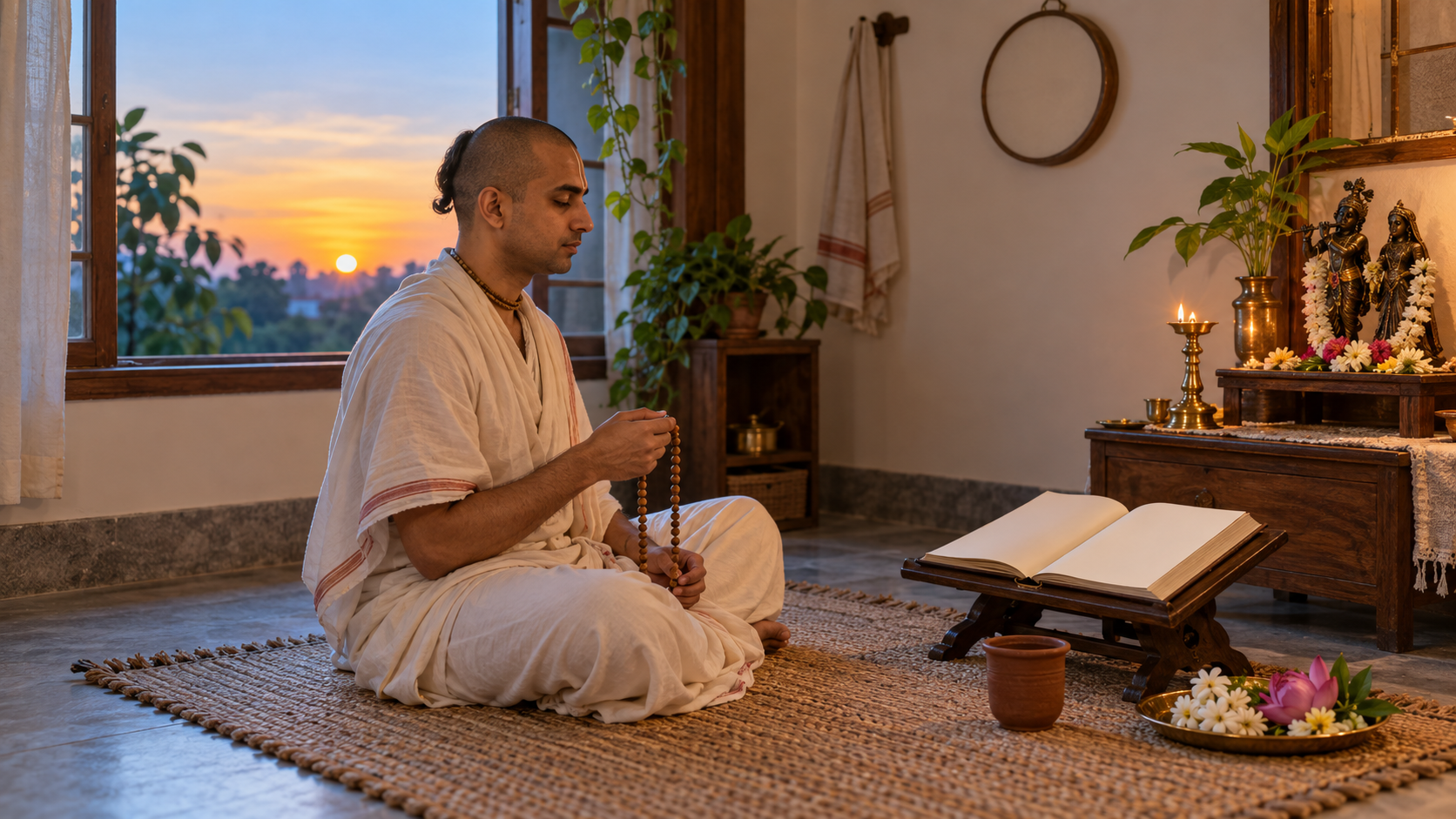
Festival enthusiasm is intense because many supports arrive at once: sacred sound, association, darshan, teaching, service, and a schedule organised by others. Ordinary life removes several of those supports. If you rely on the festival mood to continue by itself, the practice will usually disappear when the setting changes. Build a modest structure while the teaching is still clear.
- Choose a stable daily anchor. Attach chanting, reading, or prayer to a part of the day that already occurs reliably. A practice linked to an existing routine is easier to resume after disruption than one dependent on a passing mood.
- Study a narrow passage in context. Begin with the verse discussed during the observance, then read the surrounding dialogue. Ask who is speaking, what question is being answered, and what the description requires you to understand about Bhagavan.
- Turn one insight into service. If the teaching deepens your appreciation of deity worship, assist with an appropriate temple service. If it clarifies the importance of hearing, support a regular class or help another person access it. Understanding becomes durable when it enters conduct.
- Keep association practical. Ask a mature devotee a precise question about your practice instead of requesting general inspiration. A useful question names the difficulty: inconsistency, distraction, lack of comprehension, uncertainty about etiquette, or the gap between study and behaviour.
- Review the commitment at a regular checkpoint. Do not ask only whether you felt devotional. Ask whether the practice happened, what repeatedly obstructed it, and what adjustment would make faithfulness more likely.
If you are new to ISKCON, distinguish open devotional practices from formal vows or initiated obligations. You can attend kirtan, hear Bhagavad-gita and Srimad-Bhagavatam, chant the Hare Krishna maha-mantra, take prasada, ask questions, and offer suitable service without pretending to possess a level of commitment you have not yet made. For formal commitments, seek guidance from a qualified teacher who knows both the tradition and your actual circumstances.
Communities should measure transmission, not just attendance
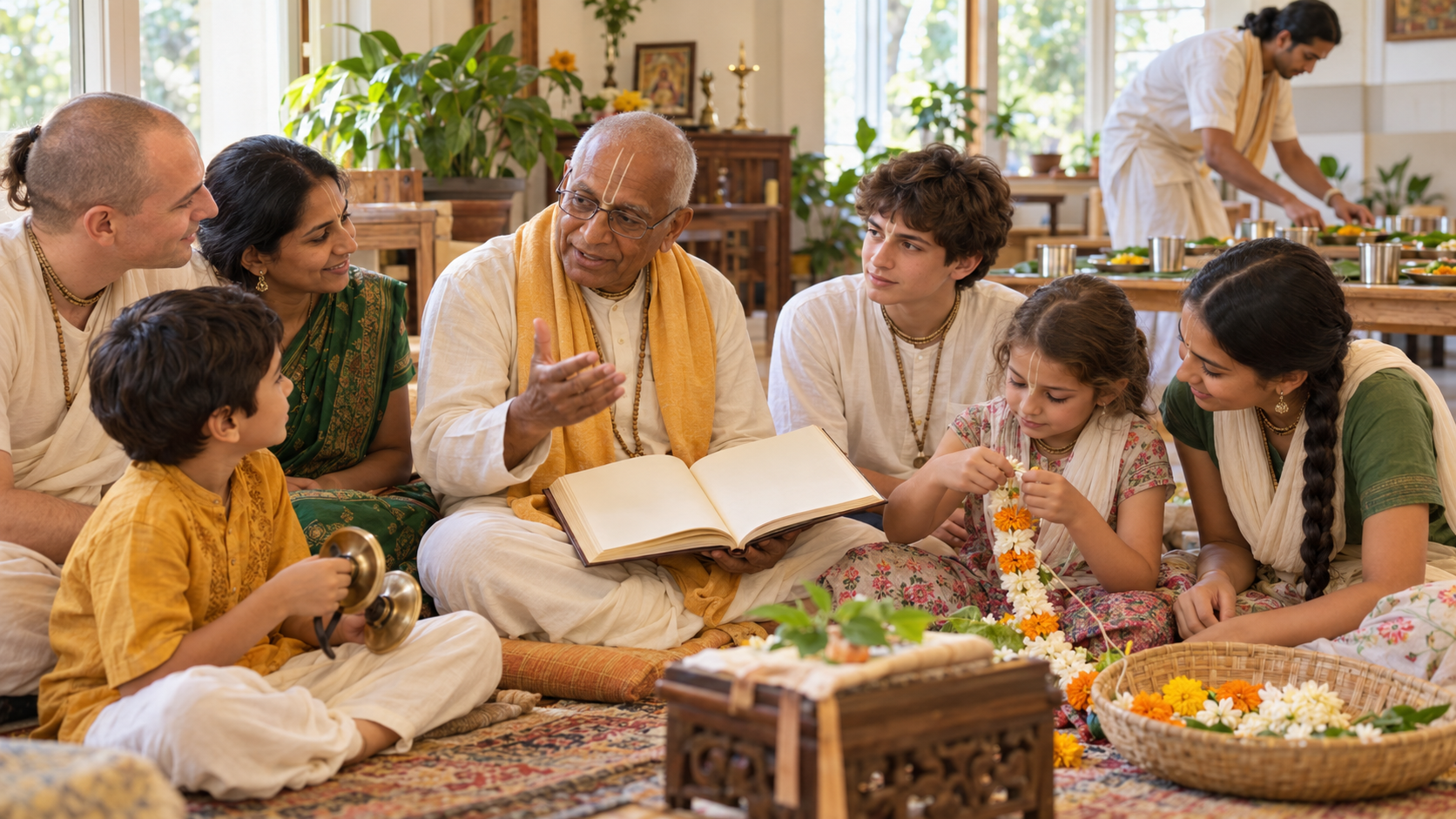
A full hall demonstrates attendance. It does not by itself demonstrate understanding, spiritual care, or continuity. A successful procession shows public visibility, but visibility is not the same as formation. Temple leaders can honour the Golden Jubilee more deeply by examining what happens after a visitor crosses the threshold.
Walk through the visitor’s path from arrival to follow-up. Can someone identify where to leave footwear, how to behave before the deities, what the congregational chanting means, and whom to approach with a serious question? Is the explanation intelligible to someone without Sanskrit vocabulary? Is there a clear next step after the celebration, such as a recurring class, kirtan, reading circle, seva opportunity, or introductory gathering?
The same test should be applied across generations. Ask whether younger members can explain why the community practises what it practises. Memorised labels are not enough. They should be able to connect a visible act to a theological meaning: why sacred form matters, why hearing precedes speculation, why seva is more than volunteering, and why discipline serves devotion rather than social conformity.
A temple committee can make this concrete by assigning responsibility for each point of transmission. Someone welcomes. Someone explains. Someone teaches. Someone offers an appropriate avenue of service. Someone follows up. Without ownership, hospitality remains an aspiration; with ownership, the jubilee can open a durable path into spiritual life.
Key takeaways
- A Golden Jubilee is not only a celebration of survival; it is a test of whether teachings, practices, and standards are being faithfully transmitted.
- Srimad-Bhagavatam 11.5.28 presents Bhagavan through identifiable personal features, inviting informed darshan rather than hurried or merely decorative seeing.
- Festival inspiration lasts when it is attached to a stable practice, a focused passage of shastra, meaningful service, and accountable association.
- Attendance measures reach, while a newcomer’s ability to understand and continue measures transmission.
- Gratitude to earlier devotees becomes inheritance when you accept a specific responsibility for what comes next.
Before the jubilee recedes into memory, write down the practice you will protect, the service through which you will express it, and the person from whom you will seek guidance. If you help organise the temple, create a visible next step for those who were touched by the observance but do not yet know how to continue.
Fifty years becomes more than a milestone when it changes the next ordinary day. Begin there: with clearer seeing, steadier practice, and one act of transmission that another person can carry forward.
References
- Dandavats — Special Address | Golden Jubliee Celebration Day 3 | 25 Oct 2026 | ISKCON Temple
- Dandavats — His Grace Sarvabhauma Prabhu || (SB-11.05.28) || (25-10-2026)

Leave a Reply
You must be logged in to post a comment.