

If you came to Srila Prabhupada through his books, recorded lectures, or the devotees he taught, you may wonder what a genuine relationship with him can mean now. The answer does not depend on manufacturing a feeling of physical closeness. It begins with allowing his instructions to change what you study, how you chant, whom you serve, and how reliably you live as a devotee.
Srila Prabhupada departed from this world in Vrindavan on 14 November 1977. His disappearance day is therefore more than an anniversary on which to admire an extraordinary life. It confronts you with a practical question: what will you do differently because he taught it?
Disappearance changes the relationship; it does not end it

Within Vaishnava understanding, the disappearance of a pure devotee marks a return to eternal service, or nitya-seva, to Bhagavan. This is why the disappearance tithi can be solemn without becoming hopeless. Separation is acknowledged, but it is not treated as the defeat of the guru’s work.
The word disappearance should not become a way of denying loss. Srila Prabhupada’s disciples could no longer sit before him, ask a question in the same room, or receive a personal assignment from his embodied presence. The atmosphere associated with his departure in Vrindavan was one of contemplation, kirtan, and collective remembrance. Grief and philosophical conviction could therefore occupy the same devotional space.
What continues is the relationship of instruction and service. In the guru-shishya tradition, closeness is not measured only by physical proximity. It is expressed through faithful attention to the guru’s teachings, serious engagement with shastra, disciplined sadhana, and service offered in the mood he exemplified. This is the practical meaning of service in separation: you stop asking how to reproduce a past encounter and start asking how to carry an instruction into the present.
Other Dharmic traditions can help you recognize the wider pattern without erasing important differences. Buddhist observances of parinirvana, Jain commemorations of nirvana, and the Sikh language of jyoti jot each preserve a distinct theology. They are not interchangeable with the Vaishnava understanding of eternal personal service. Yet each refuses to reduce a realized teacher’s departure to an ordinary ending. The shared practical insight is responsibility: remembrance should make the follower more truthful, disciplined, compassionate, and useful.
Build an observance that continues the next morning

A disappearance-day program can be emotionally moving and still leave your life unchanged. Attendance, eloquence, and devotional emotion have value, but they are not enough by themselves. The stronger test is whether one instruction survives after the gathering ends.
- Name the purpose before the program begins. Bring a real area of your life into the observance: inattentive japa, irregular reading, neglected service, avoidable harshness, or an obligation you keep postponing. A specific need gives the remembrance somewhere to land.
- Read one teaching slowly. Choose a passage from Bhagavad Gita or Srimad-Bhagavatam with Srila Prabhupada’s commentary. Do not read merely to finish a selection. Pause where the teaching corrects an assumption, exposes an excuse, or identifies a duty.
- Put the Holy Name at the center. Give focused space to Hare Krishna japa or congregational kirtan. If you are organizing the gathering, assign practical logistics to someone in advance so that chanting is not continually interrupted by announcements and last-minute coordination.
- Hear remembrance as instruction. Personal memories can reveal Srila Prabhupada’s character and priorities, but do not collect stories as devotional entertainment. After each remembrance, ask what quality or instruction it places before you: fidelity to guru and shastra, steadiness, courage in service, humility, or concern for others.
- Make the offering useful. Seva may include helping at a temple, supporting sankirtan, preparing or distributing prasada, welcoming newcomers, assisting devotional education, or undertaking compassionate community outreach. Choose a service that answers an actual need, not merely one that is publicly visible.
- Leave with an appointment, not a wish. Translate inspiration into an action tied to a stable cue. Decide what you will read, when you will chant without distraction, which service you will complete, or whom you will contact. If helpful, tell a mentor or trusted devotee so that the intention becomes accountable.
For a community observance, send the reading selection before the gathering and ask speakers to connect remembrance with practice. Make room for kirtan, study, and service rather than letting the entire program become a sequence of speeches. Conclude by inviting participants to identify a concrete commitment. The aim is not to force public declarations, but to prevent remembrance from remaining an agreeable mood.
You can also welcome people from other Dharmic paths without diluting the Vaishnava meaning of the occasion. Shared reverence for realized teachers, self-discipline, nonviolence, truthfulness, and service creates honest common ground. Respect does not require presenting different doctrines as synonyms.
Keep the connection from becoming an annual mood
An annual tithi cannot carry the whole year. Srila Prabhupada’s legacy becomes living when remembrance enters a repeatable rhythm of study, chanting, service, and review. The essential practices are accessible: regular study of Bhagavad Gita and Srimad-Bhagavatam with his commentaries, focused japa, community participation, mentorship, and compassionate outreach.
- Study: read to receive direction, not simply to accumulate completed pages. At the end of a passage, state its main instruction in your own words and identify where it applies.
- Chant: protect a dependable period for the Holy Name. When attention wanders, return without dramatizing the lapse. Steadiness is built through returning.
- Serve: attach study to a responsibility that benefits Krishna’s devotees or the wider community. Service prevents spiritual learning from becoming private consumption.
- Review: notice whether the instruction is changing speech, habits, relationships, and dependability. If nothing is moving, make the commitment smaller and more concrete rather than replacing it with another inspiring idea.
This rhythm should fit your actual stage of life. A demanding routine copied from someone with entirely different responsibilities may produce a short burst of enthusiasm followed by abandonment. Continuity is more valuable than a display of intensity that cannot be sustained.
For students and younger practitioners
Use structure to keep digital access from turning into passive browsing. Select a lecture or reading for a defined purpose, discuss it with a knowledgeable devotee or study group, and record the action it calls for. Anchor reading and japa to a stable part of your day instead of waiting for a devotional mood to appear. A mentor can help you distinguish a difficult teaching that deserves patient study from a simple instruction you are avoiding.
For householders
Build devotion into the household rather than treating family responsibilities as an interruption to it. Morning or evening sadhana, family kirtan, shared reading, and manageable community seva can give the home a devotional center. When the schedule becomes crowded, protect the reliable core. A modest routine practiced faithfully is more formative than repeatedly designing an ideal routine that the family cannot maintain.
For elders and experienced devotees
Your contribution need not depend on physical stamina or a formal position. You can preserve continuity by mentoring younger practitioners, explaining the setting of an instruction, modeling steadiness, and helping communities remember why a practice matters. Ask younger devotees where they are struggling before offering a recollection. That small change turns memory into guidance rather than nostalgia.
Community is especially valuable because it exposes the gap between what we admire and what we embody. Books and lectures provide instruction; relationships reveal whether patience, humility, cooperation, and service are actually developing. Neither side should be neglected.
Judge the legacy by its fruit, not by intensity alone
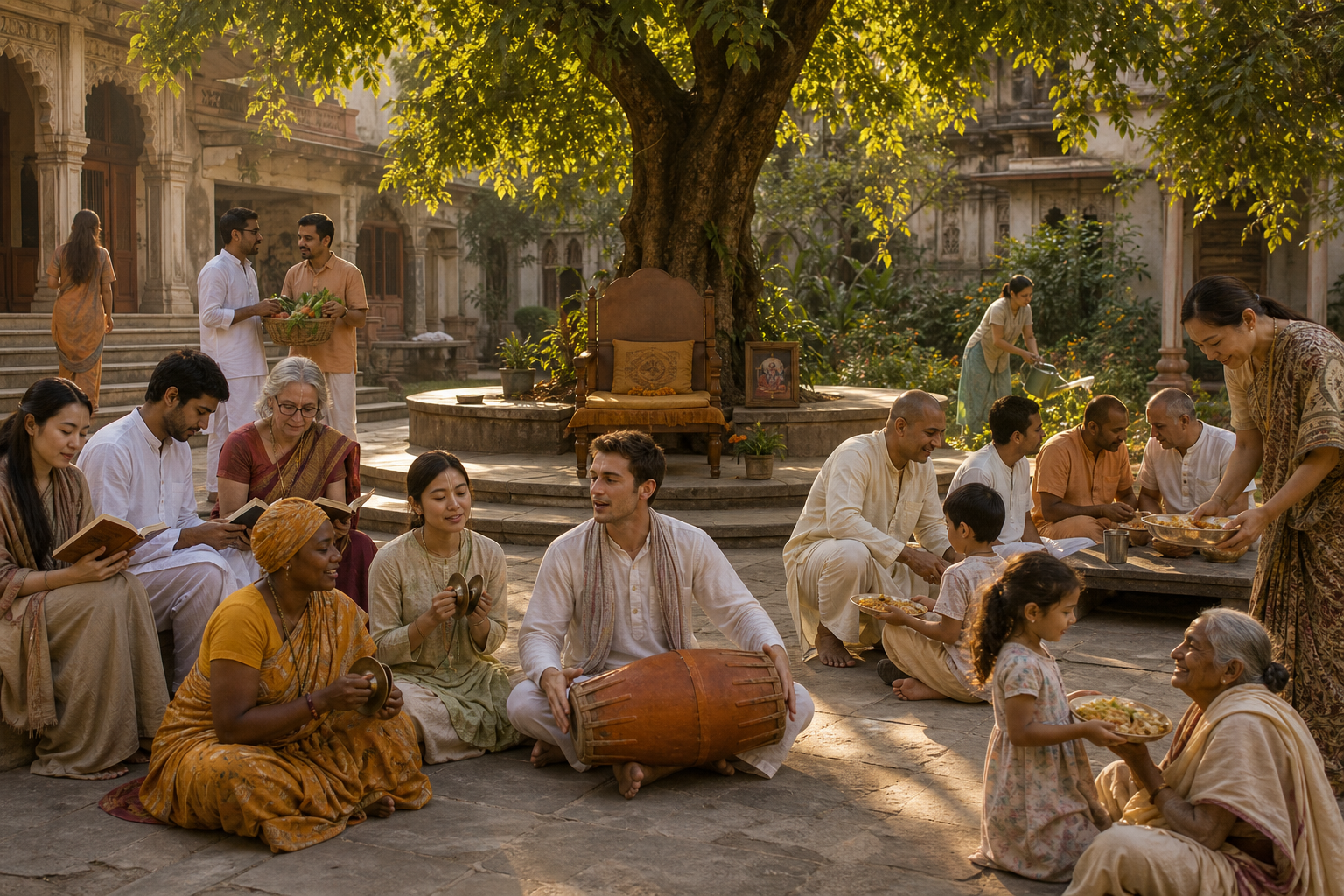
You do not need an unusual experience to know whether the relationship is becoming more substantial. Look for ordinary but demanding changes. Are you returning to chanting more readily? Does study correct your conduct, or only supply language for correcting others? Are you becoming more dependable in service? Can you meet difficulty without immediately abandoning sadhana?
Useful indicators include greater compassion, resilience in adversity, a deepening taste for chanting and study, improved focus, healthier habits, and enduring hope. These are directions of growth, not a spiritual ranking system. One difficult week does not cancel a sincere practice, and outward efficiency does not by itself prove inner realization. Notice the trend in your choices.
Some warning signs are equally revealing. Admiration without obedience leaves the relationship sentimental. Consuming lectures without applying them turns access into distraction. Public service accompanied by increasing harshness weakens the very legacy it claims to honor. Loyalty to the guru should make you more serious about truth, humility, and respect for all beings, not more eager to display superiority.
Cooperation also requires discernment. Unity across Dharmic traditions does not mean that every doctrine says the same thing. It means that people with distinct commitments can recognize disciplined practice, reverence for lineage, ethical conduct, and selfless service in one another. Srila Prabhupada’s Vaishnava identity becomes clearer, not weaker, when it is expressed without contempt.
Key takeaways
- Srila Prabhupada’s disappearance in Vrindavan on 14 November 1977 is remembered in the Vaishnava tradition as a departure into eternal service, not the termination of his spiritual work.
- Service in separation means following instruction through shastra study, attentive chanting, disciplined sadhana, and useful seva.
- A meaningful disappearance-day observance should produce a concrete commitment that remains in place after the gathering ends.
- Students, householders, and elders need different routines, but each can unite study, the Holy Name, mentorship, and service.
- The clearest signs of a living legacy are greater compassion, steadiness, humility, cooperation, and a growing willingness to serve.
At your next period of japa or study, choose one instruction you already understand but have not yet made dependable. Give it a place in your schedule and connect it to someone who can benefit from your service. That is where commemoration stops being about a departed moment and becomes your participation in a living parampara.
References
- Dandavats – Complete Guide to Staying with Srila Prabhupada: Proven Ways to Transform Devotion
- Dandavats – Discover the Essential Meaning of Disappearance Day: A Devotional Tribute to Srila Prabhupada
