
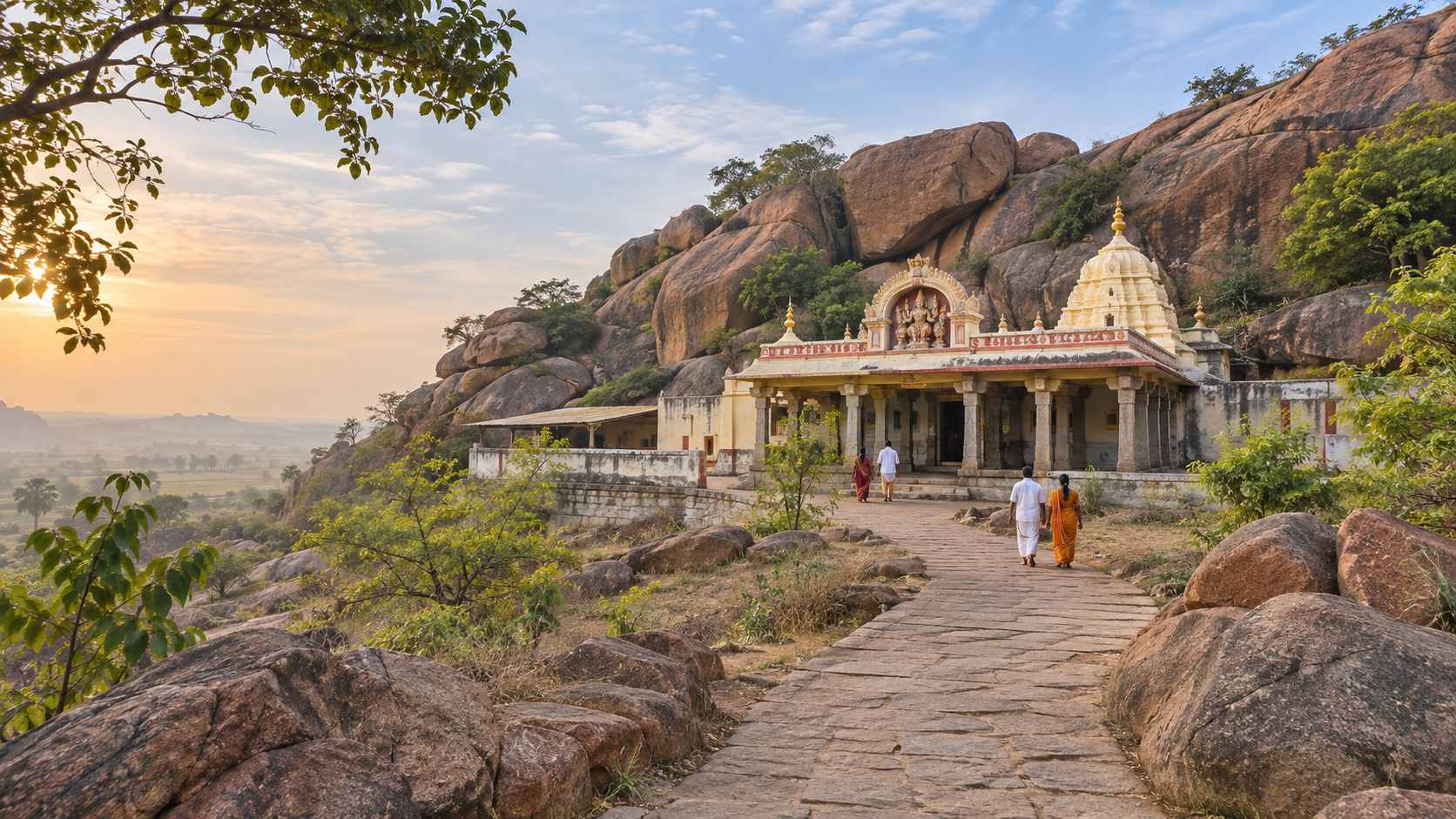
If you are arranging a pilgrimage to Mantralayam and wondering whether Panchamukhi Hanuman Temple is worth a separate visit, do not judge it by the number of kilometres involved. Its importance lies in the spiritual relationship it preserves: the devotion of Guru Raghavendra to Hanuman.
Panchamukhi is close enough to belong naturally in a Mantralayam journey, yet distinct enough to deserve its own time and intention. Understanding that distinction will help you plan the visit without reducing it to another hurried stop.
Why Panchamukhi belongs to a Mantralayam pilgrimage
The temple’s sacred identity rests on the tradition that Guru Raghavendra meditated on Hanuman at Panchamukhi for several years and received the divine vision of Panchamukha Hanuman there. The shrine was built at the place associated with that prolonged meditation and vision. Panchamukha Hanuman is therefore remembered here as a deity especially dear to the guru. This connection, rather than proximity alone, is the reason Panchamukhi matters within the sacred landscape of Mantralayam.
For you as a pilgrim, this changes the purpose of the visit. You are not simply moving from one shrine to another. You are following a relationship between guru, spiritual practice and deity. Mantralayam brings you into the presence and memory of Guru Raghavendra; Panchamukhi directs your attention toward the form of Hanuman on whom he meditated.
If your available time is limited, use that relationship to make the decision. Include Panchamukhi when you want to understand more of Guru Raghavendra’s devotional world, not merely when you want to add another temple to your itinerary. If transport, health or family needs would turn the visit into a race, it is better to make an honest plan than to treat sacred geography as a checklist.
What the Panchamukha form asks you to notice
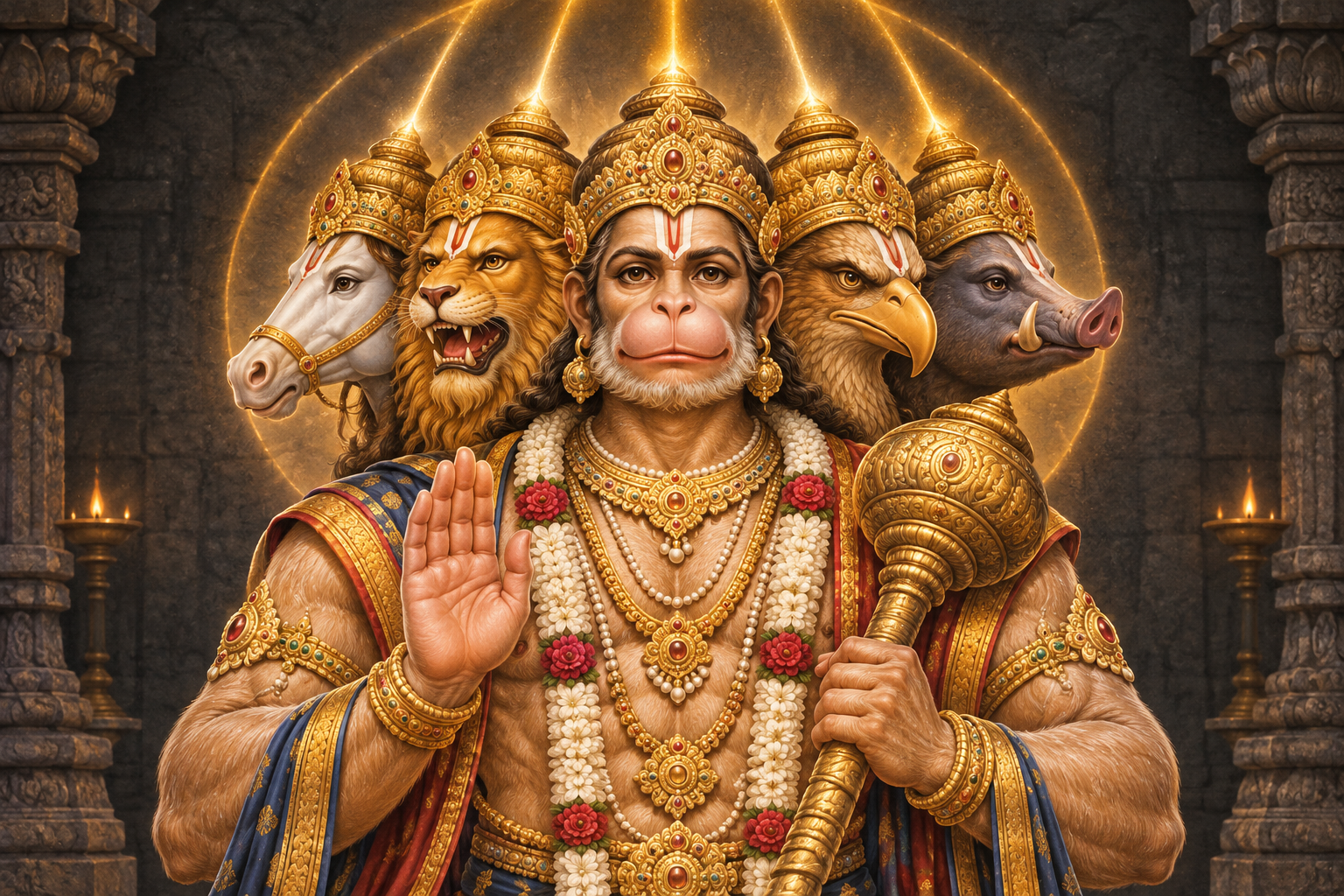
Panchamukha means “five-faced,” and Panchamukha Hanuman is the five-faced manifestation of Hanuman. You do not need to arrive with an elaborate symbolic system in order to approach the shrine properly. The temple’s central tradition already gives you a clear point of attention: Guru Raghavendra’s sustained meditation culminated in darshan of Hanuman in this form.
Keep three elements together in your mind: the devotee was Guru Raghavendra, the practice was prolonged meditation on Hanuman, and the sacred response was the vision of Panchamukha Hanuman. Separating the image from that devotional sequence can make the temple seem like a place devoted mainly to an unusual icon. Remembering the sequence reveals why the place carries meaning for followers of the guru.
Darshan in a Hindu temple is more than inspecting an image. It is a devotional encounter in which seeing the deity is joined with presenting yourself before the deity. Put away the urge to identify every feature immediately. First stand quietly, bring Hanuman and Guru Raghavendra’s devotion to mind, and allow the form before you to become the centre of your attention.
Plan Panchamukhi as a separate darshan
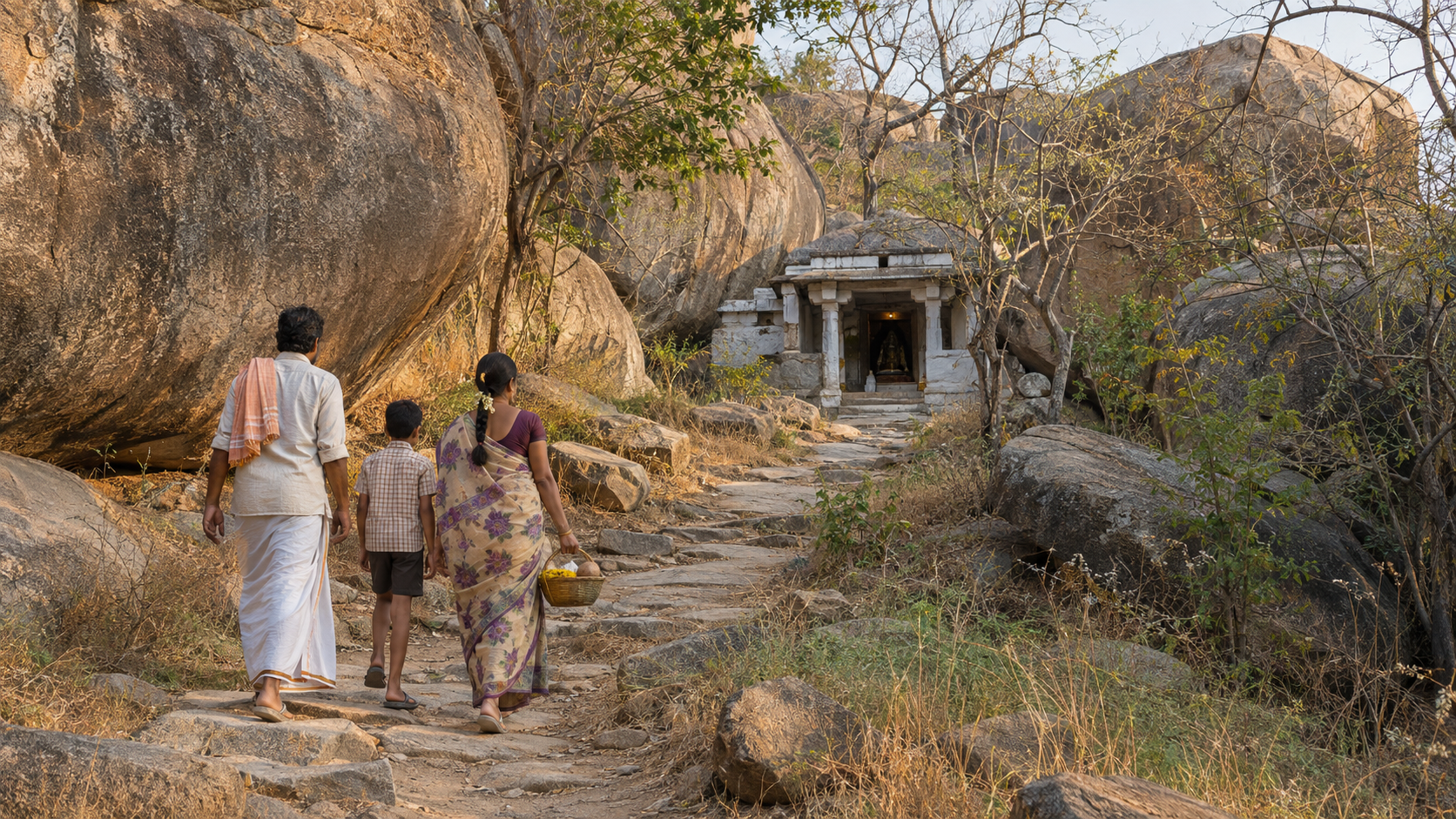
The shrine is situated a few kilometres from Mantralayam. That sounds simple, but map distance is not a complete travel plan. You still need to know the current temple hours, how you will reach the shrine, whether your vehicle will wait, and how you will return. These practical details can change, so confirm them locally on the day rather than relying on an undated timetable.
Panchamukhi visit checklist
- Confirm the current opening period. Ask at your accommodation, a local travel desk or the temple before leaving Mantralayam. Do not build the day around an assumed schedule.
- Arrange the return as well as the outward journey. A short outward ride does not guarantee that another vehicle will be ready when you finish darshan.
- State any mobility needs before departure. If someone in your group has difficulty walking, ask about present access conditions and how close the vehicle can go.
- Leave room for silence. Plan enough flexibility to pause before or after darshan if temple conditions permit. A visit shaped by meditation should not be compressed into a photograph and an immediate departure.
- Follow current temple instructions. Ask locally about offerings, photography and any site-specific practices instead of assuming that rules from another temple apply here.
If you are travelling with children or relatives unfamiliar with the place, give them one clear sentence before arrival: “Tradition remembers this as the place where Guru Raghavendra meditated on Hanuman and received the vision of Panchamukha Hanuman.” That small amount of context is more useful than a long explanation delivered after everyone has become distracted.
Approach the shrine without inventing a ritual
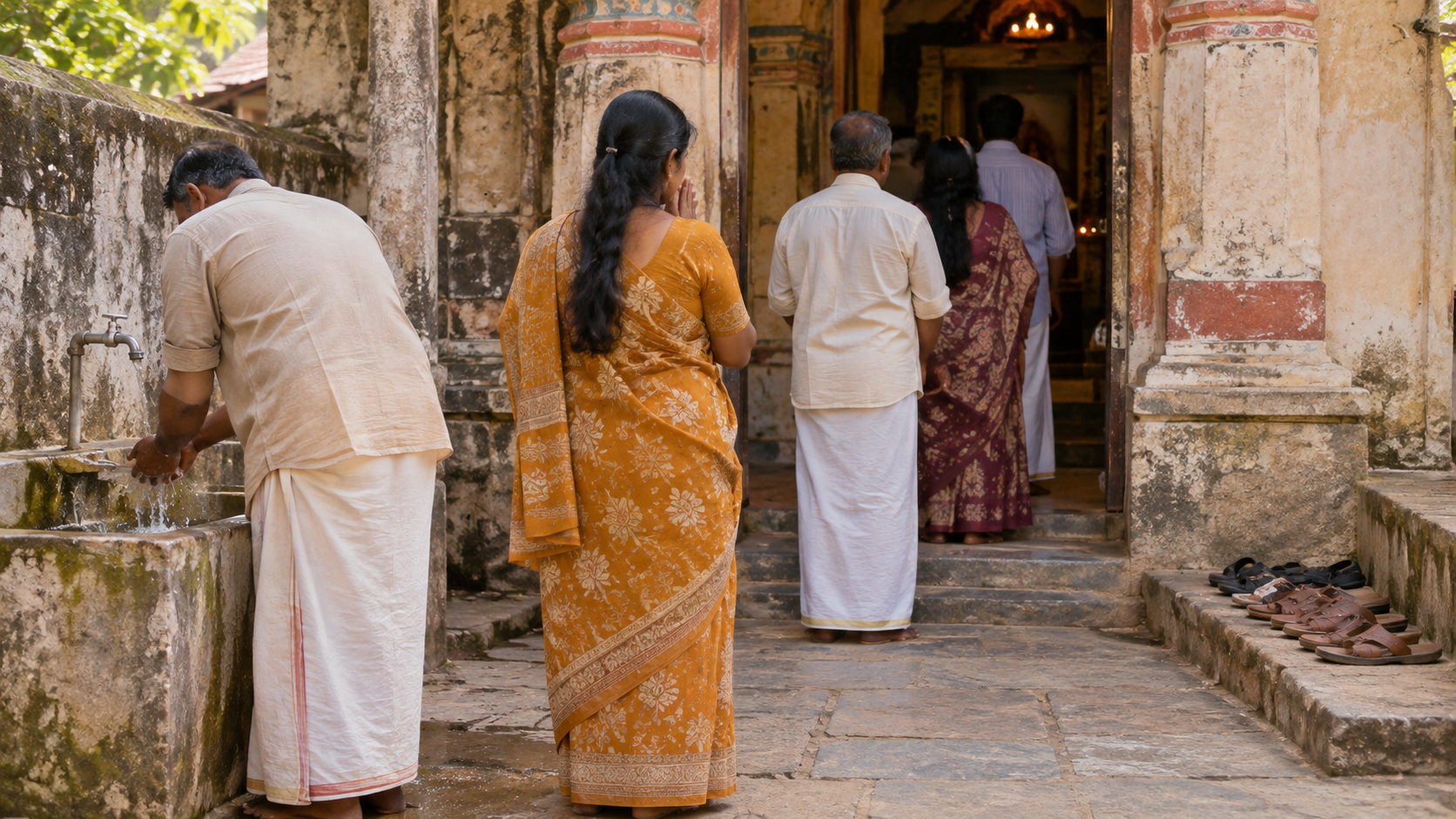
You do not need to manufacture a complicated ceremony to make the visit meaningful. If you already have a Hanuman prayer, mantra or regular practice, bring that familiar discipline with you. If you do not, quiet attention and a sincere namaskara are sufficient ways to begin. Temple staff or priests can guide you if a particular offering or local observance is appropriate.
Avoid turning the shrine into a place for testing devotion through demands: a sign, an immediate answer or a promised result. The defining story of Panchamukhi emphasizes sustained meditation over several years. Its spiritual grammar is patience and steadiness, not instant proof.
This is also why respectful conduct matters. Keep conversation low, do not obstruct another person’s darshan, and treat photography as a permission question rather than an entitlement. When the temple is crowded, a short but attentive darshan is better than occupying space while trying to create the perfect image or family recording.
If members of your family come from different devotional backgrounds, do not force a single interpretation upon them. Give them the temple’s central tradition, allow them to observe, and let reverence do more work than argument. Panchamukhi can be approached meaningfully by a committed devotee, a student of Guru Raghavendra’s life or a Hindu family trying to understand why this place belongs in the Mantralayam pilgrimage.
Let the visit change what you do afterward
The most practical teaching in the temple’s story is easy to miss: Guru Raghavendra’s meditation was sustained over years. You are not being asked to imitate his duration or expect his vision. You can, however, notice the difference between occasional religious enthusiasm and steady abhyasa, or repeated spiritual practice.
After returning to Mantralayam, choose one modest practice that you can repeat without drama. It might be a familiar Hanuman prayer, a period of silent remembrance or attentive reading connected with your own sampradaya. Keep the practice small enough to sustain and clear enough that you know when you have neglected it. The lesson to carry home is continuity, not intensity for a single day.
Before your pilgrimage day begins, decide whether you can give Panchamukhi a distinct and unhurried place in it. Confirm the current hours and round-trip transport, then arrive holding the temple’s essential memory: a guru meditated faithfully on Hanuman here, and this place preserves the vision associated with that devotion. That is enough context to enter with purpose.
References

Leave a Reply
You must be logged in to post a comment.