
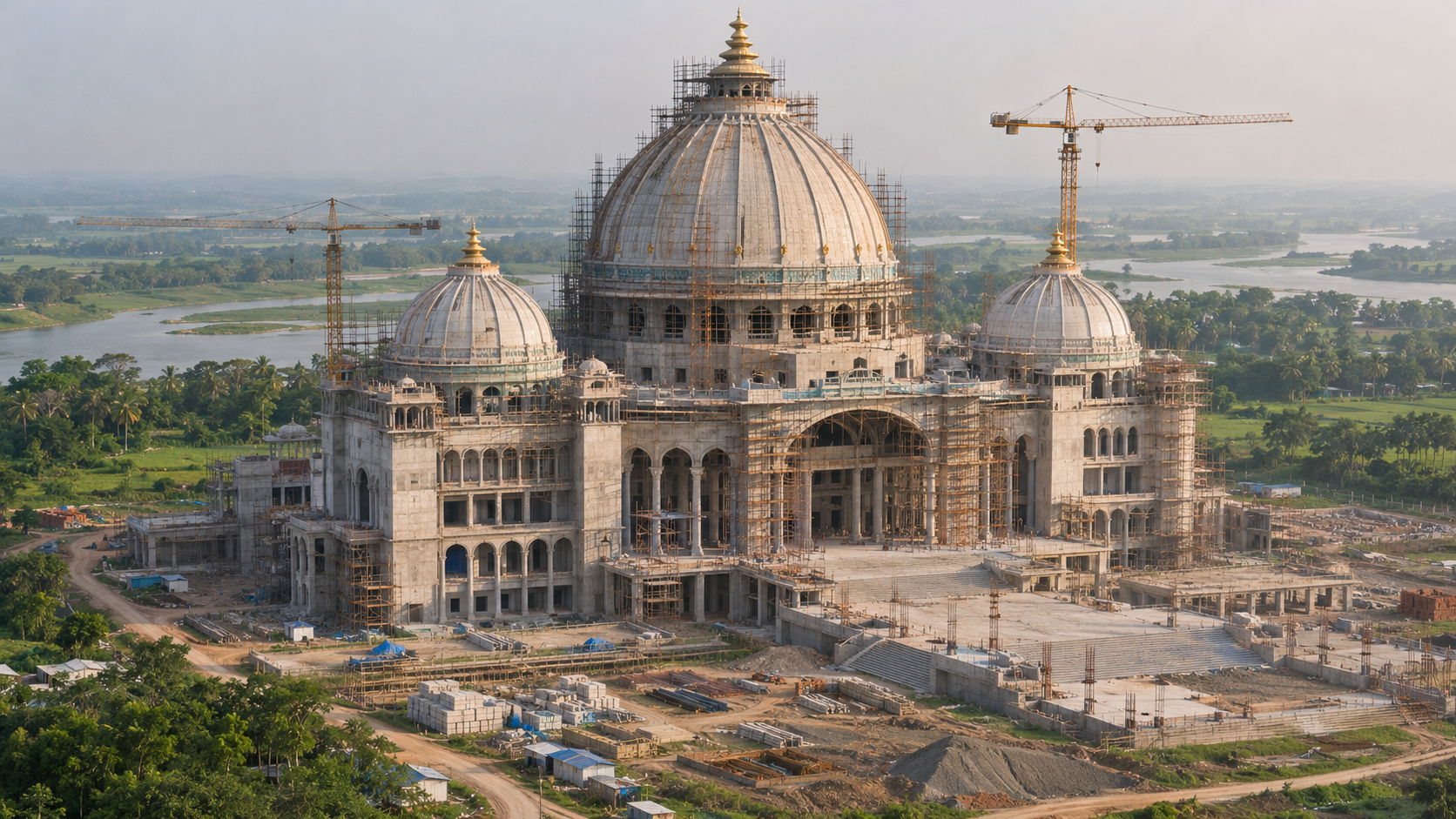
If you came looking for a percentage-complete figure or a confirmed opening date for TOVP, do not let cinematic scale answer a question it cannot answer. The latest dated view gives you a meaningful construction checkpoint, but not a finished-project certificate.
By November 2026, TOVP could be examined through new drone footage and on-location views, with 2027 identified as the project’s next major public horizon. That is encouraging. It also needs to be described precisely, especially if you are deciding whether to make travel plans, share an opening claim, or wait for firmer details.
What you can confirm as of November 2026
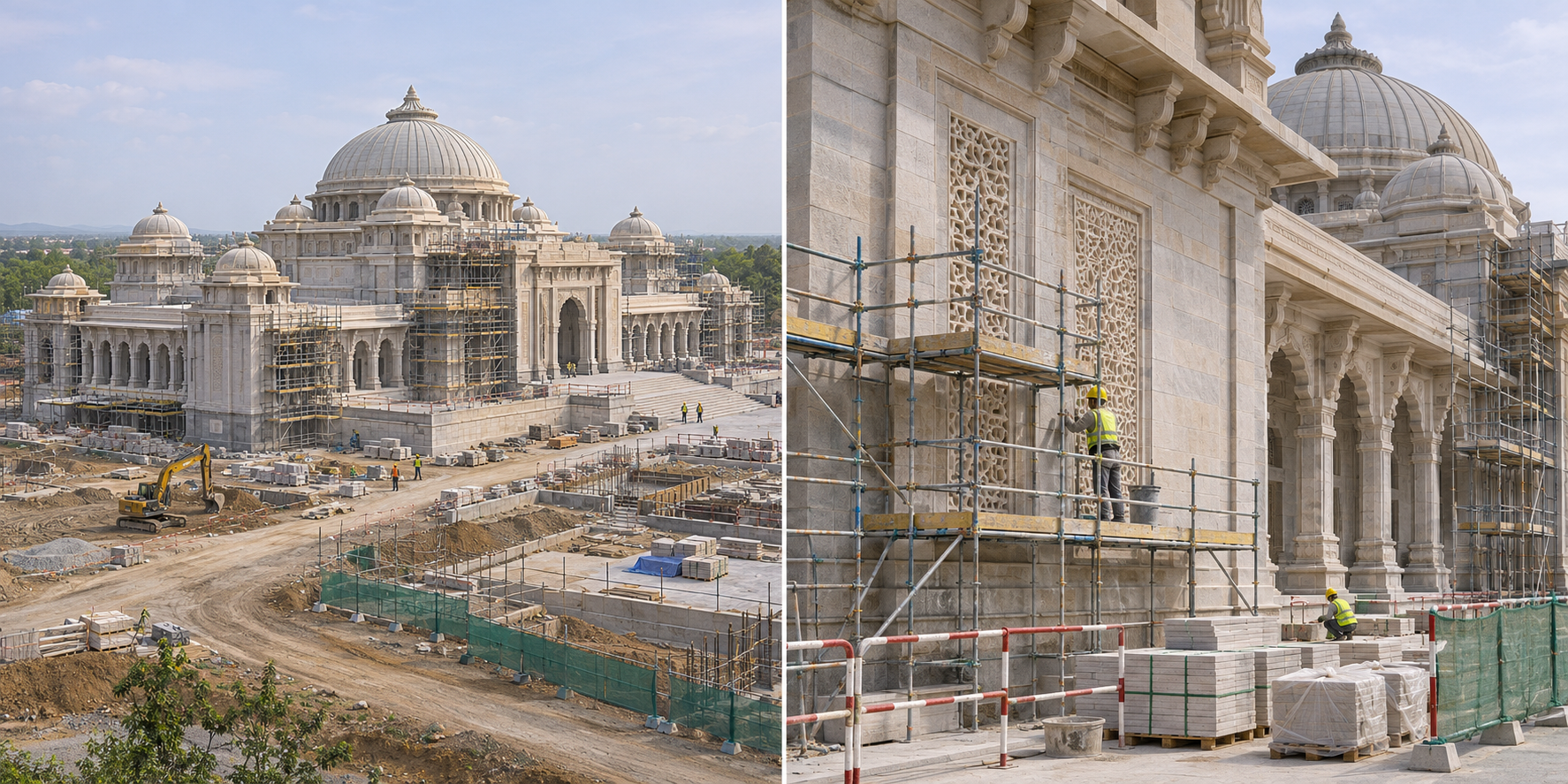
You now have a dated visual checkpoint rather than an undated promotional image. The combination of aerial and ground-level views allows you to inspect the project’s visible condition from more than one perspective. It also places the construction within a stated timeline: November 2026 is the status point, while 2027 is the forward-looking marker.
The careful conclusion is that substantial, visible work has progressed and that the project is being prepared for broader attention in 2027. The available facts do not establish an exact completion percentage, a fixed inauguration date, or a complete list of finished and remaining work.
Keep those two levels of certainty separate. Visible progress is evidence. A precise readiness claim requires named milestones, dates, and confirmation of work that cannot be judged from exterior scale alone.
Separate visual completion from operational readiness
Large sacred buildings can appear close to completion from a distance while interior finishes, building systems, commissioning, access routes, or visitor arrangements are still being completed. The reverse can also happen: important interior work may continue even when the exterior seems unchanged. This is why assigning your own completion percentage from a dramatic aerial view is unreliable.
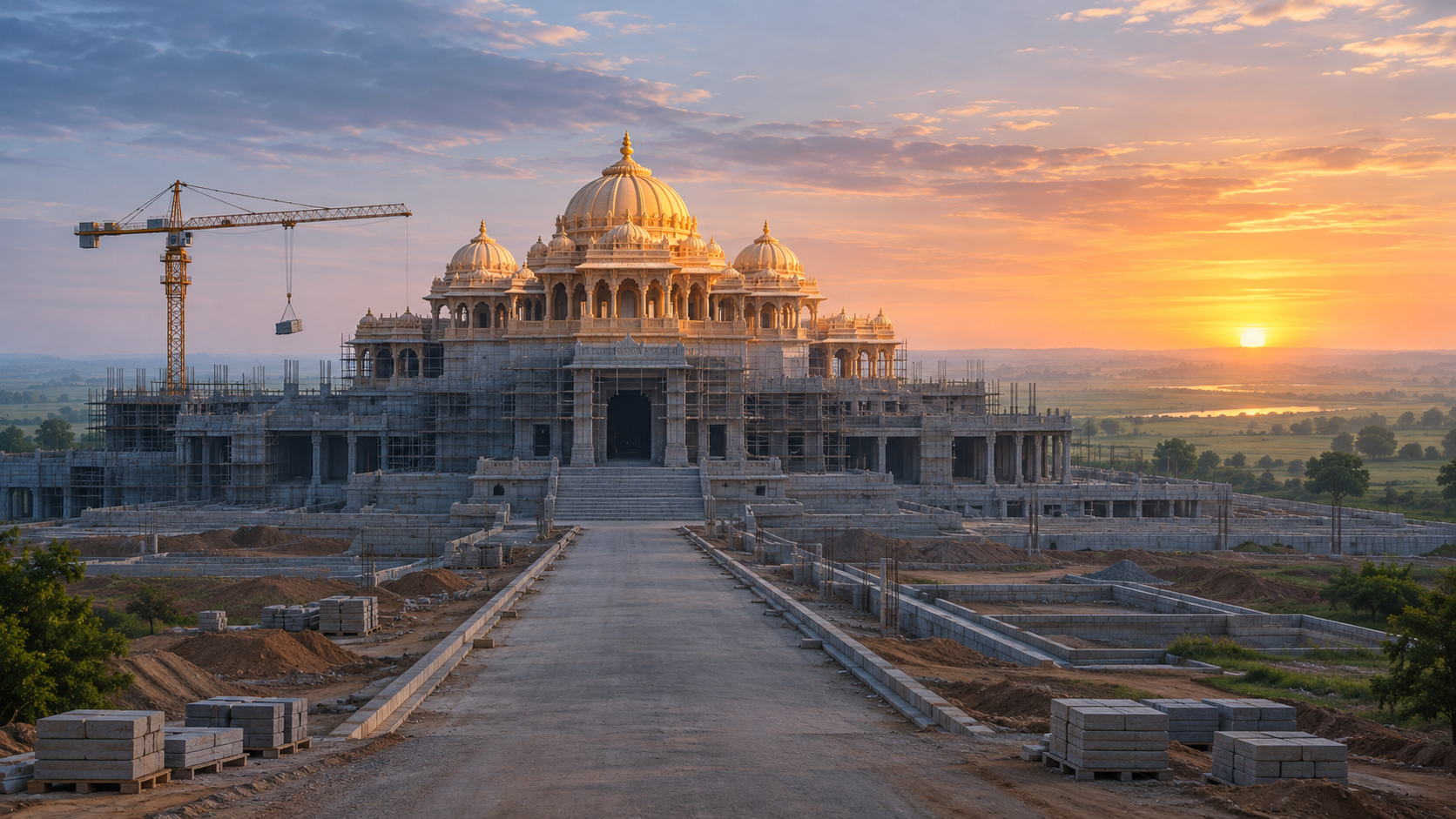
Use the different viewpoints for different questions. Aerial views help you assess the overall form, exterior surfaces, surrounding work areas, and approaches. On-location views may help you notice finishes, materials, active work zones, and the condition of accessible spaces. Neither viewpoint, by itself, confirms that every concealed or operational system is ready.
If you want to track progress rather than simply admire the scale, use this method:
- Fix the date first. Label what you see as November 2026. Do not mix it with older, undated images or assume that every circulating clip represents the same stage.
- Divide readiness into separate layers. Track the visible exterior, visible interior, building operations, site access, and visitor readiness independently. One advanced layer does not prove that all the others are equally advanced.
- Record only observable facts. Write down what appears installed or finished, but mark obscured areas as unknown. Avoid converting visual impressions such as “nearly there” into numerical claims.
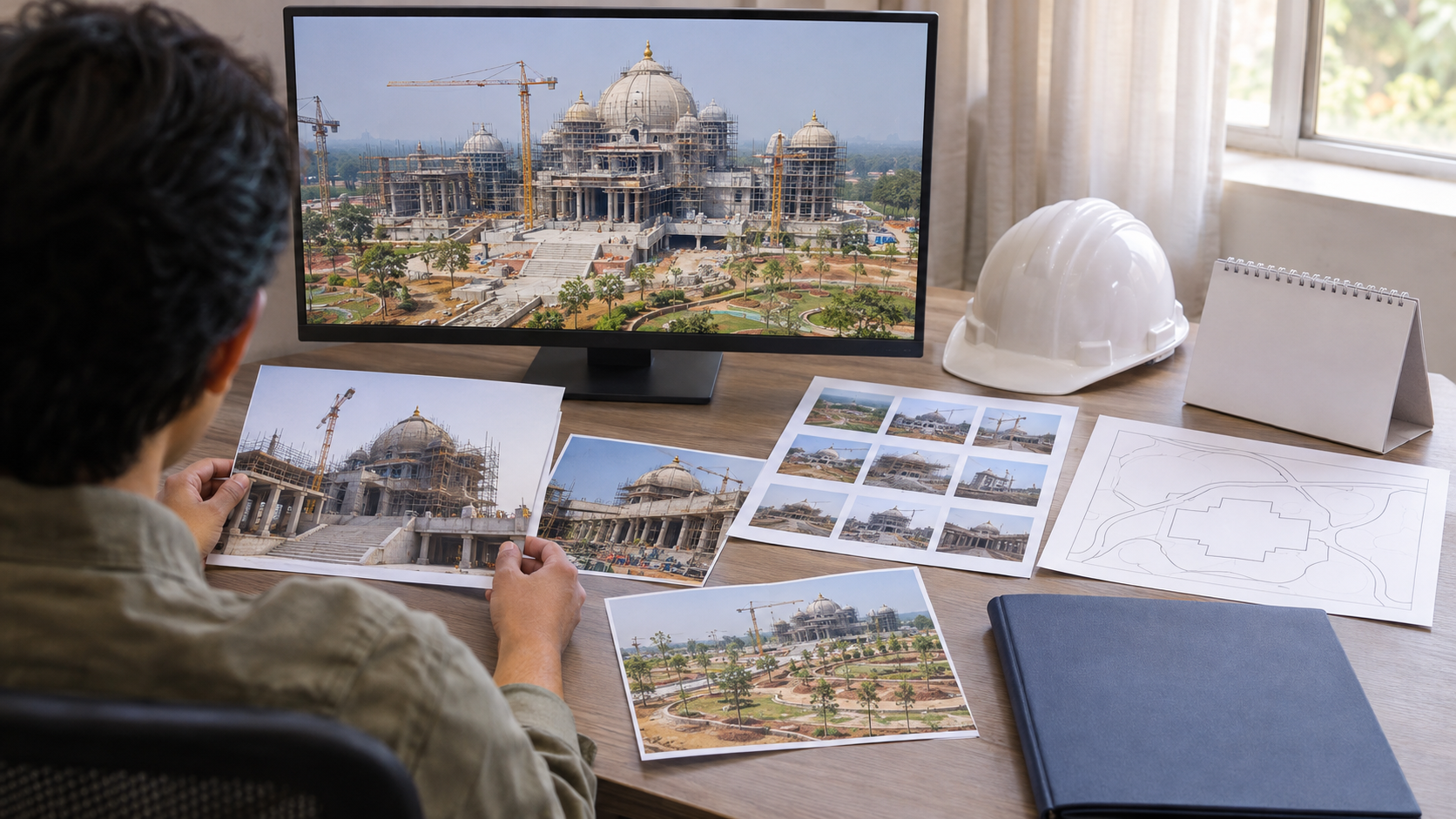
- Compare like with like. When another update arrives, compare the same elevation, interior area, or approach wherever possible. Changing camera angles can make progress look larger or smaller than it is.
- Look for named milestones. A statement that a particular phase is complete is more useful than a general claim of momentum, especially when the milestone is tied to a date.
This method lets you appreciate the achievement without asking imagery to prove hidden technical or scheduling details. It is also the fairest way to discuss a temple project whose cultural significance naturally creates high expectations.
Treat 2027 as a horizon, not a confirmed opening date
Read 2027 as the project’s stated public horizon. It does not, on the information presently available, establish a particular opening day or define the exact milestone that will place TOVP on the world stage. Construction completion, ceremonial use, visitor access, and international public attention are distinct thresholds; they should not be collapsed into one claim unless the project explicitly does so.
That distinction changes what you should do next:
- If you are planning a visit: wait for an official date and practical access information before booking non-refundable travel or committing to leave.
- If you are sharing the news: say that TOVP is working toward a major 2027 public milestone. Do not rewrite that as a guaranteed 2027 opening.
- If you are tracking construction: preserve November 2026 as a dated baseline and compare later evidence against it.
- If you are setting expectations in your community: distinguish confidence in the project’s direction from certainty about its schedule.
Respect for a sacred project does not require turning an aspiration into a promise. Precise language protects the credibility of the work and helps devotees make sensible decisions.
Key takeaways
- The latest dated TOVP construction checkpoint is from November 2026.
- Drone and on-location views provide useful evidence of visible progress from complementary perspectives.
- 2027 is identified as the next major public horizon, but no exact opening date is established.
- You should not infer a completion percentage from exterior scale or polished imagery.
- Before making firm plans, look for a named 2027 milestone, an official date, and practical visitor-access details.
What to wait for before making a firm plan
The next genuinely useful level of information will connect visible progress to defined milestones. Before treating the schedule as firm, look for clear answers to these questions:
- What exact event or construction milestone is intended for 2027?
- Which major phases are complete, which are under way, and which remain?
- Does the 2027 marker refer to construction completion, ceremonial use, visitor access, or a different public occasion?
- What work must be completed before that milestone can occur?
- Has an official date been issued, together with access and visitor information?
Until those answers appear, the sound position is both positive and exact: TOVP had a fresh visual construction checkpoint in November 2026 and was being oriented toward a major public moment in 2027. That is meaningful progress, but it is not yet the same thing as a confirmed opening.
Your next step is simple. Examine the linked footage once for the overall scale, then again using the readiness layers above. Note only what you can actually verify, preserve November 2026 as your baseline, and postpone fixed travel commitments until a formal date and access plan are announced. Enthusiasm and accuracy belong together.
References

Leave a Reply
You must be logged in to post a comment.