
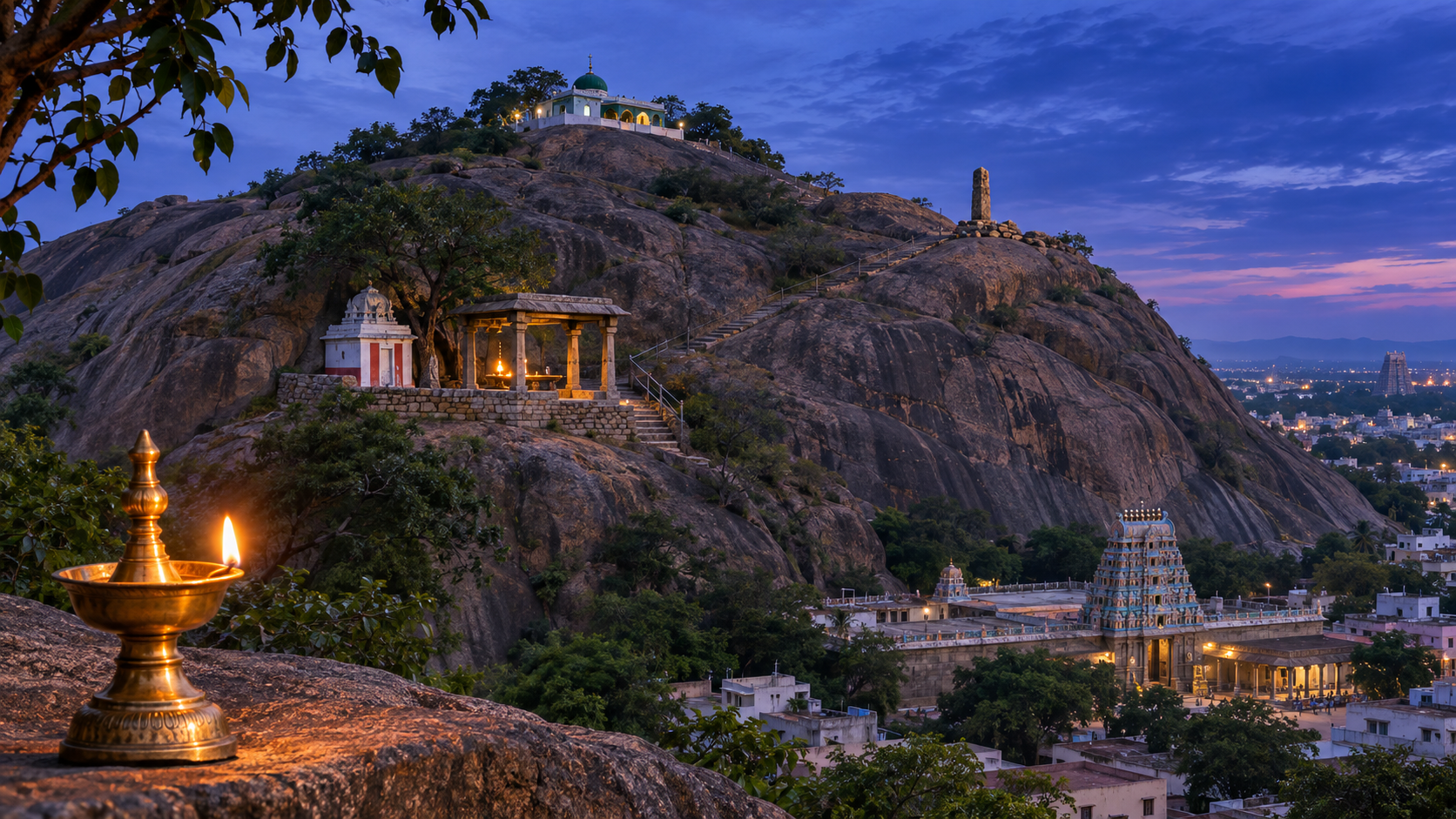
If you are trying to understand the Thiruparankundram dispute, don’t begin with the claim that one community has won and another has lost. The immediate issue is much more precise: whether Karthigai Deepam had to be lit at the disputed Deepathoon after the Supreme Court directed that it be done, and what followed when the direction was not carried out.
That distinction matters. A disagreement over a place of worship and the identity of a stone pillar has become a test of constitutional compliance. To follow it responsibly, you need to keep the religious claim, the government’s position, the conduct of officials and the eventual legal findings in separate boxes.
Key takeaways
- The disputed location is the Deepathoon on Thiruparankundram hill, near the Sikandar Badusha Dargah. The Tamil Nadu government maintains that the structure is a British-era survey stone rather than a temple-associated lamp pillar.
- On November 20, the Supreme Court permitted a designated team to light the Deepam there on November 24 as a one-time measure, under the supervision of the Madurai District Collector.
- The lamp was lit instead at the customary Deepa Mandapam near the Uchipillaiyar Temple. The disputed Deepathoon remained unlit, prompting contempt petitions alleging deliberate non-compliance.
- On November 27, the Court suspended the Subramaniya Swami Temple’s trustees, appointed two retired judges as receivers and directed that the lamp be lit at the Deepathoon on November 28.
- Devotees were permitted to light the lamp while remaining at least 50 metres from the nearby Dargah on every side. CRPF personnel were assigned security around the temple perimeter.
- Contempt notices and demands for official communications indicate serious judicial scrutiny, but they should not be misrepresented as final findings of personal guilt.
The two lamp sites are the key to the controversy
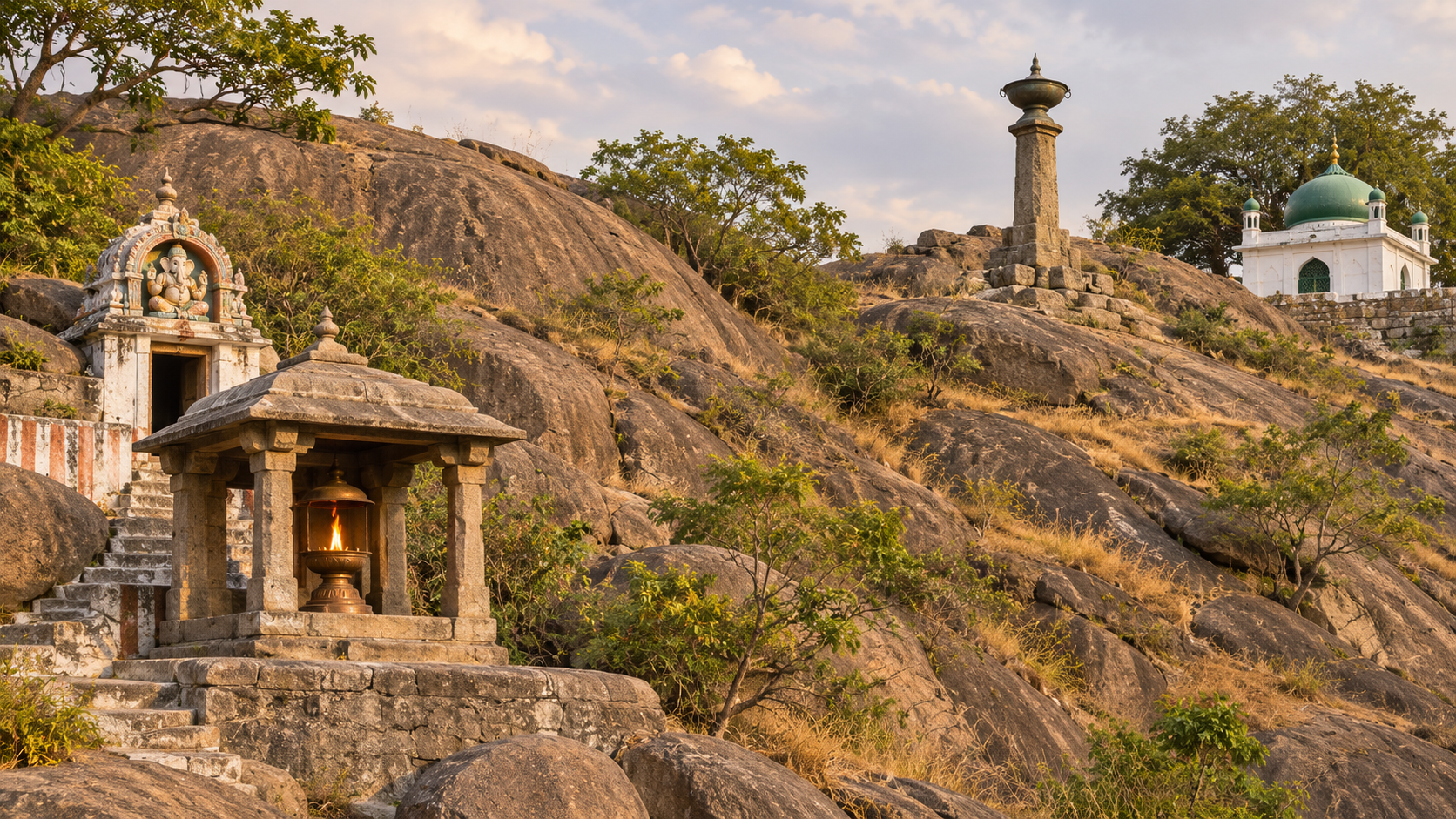
Much of the confusion disappears once you distinguish between the two locations. The Deepa Mandapam near the Uchipillaiyar Temple is described as the customary place where the lamp was lit on November 24. The Deepathoon is the disputed pillar at which the Supreme Court had specifically permitted the ritual to occur.
The Tamil Nadu administration’s position is that the Deepathoon is a British-era survey stone with no temple association. Those seeking to light Karthigai Deepam there plainly dispute that characterization. The available facts establish the existence of this disagreement; they do not provide enough historical evidence to resolve the pillar’s origin independently.
This is the first check you should apply to any account of the event: when it says the Deepam was lit, ask where. Saying only that the ritual occurred conceals the central point. The November 24 lamp at the Deepa Mandapam did not fulfil a direction specifically concerning the Deepathoon.
The Dargah’s proximity is equally important. It explains why the Court paired permission for Hindu worship with a defined separation from the Islamic site. A responsible description should therefore acknowledge both parts of the arrangement: the ritual was to proceed at the disputed pillar, and activities at the Dargah were not to be disturbed.
Non-compliance turned a temple dispute into a constitutional case
The decisive escalation followed the November 20 direction. The Supreme Court had allowed a designated team to light the lamp at the Deepathoon on November 24 and placed supervisory responsibility on the Madurai District Collector. When the disputed pillar remained unlit, petitioners returned with contempt claims.
The temple trustees reportedly passed a resolution stating that they would not implement the direction. On November 27, the Bench of Justices Aravind Kumar and Vipul Pancholi treated that reported resolution as wilful and flagrant disobedience. It suspended the board and installed retired Justices S. Vaidyanathan and V. Parthiban as receivers to oversee the trust.
This is where the case acquired significance beyond Thiruparankundram. A state department, district administration or temple board cannot treat a Supreme Court direction as a policy proposal that it may accept, renegotiate or ignore. If an authority believes an order is mistaken, unsafe or impracticable, the constitutional course is to seek its modification from the Court. Until it is modified, the obligation is to comply.
The Court invoked the principle reflected in Article 144 of the Constitution: civil and judicial authorities throughout Bharat must act in aid of the Supreme Court. For a devotee, this may feel like a question of whether a sacred observance receives fair treatment. For the constitutional system, it is also a question of whether executive officers may decide for themselves which binding judicial directions deserve obedience.
The Bench also expressed concern that officials appeared to have acted at the direction of political superiors. It ordered the Tamil Nadu Chief Secretary to produce a comprehensive affidavit covering relevant emails, calls and messages, and to appear personally at the next hearing. That concern is serious, but precision matters: an expressed judicial suspicion and an order to disclose communications are not the same as a final finding that a named person directed interference.
Contempt notices were issued to the Chief Secretary, Director General of Police, senior Hindu Religious and Charitable Endowments officials, Madurai’s Collector and police leadership, temple authorities and others. A notice requires an answer; it is not, on its own, a concluded determination of culpability. Keep that distinction intact when discussing the case.
What the November 27 directions settle, and what they leave open
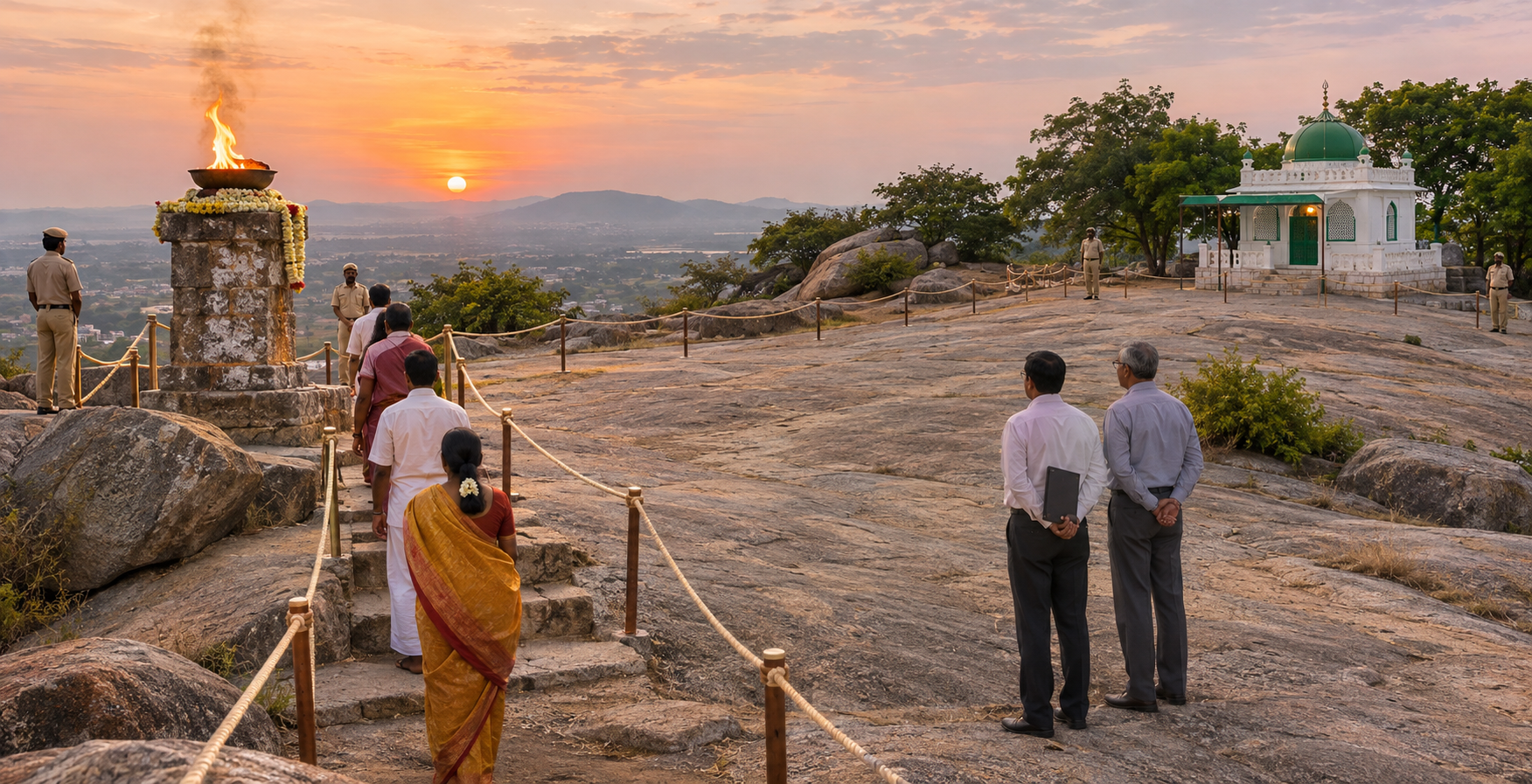
The operational command was narrow and concrete. The appointed receivers were to ensure that Karthigai Deepam was lit at the Deepathoon on November 28. Security around the temple perimeter was to pass to the CRPF. Devotees could participate at the disputed site while maintaining a distance of at least 50 metres from the Dargah on all sides.
Those safeguards should not be dismissed as incidental. They show how a court can protect a claimed right to worship without treating the surrounding religious landscape as irrelevant. Permission to conduct the Hindu observance was not permission to enter, obstruct or interfere with the Dargah.
The directions also answer the immediate question of who was responsible for implementation after the trustees’ suspension: the two receivers, operating under the Court’s mandate, were charged with ensuring that the ritual occurred. The CRPF arrangement reduced dependence on the same local administrative structure whose earlier conduct was under scrutiny.
They do not, by themselves, resolve every historical and legal issue surrounding the hill. A direction to light a lamp on a specified date is not automatically a final adjudication of the pillar’s age, original function, ownership or permanent ritual status. Nor does one supervised event create an unrestricted right of access for every future occasion. Those larger conclusions would require clear findings or later directions that are not present in the available account.
This distinction strengthens rather than weakens a pro-Dharmic position. Hindu worship should not be frustrated through administrative evasion. At the same time, a durable claim is built by stating exactly what the Court ordered, documenting compliance and avoiding historical claims that the presently available evidence cannot yet prove.
What you should verify as the case moves forward
If you are following the dispute as a devotee, citizen or commentator, use the next developments to test claims rather than merely collecting reactions. Five checks will keep your understanding accurate:
- Confirm the precise location. Verify whether the November 28 lamp was lit at the Deepathoon itself, not merely at the customary Deepa Mandapam.
- Check compliance with the protective conditions. The relevant facts include the 50-metre separation from the Dargah and whether its activities continued without disturbance.
- Look for the Chief Secretary’s affidavit. The communications demanded by the Court may clarify how implementation decisions were made and whether the concern about political direction is supported.
- Follow the contempt proceedings to their outcome. Do not turn notices into convictions or assume that every official who received notice played the same role.
- Check for later modification or clarification. A judicial direction remains binding unless the Court changes it, but later hearings may refine responsibility, access or future arrangements.
When you share an update, include the date, the location and the procedural stage. A sentence such as “the Court issued contempt notices after the Deepathoon remained unlit” is more accurate than declaring that every official has already been held in contempt. Likewise, say that the government maintains the structure is a survey stone rather than presenting that contested position as an established historical fact.
The next useful step is simple: preserve the chronology and revise your view only when the ordered act, affidavit or next hearing supplies new evidence. Dharma is not served by administrative defiance, communal provocation or careless exaggeration. It is served by protecting worship, maintaining peace and requiring public authorities to obey the same constitutional discipline they enforce on citizens.
References

Leave a Reply
You must be logged in to post a comment.