
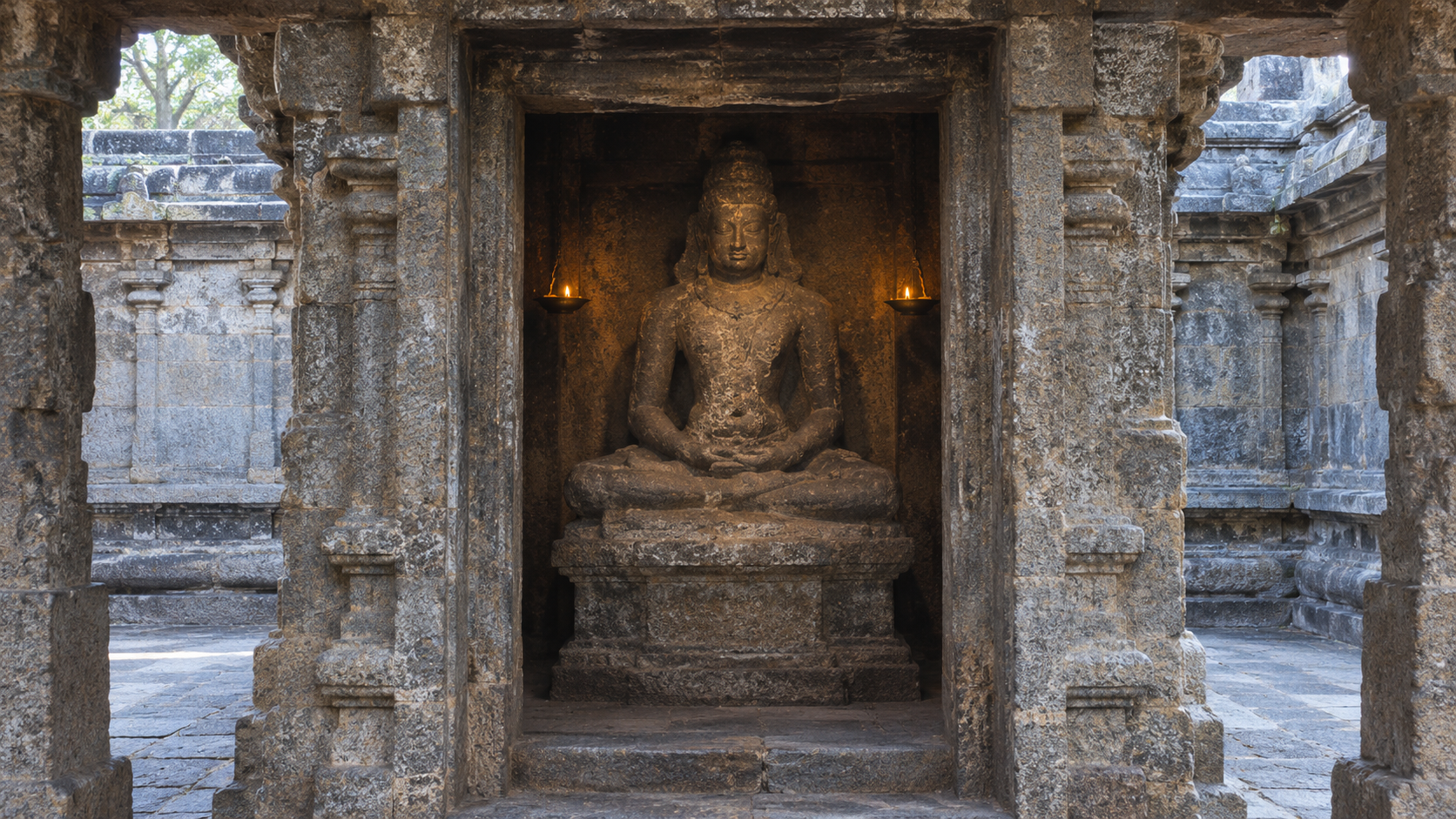
If you have encountered the name Gaulishwara at Tiruvottiyur and want to understand what makes the murti unusual, begin with a narrow set of questions: Where is it? What mode of Shiva does it embody? What does its date establish? This approach lets you recognize its significance without filling the gaps with a convenient legend.
The essential anchors are unusually precise. Gaulishwara is a rare yogic form of Shiva represented by a stone image dated to around 1067. It is housed in a shrine named after Padampakka-nayaka-deva, within the second enclosure of the Adipureeswarar Temple at Tiruvottiyur in Chennai. Keep those anchors together; separating the name from its form, setting, or date makes misidentification much easier.
Begin with the yogic identity, not an imagined legend
An unfamiliar name can tempt you to assume that Gaulishwara is a deity independent of Shiva, or that a forgotten narrative must explain the image. Neither conclusion follows from the name. The secure identification is a yogic form of Shiva, presented in the mode of a meditative ascetic.
That identification changes how you should look. A narrative image directs attention toward an event: an adversary defeated, a blessing granted, or a cosmic act performed. A yogic image directs attention first toward a condition of being. Stillness, concentration, restraint, and inward sovereignty become the interpretive centre. Divine power is not limited to visible action; it can also be expressed as perfect composure.
In iconographic language, a type is a recognizable visual conception through which a divine identity or mode is expressed. Calling Gaulishwara a rare type means that this particular conception is uncommon. It does not mean that the murti is secret, marginal, or the only example ever made. Rare and unique are different claims, and the stronger word should not be used without stronger evidence.
The name alone also does not establish its etymology, patron, sculptor, sectarian lineage, or complete ritual history. Those are legitimate questions, but they remain questions until an inscription, an authorized temple account, or securely established historical evidence answers them. Respect for Hindu heritage requires that distinction. Exaggeration does not strengthen a sacred tradition; precision does.
If you approach the murti as a devotee, iconographic study need not displace darshana. Allow worship and temple etiquette to come first. Careful observation can then deepen attention to the form through which Shiva is encountered rather than reducing the murti to an art-historical specimen.
Follow the exact trail inside Tiruvottiyur
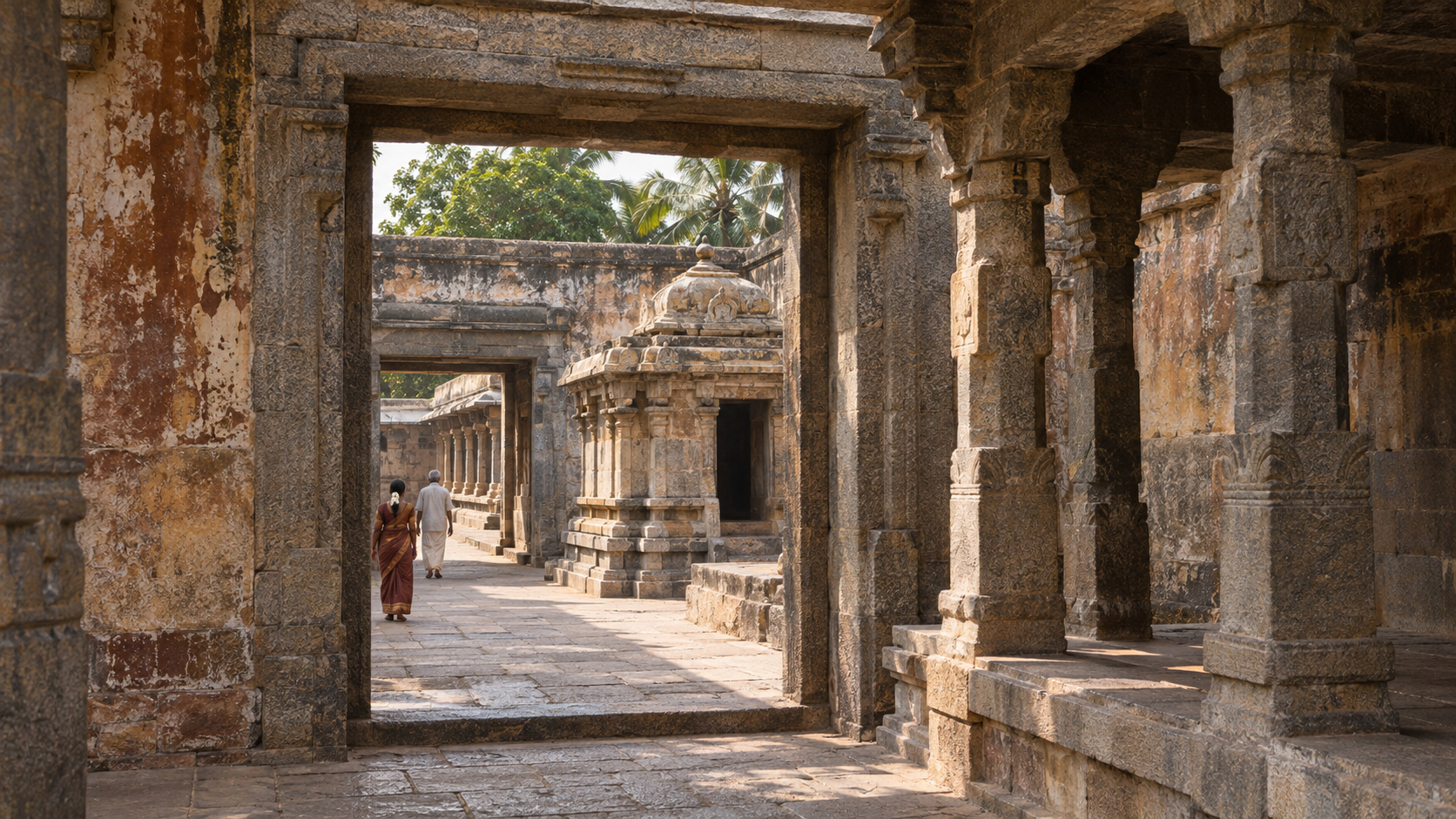
The location is part of the identification. Do not search only for a freestanding sculpture called Gaulishwara or assume that every ascetic Shiva image at the temple carries this name. Use the complete trail:
- Go to the Adipureeswarar Temple at Tiruvottiyur in Chennai.
- Ask for the second enclosure rather than asking only for a Shiva sculpture.
- Identify the shrine named after Padampakka-nayaka-deva.
- Ask for the Gaulishwara or Gaulisvara murti within that setting.
- Follow temple directions and ask permission before photographing the image. If photography is not permitted, make written observations instead.
Several English spellings can complicate a search. Try Gaulishwara and Gaulisvara, Shiva and Siva, and Tiruvottiyur and Tiruvottriyur. These variations reflect different ways of rendering Indian names in the Latin alphabet. They should be treated as search variants, not as proof that different deities, temples, or images are being discussed.
When asking for help at the temple, show the complete note rather than relying on pronunciation alone: Gaulishwara, rare yogic Shiva, Padampakka-nayaka-deva shrine, second enclosure. Each additional anchor reduces the chance that a spelling difference or unfamiliar pronunciation will send you toward another shrine.
Read the icon in layers without inventing details
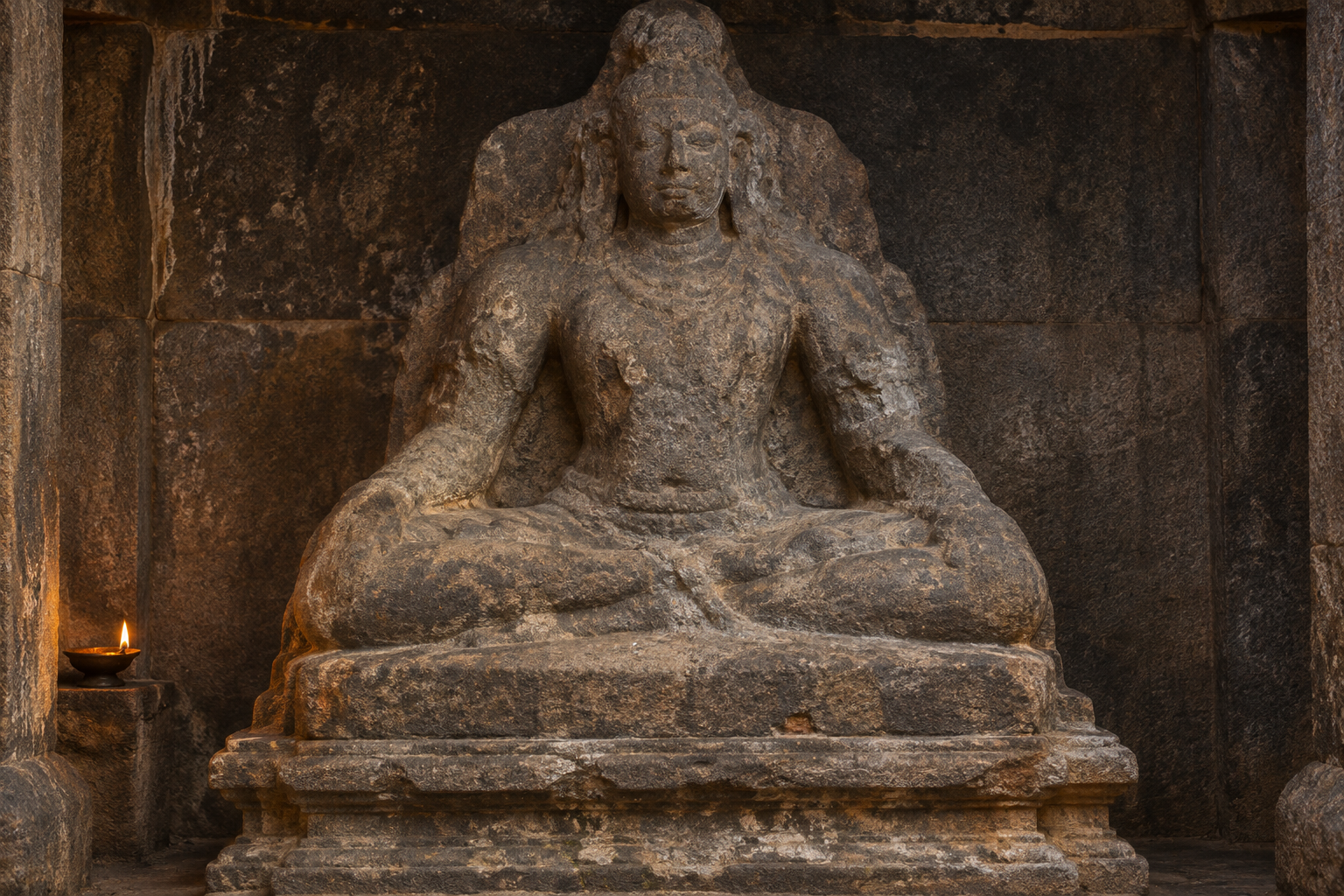
The most dependable way to study an unfamiliar murti is to separate what you know beforehand from what you can actually see. Do not begin by searching your memory for a matching illustration. Begin with the image in front of you.
- Fix the context. Record the temple, enclosure, shrine name, material, identification, and approximate date before interpreting individual features.
- Observe the whole composition. Note the posture and overall arrangement before concentrating on hands, ornaments, hair, attendants, or the pedestal. The whole form establishes the visual mode in which smaller details operate.
- Inventory only visible features. Record the number and position of hands, gestures, held objects, placement of the legs, head treatment, ornaments, accompanying figures, and base only when you can see them clearly.
- Separate sight from interpretation. A physical description belongs under observation. The religious or iconographic meaning assigned to that feature belongs under interpretation. Do not silently merge the two.
- Mark uncertainty honestly. If distance, lighting, adornment, or the angle of view conceals a feature, write “not visible” rather than “absent.” If two identifications seem possible, record both as possibilities.
A four-line field note is enough to keep your account disciplined:
- Verified: rare yogic form of Shiva; stone; dated to around 1067; Padampakka-nayaka-deva shrine; second enclosure; Adipureeswarar Temple.
- Observed: features you personally saw, described without assigning meaning prematurely.
- Interpreted: the meaning you think those visible features carry, with the reasoning stated.
- Unresolved: hidden details, uncertain identifications, the origin of the name, and questions requiring temple or inscriptional evidence.
This method matters because confident errors often begin with a real detail. A viewer sees one feature, recalls a familiar form of Shiva, and unconsciously supplies the rest. Keeping verified, observed, interpreted, and unresolved material apart prevents a partial view from becoming a complete but imaginary description.
Use the date around 1067 with care
The approximate date places the stone image within the eleventh century and confirms that this uncommon yogic conception belongs to the historical depth of Tamil Shaiva sacred art. It gives you a chronological anchor. It does not, by itself, identify the sculptor, patron, ruling dynasty, date of consecration, or subsequent ritual history.
| Defensible wording | Claim to avoid |
|---|---|
| The stone image is dated to around 1067. | The murti was consecrated in the exact year 1067. |
| It is housed in a shrine named after Padampakka-nayaka-deva. | Padampakka-nayaka-deva commissioned or sculpted the image. |
| Gaulishwara is a rare yogic iconographic type. | It is the only Gaulishwara image in existence. |
The distinctions in this table are not verbal niceties. “Dated to around” preserves approximation; “consecrated in” asserts a specific ritual event. “Named after” describes the shrine; “commissioned by” asserts patronage. “Rare” establishes uncommonness; “only” requires an exhaustive claim. Each stronger formulation needs evidence that the basic facts do not supply.
If you are preparing a label, class note, pilgrimage record, or social-media caption, a defensible version is: Gaulishwara (Gaulisvara), a rare yogic form of Shiva in stone, dated to around 1067; housed in the shrine named after Padampakka-nayaka-deva in the second enclosure of the Adipureeswarar Temple, Tiruvottiyur, Chennai.
That wording may seem restrained, but it already communicates something important. Tamil temple culture preserved more than the small group of Shiva forms most familiar through calendars and modern reproductions. Gaulishwara bears witness to a broader iconographic vocabulary in which meditation itself could be given a distinctive sacred presence in stone.
Key takeaways for visitors and writers
- Identify Gaulishwara first as a rare yogic form of Shiva and a meditative ascetic image.
- Use the complete location: Padampakka-nayaka-deva shrine, second enclosure, Adipureeswarar Temple, Tiruvottiyur, Chennai.
- Search spelling variants such as Gaulishwara and Gaulisvara, but do not mistake transliteration differences for separate identities.
- Write “dated to around 1067,” not “consecrated in 1067,” unless additional evidence establishes the ritual date.
- Keep verified facts, visible observations, interpretations, and unresolved questions in separate notes.
- Do not expand “rare” into “unique,” or a shrine name into a claim about patronage.
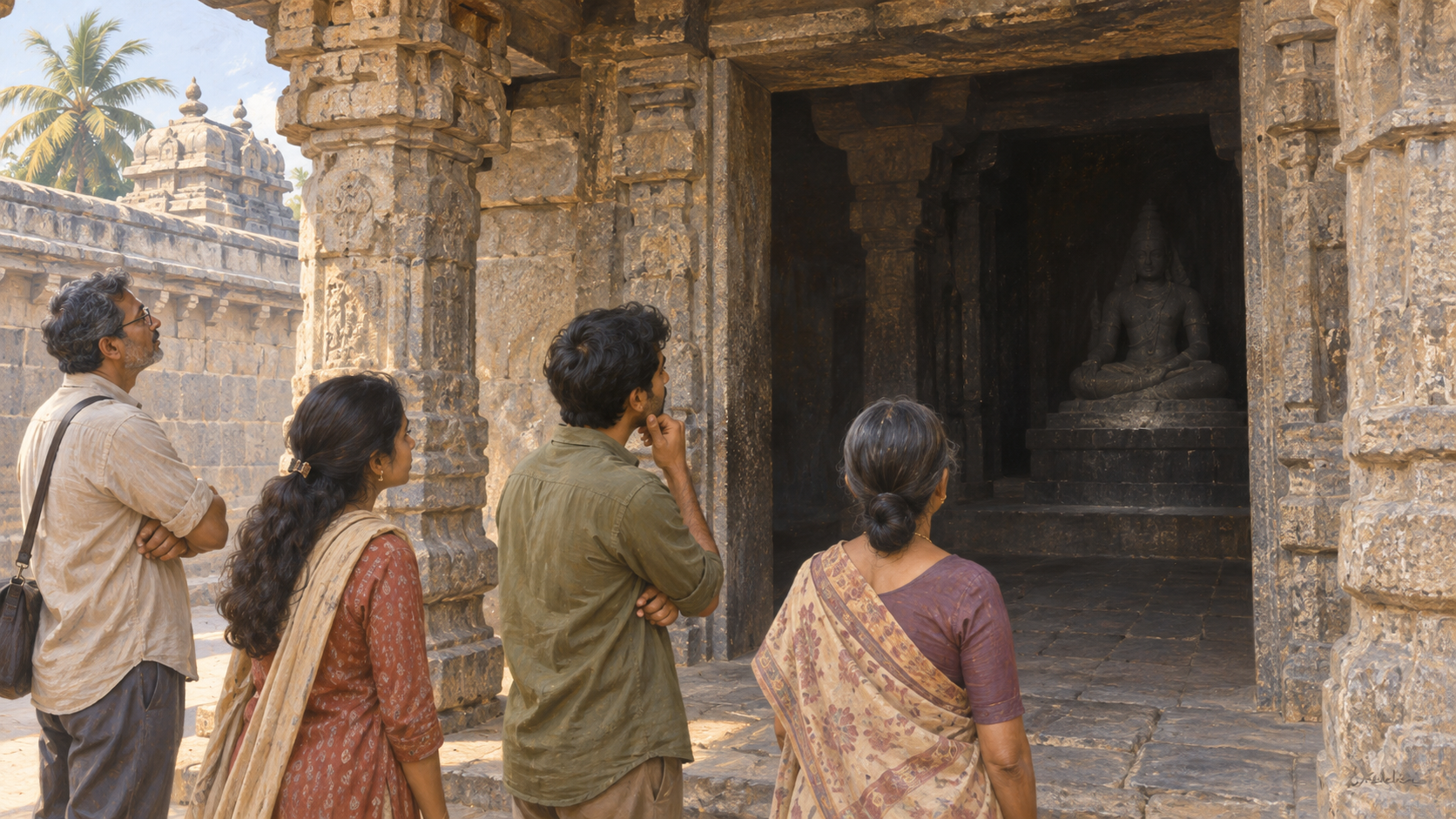
On your next visit, carry the suggested caption and the four-line field note. Then ask one focused question at the shrine: whether an authorized label, inscription, or temple account explains the name Gaulishwara. Record the exact wording of any answer and its location. That small act of disciplined attention will do more for understanding and preserving this form of Shiva than an elaborate story built beyond the evidence.
References

Leave a Reply
You must be logged in to post a comment.