
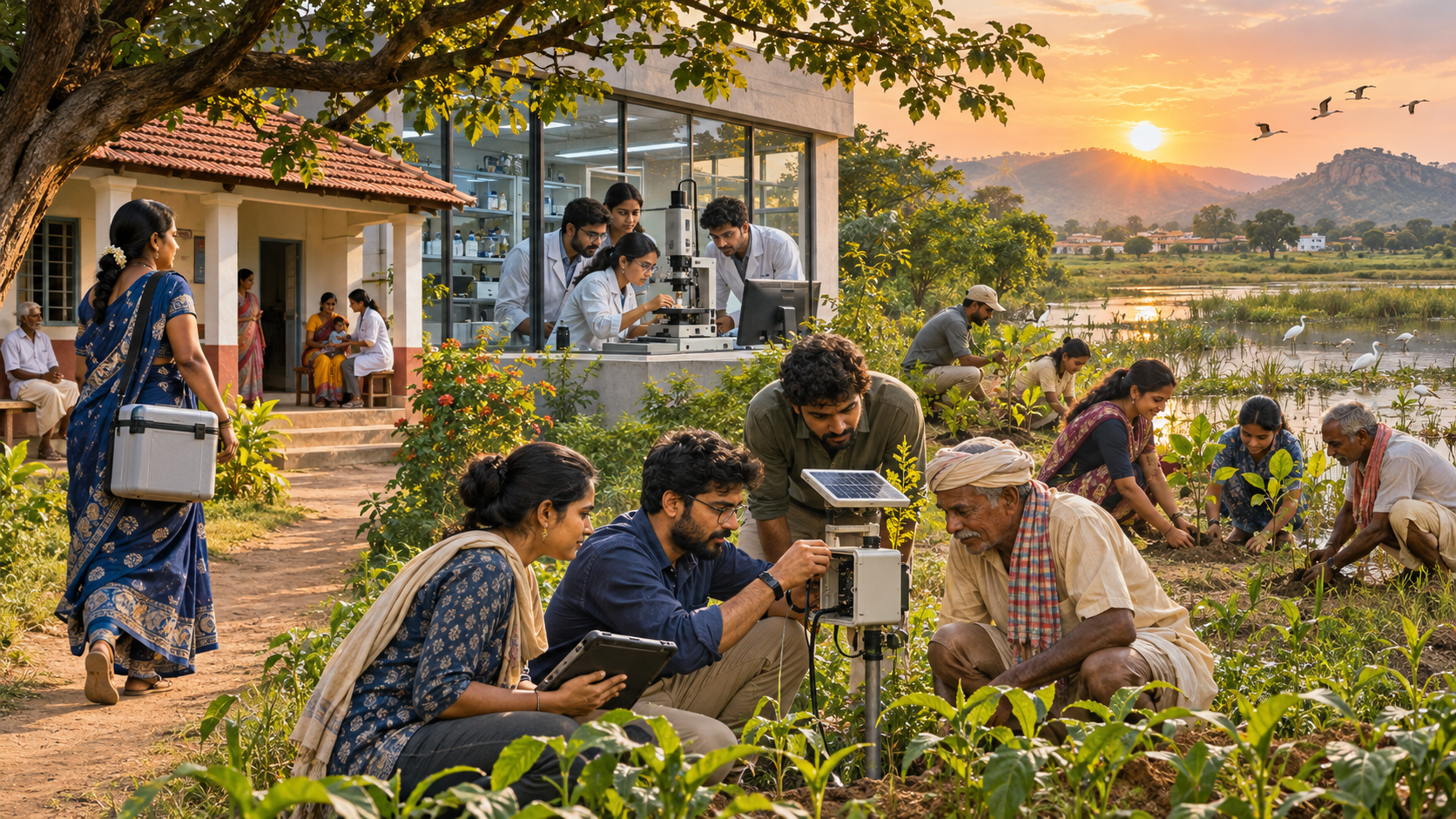
If you want reasons to feel proud of Bharat without retreating into slogans, look for capabilities that change lives. Can the nation prevent disease at scale, strengthen scientific institutions, develop technology for Bharatiya needs and restore damaged ecosystems? Concrete achievements let you answer with evidence.
The more useful question is not whether Bharat deserves pride. It is what kind of pride will help Bharat advance. Grounded pride recognises a real achievement, understands the capacity behind it and remains honest about the work still unfinished.
A stronger test for national achievement
Public applause is a poor measure of national progress. Some important advances are technical, gradual or almost invisible outside the communities they serve. A vaccination campaign, a specialised laboratory and years of wildlife monitoring may attract less attention than a single dramatic event, yet each can leave the country more capable than it was before.
Use three questions when you encounter a claim about Bharat’s success:
- What changed in the real world? Look for a delivered service, functioning facility, restored population or other identifiable result.
- What lasting capacity was built? An achievement matters more when it strengthens institutions, trains people, improves infrastructure or creates knowledge that can support later work.
- What remains unresolved? A milestone can deserve celebration without proving that the entire mission is complete.
This test protects you from two equal mistakes: dismissing genuine progress because it is incomplete, and exaggerating one milestone into a final victory. A Dharmic measure of success should reach beyond prestige. It should ask whether an achievement helps sustain life, knowledge, community or the natural world.
Four achievements that reveal national capacity
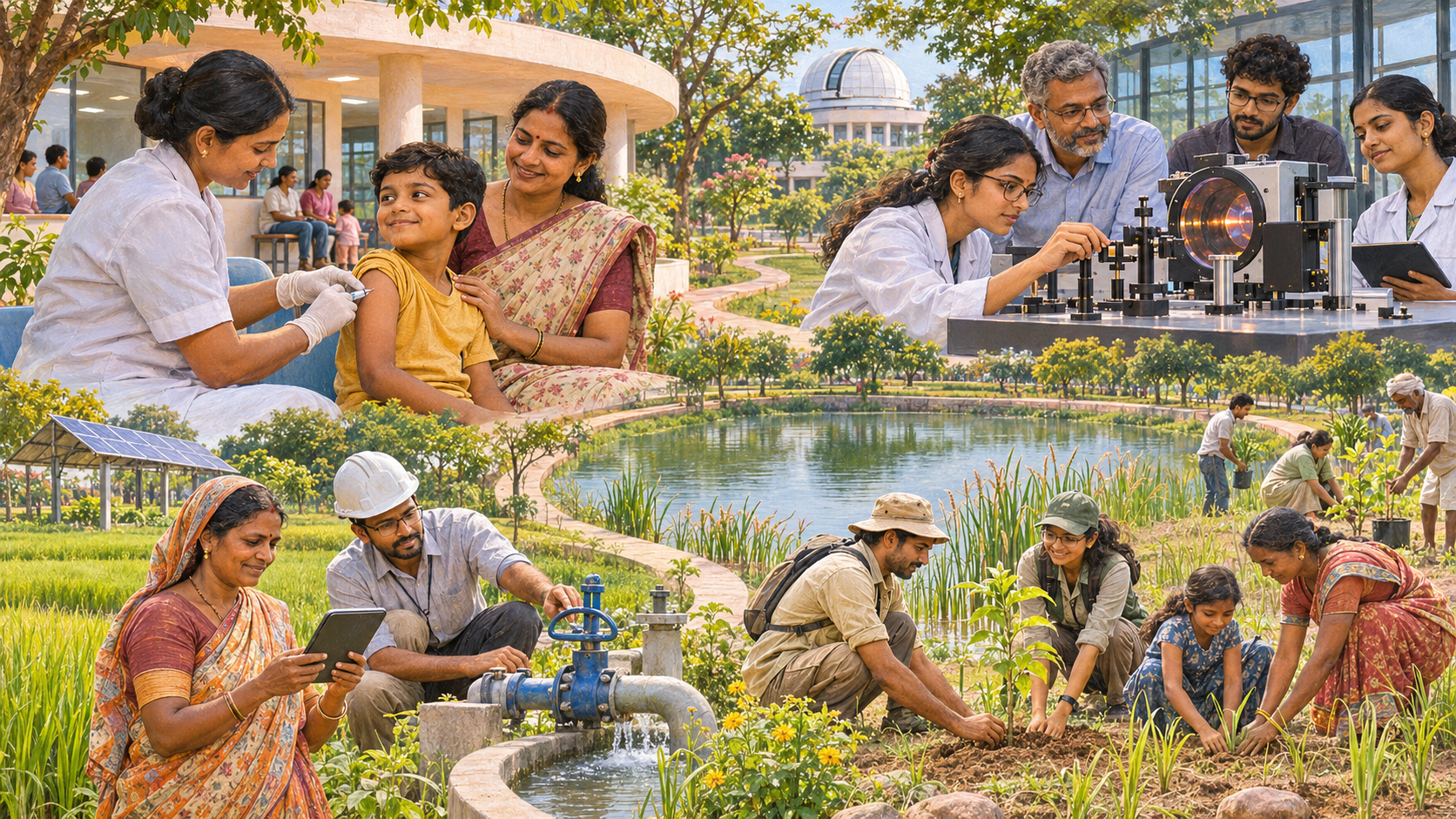
Four very different milestones show how this approach works. Each deserves pride for a particular reason, and each must be described within its actual limits.
Preventive healthcare at population scale
Bharat administered more than one crore doses of the HPV vaccine in less than nine months. The campaign is intended to protect adolescent girls against human papillomavirus, which is responsible for nearly all cervical cancer cases.
The achievement is not simply the size of the number. It combines speed, distribution, preventive care and a clearly identified population. Preventing illness requires a health system to reach people before symptoms appear, when the benefit is less visible but potentially profound.
When you discuss this milestone, preserve its boundaries: more than one crore doses, administered in under nine months, for protection centred on adolescent girls. Do not turn the national figure into personal medical advice or declare the disease problem solved. Individual eligibility and vaccination decisions should be discussed with a qualified healthcare professional. The appropriate national task is to sustain awareness and access so that early momentum becomes durable protection.
Scientific infrastructure for Bharatiya health problems
Christian Medical College in Vellore, working with the Tata Institute of Fundamental Research, inaugurated Bharat’s first dedicated Human Metabolic Chamber. It allows researchers to examine how the body uses energy and responds to food, exercise and other influences. That capability can support work concerning metabolic disorders, diabetes, obesity and nutrition.
A facility is not itself a cure or a completed discovery. Its importance lies in making rigorous investigation possible inside Bharat. That distinction matters. Celebrate the chamber as research infrastructure, then look for the knowledge, diagnostic approaches and preventive insights that researchers eventually produce with it. This is how national pride becomes scientifically literate: it honours the platform without inventing results that do not yet exist.
Artificial intelligence tied to local needs
Google committed $5 million to IIT Kharagpur for artificial-intelligence research, education and capacity building. The intended areas include Bharatiya languages, agriculture and materials science, with opportunities for students and researchers.
The important feature is not merely that a global technology company is spending money in Bharat. It is that an established Bharatiya institution can direct research capacity towards problems that matter within the country. Language diversity and agriculture are not peripheral concerns to be considered after a generic technology has been built; they can help define the work from the beginning.
Funding is an input, not an invention. Judge its eventual value by whether it develops researchers, produces serious work and creates solutions suited to Bharatiya conditions. Aatmanirbharta does not require refusing international collaboration. It requires ensuring that collaboration deepens Bharatiya capability instead of making the country permanently dependent on knowledge designed elsewhere.
Wildlife recovery that includes the habitat
The cheetah population under Project Cheetah reached 62 animals. The programme seeks to restore cheetahs to Bharat’s natural landscape after the species became extinct within the country.
The population figure is the visible milestone, but the capability behind it includes habitat management, veterinary care, monitoring and continuing conservation work. The wider significance also reaches beyond one admired animal. Protecting the cheetah draws attention to grasslands and the biodiversity that depends on them.
Do not turn 62 into a finish line. Long-term challenges remain, and a restored population must be sustained rather than merely announced. The responsible way to celebrate is to recognise both the recovery and its conditions: suitable habitat, scientific observation, animal care and durable conservation partnerships.
Civilizational confidence begins in daily life

National pride becomes shallow when heritage is treated only as a museum display. It becomes dangerous when heritage is used to reject evidence or necessary medical care. A living civilisation does something more demanding: it tests inherited practices, retains what supports life and applies it with judgement.
Ayurveda emphasises balance among the body, mind and environment, while Dinacharya organises well-being around a regular daily routine. The practices associated with that routine include waking early, physical activity, yoga, fresh and balanced food, meditation, breathing practices and regular sleep.
You do not need to adopt every practice at once or make extravagant claims for any of them. Choose one source of irregularity in your routine. You might establish a consistent sleep schedule, replace a frequently processed meal with fresh seasonal food, or make yoga, exercise, meditation or breathing a repeatable part of the day. A modest habit that you actually sustain expresses more civilizational confidence than a grand claim that changes nothing.
Traditional lifestyle practices must not be presented as substitutes for diagnosis or treatment. If you have diabetes, high blood pressure, heart disease, obesity or another health concern, seek appropriate professional care. The sound approach combines evidence-based healthcare with safe habits that support prevention and everyday well-being.
Key takeaways
- Measure national pride through identifiable outcomes and the lasting capacity built behind them.
- Distinguish an enabling investment or facility from the discoveries and public benefits it may later produce.
- Celebrate scale accurately: preserve the number, timeframe, institution and population to which a claim applies.
- Keep unfinished work visible. Honest limits make a genuine achievement more credible, not less.
- Connect civilizational pride with disciplined daily practice rather than unsupported medical or historical claims.
Turn pride into informed participation
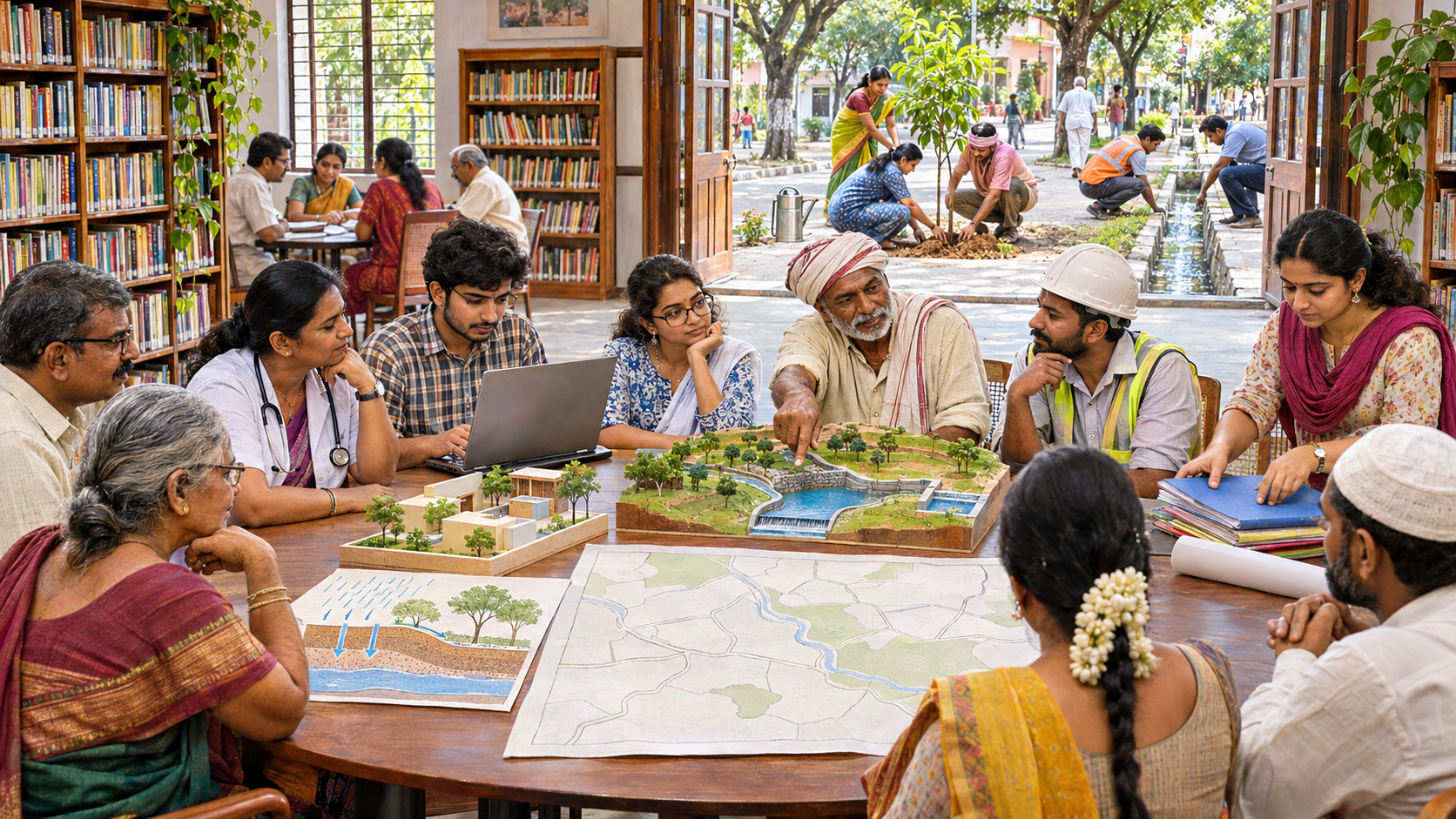
Create a simple achievement ledger for the claims you share about Bharat. For every entry, record four things: the verified milestone, the capability behind it, the public or ecological benefit and the next evidence you would need to see. If one of those fields is empty, pause before forwarding the claim.
This habit changes how you participate in national life. You stop treating pride as a contest over who can make the largest assertion. You start identifying institutions worth watching, programmes worth sustaining and personal practices worth adopting.
Begin with one achievement described here. Explain it accurately to one other person, include what remains unfinished and choose one action connected to its purpose. Pride earns trust when it is precise, and it serves Bharat when it leads to responsibility.
References

Leave a Reply
You must be logged in to post a comment.