

If you are trying to decide whether the Puri Ratna Bhandar inventory deserves confidence, do not begin with rumours about weight, gemstones, or monetary value. Begin with a harder question: can every sacred object be identified, handled according to tradition, traced through the entire process, and returned to seva in a safer condition?
The exercise announced for March 25, 2025, after an interval of 48 years was intended to combine ritual discipline, administrative accountability, security, and conservation. Because the final procedures and outcomes remained subject to the competent authorities and servitor bodies, devotees should distinguish promised safeguards from safeguards whose completion is later documented.
The right question is not “How much is it worth?”
The Ratna Bhandar is often discussed as a treasury, but that word can mislead. Its ornaments are not merely accumulated valuables. They embody seva-dana, royal patronage, artisan knowledge, and the offerings of generations of devotees. Many remain connected to the ritual appearance of the deities and acquire their fullest meaning when used in a Besha.
The treasury is commonly described through the Bahar Ratna Bhandar and Bhitar Ratna Bhandar, or outer and inner chambers. Ornaments associated with periodic Beshas, including the revered Suna Besha, are traditionally kept there. An inventory that treats a crown, necklace, clasp, or embedded stone as an isolated commodity can therefore miss part of what must be preserved: its place within a complete ritual ensemble.
This changes the standard by which you should judge the exercise. A large published total would attract attention, but it would not by itself establish good stewardship. The stronger result is a record that connects each object to its ritual identity, physical condition, authorised custodians, storage history, and related components.
Key takeaways
- A count is only the beginning. Each object or complete Besha ensemble needs a stable identity, images, condition notes, and a documented location.
- Trust depends on an unbroken chain of custody, witnessed movements, tamper-indicating seals, and signatures from more than one responsible party.
- Ritual propriety is part of accuracy. An ornament separated from its traditional name, use, or matching components has been incompletely recorded.
- Useful transparency means publishing aggregate counts, object types, methods, and conservation outcomes while withholding details that would weaken temple security.
- The lasting test is whether the first inventory leads to safer storage, scheduled verification, trained handling teams, and fewer emergency openings.
What a defensible inventory record must contain
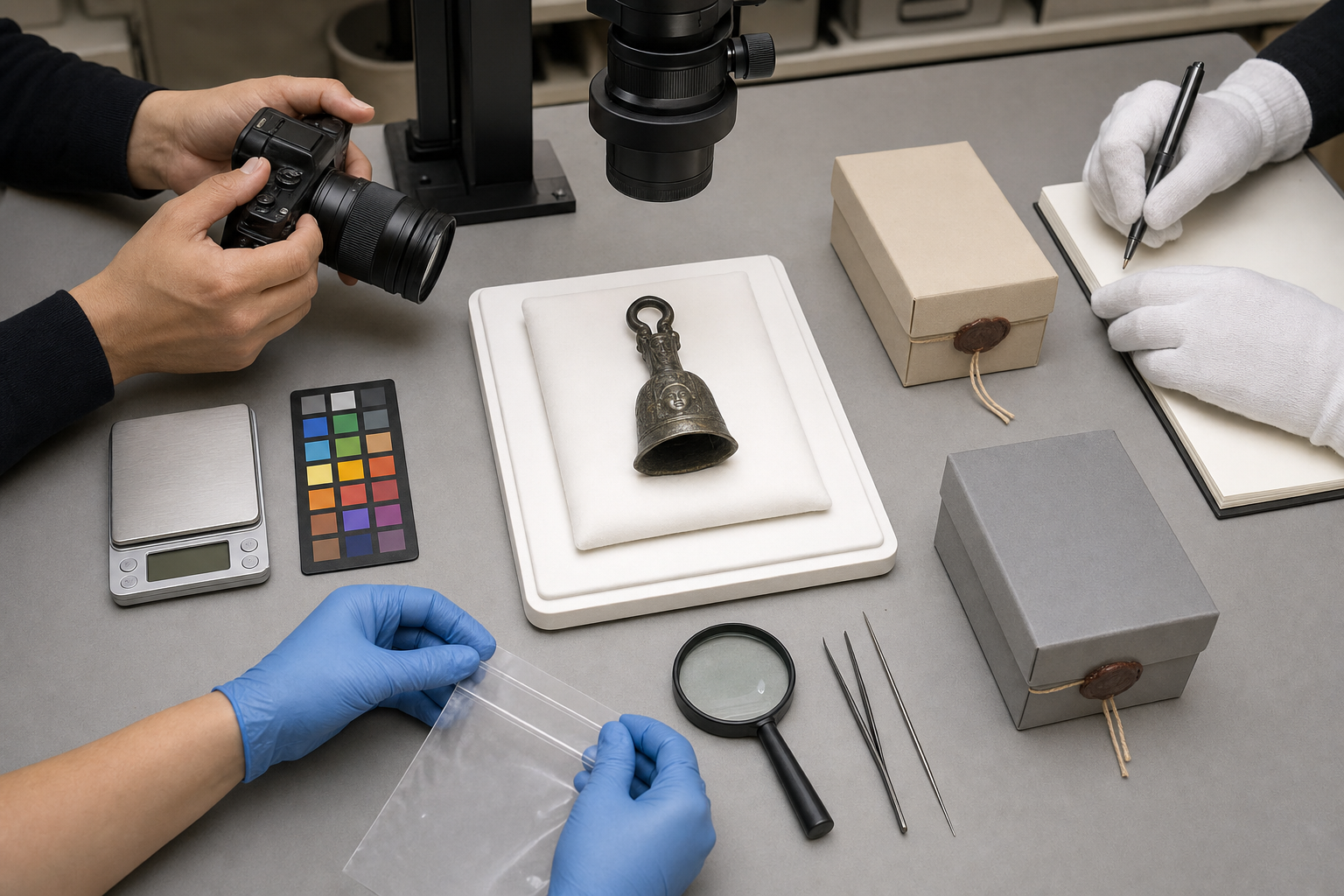
A defensible inventory should allow a future authorised team to answer five questions without relying on memory: What is this object? Which ensemble does it belong to? What condition was it in? Who handled or moved it? Where was it secured afterward?
That requires more than a handwritten line such as “one gold necklace.” Descriptions of that kind become ambiguous when several ornaments have similar names or appearances. A practical record should be built in layers:
- Assign a stable identity. Record whether the entry represents a complete Besha ensemble, a discrete object such as a mukuta, hara, kundala, or kankana, or an attached component such as a clasp or fastener. This prevents one set from being mistaken for several unrelated pieces.
- Preserve the ritual context. Enter the traditional name, deity association, Besha or ceremonial function, matching pieces, and handling requirements known to the authorised servitors. The inventory must retain the relationships that make the object usable in worship.
- Create a repeatable visual record. Photograph the front, reverse, oblique views, and identifying details. A scale bar and calibrated colour reference make later comparisons more reliable than ordinary photographs taken under changing light.
- Describe materials without overclaiming. Record visible material classes such as gold, silver, or alloy and identify gemstones only to the level supported by observation or authorised testing. Portable X-ray fluorescence may help characterise surface alloys, while reflectance spectroscopy may assist with gemstones, but such non-destructive tests should occur only with explicit permission and servitor concurrence.
- Document condition, not just existence. Note deformation, loose settings, weak fasteners, surface changes, earlier markings, and available storage history. These observations turn an audit into a conservation plan.
- Join the object record to the custody record. Every removal, examination, transfer, and return should carry a time, place, purpose, witness entry, seal reference, and cross-signature. An object photograph without this movement history cannot prove continuous custody.
The distinction matters because the last comprehensive inventory is widely placed in the late 1970s, while an attempted assessment in 2018 raised concerns about key custody and record-keeping. A new exercise should therefore reconcile old and new entries item by item. A matched entry, a changed description, and an unresolved difference are three different outcomes; they should not be collapsed into a single total or treated as interchangeable evidence.
An unresolved entry is not, by itself, proof of theft or misconduct. Names change, sets can be described differently, and old records may lack adequate images. The responsible response is to preserve the discrepancy, document the search and comparison process, and require authorised resolution. Speculation should not replace evidence, but uncertainty should not be erased for convenience either.
Ritual authority and conservation must work together
Puri Srimandir is a living temple, not a museum collection placed outside worship. Its association with the 12th-century Eastern Ganga dynasty gives the Ratna Bhandar major historical importance, but antiquity does not cancel living custom. The ornaments remain situated within Niti, seva, and the hereditary knowledge of the temple’s servitor communities.
The administrative structure reflects that reality. The Shree Jagannath Temple Administration coordinates management under the Shree Jagannath Temple Act, 1955. The Chhatisa Nijoga and relevant servitors retain customary ritual responsibilities, while the Archaeological Survey of India has a conservation remit for the monument. District authorities, law-enforcement personnel, conservation specialists, and designated observers can provide additional checks without replacing the servitors’ ritual competence.
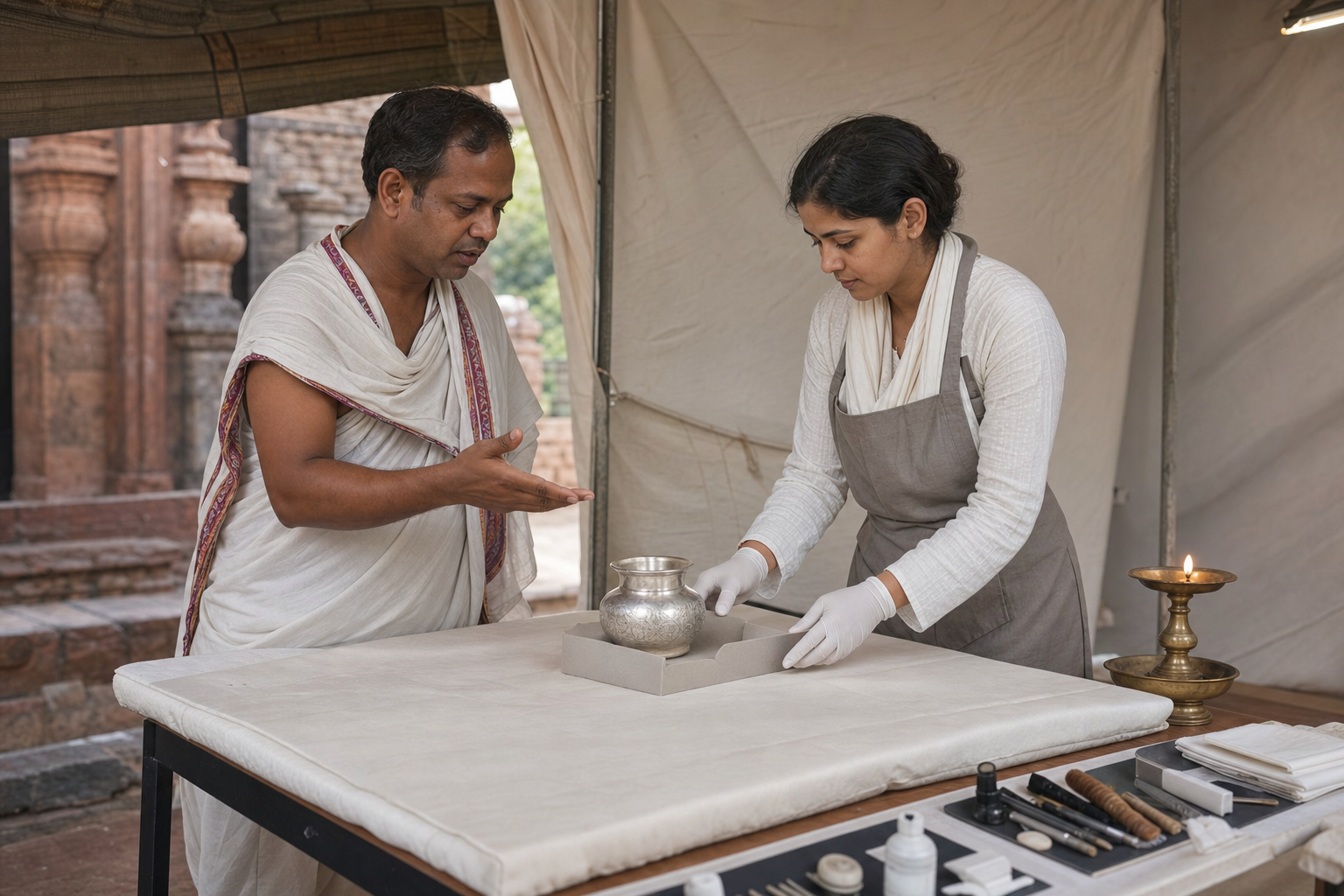
This is not a contest between faith and professional practice. The Niti schedule determines when work can occur. Servitors establish how sacred ornaments may be touched, positioned, and returned. Conservation personnel identify vulnerable materials, suitable supports, and environmental risks. Administrators maintain permissions, records, and custody controls. Each protects something the others cannot protect alone.
A careful working sequence should therefore look like this:
- Confirm the authorised time window against the Niti schedule and record all participants before entry.
- Open locks, doors, or sealed containers in the prescribed ritual manner, with witness logs and time stamps.
- Move only the object or container being documented into a controlled examination area prepared with sacred cloth, inert contact materials, and suitable supports.
- Complete identification, photography, condition notes, and any specifically authorised non-destructive examination with as little handling as possible.
- Place the object in an appropriate support or container, record its exact return, apply the required tamper-indicating seal, and obtain cross-signatures.
- Close the working session with a reconciliation of every object, container, person, device, and record that entered or left the controlled area.
The condition record should then drive practical improvements. Humidity buffering, inert storage media, soft supports that reduce stress on metalwork, and integrated pest management can extend the ritual life of vulnerable objects. The point is not to make ornaments permanently untouchable. It is to reduce avoidable deterioration so they can continue to serve their sacred purpose.
Odisha’s traditional goldsmiths, textile specialists, and other craft knowledge holders also matter. Their knowledge can help explain construction, attachments, sacred textiles, and historic repair methods. Their participation should be governed by the same authorisation and documentation as every other intervention; inherited skill is most valuable when it is preserved alongside a clear conservation record.
Transparency should inform devotees without weakening security
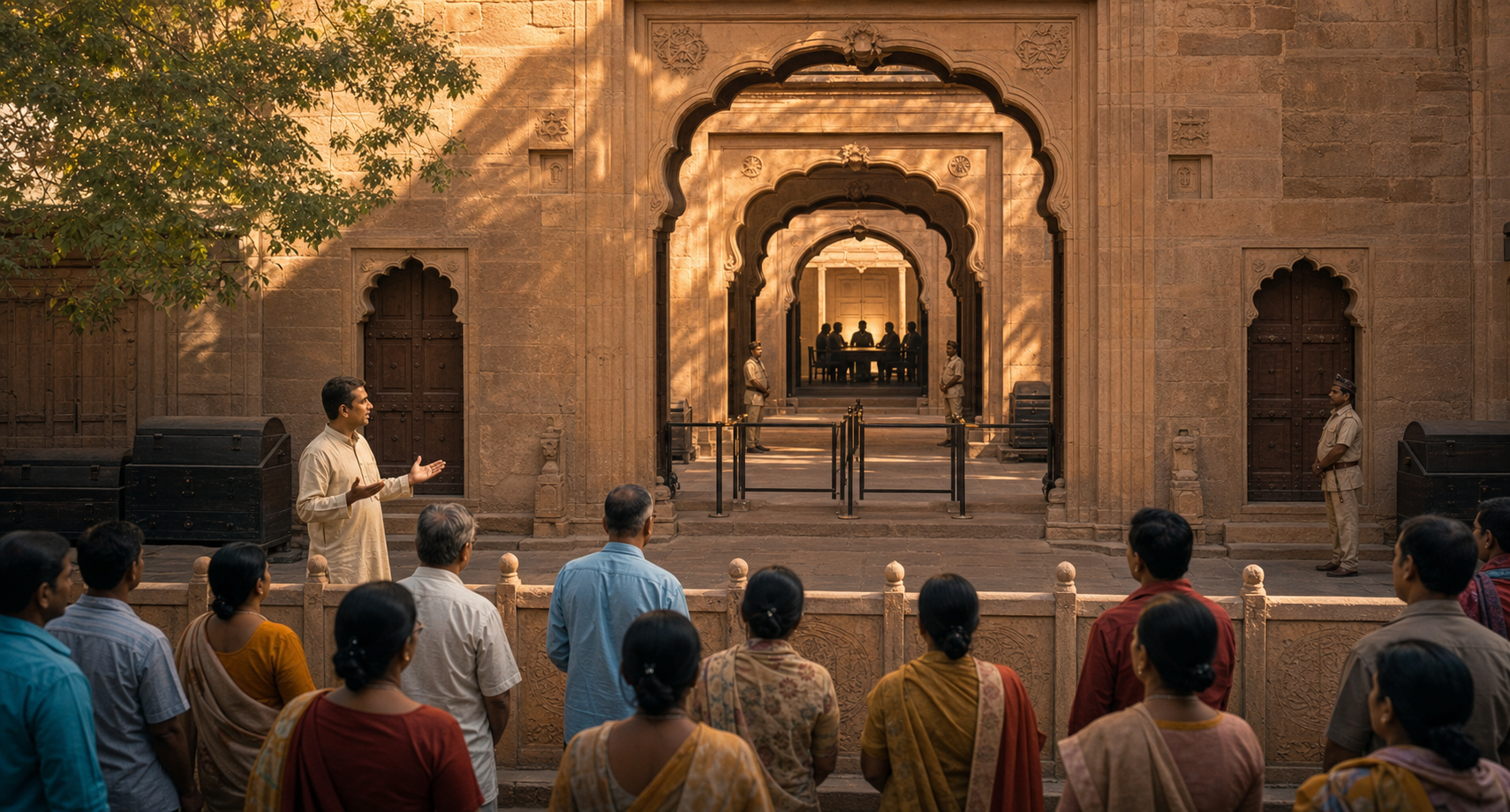
Calls for transparency are legitimate, but complete public disclosure is not the same as accountability. Publishing sensitive chamber layouts, exact item locations, detailed security arrangements, or valuations could create new risks. Withholding those details does not excuse silence about the method or outcome.
A useful public report can state the number of verified objects and ensembles, the broad typologies represented, the method of reconciliation, the number of entries requiring further examination, the main condition categories, and the conservation work authorised. It can also state which bodies witnessed the process and whether the required signatures, seals, images, backups, and closing reconciliations were completed.
Restricted records can retain the item-level images, precise storage locations, detailed access information, and other facts that authorised custodians need but the public does not. This separation gives devotees evidence of performance without turning transparency into a map of vulnerabilities.
Physical security and record security must reinforce each other. The planned controls included limited-access zones, continuous CCTV with redundant storage, personnel checks, device restrictions, tamper-indicating seals, and uninterrupted movement logs. Yet cameras and guards cannot correct an editable or fragmented inventory database. The information itself needs a verifiable custody history.
A write-once, read-many record, often abbreviated as WORM, prevents ordinary users from silently overwriting the original entry. Cryptographic hashes make later file changes detectable when the hash is checked. Controlled permissions limit who may view or add information. Two offline backups in separate locations reduce the risk that one failure destroys the record. Cross-signatures from temple administration, servitor representatives, and authorised observers prevent trust from resting on one office or one individual.
None of these controls works merely because its name appears in a protocol. A later accountability statement should confirm that the records were actually sealed, hashed, copied, signed, and reconciled. Devotees need evidence of completed controls, not only a list of intended technologies.
Use six questions to assess the next official update
When a new official statement appears, you do not need access to the inner chamber to evaluate whether it advances accountability. Test it against six questions:
- Was identity preserved? Does the update distinguish complete ritual ensembles, individual ornaments, and attached components, or does it offer only an undifferentiated total?
- Was the old inventory reconciled? Does it explain how earlier descriptions were matched to current objects and how unresolved entries will be investigated?
- Was custody continuous? Does it confirm witnessed opening and closing, timed movement logs, tamper-indicating seals, controlled access, and cross-signatures?
- Was condition converted into action? Does it identify storage or conservation priorities and state who is responsible for completing them?
- Were the records made durable? Does it confirm protected originals, cryptographic verification, controlled permissions, and separate offline backups?
- What happens next? Is there a measured verification cycle, a living risk register, handling training, and a process for updating records after an ornament is used, repaired, or rehoused?
A statement that answers only the first question is a count, not a complete accountability result. A statement that answers all six shows that the opening has been converted into an enduring system of stewardship.
The Ratna Bhandar should not have to wait another long interval for uncertainty to accumulate. Save these questions and use them when authorities publish the next verified update. Ask for enough information to establish stewardship, support conservation, and protect ritual continuity, while refusing the spectacle of speculative valuation. That is how devotees can defend both accountability and sanctity.