
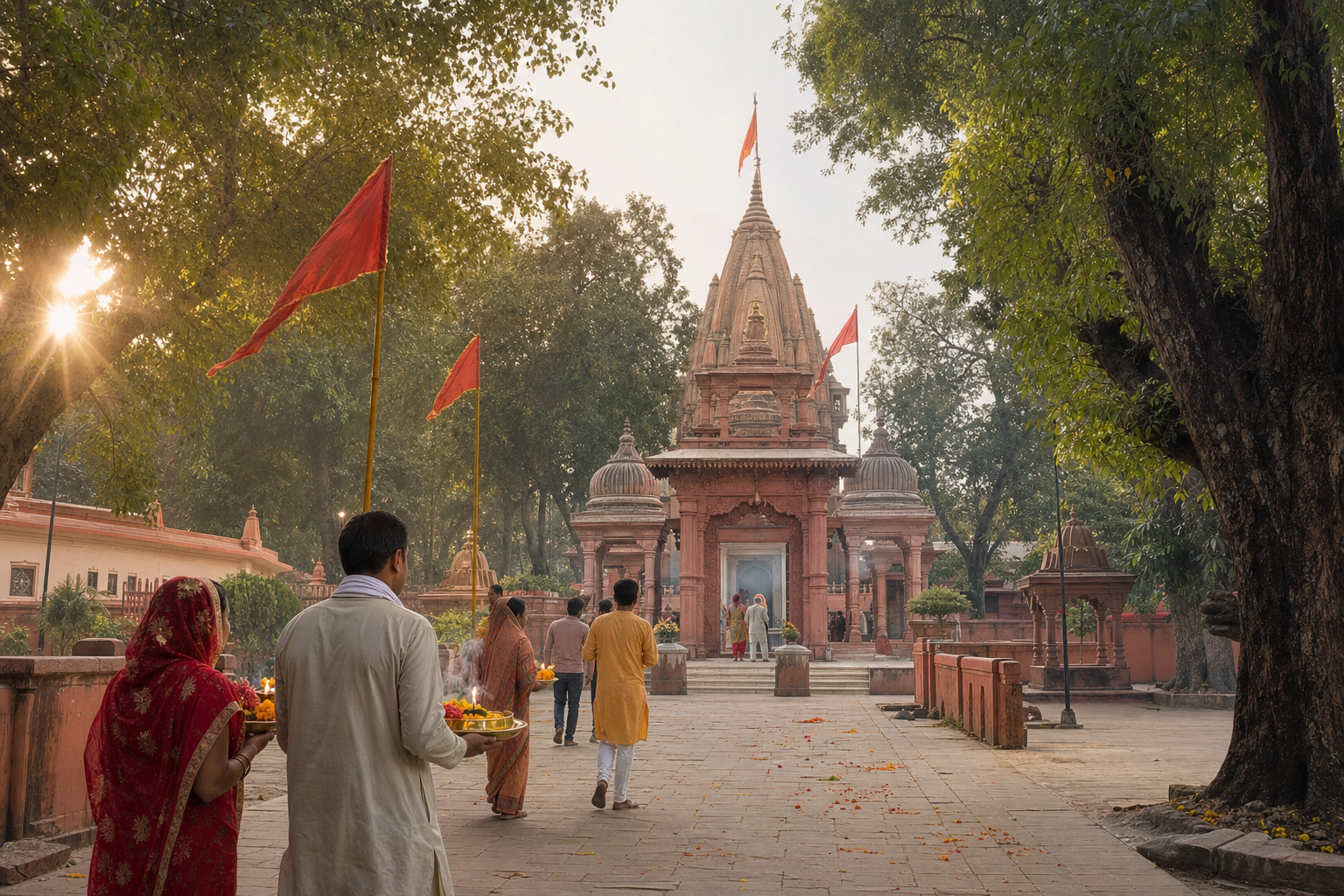
If you are deciding whether Lalita Devi Temple deserves a dedicated pilgrimage, the useful answer is yes—but approach it as the spiritual doorway to Naimisharanya, not as an isolated stop. The temple’s importance comes from living worship as a Siddha Shakti Peeth, the sacred memory of the surrounding forest, and its place within a larger circuit of tirthas.
This approach also keeps you from reducing the shrine to a disputed list or an unsupported claim about which part of Sati fell here. Shakti Peeth enumerations and local origin narratives vary. What remains steady is the devotional reality: worshippers come to Lalita Devi for darshan, protection, reassurance, and spiritual resolve.
Key takeaways for your visit
- Lalita Devi Temple is honoured in living regional practice as a Siddha Shakti Peeth, even though classical Peeth lists are not uniform.
- Naimisha appears in a Devi Bhagavata verse as the abode of Lingadharini, while Lalita Devi is named at Prayag in the same sequence. Preserve that distinction when explaining the temple’s textual standing.
- Make time for the wider Naimisharanya kshetra, especially Chakratirtha, rather than treating temple darshan as the entire pilgrimage.
- Choose an ordinary period and an early start if you want greater quiet. Chaitra and Sharadiya Navratri bring more intensive participation.
- Darshan, arati, simple japa, attentive silence, and seva are sufficient. Lineage-specific practices should be undertaken only with appropriate guidance.
Read the Shakti Peeth identity in three layers
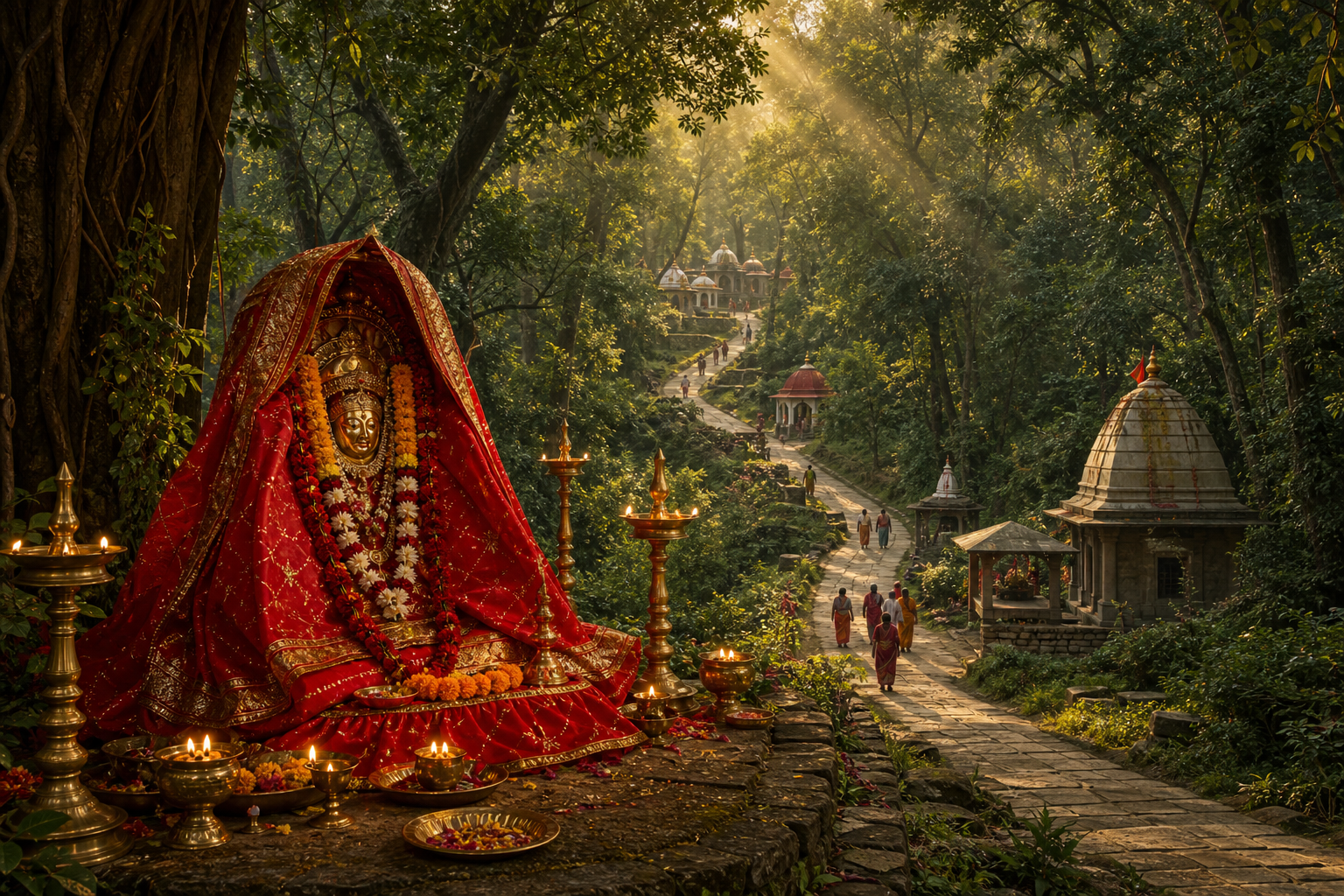
A Shakti Peeth is more than a location on a religious map. It is a place where devotees recognise the Goddess’s presence as especially concentrated and accessible. Such recognition is sustained through worship, inherited memory, pilgrimage, and the spiritual confidence of a community.
There is no single universally controlling enumeration. Different traditions speak of four, eighteen, fifty-one, or fifty-two Peethas. That variation matters because a numbered list is often mistaken for the whole doctrine. It is better to ask how a shrine lives within its tradition than to assume that one modern checklist can settle every local claim.
The living status of the temple
At Naimisharanya, the first layer is straightforward: devotees approach Lalita Devi Temple as a powerful, established seat of Shakti. Daily worship, darshan, arati, festival observance, japa, and collective devotion keep that identity alive. Its status is therefore not merely an archaeological or literary proposition. It is a continuing religious relationship between the Goddess, the kshetra, and its pilgrims.
This is the most useful place to begin if someone asks whether the shrine is a real Shakti Peeth. You can answer that it functions as a Siddha Shakti Peeth in living practice, while acknowledging that textual lists differ. That wording is both faithful and precise.
The textual geography and its exact wording
The second layer requires careful reading. In a widely invoked Devi Bhagavata sequence, Naimisha is associated with Lingadharini. Lalita Devi is named at Prayag within that same sacred itinerary. The verse therefore places Naimisha firmly within the Goddess’s many-centred geography, but it does not simply equate every name and location in the sequence.
This distinction does not weaken Lalita Devi Temple. It prevents a devotional truth from being defended with an imprecise textual claim. Naimisharanya’s temple identity is carried by local tradition and worship; its broader Shakta standing is reinforced by the presence of Naimisha in sacred geography. These claims support one another without being identical.
The name Lingadharini, meaning the one who bears or upholds the linga, points toward the inseparability of Shiva and Shakti. The name Lalita carries another resonance: the graceful, auspicious, compassionate, and sovereign Goddess, closely associated with Tripurasundari in Sri Vidya traditions. Together, the names help you notice a theological harmony rather than a rivalry—Shiva is not complete without Shakti, and the Goddess’s tenderness is not separate from her sovereignty.
That resonance should not be turned into a claim that every rite at the temple follows one Sri Vidya system. A divine name can open a theological horizon without proving adherence to a single ritual manual or lineage. If your own practice belongs to a particular sampradaya, follow its discipline rather than improvising esoteric worship from the name alone.
The varying stories of origin
The third layer consists of local narratives connecting Naimisharanya with Sati’s cosmic dismemberment. Versions differ across regions and enumerations, and the available tradition does not justify presenting one particular body-part claim as uncontested fact. If a priest or local devotee gives you a specific version, receive it as that community’s sacred account and ask which tradition it follows.
You do not have to choose between reverence and accuracy. Hindu sacred geography has long accommodated multiple tellings, local manifestations, and lineage-specific mappings. The stable centre is the presence of the Devi; the narratives explain and deepen that presence from different inherited perspectives.
Plan for the whole Naimisharanya kshetra
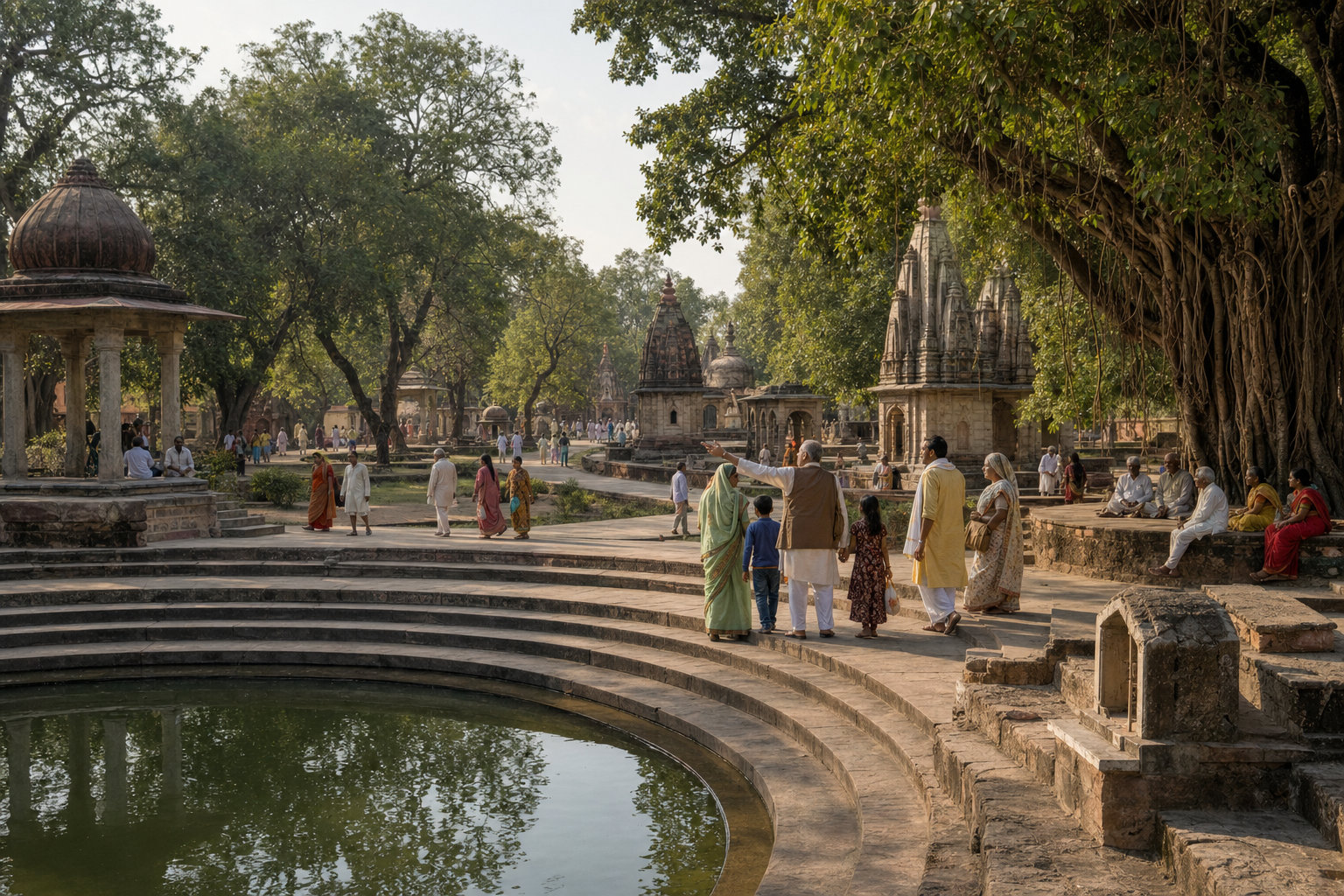
Lalita Devi Temple stands in Naimisharanya in Uttar Pradesh’s Sitapur district, with road access from Sitapur and Lucknow. Yet reaching the temple is only the logistical beginning. Naimisharanya is remembered as a forest of sacred learning, where sages assembled for recitation and the transmission of Puranic and dharmic knowledge. A visit becomes more intelligible when you allow that wider identity to shape your route.
Chakratirtha is especially important. Local sacred memory connects it with the divine chakra that marked the holy place. Temple and tirtha therefore express two sides of Naimisharanya: the personal encounter of darshan and the cosmic marking of sacred space.
A practical sequence for the day
- Choose your purpose before travelling. Decide whether you primarily seek darshan, quiet japa, participation in arati, study of the kshetra, or a broader tirtha circuit. That choice should determine how much time you reserve.
- Confirm local timings close to the visit. Arati schedules and access arrangements can vary. Treat an unverified online timetable as provisional, especially during major observances.
- Begin early if contemplation matters to you. Dawn is associated with a quieter atmosphere around the shrine. An early arrival gives you a better chance to sit attentively before the day’s movement intensifies.
- Give Lalita Devi darshan its own time. Do not turn the sanctum into a checkpoint. Complete the darshan, step aside for others, and spend your reflective time where temple arrangements permit it.
- Include Chakratirtha and other associated sites as time allows. If your schedule is tight, Lalita Devi Temple and Chakratirtha form a more coherent pilgrimage than a hurried attempt to collect many locations.
- Leave room for the place’s actual rhythm. Bells, incense, queues, collective hymns, and unexpected pauses are part of a living tirtha. A rigid itinerary can make you impatient at precisely the moment when the pilgrimage asks for attention.
Ordinary periods and Navratri offer different experiences
Both Chaitra Navratri and Sharadiya Navratri bring heightened worship at the temple. Choose those periods if collective devotion and festival intensity are central to your sankalpa. Expect less stillness and allow more flexibility around darshan.
Choose an ordinary period if you want to notice the contemplative character of Naimisharanya more clearly. Neither experience is spiritually superior. One foregrounds the gathered energy of the community; the other may give you more space for silence, study, and unhurried movement through the kshetra.
If you are extending a North Indian pilgrimage, Naimisharanya can also be understood within a connected sacred geography that includes Kashi and Prayag. Avoid compressing those places into a rushed sightseeing route. Each has its own ritual rhythm, and the value of linking them lies in sustained darshan and reflection rather than the number of shrines completed.
Keep worship simple, rooted, and respectful
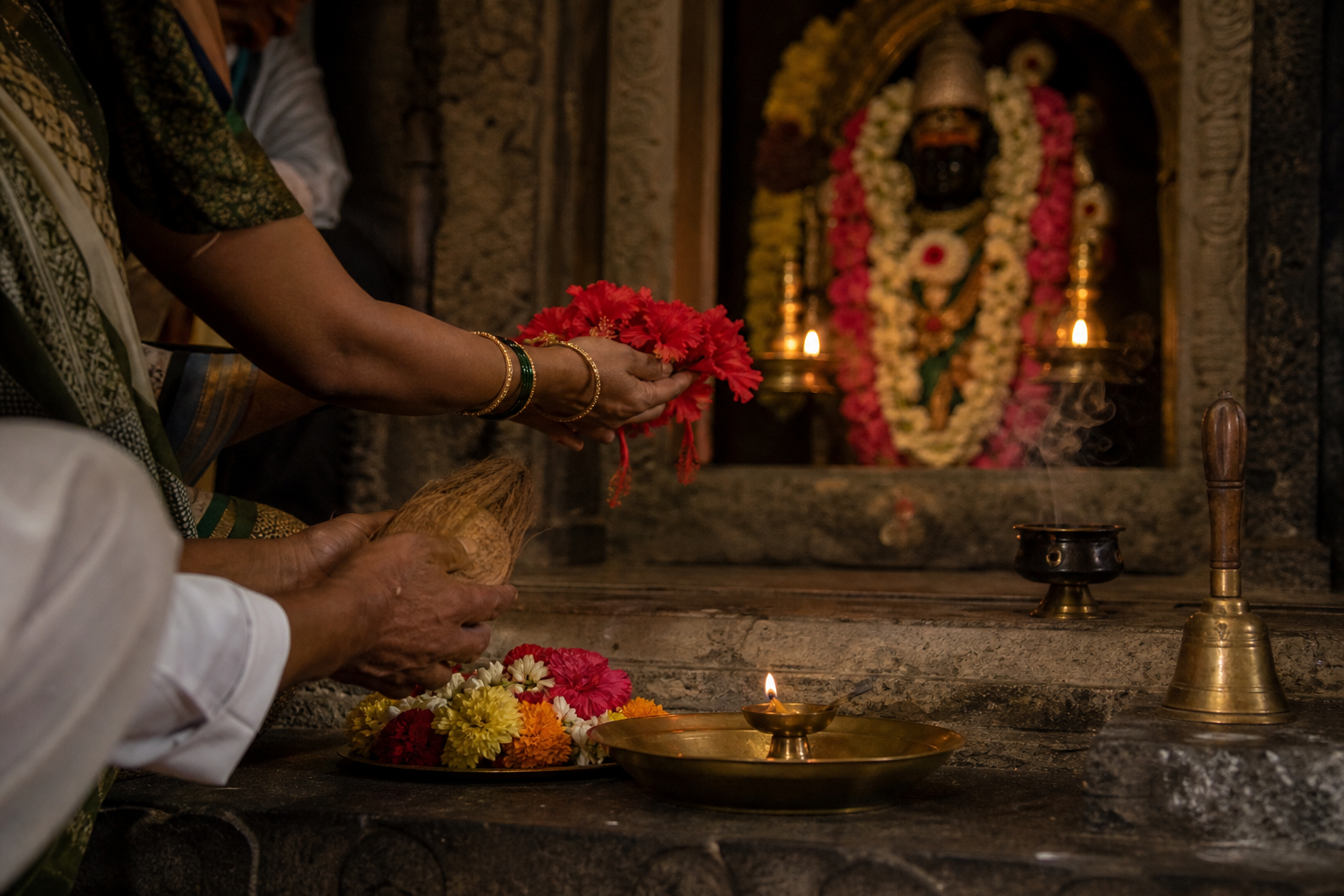
You do not need an elaborate private ritual to approach Lalita Devi. Darshan, participation in the temple’s arati, a familiar Devi stotra or nama-japa, and a clear prayer are substantial acts when performed with attention. If you make a sankalpa, state it plainly: what are you asking the Devi to help you see, endure, correct, or complete?
Japa is part of the shrine’s devotional atmosphere, but use a mantra received through your family or spiritual lineage when possible. The association of Lalita with Sri Vidya should not be treated as permission to adopt restricted or esoteric practices without instruction. Devotion does not become deeper merely because a ritual is more complicated.
Kumari puja is observed in some lineages, particularly within wider Goddess worship, but it is not an obligation for every visitor. Participate only where it is properly organised and guided. The same principle applies to offerings: follow the temple’s current practice rather than carrying assumptions from another shrine.
Respect for the kshetra is itself a form of seva. Keep your voice low near the sanctum, obey photography restrictions, avoid obstructing worshippers, and follow local conservation measures. If annadana or another organised service is available, support it through the recognised arrangement. Spend with local households and vendors fairly, but do not bargain in a way that treats a pilgrimage community as merely a tourist market.
Naimisharanya can also be approached with respect by visitors from Buddhism, Jainism, Sikhism, and other Dharmic paths. Shared values such as self-discipline, reverence for life, contemplation, hospitality, and seva provide genuine points of recognition. Those affinities need not erase theological differences. Lalita Devi Temple remains a Hindu place of worship, and honouring its particular practice is part of meaningful inter-Dharmic respect.
Carry the forest of learning home

Naimisharanya’s memory as an assembly place of sages gives you a useful measure for the pilgrimage: the journey is incomplete if nothing in your daily conduct changes. Darshan should lead toward steadier attention, sacred learning, and service—not merely the possession of photographs or a claim that you visited a Shakti Peeth.
Before leaving, choose three modest continuations. Keep one daily practice, such as a short period of nama-japa. Begin one act of study connected with the Devi or the Puranic tradition of Naimisharanya. Commit to one form of seva that is realistic enough to sustain. Small disciplines carried forward honour the tirtha more deeply than an ambitious vow abandoned after returning home.
If you are planning the journey now, make one decision first: do you want the concentrated collective devotion of Navratri or the quieter cadence of an ordinary visit? Then confirm local timings, reserve time for Chakratirtha, and arrive with one clear sankalpa. That will let you meet Lalita Devi not as an item on a list, but as the living centre of Naimisharanya’s worship, memory, and learning.