
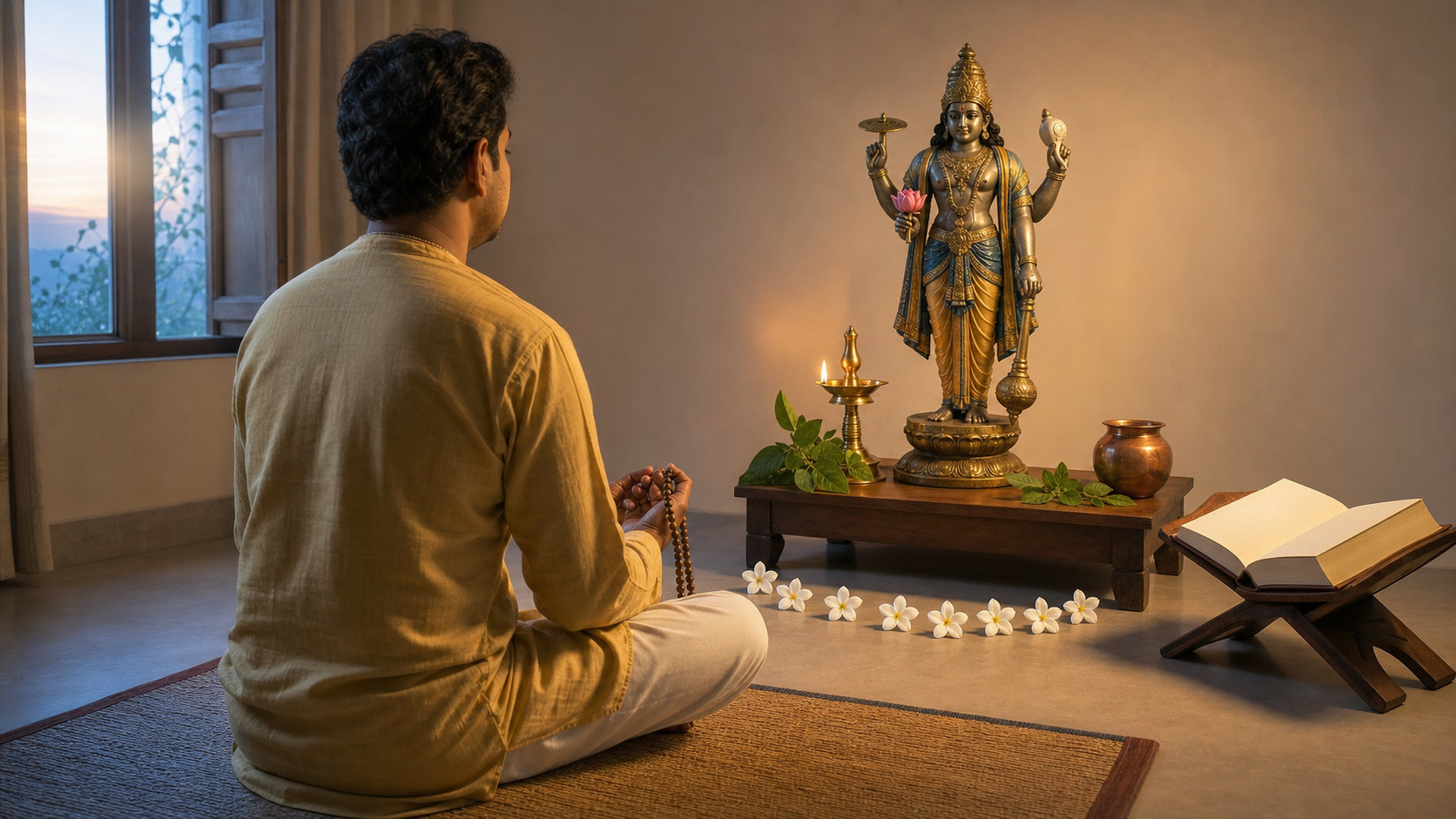
If you are considering Ekadasha Vishnu Sahasranama, the real question is not whether you can force yourself through 121 recitations. It is whether your next eleven days can carry a vow of this size without turning nama into a race. The most important preparation therefore happens before the first sankalpa: time one complete parayana, reserve the necessary hours, choose one reliable text, and decide exactly how you will count.
Approached carefully, this sadhana brings devotion, attention, speech, daily conduct, and time under one discipline. Approached as a numerical challenge, it can produce hurried pronunciation, a strained voice, and anxiety about the tally. Here is how to preserve both the formal count and the inward purpose of the vrata.
Count the real cost before taking the vow
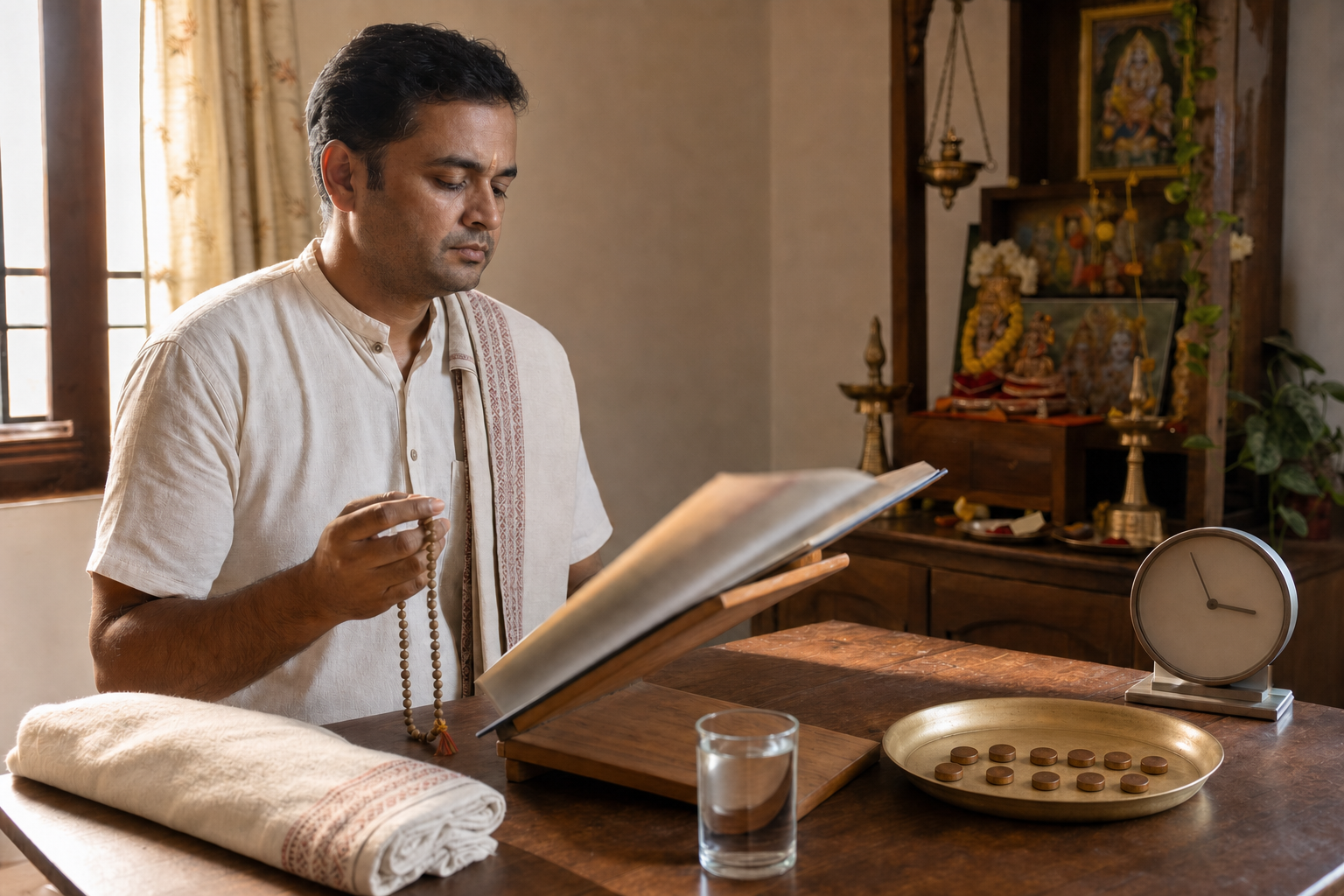
Ekadasha Parayana has a definite core: eleven complete recitations each day for eleven consecutive days. That produces 121 complete parayanas. A full recitation commonly runs from the introductory and meditation verses through the Sahasranama and concluding phalashruti, although you should verify the boundaries in the edition you intend to use.
At a measured pace, one parayana may require 30 to 45 minutes. Eleven therefore require about 5 hours 30 minutes to 8 hours 15 minutes each day, before allowing for invocations, offerings, meals, breaks, family duties, or an unexpectedly slow session. This is not a small addition to an ordinary workday.
Do one complete rehearsal with the exact text you will use. Chant at a clear, unforced pace and record the actual duration. Multiply that time by eleven, then place the result into a real day rather than an imaginary free day. If the hours do not fit, postpone the formal vrata or undertake a smaller daily discipline without calling it Ekadasha Parayana. A modest commitment you can honor is more truthful than a large sankalpa you already expect to rush.
The number eleven also gives the discipline an inward measure. It is associated here with the ekadasha-indriyas: the ten senses together with the mind. The aim is not numerical display but the gradual governance of attention, speech, appetite, reaction, and conduct. Your schedule should serve that purpose.
Key takeaways
- The formal observance is eleven complete parayanas per day for eleven consecutive days.
- At the stated pace, daily chanting alone can occupy 5 hours 30 minutes to 8 hours 15 minutes.
- Use one reliable edition and define what counts as a complete parayana before making the sankalpa.
- Divide the count across several blocks so that pronunciation and attention do not collapse late in the day.
- Mark only completed recitations, and record any adaptation honestly instead of changing the count retrospectively.
- Clarity, devotion, and ethical restraint are part of the vrata; they are not optional extras added after the tally.
Make a sankalpa that leaves no room for confusion
The Vishnu Sahasranama belongs to the Mahabharata’s Anushasana Parva, where Bhishma gives the thousand names to Yudhishthira in a teaching concerned with peace, protection, dharma, and liberation. That setting matters. You are not merely repeating a long catalogue; you are repeatedly bringing the mind before names that express divine sovereignty, refuge, compassion, patience, and sustaining order.
Prepare the observance in the following order:
- Select the text. Use a well-edited Sanskrit version or a reliable transliteration. Keep the same edition throughout so that the opening, closing, and count remain consistent.
- Reserve the eleven days. Look for travel, deadlines, caregiving duties, ceremonies, or other predictable conflicts. Resolve them before the vow rather than hoping they disappear afterward.
- Designate a place. A clean, quiet area, a stable seat, an image or symbol of Vishnu, a lamp, water, flowers, or tulasi are sufficient. Simplicity is not a deficiency.
- Choose a counting method. Eleven grains of akshata moved one by one, a written tally, or another unmistakable physical count is safer than memory after several hours of chanting.
- Write the sankalpa. State its duration, daily count, spiritual purpose, and intention for the welfare of beings. Read it once before beginning and reaffirm it briefly each day.
- Create a recovery window. Leave part of each day unscheduled so that a delayed or interrupted session does not force frantic chanting at night.
A plain sankalpa is enough: For eleven consecutive days, I undertake eleven complete recitations of the Vishnu Sahasranama each day, with devotion and steadiness, for inner purification, fidelity to dharma, and the welfare of all beings. You may adapt the wording to your language and sampradaya. The essential point is that you know what you have promised.
Begin each day’s first session with a few moments of quiet breathing, a prayer for guidance, and the dhyana verses used in your edition. Kara-nyasa and anga-nyasa may be included when you have been taught them. If you have not received that instruction, proceed reverently without imitating a ritual you do not understand. Nyasa is not a test that a beginner must pass before approaching the divine names.
Distribute eleven recitations across the day
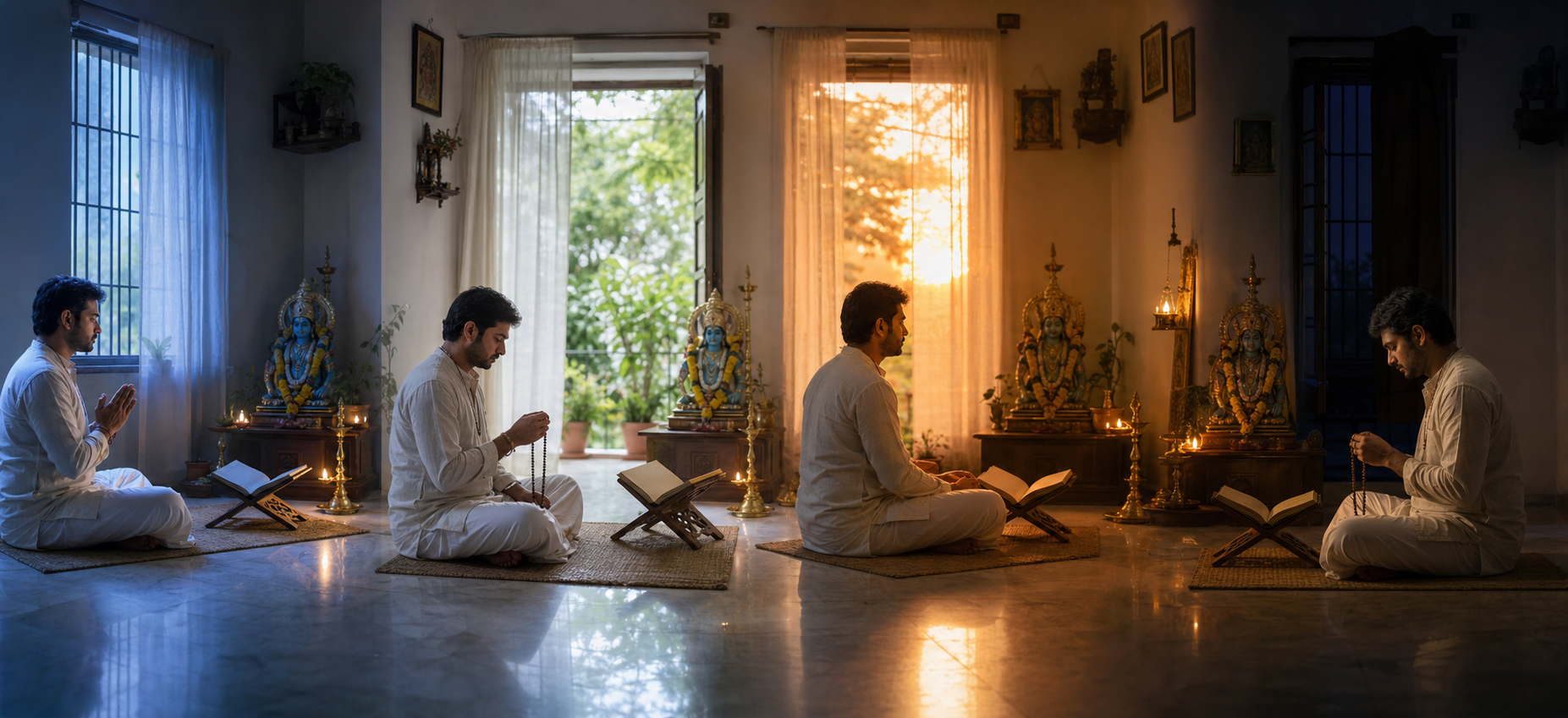
Trying to complete all eleven in one sitting is usually the hardest arrangement for the voice and the attention. A four-block day protects freshness and prevents the entire vow from depending on one exhausting stretch. The following pattern is practical rather than mandatory:
| Daily block | Parayanas | Practical purpose |
|---|---|---|
| Brahma-muhurta or pre-dawn | 4 | Completes the largest share while the surroundings and mind are comparatively quiet. |
| Late morning | 3 | Resumes after food, hydration, and a period of vocal rest as appropriate. |
| Late afternoon | 2 | Keeps the remaining count manageable without one long second session. |
| After sunset | 2 | Completes the day deliberately rather than leaving a large late-night backlog. |
Put both a start time and an expected finish time on each block. A vague intention such as reciting three sometime in the morning is easy to displace. A protected period with a known duration is much harder to bargain away.
Build short pauses between recitations. Drink water, relax the jaw and shoulders, and allow the breath to return to normal. The discipline does not require theatrical volume. If your voice becomes hoarse or painful, forcing it is not an act of bhakti. Reduce strain, take adequate rest, and adapt responsibly rather than treating bodily warning signs as obstacles to conquer.
Keep one additional same-day window available. It is especially valuable during the middle of the observance, when the novelty has faded but several days remain. Without that reserve, one late meeting or family need can push multiple parayanas into the least attentive hours of the night.
The schedule is logistical, not sacred. A student, householder, shift worker, or renunciant may need different blocks. Preserve the daily total, continuity, vocal care, and clarity; arrange the clock around those requirements.
Protect pronunciation without turning perfection into fear
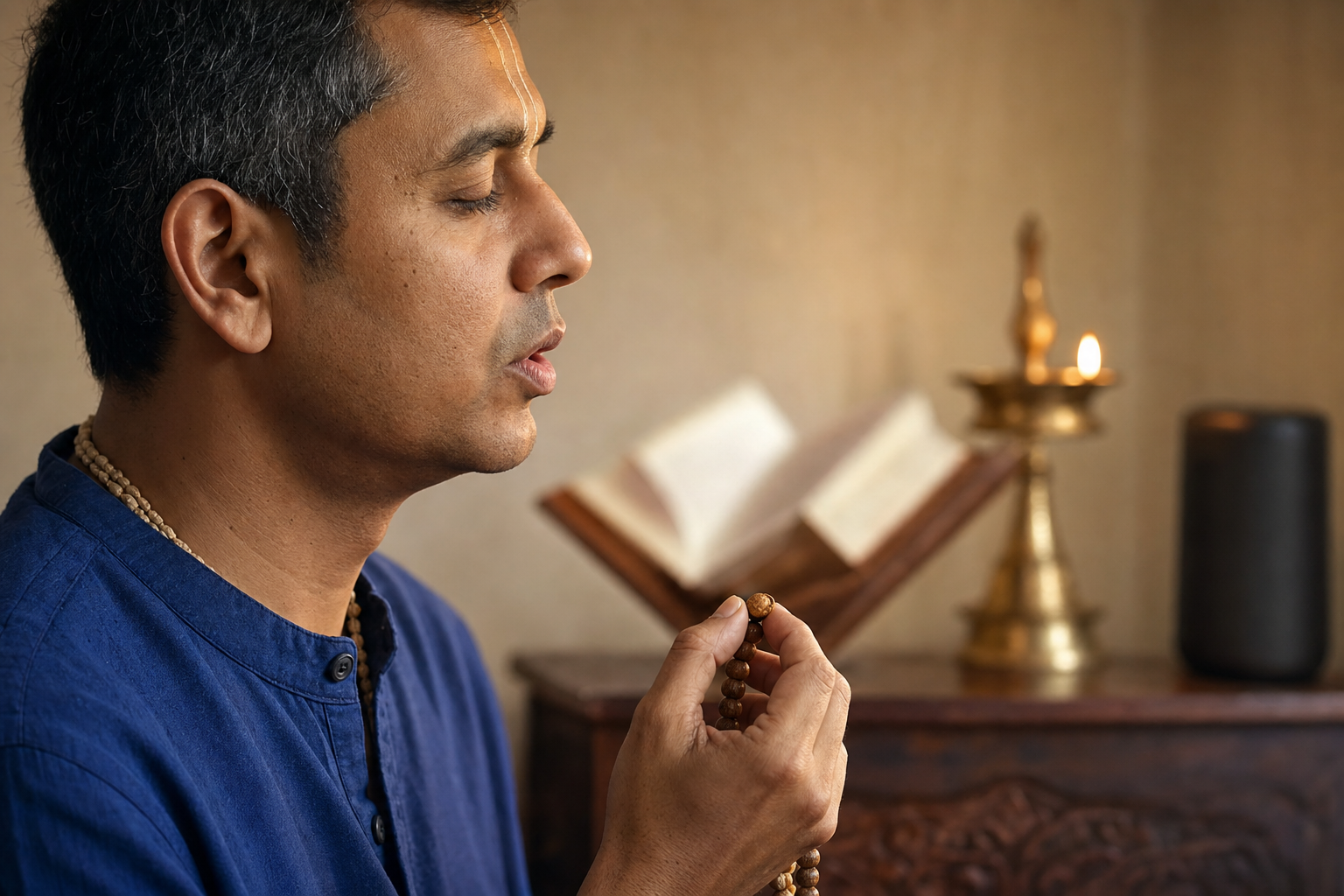
Textual fidelity matters because the practice works through attentive sacred speech, not through a hurried impression of the names. Yet fear of making any error can prevent a sincere beginner from starting. The workable middle path is deliberate learning: use a clear text, listen to competent pronunciation when available, slow down at difficult compounds, and correct recurring mistakes without self-reproach.
Use the same sequence for every recitation:
- Sit on a stable asana with the spine comfortably upright.
- Settle the breath and recall the day’s sankalpa.
- Recite the invocation and dhyana portions included in your chosen form.
- Chant each name distinctly at a pace the breath can sustain without gasping or swallowing syllables.
- Complete the concluding verses and phalashruti that define the end of your parayana.
- Move one counter or make one written mark only after the recitation is complete.
- Pause before beginning the next parayana, even when both belong to the same block.
If you are working from transliteration, make difficult sound combinations visible before the observance begins. Pencil marks, word breaks, or unobtrusive pronunciation notes are more useful than repeatedly stumbling and accelerating to recover time. If Sanskrit fluency is still developing, clarity should determine your speed. Fluency earned by day-to-day repetition is more stable than speed imposed on the first morning.
A translation can help you understand what you are invoking. Move gradually from sound alone toward the qualities carried by the names. Notice where a name points to protection, patience, order, compassion, or transcendence, then ask whether your conduct during the same day contradicts it. That small act of reflection prevents the recitation from becoming isolated from dharma.
Practitioners sometimes describe a quieter mind by the third or fourth day and greater steadiness during days nine through eleven. Do not turn that pattern into a promised result or a spiritual examination. You may feel calm, distracted, devotional, tired, or apparently unchanged. Your responsibility is faithful practice; a particular inner sensation is not part of the count.
This observance can be undertaken by sincere householders, students, and renunciants, without a caste, gender, or occupational qualification. Particular families and sampradayas may retain their own achara concerning illness, menstruation, purity, or ritual setting. If you belong to such a lineage, clarify its expectations with a trusted teacher before the sankalpa. Local discipline should guide your own conduct without becoming a pretext for judging another devotee.
Keep the vrata honest beyond the chanting seat
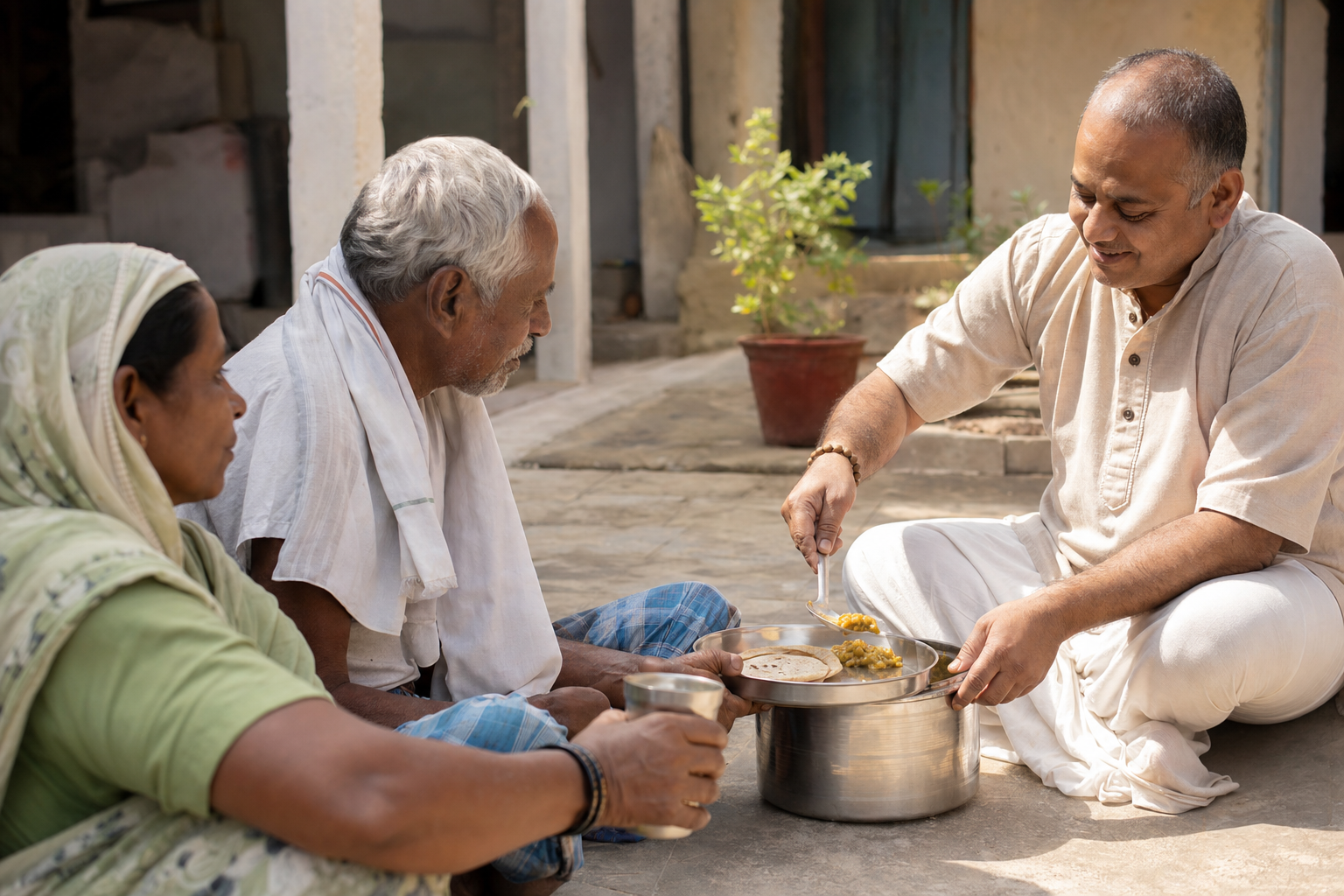
Eleven recitations can coexist with an undisciplined day unless you consciously connect sound with conduct. During the observance, keep speech truthful, meals simple and sattvic, media intake restrained, and avoid arguments that you do not need to enter. Practice ahimsa in thought, word, and action. Maintain adequate sleep instead of sacrificing it merely to rescue a poorly planned count.
Ekadashi fasting may fall within the eleven-day period and may be observed where it is already appropriate to your tradition and health. It is not necessary to add severe food restriction simply to make the sadhana feel more demanding. Anyone with a medical condition should adapt diet and exertion sensibly and seek appropriate professional care when needed. Chanting supports spiritual life; it is not a substitute for medical or psychological treatment.
Group recitation can support consistency. A family may share the altar space and synchronize one daily parayana, while a satsanga may gather for the final day. Shared sound does not remove personal accountability: if your sankalpa is for eleven daily recitations, keep your own count even when others join.
If a recitation or block is missed, respond without concealment or panic:
- First use the same-day recovery window. Complete the missing parayana at a clear pace rather than racing through the scheduled blocks.
- If same-day completion becomes impossible, record the actual count. You may make up the recitation on the following day when that can be done without damaging the quality of the larger practice.
- If an unavoidable circumstance breaks the eleven-day pattern, extend the observance by a day. This preserves the substance of the commitment, although it should be acknowledged as an adaptation of the strict consecutive form.
- If illness or an urgent duty requires you to stop, stop honestly. A vow does not erase responsibilities toward health, dependants, or people in your care.
Close the final daily round with whatever simple form you can sustain: water, fruit, or sattvic food as naivedya; arati where customary; a peace invocation; and kshama-prarthana for errors of pronunciation, attention, omission, or conduct. The value of an offering does not rise with its price. Reverence and truthfulness are the relevant measures.
After the eleventh day, do not let completion become abrupt abandonment. Decide on a smaller rhythm you can carry into ordinary life, such as one daily parayana or another regular period of nama-japa. The intensive vrata has done its practical work when it leaves behind a more dependable relationship with attention, speech, and remembrance.
Your next step is simple: time one complete recitation with the text you intend to use. If your calendar can genuinely hold eleven such recitations for eleven days, prepare the space, write the sankalpa, and begin. If it cannot, choose a discipline you can keep without haste. Honoring the divine name begins with honoring the truth of your own commitment.