
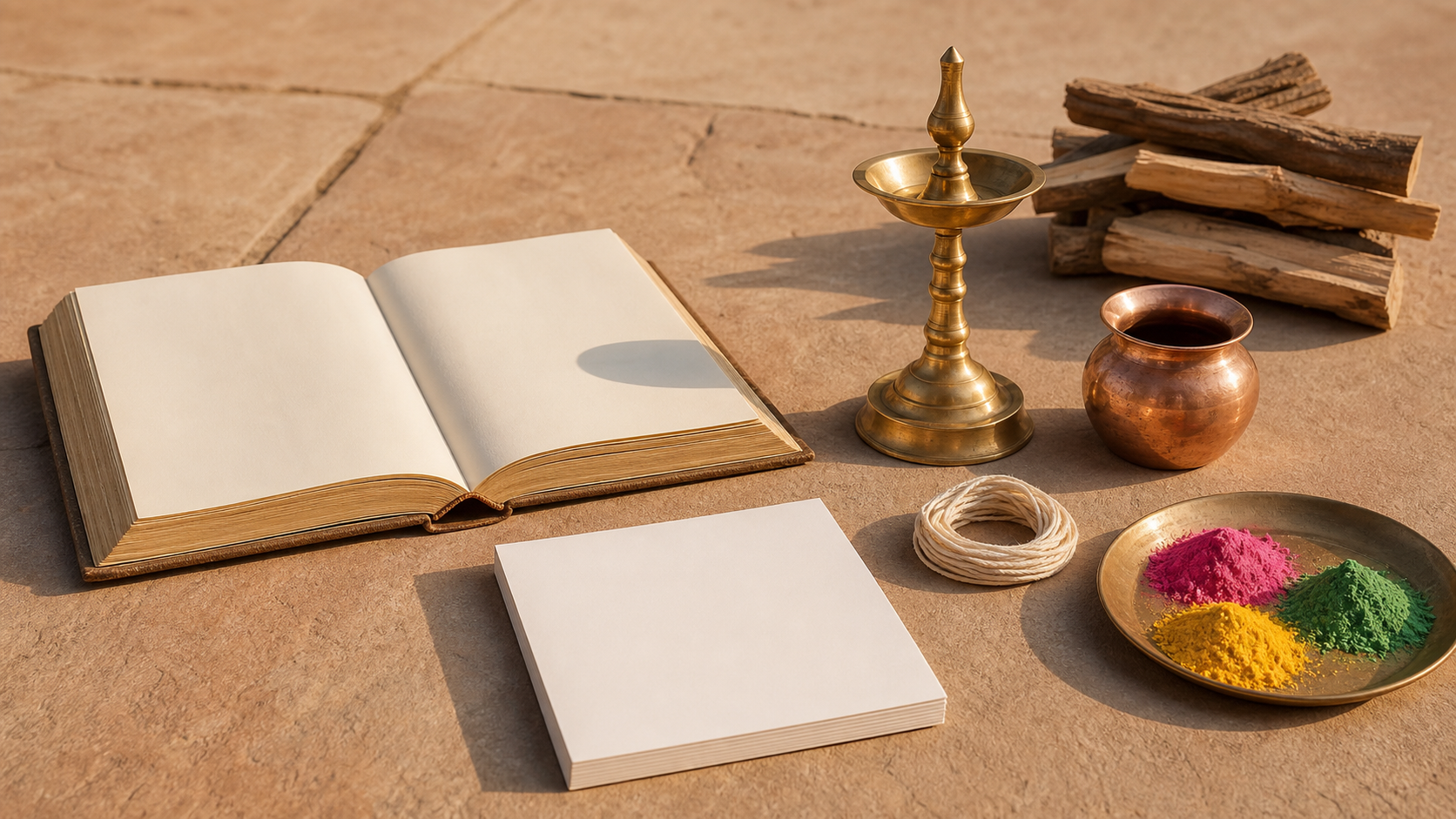
If you are trying to schedule family ceremonies, organize Holika Dahan, plan the color-playing day and keep a household vrata, the important distinction is not simply before and after Holi. In 2026, the observance sequence runs from Holashtak beginning on February 24 through Dasha Mata udyapan on March 13 in India.
You need three things to plan this period correctly: the civil dates, the local lunar tithis and your family’s regional practice. Keep those separate, and the season becomes much easier to observe without either neglecting tradition or turning every calendar difference into a dispute.
Key takeaways for the 2026 Holi season
- Holashtak: February 24 through March 3, 2026, in the prevalent North Indian reckoning, from Falgun Shukla Ashtami through Purnima.
- Holika Dahan: March 3 in the evening, after the local Bhadra period has ended. The exact permissible time depends on your location-specific panchang.
- Dhulandi or Rangwali Holi: March 4 in most North Indian locations.
- Dasha Mata Vrata: Day 1 is mapped to March 4 under the cited Indian calendar, with the concluding worship on March 13.
- What Holashtak restricts: primarily optional auspicious ceremonies and festive inaugurations in communities that observe the custom. Routine work, study and travel do not stop.
Put the civil dates and lunar calendar on one page

Use the following as a planning framework for India. It is not a substitute for a local panchang when you need a muhurta, because a tithi is a lunar interval rather than a midnight-to-midnight date. Its overlap with sunrise and local time can change the civil-day assignment outside India and occasionally within different regional traditions.
| Date in 2026 | Observance | What you should plan |
|---|---|---|
| February 24 | Holashtak begins | Pause the major shubh karya recognized by your family or community; begin a simpler devotional routine. |
| February 24-March 2 | Holashtak continues | Continue ordinary responsibilities while emphasizing japa, katha, dana and restraint. |
| March 3 | Falgun Purnima and final day of Holashtak | Confirm the local Bhadra period and Holika Dahan muhurta rather than relying on a national time. |
| Evening of March 3 | Holika Dahan | Conduct the fire observance only after Bhadra has elapsed according to the local panchang. |
| March 4 | Rangwali Holi and Day 1 of the Dasha Mata cycle | Plan color play and, where your family keeps the vrata, make the sankalpa and begin daily worship. |
| March 5-12 | Dasha Mata Vrata, Days 2-9 | Maintain the same manageable time, dietary niyam, katha and act of service each day. |
| March 13 | Day 10 and Dasha Mata udyapan | Complete the concluding puja, protective-thread custom, prasada distribution and dana followed in your tradition. |
March 4 is the date most likely to cause confusion. The North Indian festival sequence places Rangwali Holi on that civil date, while the ten-day Dasha Mata schedule also counts March 4 as Day 1. Some families use Holi to mean the Purnima and Holika Dahan observance; others use it primarily for the following color-playing day. Do not move the vrata to March 5 merely because an English phrase such as after Holi appears to demand it. Confirm what your inherited wording means and then check the applicable tithi.
The concluding Dasha Mata tithi illustrates the same issue. In the Purnimanta calendar it is Chaitra Krishna Dashami, while an Amanta calendar may identify the corresponding observance as Phalguna Krishna Dashami even when the Indian civil date remains March 13. The month name can therefore differ without the household necessarily observing on a different date.
- Civil date: use it to coordinate leave, travel, meals, guests and community facilities.
- Tithi and muhurta: use a location-specific panchang to determine when the ritual interval actually applies.
- Regional custom: use your family’s sampradaya, elders or local priest to decide which practices belong to your household.
If you live in the diaspora, do not copy an Indian muhurta clock time. Check a panchang calculated for your city, because the relevant tithi or Bhadra interval may fall differently at your longitude. You can still coordinate a family katha by video call, but each household should observe the time appropriate to its location.
During Holashtak, pause the ceremony rather than ordinary life
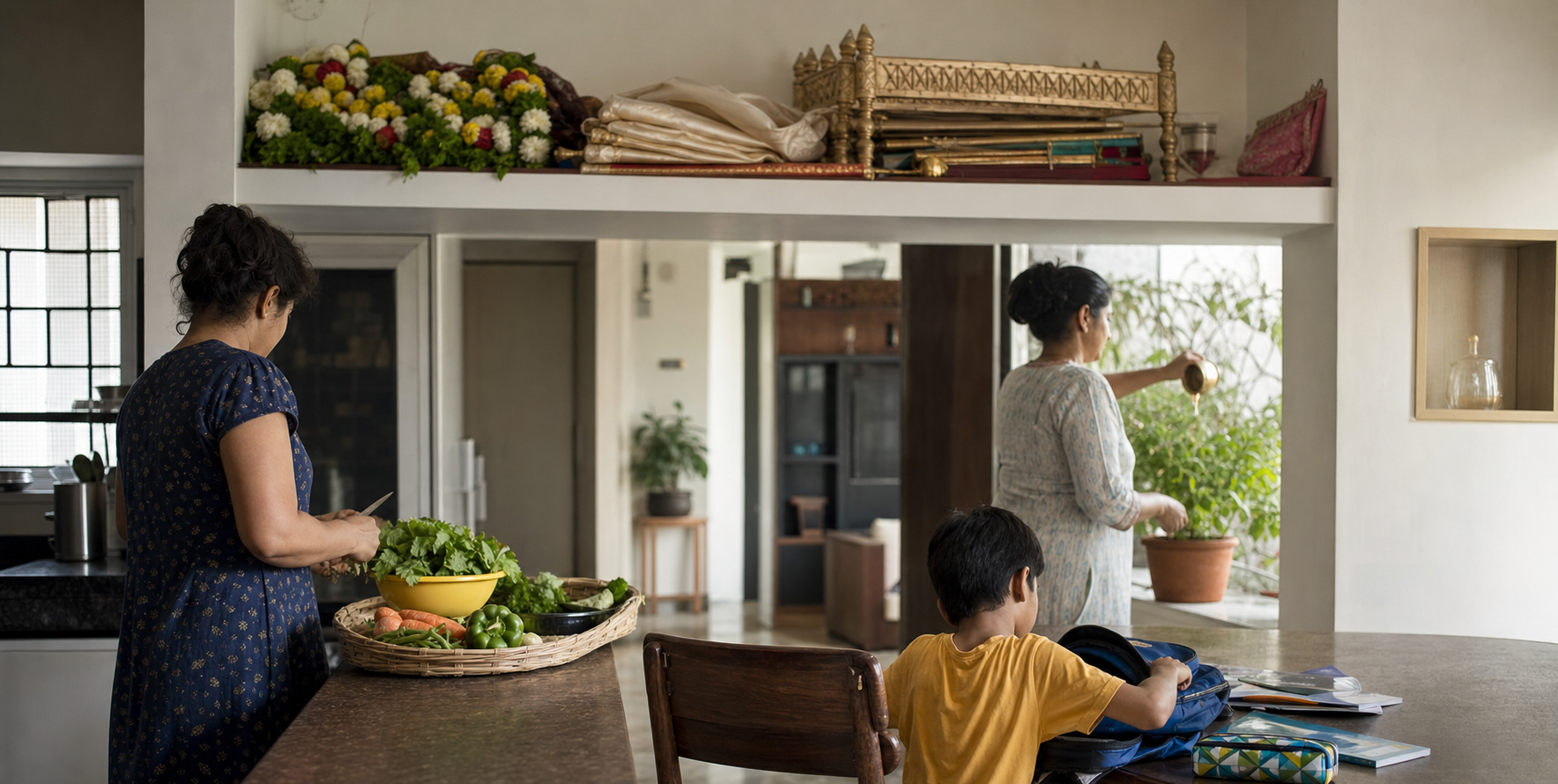
Holashtak is especially important in the North Indian ritual calendar. It covers eight tithis: Falgun Shukla Ashtami, Navami, Dashami, Ekadashi, Dwadashi, Trayodashi, Chaturdashi and Purnima. Some regional almanacs begin the restricted period on Saptami, however, so a one-day difference in a community calendar is not automatically an error.
The customary restraint concerns chosen shubh karya. In communities that observe Holashtak, this commonly includes weddings, engagements, griha pravesh, major business inaugurations, celebratory property registrations, mundan and upanayana. If one of these is under discussion, check the overlap before paying non-refundable deposits or announcing a date.
Do not interpret the period as eight days in which all movement is forbidden. Routine employment, study and travel continue. The distinction is between necessary life and a deliberately chosen auspicious launch. If a legal or professional deadline cannot move, complete what is required and ask a trusted priest or elder how your community handles the devotional side. Where feasible, separate the mandatory transaction from its ceremonial celebration.
Holashtak is also not a uniform pan-Hindu prohibition. It is widely recognized across parts of Uttar Pradesh, Uttarakhand, Himachal Pradesh, Haryana, Punjab, Rajasthan, Bihar, Madhya Pradesh and Delhi, but other regions may not impose the same restriction. When two families follow different calendars, identify whose samskara is being performed and agree in advance which household convention will govern it. That is more dharmic than treating a regional achara as a test of another family’s devotion.
Replace the postponed festivity with a practice you can actually maintain. Read or recount Prahlada’s story, keep a fixed period of mantra-japa, light a lamp, support a community kitchen or shelter, or simplify the household diet. The narrative remembered during these days centers on Prahlada’s steadiness amid repeated ordeals and the failure of power to extinguish bhakti. The practical question is therefore not merely what you avoided, but what quality you strengthened before Holika Dahan.
Plan Holika Dahan and Rangwali Holi as two distinct duties
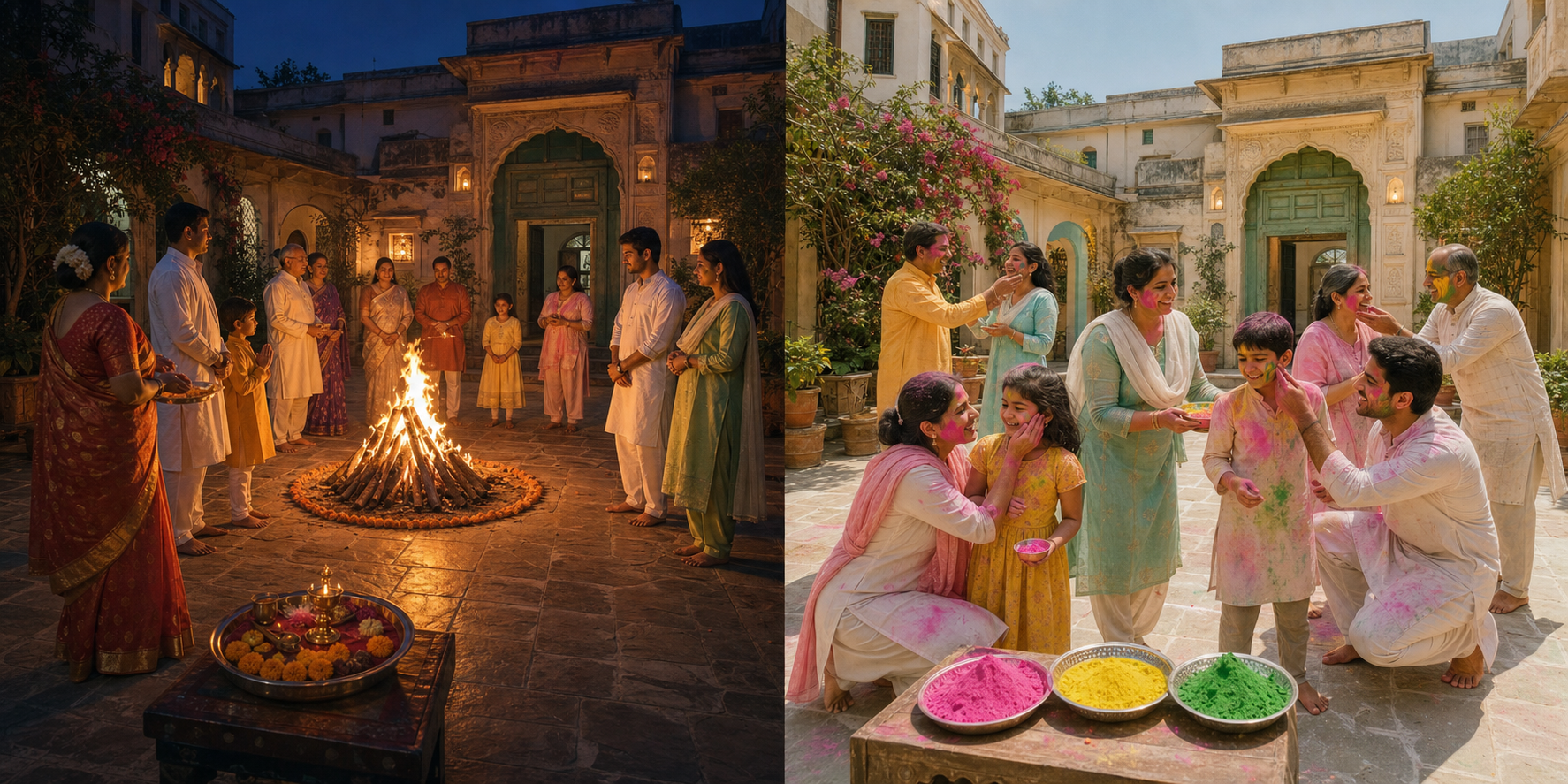
For most North Indian locations, Holika Dahan falls on the evening of March 3 and the color-playing day follows on March 4. Do not choose the fire time from a generic social-media graphic. Holika Dahan is traditionally performed on Purnima only after Bhadra has passed, and the exact window is panchang-dependent.
- Confirm the time locally. On March 3, check a panchang for the city where the fire will be lit. Record the Bhadra end and the permitted Holika Dahan window for the person coordinating the rite.
- Keep the fire proportionate. Use a modest, community-supervised bonfire and sustainably available biomass. Protect nearby trees, animals, buildings and public space rather than equating a larger fire with greater punya.
- Give the gathering a devotional center. Make room for the Prahlada katha, prayer and a concrete act of dana. Otherwise the ritual can shrink into spectacle while its moral meaning is lost.
- Set expectations for March 4. Choose non-toxic, preferably plant-based colors; conserve water; and obtain consent before applying color. A person’s refusal is complete in itself and does not require an explanation.
This separation matters. Holika Dahan asks the community to confront fear, arrogance and destructive power through the memory of Prahlada’s bhakti. Rangwali Holi then permits release, reconciliation and social joy. Safety, consent and ecological restraint do not make the celebration less traditional; they express ahimsa and responsibility within it.
The wider season also carries distinct Dharmic expressions. Sikh communities in Punjab observe Hola Mohalla with discipline, martial skill and langar. Hindu and Buddhist communities in Nepal celebrate Fagu Purnima, while many Jain households make ahimsa especially visible by avoiding harmful forms of color play. You do not need to collapse these traditions into one festival to recognize their shared insistence that joy must remain joined to courage, service and non-harm.
Build a Dasha Mata vrata that your household can sustain
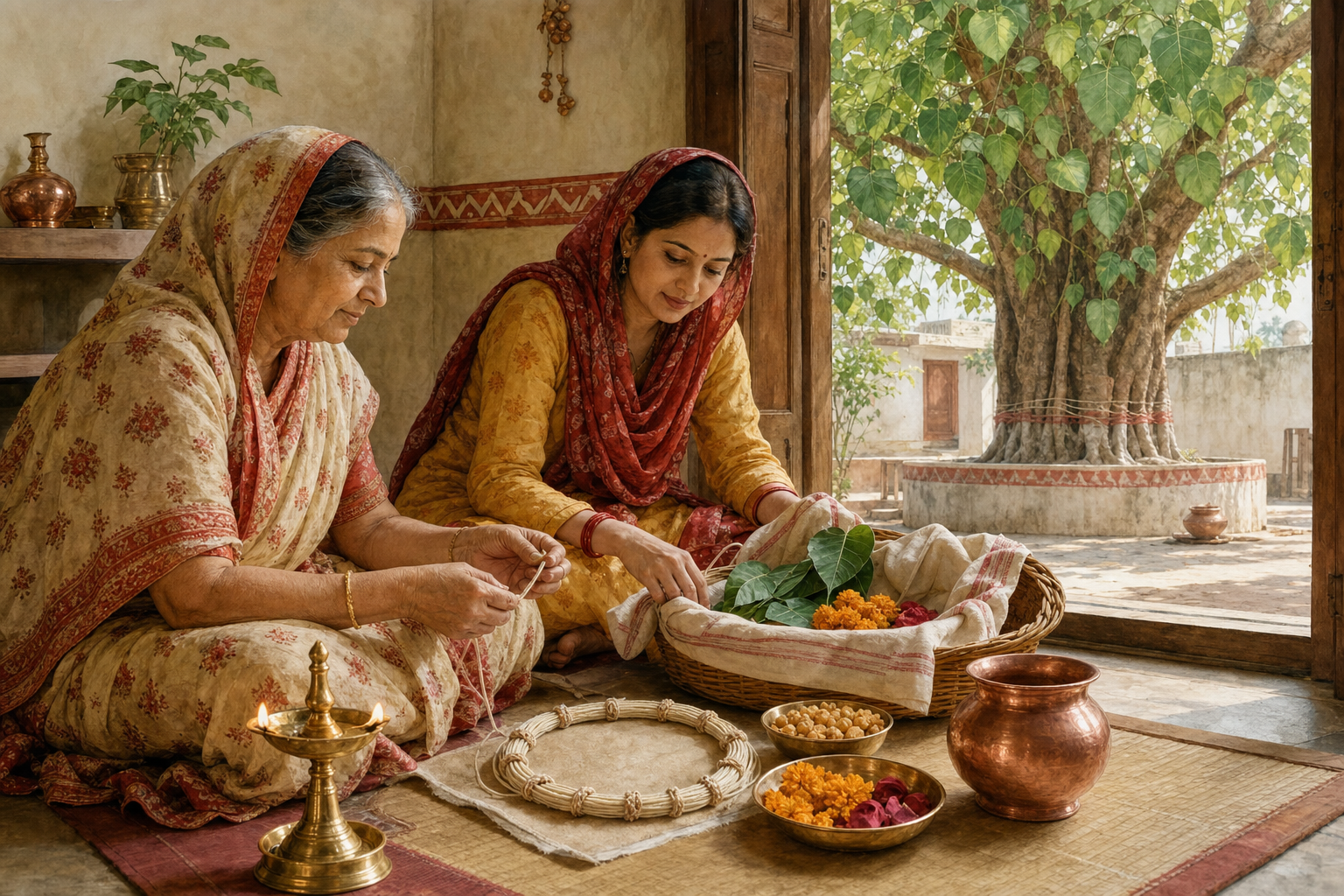
The ten-day Dasha Mata Vrata is especially associated with households in parts of Rajasthan, Gujarat, Madhya Pradesh and Uttar Pradesh. Devotees seek the Divine Mother’s protection across the ten directions and pray for stability in family life, health, relationships and livelihood. The number ten may appear in a knotted thread, lamps, small offerings or altar markings, but you need not reproduce every regional symbol at once.
First confirm which observance your family means. The post-Holi Dasha Mata Vrata ending on March 13 is distinct from Gujarat’s popular Dashama devotion during Ashadha, which has its own seasonal setting, fairs and community forms. Shared devotion to the Devi does not make the two calendars interchangeable.
- Prepare before Day 1. Clean the puja place and assemble only what your custom uses: a deepa, incense, flowers, haldi, kumkum, akshata, water, a Dasha Mata image or symbol, a ten-knotted dora, simple naivedya and a copy of the Dashamata Vrat Katha. A kalasha or ten-direction diagram may be included where customary.
- Make the sankalpa on March 4. State who is keeping the vrata, its devotional intention and the commitment to continue through Day 10. Choose a fixed morning or early-evening time that the household can keep consistently.
- Repeat a simple daily sequence. Light the deepa, offer incense and flowers, recite a Devi shloka or stotra, read or narrate the katha, perform aarti and share prasada. Consistency matters more than adding new materials each day.
- Complete the udyapan on March 13. Follow your family’s custom for tying or wearing the ten-knotted protective thread. Common concluding offerings include a sweet roti with ghee and sugar, prasada for neighbors, anna-dana and food offered compassionately to cows or birds.
Choose one clear expression of the tenfold symbolism. You might use a thread with ten knots, ten small auspicious marks, ten small offerings or a lamp arrangement recognized by your tradition. Treat the number as a reminder that dharmic responsibility extends in every direction, not as a reason to buy an elaborate set of ritual objects.
Fasting should be matched to capacity. A person who is elderly, pregnant, nursing, unwell or doing heavy physical work can keep a light, regulated sattvic diet rather than a stringent fast. A vrata is not strengthened by neglecting health or the responsibilities that depend on you. Decide the dietary niyam before the sankalpa so that the commitment is honest and sustainable.
The name Dasha can also remind some devotees of difficult planetary periods in Jyotisha, but this vrata is primarily devotional rather than an astrological transaction. Use it to cultivate steadiness, seva, dana and clearer conduct. Do not present ritual observance as a substitute for practical problem-solving or appropriate professional guidance when a family faces illness, financial trouble or another serious difficulty.
The katha’s ethical force lies in truthfulness, humility, honoring commitments and caring for dependents. Give that teaching a visible form during the ten days: prepare food for someone, support education, contribute to a community kitchen, call a relative who needs attention or reduce avoidable waste. Plant-based prasada, reusable vessels and composted flowers let the altar’s order extend into care for the living environment.
Put February 24, March 3, March 4 and March 13 into your calendar now. Then choose one form of Holashtak restraint, one safe way to celebrate Holi, one daily discipline for the vrata and one act of dana. Confirm the local tithis before the relevant day, and you will enter the season with a plan sturdy enough to support both celebration and sadhana.
References
- DharmaRenaissance Blog – Dasha Mata Vrata 2026: Ten Transformative Days After Holi for Protection and Prosperity
- DharmaRenaissance Blog – Holashtak 2026: Sacred 8-Day Pause Before Holi – Exact Dates, Ritual Guidance, and Regional Traditions
