
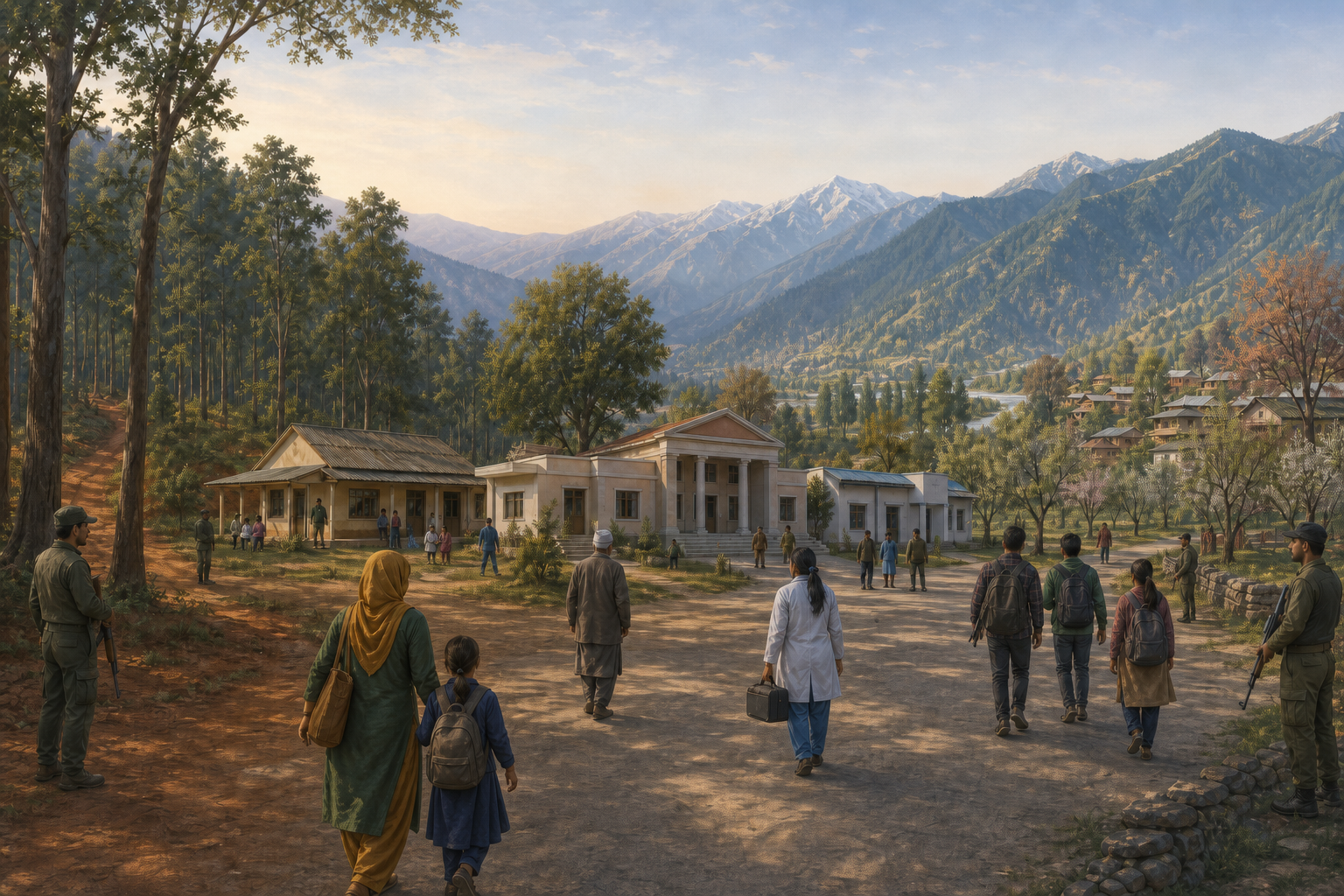
If you are trying to decide whether Bharat is truly prevailing in Bastar or Jammu & Kashmir, the loudest evidence is often the least reliable. An encounter, a procession, or a new security promise may matter, but none of them alone tells you whether a resident can reject an armed group on Monday and still live safely on Friday.
Use a harder standard. Ask whether security is durable, constitutional institutions remain after the cameras leave, civilians have more freedom to choose, officials can be held accountable, and injured communities can recover their homes and cultural life. That test supports a firm state without confusing firmness with spectacle.
Why Bastar and Kashmir cannot share a copy-paste strategy
Bastar and Jammu & Kashmir are often placed in the same national-security frame because armed actors use fear to weaken the Indian state. The comparison is useful only up to that point. The conflicts differ in their histories, social settings, sources of support, and wounds inflicted on civilians.
| Question | Bastar | Jammu & Kashmir | What follows |
|---|---|---|---|
| What is being contested? | Maoist influence has depended on armed intimidation and the exclusion of normal constitutional activity from remote communities. | Cross-border terrorism operates within a longer territorial and political conflict. | Bastar requires the state to end local coercive control; Jammu & Kashmir also requires border security and disruption of external support. |
| What civilian wound matters most? | Adivasi communities have lived amid attacks, threats, disrupted access, and competition over who can claim to speak for them. | Kashmiri Hindus carry the trauma of targeted violence and mass displacement, while other residents also live with terrorism and recurring insecurity. | Rehabilitation must be community-specific. A generic development package cannot repair every form of harm. |
| What would a false victory look like? | A public event is held under temporary protection, but coercion returns after the security presence moves on. | An attack network is disrupted, but threatened families remain displaced or are expected to become their own permanent militia. | Measure the civilian condition after the operation, not merely the operation itself. |
| What is the desired end state? | Adivasi citizens can use constitutional institutions without Maoist permission or retaliation. | Residents can live without terrorism, displaced families can exercise their rights, and political disagreements remain inside constitutional channels. | The objective is normal civic agency under law, not permanent emergency rule. |
This distinction changes policy. Securing a route through an isolated Bastar village may break an armed group’s ability to deny physical access. A visible deployment in Kashmir may protect a vulnerable location, but it cannot by itself restore a displaced family’s title, temple access, livelihood, or confidence in returning. The shared doctrine should be constitutional control; its local application must be different.
In Bastar, the flag is a test of access rather than a finish line
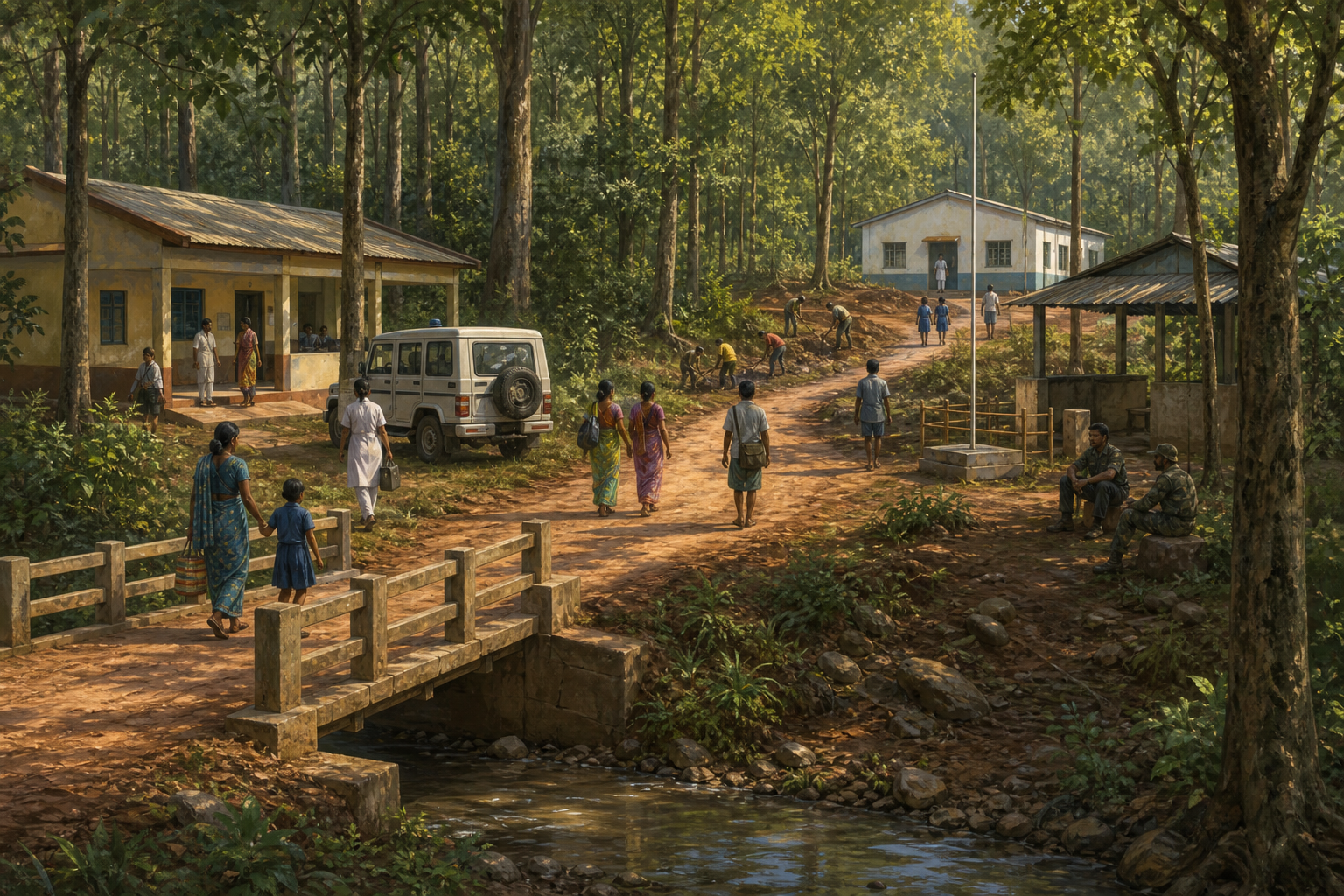
The announced Bastar Tiranga Yatra is scheduled to travel from 12 to 15 August 2026 through more than 90 villages described by its organisers as places where the national flag has not previously been raised. Its planned route runs from Narayanpur toward Dantewada, Sukma, and Bijapur, including areas such as Dornapal, Minpa, Silger, and Awapalli that have been associated with prolonged Maoist influence. That is a meaningful assertion of constitutional access if residents can participate without being punished afterward. It is not, by itself, proof that the fear of Naxalism has ended.
The distinction is not cynical. A flag ceremony can serve as a diagnostic. It reveals whether officials, local representatives, journalists, transport, and residents can enter a place once controlled through intimidation. The mistake is to convert that diagnostic into a declaration of final victory before anyone has checked what happens next.
- Ask whether access is repeatable. Can health workers, teachers, administrators, traders, and families use the same route after the event, without an exceptional security cordon?
- Ask whether participation is voluntary. A crowd assembled under official pressure says little about freedom from Maoist pressure.
- Look for administrative follow-through. Documentation services, grievance hearings, compensation cases, transport links, and functioning local institutions should follow symbolic entry.
- Track coercion rather than attendance. Fewer threats, extortion demands, forced recruitment attempts, and restrictions on movement are more persuasive than the size of a procession.
- Check whether residents can report misconduct by either armed extremists or state personnel. Constitutional presence loses legitimacy if accountability disappears when security forces arrive.
The planned route also passes places associated with severe Maoist violence. At Errabor, 33 innocent people were killed and more than 200 homes were burned; on 15 August, the programme is intended to commemorate those killed in the 2013 Jhiram Valley convoy attack. Remembering these victims is part of restoring moral order. Yet remembrance should remain centred on the dead, their families, and the duty to prevent repetition, not become a licence for partisan triumphalism.
A Dharmic understanding of rajadharma is demanding here. The state must defeat those who murder and intimidate, but it must also protect the dignity and agency of the Adivasi citizen in whose name many outsiders claim to act. Development without consent can breed resentment; security without continuity can expose villagers to reprisal; cultural respect without physical protection leaves the coercive actor in command. All three have to move together.
In Kashmir, protection must lead to justice and dignified return
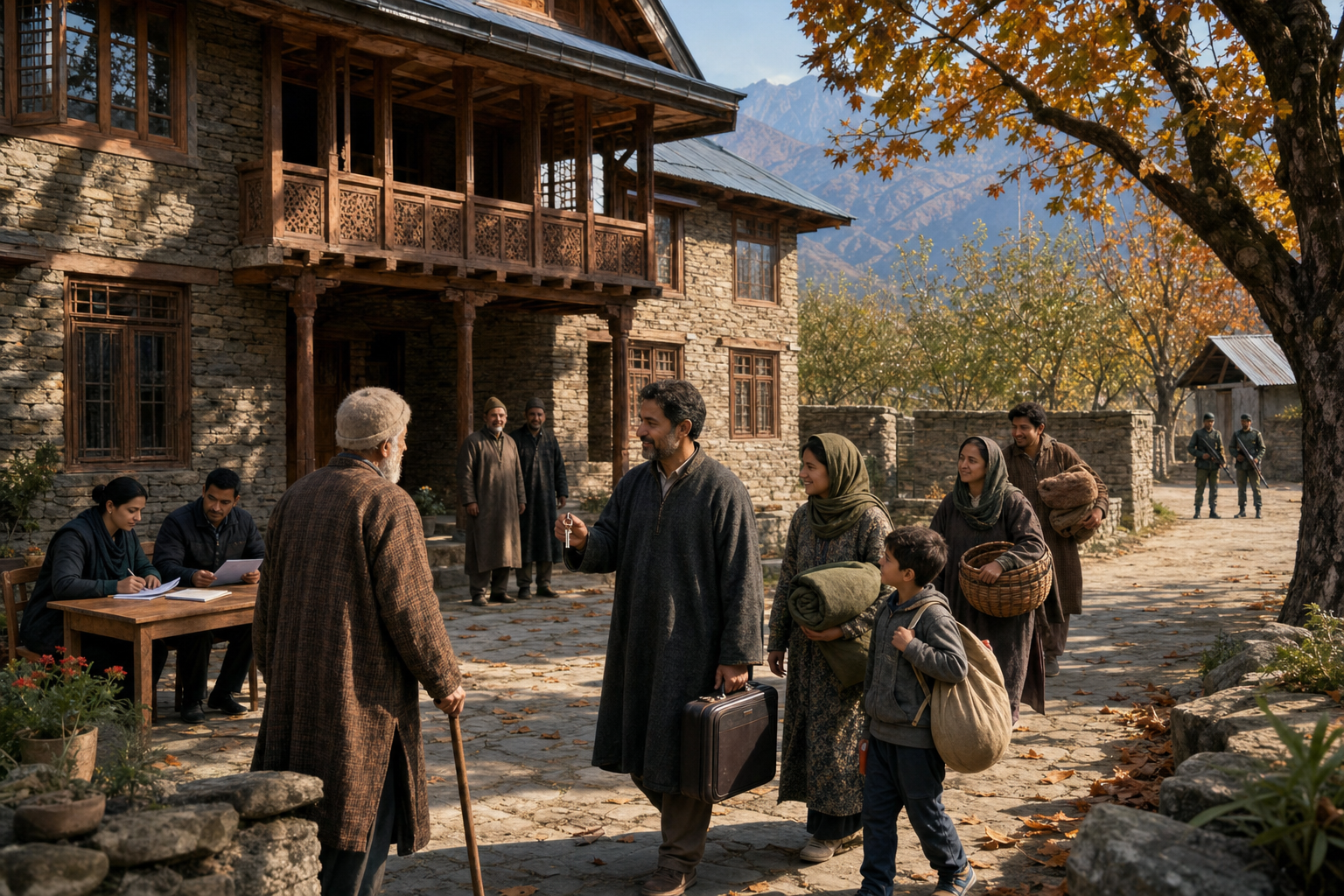
Kashmiri Hindus and other threatened minorities need a state capable of protecting them. They should not be required to become a permanent civilian army merely to exercise the rights of citizenship. This is where a just concern about terrorism can produce a dangerous policy shortcut.
One line of advocacy calls for the government to provide firearms and weapons training to men, women, and children as a deterrent against terrorists. Including children in an armed security design crosses a clear line. Children should never be assigned a combat or deterrence role. It transfers the burden of state protection to minors and can make families, schools, and neighbourhoods more exposed rather than less.
Adult civilian-defence arrangements, where the law permits them, still require a much stricter test than the slogan of self-protection implies. Participation must be voluntary and limited to vetted adults. Legal authority, supervision, secure custody, defined command, coordination with police, incident reporting, periodic review, and an exit mechanism must be clear before weapons are issued. Without those safeguards, infiltration, theft, personal disputes, mistaken identification, and retaliatory targeting can turn a deterrent into another source of insecurity. Most importantly, such an arrangement cannot relieve the police and security establishment of responsibility for protecting civilians.
Return and property policy need the same discipline. A proposal to place retired Army families as tenants in homes left by displaced Kashmiri Hindus, with the government paying rent until the owners return, recognises that empty properties require protection. But military association is not a substitute for restitution. Any tenancy must begin with verified ownership, the owner’s explicit consent, a written rent arrangement, protection against adverse claims, a clear termination process, and the owner’s unqualified right to recover possession.
The larger return test is practical. Can a displaced family choose to return without surrendering safety, livelihood, education, worship, or property rights? Can an owner who does not wish to return still control, lease, sell, or preserve the property without coercion? Is targeted support based on documented displacement and vulnerability, or is it an attempt to turn victims into instruments of demographic or party politics? These questions distinguish rehabilitation from social engineering.
Preferential employment or housing measures can be debated as forms of redress, but their design must match the injury. Tying promotion in an ordinary government job to daily military training would confuse civilian service with soldiering and could exclude people unable to train for reasons unrelated to merit. A defensible remedy should be transparent, reviewable, connected to documented harm, and open to judicial scrutiny.
A common doctrine: firm security under constitutional restraint
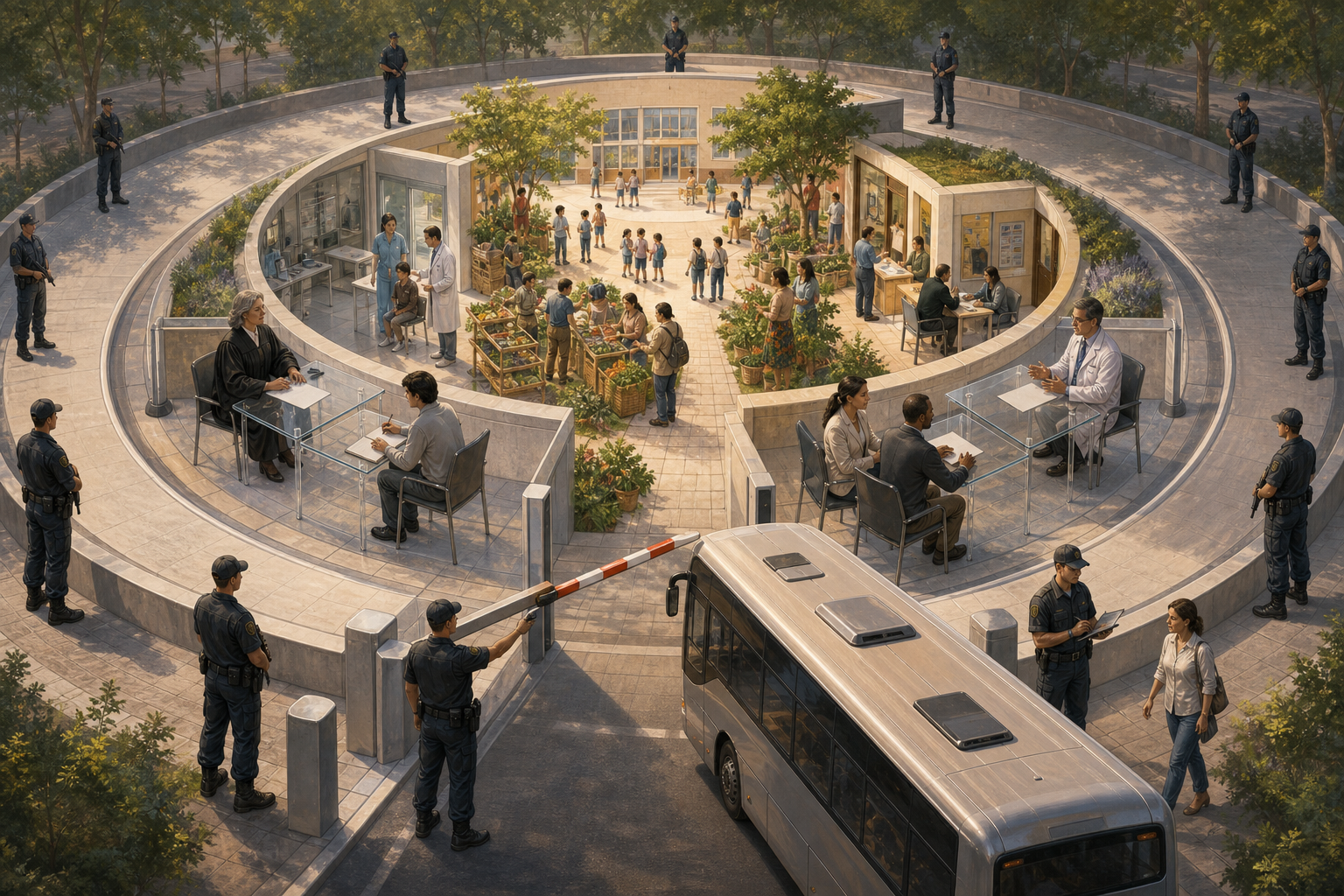
The moral choice is not between force and compassion. Protecting innocent people sometimes requires force against armed actors. The real choice is between disciplined force serving a lawful political end and force that becomes its own measure of success.
- Clear the immediate threat. Active attackers, intimidation networks, weapons flows, and operational support have to be disrupted through precise, intelligence-led action. A community must not be treated as interchangeable with the armed actors operating around it.
- Hold access lawfully. Security gains matter when police, administrators, transport, and communications can remain available without depending indefinitely on exceptional operations.
- Serve the citizen. Identity documents, compensation, property records, courts, education, health care, and grievance channels turn physical presence into constitutional presence.
- Repair what violence targeted. In Bastar this includes homes, village life, and Adivasi agency. In Kashmir it includes displaced families, property rights, religious continuity, and the freedom to return or remain elsewhere.
- Publish honest measures. Separate attacks prevented, networks disrupted, areas made accessible, civilian complaints resolved, displaced owners restored, and institutions functioning. One statistic should not be used as a substitute for all the others.
Political space is part of this doctrine. Peaceful protest and criticism belong to democracy; assault, incitement, and destruction of public property belong to a different legal category. Preserving the boundary between peaceful dissent and violence denies insurgents and terrorists the claim that constitutional politics is meaningless. A state confident in its legitimacy can punish violence without criminalising disagreement.
Likewise, zero tolerance for terrorism should mean zero tolerance for killing, financing, recruitment, intimidation, and logistical support. It should not mean zero tolerance for questions about policy. Accountability is not a concession to the enemy. It is one of the state’s strategic advantages over the enemy.
Key takeaways: six questions for every victory claim
- Is access repeatable? A route opened for one protected event is not yet an open civic space.
- Do residents have safer choices? They should be able to refuse extremists, approach officials, preserve their culture, and report abuse without retaliation.
- What remains after the operation? Look for functioning institutions, resolved grievances, lawful policing, and regular movement rather than an isolated display.
- Who carries the risk? Security policy should protect civilians, not transfer combat responsibility to families or children.
- Are victims directing their own rehabilitation? Displaced owners need consent, control of property, cultural restoration, and a genuine choice about return.
- Can the government admit unfinished work? A credible campaign distinguishes a milestone from an end state and publishes measures that can expose setbacks.
The next time you hear that Bastar has been liberated or Kashmir has been secured, do not dismiss the claim and do not accept it on ceremony alone. Apply these six questions to the village, district, and affected community. Support decisive action where it enlarges the citizen’s freedom under the Constitution; demand correction where it merely relocates danger. That is how Bharat can be strong without losing the dharma that gives strength its purpose.
References
- Hindu Post — बस्तर में 90 से ज्यादा गांवों में पहली बार फहराएगा तिरंगा, विजय शर्मा बोले- नक्सलवाद का डर खत्म हुआ
- Hindu Post — How the Modi Government Can Bring an End to Terrorism in Jammu & Kashmir
