
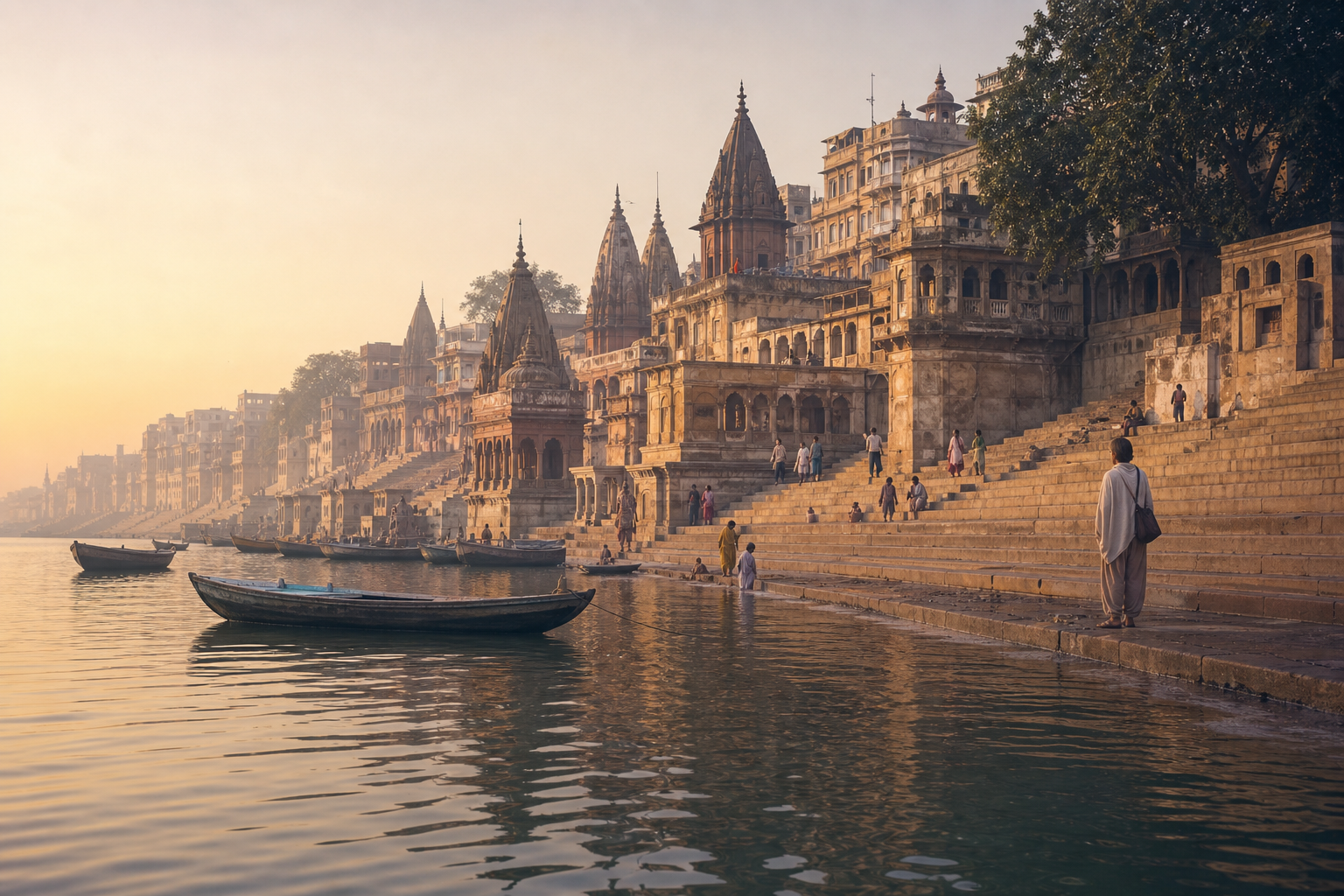
You can visit Varanasi, complete a long list of temples, and still miss what makes Kashi sacred. The better question is not how many shrines you can fit into a day. It is how to approach darshan, ritual, architecture, and the Ganga as parts of one living inheritance.
If you are preparing for your first visit, begin with Kashi Vishwanath and leave room for the city around it. A respectful pace will teach you more than a hurried circuit, and your conduct will determine whether you participate in that heritage or merely pass through it.
Key takeaways for a respectful visit
- Treat Kashi Vishwanath as the central point of your visit, not as a substitute for Varanasi’s wider sacred landscape.
- Decide whether your immediate purpose is darshan, heritage study, or both. If it is both, give worship priority while ritual is underway and make notes afterward.
- Read a temple through three connected layers: continuing ritual, material form, and its relationship with the surrounding sacred city.
- Observe before copying a practice. Follow instructions given at the shrine rather than assumptions gathered elsewhere.
- Recognize kinship among Dharmic traditions without pretending that Hindu, Buddhist, Jain, and Sikh teachings are interchangeable.
- Preserve living heritage through ordinary discipline: do not obstruct worship, touch sacred objects casually, or photograph people without permission.
Begin with Kashi Vishwanath, then widen your attention
Varanasi is counted among the world’s oldest continuously inhabited cities. Its sacred identity has been formed not by temples alone, but by the relationship among shrines, ghats, pilgrims, and the continuing presence of the Ganga. That is why a temple visit makes more sense when you resist treating each building as an isolated attraction.
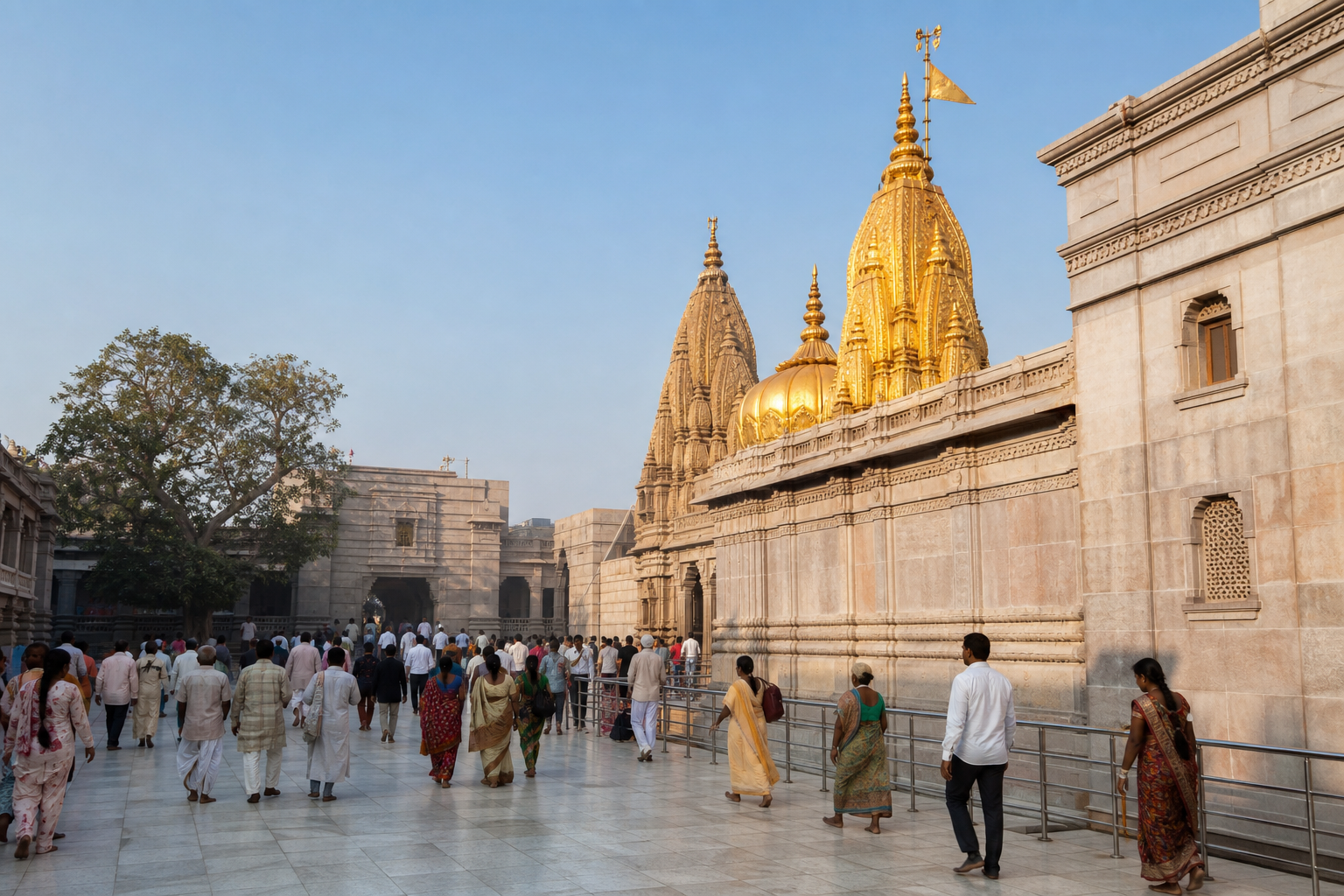
Kashi Vishwanath is the natural anchor. Dedicated to Shiva, it is one of the twelve Jyotirlingas and is distinguished visually by its gold-plated spire. Its importance, however, cannot be reduced to architectural grandeur. Darshan, daily ritual, accumulated devotion, and cultural memory make the shrine a focal point of pilgrimage.
The practical consequence is simple: do not place your visit between two tight appointments. Crowds rise and recede with the rhythms of worship, so a rigid timetable can turn darshan into a race. If another commitment matters, put a generous gap after the temple rather than expecting the shrine to conform to your schedule.
The temple’s listed address is Lahori Tola, Varanasi, Uttar Pradesh 221001. Check current entry instructions through reliable local or official channels before setting out, because operational rules can change. Once you arrive, on-site directions take precedence over anything you previously read.
Before joining the flow of visitors, settle one question: what are you there to do? If your purpose is darshan, keep attention on the deity and allow historical observation to wait. If your purpose includes heritage study, do not let note-taking, commentary, or photography intrude on active worship. Devotion and inquiry can coexist, but they should not compete at the moment of darshan.
Read the temple as living heritage, not a silent relic
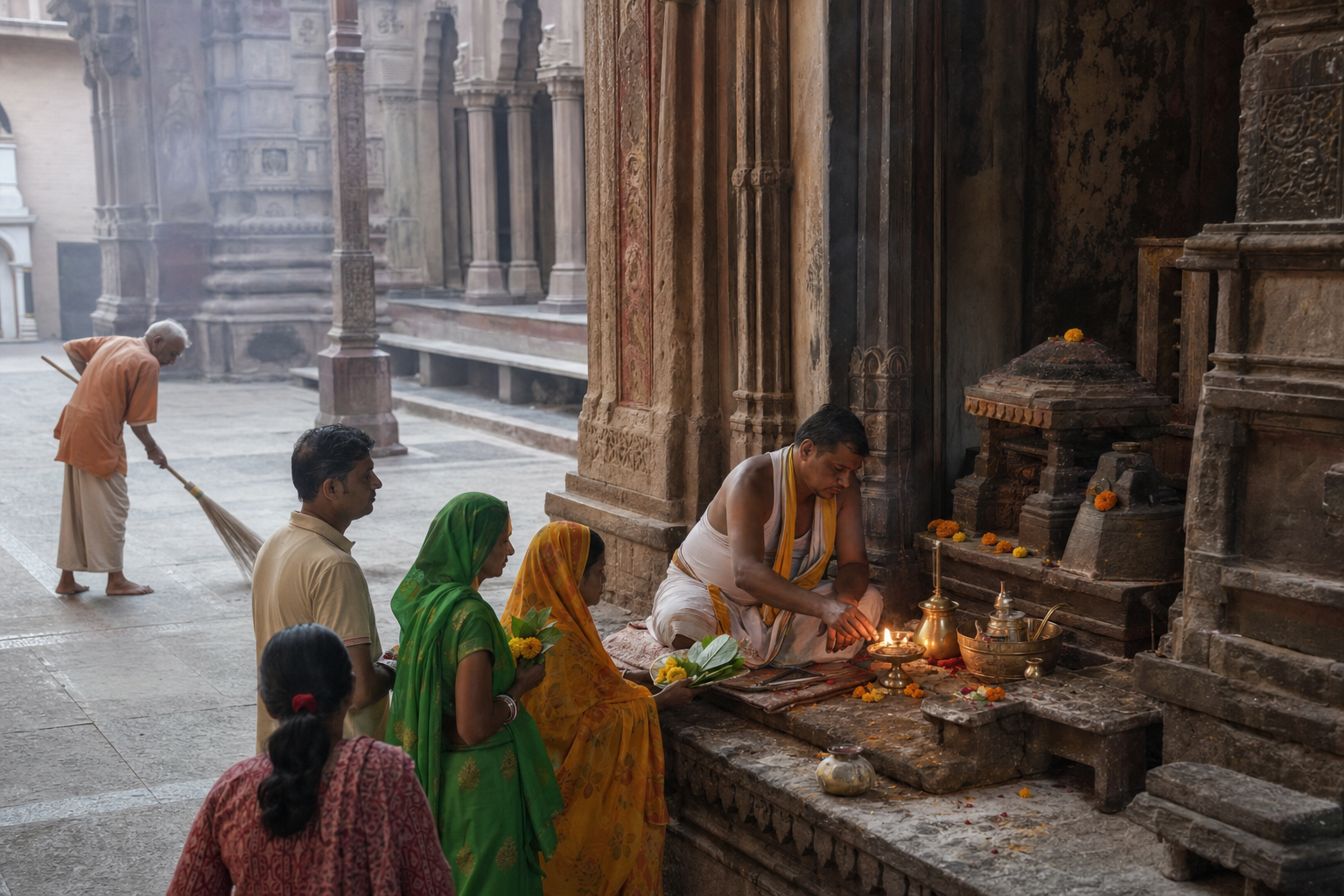
A museum object can be understood mainly through what has survived. A living shrine also asks what continues. In Varanasi, worship, incense, sound, movement, and architectural symbolism are not background effects added for visitors. They are among the ways sacred meaning remains active.
You can make your observation more disciplined by looking for three layers:
- Ritual continuity: Notice the sequence people follow. Where do they pause? When do they make space for others? What happens before and after darshan? Watch without assuming that every visitor follows an identical practice.
- Material form: Look at thresholds, vertical forms, light, ornament, worn surfaces, and the relation between enclosure and movement. At Kashi Vishwanath, the gold-plated spire is immediately visible as a sign of devotional grandeur, but the quieter evidence of repeated use also matters.
- Sacred setting: Ask how the shrine belongs to the lanes, ghats, Ganga, and movement of pilgrims around it. Varanasi’s heritage lies partly in these relationships; extracting one monument from them gives you an incomplete picture.
Do not try to document everything while standing inside the sacred space. After you leave the immediate area of worship, write down three observations: one ritual action, one feature of the physical setting, and one way the surrounding city shaped the experience. This small discipline prevents a gallery of disconnected photographs from becoming your only record.
Pay attention to sound as carefully as you attend to form. Sonic devotion, incense, architecture, and the concentrated movement of worshippers can produce an inward stillness beneath the city’s visible intensity. You do not need to manufacture a dramatic spiritual response. Simply give the place enough undistracted attention for its rhythm to become apparent.
See Dharmic kinship without erasing real differences
Varanasi’s wider sacred landscape reflects Hindu, Buddhist, Jain, and Sikh presences. That plurality matters because Bharat’s heritage has often developed through proximity, dialogue, shared ethical concerns, and distinct disciplines practiced side by side. It does not mean that every tradition teaches the same doctrine or interprets sacred life in the same way.
A more honest way to recognize unity is through an ethical vocabulary that includes dharma, ahimsa, dana, and dhyana. Use these as practical lenses during your visit rather than as slogans:
- Dharma: Ask what obligations sustain the sacred place. Consider the duties of worshippers, custodians, teachers, donors, residents, and visitors rather than seeing heritage as somebody else’s responsibility.
- Ahimsa: Reduce the harm caused by your presence. Keep passageways open, lower your voice, avoid disrupting prayer, and do not turn another person’s devotion into content without consent.
- Dana: If you choose to give, use a clearly identified and appropriate channel. Give without making the donation a performance or treating it as a purchase of spiritual privilege.
- Dhyana: Set aside a period without a screen, narration, or a search for the next image. Attention is not an optional extra in a sacred place; it is part of how you receive what the place can teach.
This approach avoids two common errors. The first is sectarian narrowness, which cannot see value beyond one’s own path. The second is vague universalism, which praises harmony by dissolving every distinction. Respect asks more of you: recognize shared moral ground while allowing each tradition to speak in its own language.
Make your conduct part of preservation
Temple conservation is not only the repair of stone, metal, or ornament. Varanasi’s heritage also lives in repeated worship, remembered customs, patterns of service, and the disciplined hospitality that lets new pilgrims enter an old sacred world. A physically intact building can still be diminished if worship becomes mere spectacle.
Your part is modest but real. Use the following rules wherever you visit:
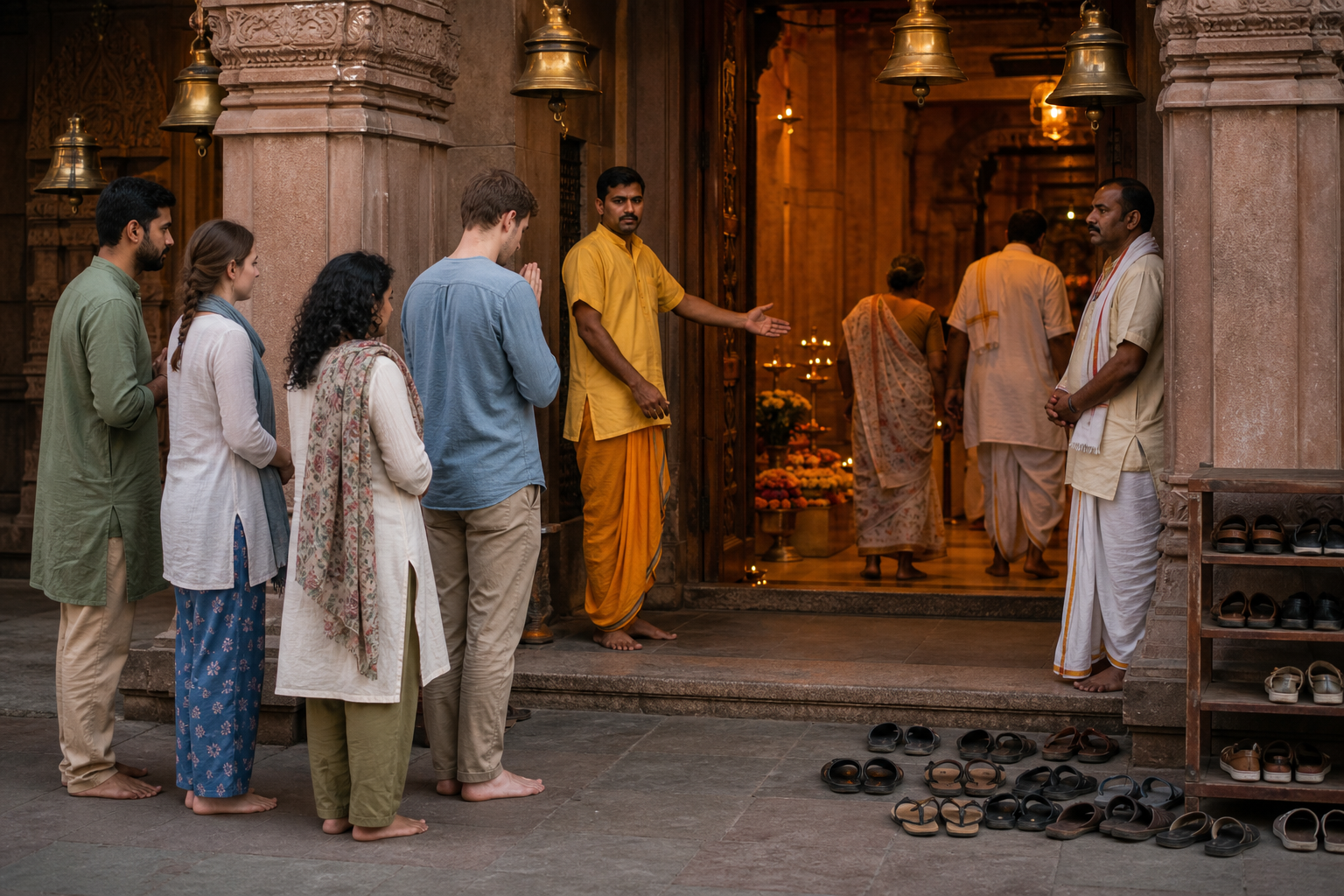
- Read and follow the instructions displayed at the site. Ask when you are uncertain rather than copying another visitor.
- Keep your phone put away during darshan unless an urgent need requires it. Where photography is allowed, permission to photograph a place is not automatically permission to photograph an identifiable worshipper.
- Do not touch carvings, sacred objects, offerings, or ritual implements unless a custodian or established practice clearly invites you to do so.
- Keep entrances and narrow passages clear. If you want time for detailed observation, move out of the active flow first.
- Do not correct another person’s practice on the basis of a brief observation. Customs can vary, and a temple queue is not the place to stage a doctrinal argument.
- Ask concise questions at a suitable moment. Priests, volunteers, residents, and worshippers may be occupied; their presence does not create an obligation to provide a private explanation.
- Leave no waste behind. The sacred landscape includes the routes, lanes, and riverfront spaces connecting its principal shrines.
If you have limited time, choose depth over accumulation. Visit Kashi Vishwanath as your principal shrine, then spend unhurried time at a ghat or beside the Ganga so that you can see how temple, river, city, and pilgrim movement belong together. One attentive encounter is more useful than several visits remembered only as queues.
End the day before fatigue turns reverence into impatience. Record what you learned, identify one question worth studying further, and carry one value into your conduct after leaving Kashi. The most credible respect for Varanasi’s temple heritage begins when the visit stops being a checklist and becomes a responsibility.
References
