
If one Kartik 2025 calendar ends the month on November 5 and another ends it on November 20, you haven’t necessarily found an error. You are looking at different lunar-month conventions, and mixing those conventions is the quickest way to put a vrata or temple visit on the wrong civil date.
Your first decision is therefore not which festival to mark. It is which regional Panchang your household follows. In the Marathi, Kannada, Telugu and Gujarati calendars covered here, Kartik runs from October 22 through November 20, 2025. Kartik Purnima falls on Wednesday, November 5 in India and concludes Kartik in the North Indian reckoning. Once that distinction is clear, you can build a calendar that is both devotional and practical.
Key takeaways
- Use October 22-November 20 as the Kartik month window if your household follows the Marathi, Kannada, Telugu or Gujarati calendar described here.
- Mark Wednesday, November 5 for Kartik Purnima in India. It is also known as Tripurari Purnima, Tripuri Purnima and, in its festival-of-lamps setting, Dev Diwali.
- Do not assume that Kartik Purnima ends Kartik in every regional system. It ends the month in the North Indian calendar, while it falls within the longer October 22-November 20 southern and western month window.
- Plan Diwali-related observances, Prabodhini Ekadashi, Tulsi Vivah and Bhishma Panchaka by tithi, not by copying an undated festival sequence into your civil calendar.
- A workable daily Kartik discipline can be simple: early snana, one recitation or period of japa, one safely placed evening deepa, and a regular act of dana or seva.
- Confirm sunrise tithi and muhurta with a Panchang calculated for your location, especially before fasting, travelling or joining a temple programme.
Why two Kartik end dates can both be correct
A lunar tithi does not begin at midnight. Its start and end follow the lunar cycle, so one tithi can occupy parts of two civil dates. Many vratas then use the tithi present at sunrise, while evening observances can depend on a different prescribed interval. A date-only list cannot show those distinctions.
The month boundary also changes with the calendar tradition. Karnataka follows an Amavasyanta system, in which the named lunar month is organized around Amavasya. North Indian Hindi calendars conclude Kartik at Kartik Purnima. That is why November 5 can be the last day of Kartik in one calendar without contradicting a November 20 conclusion in another.
Use this four-part check before entering anything in a shared family calendar:
- Write the name of your calendar tradition at the top: Marathi, Kannada, Telugu, Gujarati or the North Indian calendar used by your family.
- Set the location to the city where the observance will take place. Sunrise and tithi boundaries are location-sensitive.
- Record the tithi as well as the civil date. For example, write “Kartik Shukla Dwadashi” rather than only writing “Tulsi Vivah.”
- Confirm the temple’s own schedule before arranging travel. Temple utsavas may follow local calculations and established sampradaya practice.
If you live outside India, the India date is a reference point, not an automatic local ruling. Consult a location-specific Panchang rather than transferring the Indian civil date across time zones.
Your Kartik 2025 planning calendar
The entries below separate confirmed civil dates from observances that still require a local tithi check. That distinction matters more than filling every blank with an apparently precise date.
| Observance or period | 2025 placement | What you should plan |
|---|---|---|
| Kartik or Kartika month | October 22-November 20 in the Marathi, Kannada, Telugu and Gujarati calendars covered here | Choose the daily discipline you can maintain throughout this complete window. |
| Diwali-related Kartik observances | At the Ashwin-Kartik transition; Lakshmi Puja Amavasya may remain in Ashwin in a Marathi Panchang | Check the boundary carefully. Mark Kartik Shukla Pratipada or Padwa, Govardhan Puja or Annakut, and Bhai Dooj using your local calendar. |
| Daily Akasha Deepam | October 22-November 20 in the named southern and western calendars | Select a secure elevated location and prepare a stable lamp holder, oil or ghee, and wicks before the first evening. |
| Prabodhini Ekadashi | Locate by Ekadashi tithi in your regional Panchang | Plan the vrata appropriate to your tradition and note that this observance marks the conclusion of Chaturmasya. |
| Tulsi Vivah | Kartik Shukla Dwadashi or Trayodashi, depending on local tradition | Ask which tithi your family or temple uses before inviting participants or arranging offerings. |
| Bhishma Panchaka | The final five days of Kartik | Block the final five tithi days shown by your own calendar rather than counting backward from a date belonging to another regional system. |
| Kartik Purnima | Wednesday, November 5 in India | Plan dawn snana, dana and prayer, followed by evening deepa-dana or temple worship. This concludes Kartik in North Indian reckoning. |
The Diwali boundary deserves particular care. In many Marathi Panchangs, Lakshmi Puja on Amavasya can fall at the end of Ashwin, while Padwa, Govardhan Puja or Annakut, and Bhai Dooj belong to the opening movement of Kartik. Calling every Diwali day “a Kartik festival” hides a real calendrical distinction.
Choose a practice you can sustain for the whole month
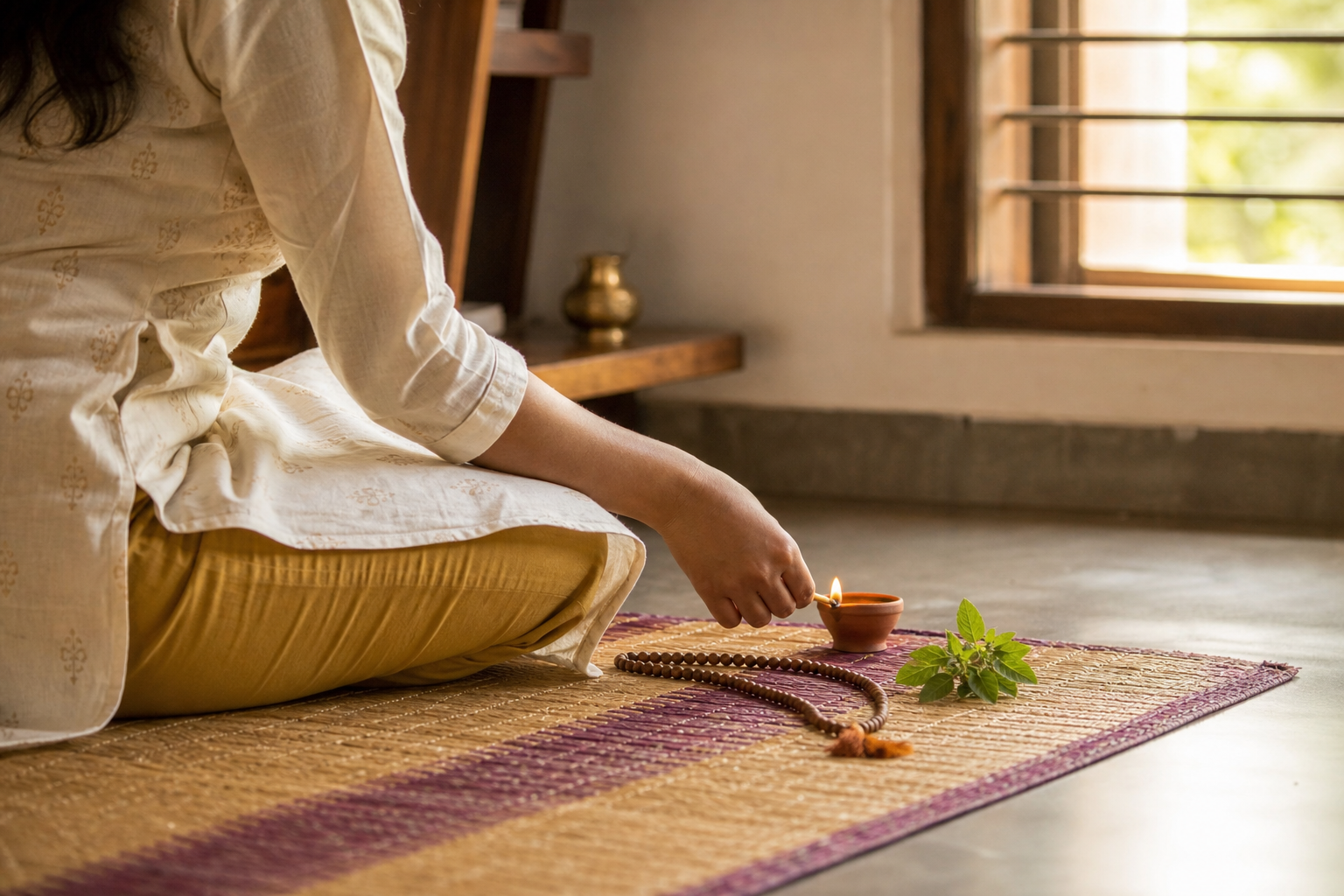
Kartik works best as a rhythm, not as a collection of isolated festival days. The temptation is to assemble a demanding routine from several regions and then abandon it. A better approach is to set a minimum daily observance first and add only the practices rooted in your household’s sampradaya.
- Begin the morning with snana. If a river, tank or pilgrimage bath is not practical, preserve the discipline of an early, attentive bath at home rather than treating travel as a requirement.
- Choose one repeatable recitation: japa, a familiar stotra or a passage from a sacred text. Consistency matters more than changing the text every day.
- Make restraint concrete. Keep the diet sattvic if that is your vrata, reduce an avoidable indulgence, or set aside something regularly for dana. A vrata need not become severe food restriction; if fasting is unsafe for you, choose a non-food discipline and seek appropriate personal guidance.
- Light a deepa at dusk and allow a short period of quiet prayer. One lamp maintained attentively is a sound baseline when a larger arrangement would be difficult.
- Connect inward practice to outward service through annadana, material support, care for a temple or sacred water site, or another useful form of community seva.
Add the devotional stream your household follows
- Shaiva households can give particular attention to Kartik Mondays through Shiva puja, recitation and the form of fasting they traditionally observe.
- Vaishnava households observing the Damodara month can place the daily deepa near Tulasi and use the stotras preserved in their lineage.
- Families keeping Akasha Deepa Vratham from October 22 to November 20 can light an elevated evening lamp on a terrace, balcony or courtyard structure.
- A household new to Kartik practice can begin with snana, one deepa, one recitation and one planned act of dana. It does not need to imitate every regional custom in the first year.
Keep Akasha Deepam elevated, stable and attended
“Elevated” does not mean exposed or precarious. Place the diya in a stable holder on a secure surface, away from hanging cloth, dry decorations, strong wind and any edge from which it could fall. An adult should handle the flame and remain responsible for extinguishing it. If your balcony or terrace cannot safely hold an open flame, keep the devotional intention through a safely placed lamp at the home altar rather than creating a falling-fire hazard.
Clay diyas, natural oils and modest offerings keep the ritual materially simple. Prepare the lamp before dusk so the observance becomes a pause in the household’s evening rather than a hurried search for wicks and matches.
Prepare for the turning points, not just the full moon
From Prabodhini Ekadashi to Tulsi Vivah
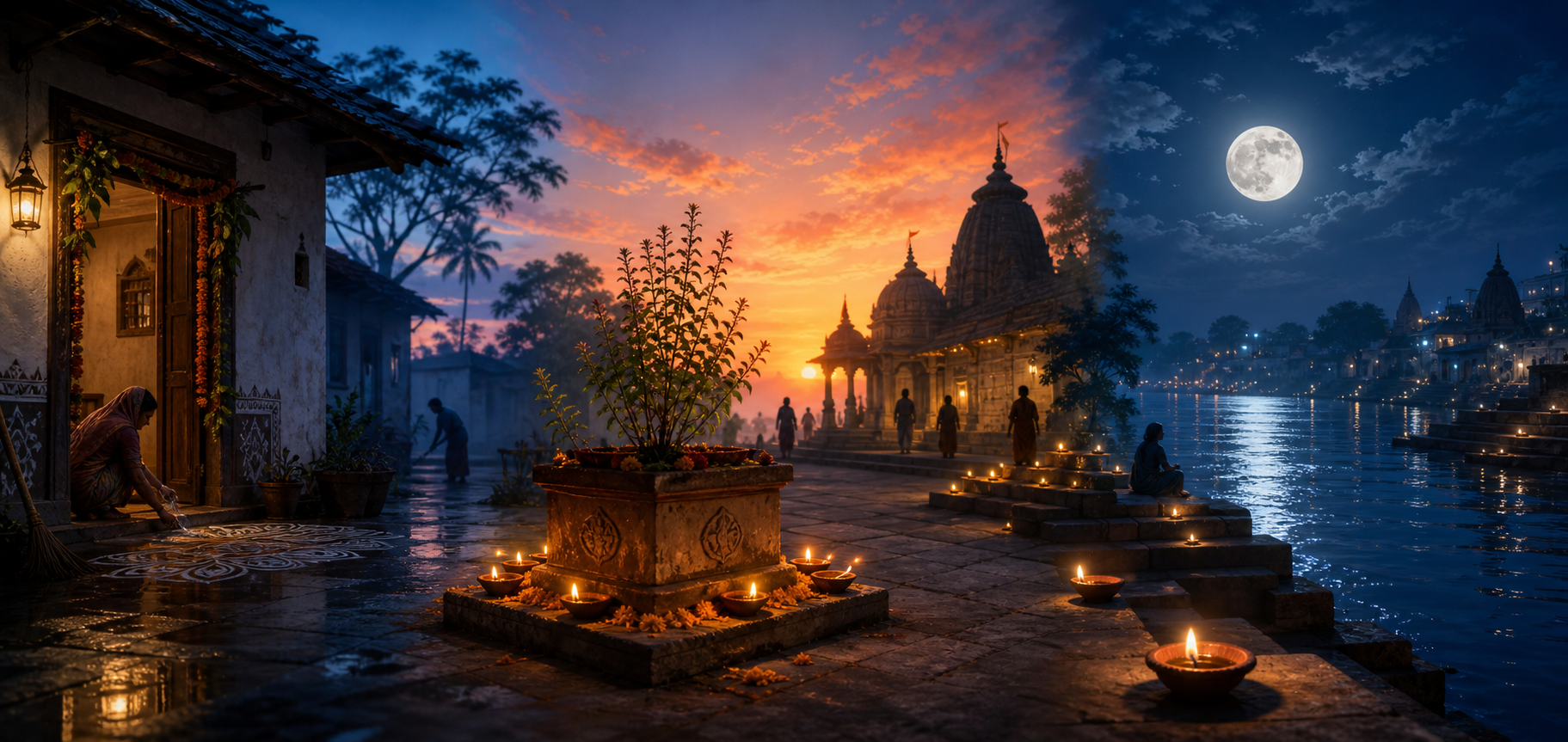
Prabodhini Ekadashi marks the awakening of the deities and the conclusion of Chaturmasya. Tulsi Vivah follows, but households do not all assign it to the same tithi: Dwadashi or Trayodashi may be used. If you are hosting the observance, put the tithi and the chosen Panchang on the invitation. That prevents a difference in tradition from looking like a scheduling mistake.
Bhishma Panchaka occupies the last five days of Kartik. Do not obtain those five days by subtracting civil dates from November 20 unless that date is actually the conclusion used by your regional calendar. Locate the five tithis directly in the same Panchang you used for the beginning of the month.
Give Kartik Purnima its own morning and evening plan
Kartik Purnima on November 5 is not merely another lamp-lighting evening. The traditional arc begins with dawn snana, prayer and dana, then moves toward Chandradeva darshan, deepa-dana and temple or home worship after dusk. In Kashi and other pilgrimage centres, the night is associated with Dev Diwali and large-scale illumination; elsewhere, one can keep the same devotional movement without reproducing the scale of a major tirtha.
For a home observance, decide separately what you will do at dawn, what you will give during the day and where you will light the evening lamps. For a pilgrimage, verify the local muhurta and temple programme before departure. If a riverbank is crowded, inaccessible or unsafe, snana and deepa-dana at home remain more responsible than forcing a hazardous visit.
Honour shared dharmic values without merging distinct traditions
Kartik’s language of light, restraint, dana and disciplined practice resonates across the dharmic family, but the observances are not interchangeable. Jain communities may mark Kartik Purnima through vrata and tirtha-yatra, Sikh communities commemorate Guru Nanak Jayanti around the full moon, and the Buddhist Kathina season emphasizes dana and support for the sangha during this broader period.
If you are organizing a community gathering, name each tradition’s observance accurately and let practitioners present its meaning in their own terms. Build unity around a shared act such as food service, charitable giving or care for a public sacred space. A generic hybrid ritual may blur precisely the traditions the event is meant to respect.
Before you buy supplies or promise attendance, open the Panchang for your city and write four items on one page: your Kartik month boundary, your daily lamp practice, the Tulsi Vivah tithi used by your household, and the local Kartik Purnima muhurta. Then choose one dana or seva commitment. That turns a crowded festival list into a vrata you can actually keep.
References
- DharmaRenaissance Blog — Kartik Maas 2025 in Marathi Calendar: Complete Guide to Dates, Festivals & Spiritual Practices
- DharmaRenaissance Blog — Discover Kartika Maasa 2025 (Kannada Calendar): Complete Guide to Dates, Rituals, Festivals
- DharmaRenaissance Blog — Akasha Deepam 2025: Essential Guide to Akasha Deepa Vratham Dates, Meaning, and How to Observe
- DharmaRenaissance Blog — Kartik Purnima 2025 Guide: Discover Essential Date, Puranmashi Timings & Sacred Rituals
