
-
Unveiling Kena’s Dual Identity: Why It’s the Talavakara Upanishadand Why It Matters Today

The Kena Upanishad is called the Talavakara Upanishad because it is embedded in the Tālavakāra Brāhmaṇa of the Sāma Veda, reflecting its precise textual lineage. Its name “Kena” comes from the opening question“by whom?”that frames a profound inquiry into the source of mind, speech, and life. Structured in four sectionstwo metrical and two proseit advances…
-
Brahmā’s Joy, Kapila’s Descent: A Powerful, Unifying Study of Srimad-Bhāgavatam 3.24.11
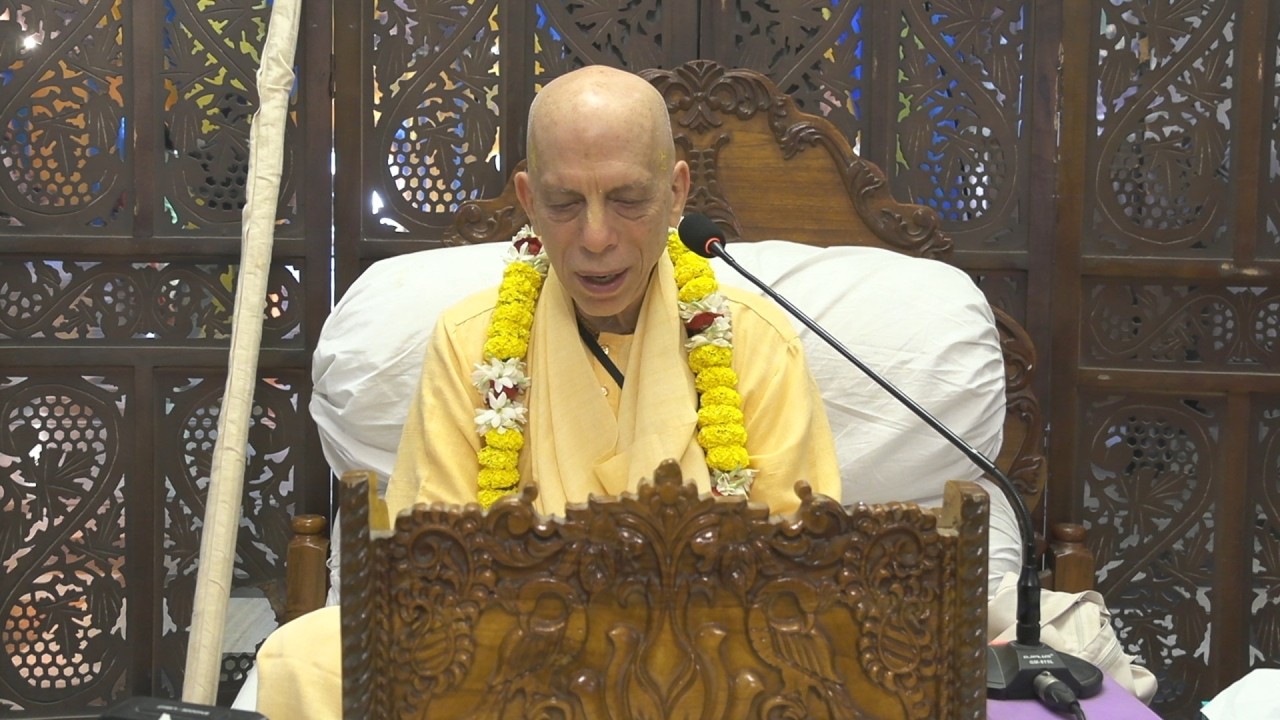
Srimad-Bhāgavatam 3.24.11 marks the moment Brahmā, purified by worship, speaks to Kardama and Devahūti as the Supreme Lord prepares to descend as Kapila. The verse frames avatāra as purposeful revelation and grounds understanding in devotion, anticipating Kapila’s theistic Sāṅkhya. Connected to Bhagavad-gītā Chapter 4especially 4.9 (“janma karma ca me divyam”)it teaches that properly understood divine…
-
Kubera and Mammon Unveiled: How Icons of Wealth Shape Ethics, Society, and Spiritual Life

Wealth has long stirred both aspiration and anxiety. This comparative study of Kubera in Hinduism and Mammon in the Aramaic and Christian traditions clarifies how cultures transform riches into ethical guidance. It shows how Hindu texts situate prosperity within dharma and community welfare, while biblical teachings personify Mammon to warn against greed. Readers gain practical…
-
Touching the Book, Touching Freedom: HG Satyanarayana Prabhu on Bhakti and Service

This piece profiles HG Satyanarayana Prabhu, a direct disciple of Srila Prabhupada, whose service as Director of the Bhaktivedanta Book Trust in the Far East and Middle East exemplifies devotion grounded in scholarship. It highlights the bhakti conviction that sacred texts can catalyze inner transformation, beginning with a simple touch and deepening through study and…
-
Sukhmani Sahib: A Timeless Pathway to Inner Peace, Compassion, and Dharmic Unity

Sukhmani Sahib, a revered composition in the Guru Granth Sahib, offers a structured path to inner peace through Naam, Simran, humility, and Seva. Organized in 24 ashtapadis, it marries clear doctrine with musical cadence to aid contemplation and practice. The scripture translates spiritual insight into actionable ethicstruthfulness, compassion, and community servicethat improve emotional balance and…
-
Why the Upanishads Inspire Unity: Timeless, Non-Sectarian Wisdom for All Seekers

The Upanishads endure as non-sectarian, universal Scriptures that speak across traditions and eras. Their core inquiry into ātman, Brahman, and truth encourages seekers to look beyond labels and toward direct realization. By emphasizing disciplined reflection, meditation, and ethical living, they offer tools for clarity, compassion, and inner stability. This approach strengthens unity among the Dharmic…
-
WSN October 2025: Powerful Sankirtan Achievements, Temple Leaders, and Global Outreach

WSN October 2025 showcases a strong month of sankirtan outreach, with Mayapur, Mumbai-Juhu, and Los Angeles leading large temples and London-Soho, Bengaluru-South, and Baroda topping the medium category. Atlanta Krishna Life, Surat, and Chandigarh excelled among small centers, while Baltimore, Winnipeg, and Ottawa led the maha-small group. More than 385,000 literatures were distributed, expanding access…
-
Skanda Purana Stories: Timeless Tales of Valor, Devotion, and Dharma for Modern Life

The Skanda Purana, one of the eighteen Mahapuranas, presents Lord Skanda (Kartikeya/Muruga) as a model of disciplined devotion and protective courage. Its narrativesframed as dharma-yuddhaportray valor as service to the common good, guided by compassion and self-control. Rich with tirtha-mahātmyas (e.g., Kashi Khanda), the text connects personal practice with sacred geography and community life. Iconography…
-
Prithu Chakravarthi: The Legendary Sovereign Who Made Earth ‘Prithvi’ and Renewed Dharma

The Brahma Purana’s account of Prithu Chakravarthi explains why Earth is called Prithvi and presents a powerful model of ethical leadership. By restoring prosperity after the misrule of Vena, Prithu embodies raja-dharmaprotecting Mother Earth and ensuring just abundance. The narrative’s imagery of Earth as a cow, yielding to compassionate stewardship, offers enduring guidance for sustainable…
-
When Scriptures Go Viral: How to Protect Sacred Wisdom from Digital-Age Distortions

In the digital age, sacred texts from Hinduism, Buddhism, Jainism, and Sikhism are often decontextualized and repackaged into viral slogans. This academic reflection explains how algorithmic amplification and selective translation fuel misinterpretations of the Bhagavad Gita, Upanishads, Dhammapada, Jain Agamas, and Guru Granth Sahib. Drawing on Hindu hermeneutics, Jain Anekantavada, Buddhist Right Speech, and Sikh…
-
Vishnu Purana Stories: Timeless Tales of Devotion, Dharma, and Unity in Diversity

The Vishnu Puranaone of the Eighteen Mahapuranaspresents timeless stories of Lord Vishnu, his avatāras, and exemplary devotees such as Nārada, Prahlāda, Tumburu, and Dhruva. These narratives model steadfast devotion, courage, and disciplined practice while offering practical ethical guidance for daily life. Read within the broader Hindu ethos, the text honors multiple valid paths to the…
-
Gurbani Exegesis and Japji Commentaries: Illuminating Tradition, Unity, and Future Pathways

A webinar hosted by Naad Pargaas Australia explored “Exegesis of Gurbani and the Commentaries on Japji,” emphasizing rigorous yet devotional approaches to Sikh scripture. The discussion balanced linguistic precision, historical context, and lived practice to clarify Japji Sahib’s enduring relevance. Speakers situated Sikh hermeneutics within a wider dharmic landscape, strengthening unity across Hinduism, Buddhism, Jainism,…
-
Srimad Bhagavatam 3.21.32: Unveiling Divine Expansions and the Unity of Dharmic Paths

Srimad Bhagavatam 3.21.32 explains how the Supreme is one yet manifests as many through kalā, svāṁśa, and vibhinnāṁśa. The passage distinguishes viṣṇu-tattva forms like Vāmana, Govinda, and Nārāyaṇa (svāṁśa-kalā) from ordinary living beings (vibhinnāṁśa). This precise vocabulary aids careful study and deepens devotional focus. Readers find that these insights foster humility, compassion, and ethical service…
-
Essential Guide to Śrīmad Bhāgavatam 3.21.25: Discover Manu’s Rule and Sacred Geography

Śrīmad Bhāgavatam 3.21.25 presents Svāyambhuva Manu as an exemplar of righteous leadership grounded in dharma. The verse’s reference to Brahmāvarta and its association with Kurukṣetra illuminate how sacred geography encodes ethical memory in Hindu scriptures. Read in context, the imagery of ruling over the earth “with its seven oceans” signals cosmic completeness and responsible stewardship.…
-
Master Deep Focus and Memory: Proven Benefits of Studying Sacred Texts across Dharmic Paths

Sacred study functions as a sattvika yagyadisciplined worship performed without attachment to resultsgrounded in Bhagavad Gita 17.11 (karmani prayoga). Traditional methods such as memorization, precise recitation, and commentary reading build medha shakti while cultivating humility and steadiness. Modern research supports these practices, linking Vedic learning to neuroplasticity and gains in short- and long-term memory, language,…
-
Discover HH Guru Prasad Swami’s Srimad Bhagavatam Katha: A Complete ISKCON Legacy of Service

HH Guru Prasad Swami’s Srimad Bhagavatam Katha at ISKCON Temple Chandigarh reflects a lifetime of disciplined seva, scriptural teaching, and inclusive community building. The narrative traces his early administrative service and BBT publication distribution in the USA and Central America, followed by his leadership as Costa Rica temple president in 1978. His outreach across Latin…
-
Yam Deep Daan Pooja 2025: Complete Guide to Rituals, Significance, and Diwali Harmony

Yam Deep Daan Pooja, observed on Yam Trayodashi (Dhanteras), falls on October 23 in 2025 and marks the opening of the Diwali cycle. The observance centers on offering a lamp to Yama for well-being and protection, with regional practices emphasizing Pradosh Kaal and south-facing lamps at the entrance. A traditional katha of King Hima highlights…
-
Master the Mahatmyam of Tulasi Puja: Complete Puranic Insights for Kartik and Shravan

Tulasi Puja is a year-round home practice that peaks in Kartik month and Shravan month, celebrated for its Mahatmyam across the Padma Purana, Skanda Purana, Garuda Purana, Narada Purana, and Brahma Vaivarta Purana. These texts present Tulasi as Vishnu-priya and affirm the spiritual merit of planting, nurturing, and worshipping the sacred plant. Daily observancesdeepa, japa,…
-
Discover Guru Har Rai’s Proven Path: How Gurbani Transforms Compassion into Living Wisdom

This analysis presents Guru Har Rai Ji as a model of compassionate leadership, where Gurbani matures into lived wisdom through seva and stewardship. It explains how caring for animals, cultivating fruit orchards, and maintaining herbal dispensaries formed a coherent framework for community health. The discussion situates these practices within a shared dharmic ethicahimsa, karuṇā, daya,…
-
Proven Benefits of Sacred Study: Discover Focus, Memory, and Clarity through Dharmic Texts

Sacred study in the dharmic traditions functions as a sattvika yagyadisciplined effort without attachment to resultsconsistent with Gita Ch 17.11. Practitioners across Hinduism, Buddhism, Jainism, and Sikhism use chant, memorization, and contemplative reading to strengthen attention, memory, and equanimity. Contemporary research on neuroplasticity supports these practices, linking structured oral traditions to improvements in language processing…