
-
Nandi Kalyanam at Thirumazhapadi: Witness the Sacred Wedding of Nandikeshwara and Suyasha
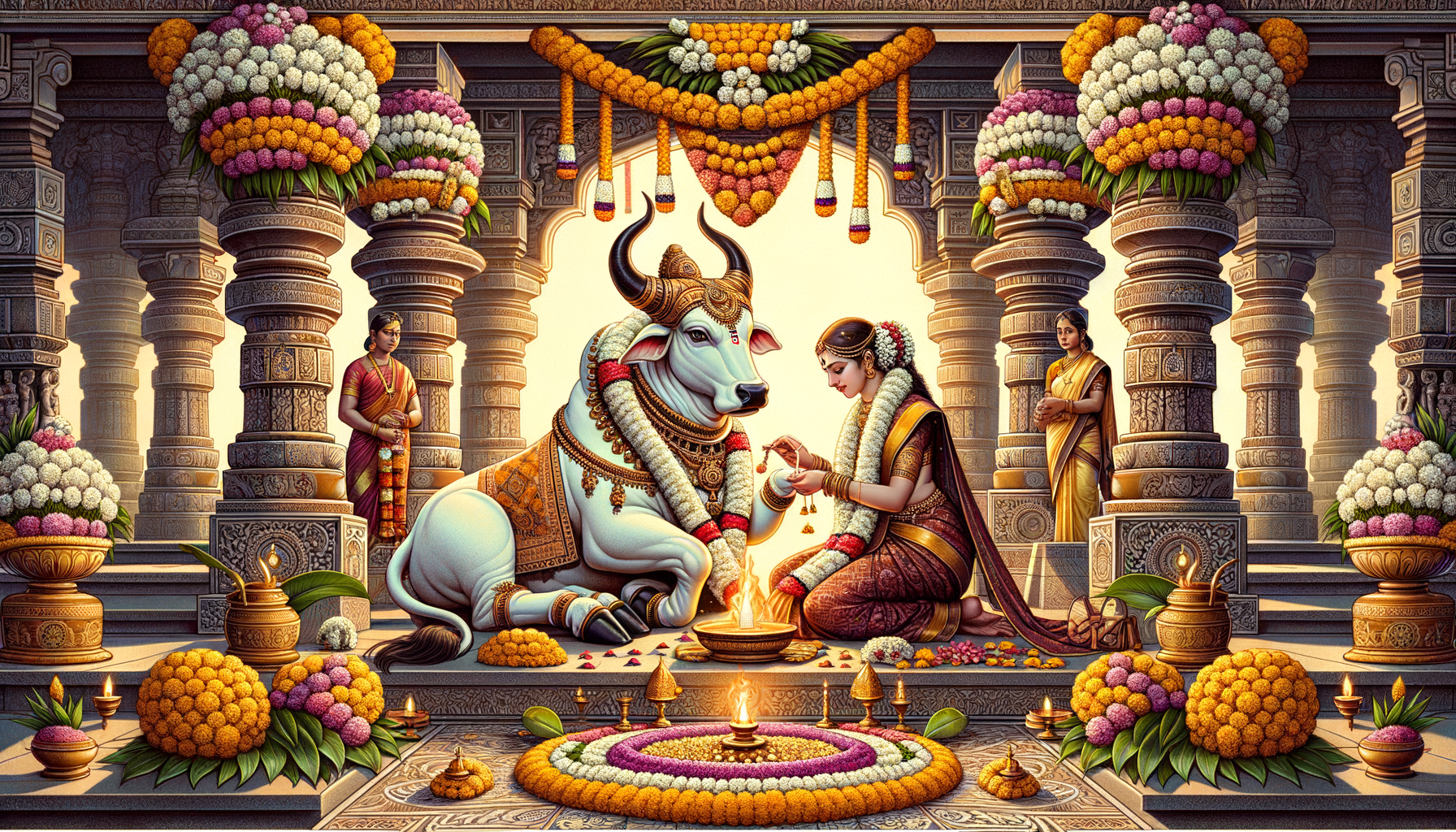
Nandi Kalyanam at Thirumazhapadi Vaidhyanathar Temple honors the sacred wedding of Nandikeshwara and Suyasha, a Shaiva narrative that unites devotion with ethical living. Presented in an academic, accessible style, this account highlights how the kalyanam symbolizes steadfast duty (dharma), auspicious grace, and communal harmony. Pilgrims commonly describe a deep sense of inner steadiness amid music,…
-
Chhinnamasta in the Pranatosini Tantra: Divine Self-Sacrifice and Cosmic Renewal

This article explores the Pranatosini Tantra’s account of Chhinnamasta, a Mahavidya who embodies divine self-sacrifice and cosmic renewal. It explains how the Goddess nourishes her attendants through three life-giving streams, an image read as both prāṇa symbolism and radical generosity. The iconographystanding over Kāma and Ratiillustrates mastery over desire and the transformation of passion into…
-
Alopi Devi Temple, Prayagraj: Sacred Shakti Peeth Where a Cradle Becomes the Deity

Alopi Devi Temple in Prayagraj, a revered Shakti Peeth, is renowned for an aniconic sanctum where a red-draped cradle is worshipped instead of an idol. The shrine’s symbolism emphasizes the formless presence of the Divine Mother while honoring maternal tenderness, protection, and renewal. Local lore links the name “Alopi” to disappearance, suggesting a sacred presence…
-
Sacred Pavitra in Hindu Rituals: Purity, Protection, and a Living Bridge to the Divine

The pavitra, or kusha ring, is a sacred implement in Hindu rituals that signals purification, focus, and spiritual readiness. Traditionally made from kusha (darbha) grass, Desmostachya bipinnata, it supports puja, homa, Sandhyavandanam, mantra-japa, vratas, samskaras, and pitṛ-karmas with an emphasis on śuddhi and steadiness. Lineages prescribe how and when it is worn, commonly on the…
-
Discover the 68 Swayambhulingas: Self-Manifested Shiva Forms and Bharat’s Sacred Geography

This article explores the 68 Swayambhulingas as self-manifested forms of Lord Shiva that shape the sacred geography of ancient Bharat. It clarifies the meanings of Swayambhu and linga, emphasizing the linga as a cosmic symbol of formless consciousness. Readers gain historical and cultural context for these sites within India’s interconnected temple landscapes. The piece highlights…
-
Chakravana: The Western Sea’s Sacred MountainAn Awe-Inspiring Anchor of Hindu Epics

Chakravana, portrayed as a sacred mountain rising from the Western Sea, holds a distinctive place in Hindu scriptures and the imagination shaped by Indian Epics. This account situates Chakravana amid Vishnu’s protective triumphs and the Ramayana’s search for Sita, highlighting how sacred geography deepens narrative meaning. Readers gain an accessible, academic summary that clarifies the…
-
Vaishnavi’s Devipura: Varaha Purana’s Powerful Vision of a Sacred City of Women

This academically grounded retelling of Varaha Purana, Chapter 92, explores Vaishnavi’s creation of Devipuraa sacred city of womenand the emergence of maidens who embody Dharma’s virtues. It clarifies the story’s symbolism, showing how the Divine Feminine (Devi Shakti) harmonizes tapas and ananda into social flourishing. Readers gain practical reflections for dhyāna, japa, and seva, linking…
-
Nityasuris of Vaikuntha: Profound Symbolism of Eternal Service, Grace, and Freedom
Vaikuntha is portrayed as the timeless abode of Lord Narayana, where the Nityasuriseternally liberated beingsserve in pure devotion beyond the reach of karma. Their symbolism illuminates the ideals of selfless service, humility, and steadfast remembrance that guide seekers in the Bhakti Tradition. Exemplars such as Garuda, Adiśeṣa, and Vishvaksena demonstrate how strength, discipline, and loyalty…
-
Brahma’s Fifth Head and Goddess Shatarupa: A Timeless Purana Lesson on Desire and Dharma

This retelling of Brahma’s fifth head and Goddess Shatarupa presents a Puranic episode as a profound ethical allegory. It situates Brahma’s four heads within the symbolism of the Vedas and cosmic order, while reading the fifth head as a lesson on attention and desire. The narrative foregrounds dignity toward the feminine principle and emphasizes self-mastery.…
-
Ultimate Guide to मनोकामनाओं हेतु वृक्ष: Discover Proven Sacred Trees to Transform Life

मनोकामनाओं हेतु वृक्ष (Manokamna hetu Vriksh) is a disciplined, nature-centered practice that unites intention, devotion, and daily care. Rooted in the Hindu way of life and Vedic culture, it also resonates across Buddhism, Jainism, and Sikhism, strengthening unity among dharmic traditions. Sacred trees such as Peepal, Banyan, Bilva, Tulsi, Neem, and Amalaka are associated with…
-
Essential Insights into the Sacred Amla Tree: A Complete Guide to Its Role in Dharmic Life

The Amla tree (Phyllanthus emblica/Emblica officinalis) occupies a revered place in Hinduism as “Aamla” from the Sanskrit “Amalika.” The Vishnu Purana links its origin to the tears of Vishnu, framing the tree as a sign of divine grace. Rituals such as Amalaki Ekadashi honor the Amla with offerings and lamps, while Ayurveda recognizes it as…
-
Some Protagonists of Sacred Traditions: The Book that Sanctifies Every Hindu Home

This blog post introduces the English translation of D.V. Gundappa’s seminal work, “Vaidikadharmasampradāyastharu,” now titled “Some Protagonists of Sacred Traditions.” It pays tribute to both the original work and its insightful author, emphasizing the book’s ability to deliver spiritual wisdom and inner peace. The introduction explores the absence of extensive philosophical quotations, focusing instead on…