
-
Quieting Food Noise: Evidence-Based Steps to End Mental Chatter and Rebuild Self-Trust

Persistent food noiseintrusive thoughts about eatingoften reflects learned stress responses rather than true hunger. This analysis distinguishes physiological hunger from psychological cravings and outlines practical methods to interrupt the habit loop. Evidence-based steps include labeling thoughts, inserting a brief pause, using cognitive refutation to challenge distortions, and practicing self-compassion to prevent all-or-nothing spirals. Over time,…
-
Modern Screens Numb the Sacred Tongue: Dharmic Wisdom to Reclaim Mindful Eating Today
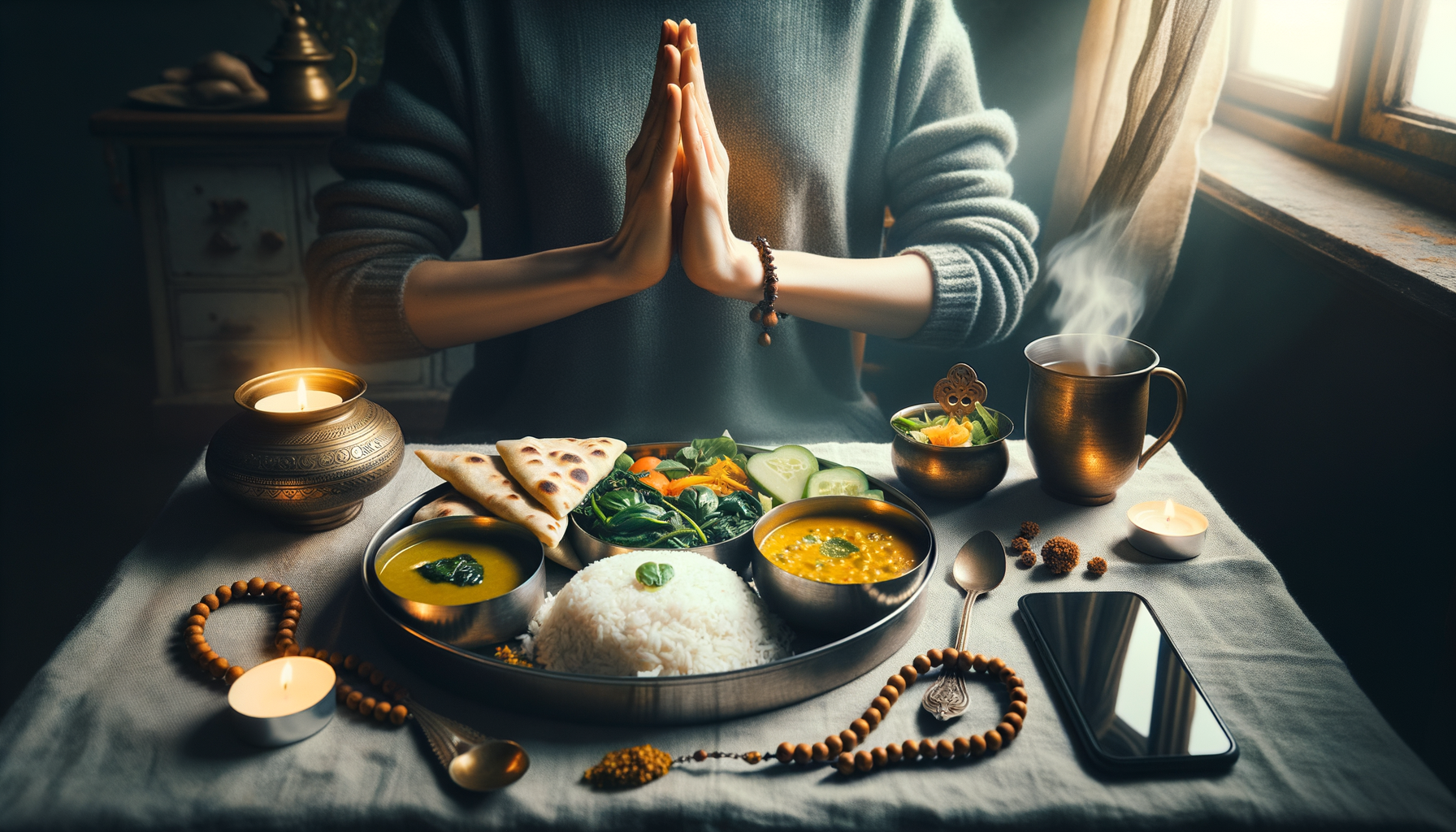
Meals in the digital age often unfold under the glow of screens, numbing the tongue and dulling awareness. Dharmic traditionsHinduism, Buddhism, Jainism, and Sikhismoffer a unifying path to reclaim mindful eating as a sacred practice. Ayurveda illuminates the effects of sattvic, rajasic, and tamasic foods, while Yoga’s pratyahara redirects attention from devices to the plate.…
-
Quieting the Overthinking Mind: Ashtavakra’s Advaita Wisdom for Modern Mental Clarity

Information overload and constant notifications have intensified overthinking and anxiety. Ashtavakra’s Advaita insightone is not the mindoffers a clear, practical antidote by shifting identity from mental turbulence to steady awareness. The article explains sakshi (witness) consciousness, links it to Pancha Kosha discernment, and shows how breath awareness, pratyahara, dhyana, and inquiry (vichara) reduce reactivity. It…
-
Resilience in Hinduism: Timeless Dharmic Practices to Rise Strong from Adversity

This article examines resilience in Hinduism as a cultivated capacity grounded in abhyāsa (practice) and vairāgya (wise non-attachment). Drawing on the Bhagavad Gita, the Upanishads, and the Yoga Sutra, it outlines how equanimity, witnessing awareness, and disciplined routines foster emotional balance. Practical methodsdhyāna, prāṇāyāma, and mantra japaare presented as accessible tools for stress management and…
-
Discover Bliss in the Eternal Now: Dharmic Wisdom on Presence Beyond Happiness

Modern life scatters attention, yet dharmic traditions affirm that abiding in the present moment reveals a stable blissanandabeyond fleeting happiness. Hinduism links Presence to equanimity and Karma Yoga, turning daily duties into contemplative practice. Practical methods such as breath awareness, Pranayama, dhyana, and japa make the Eternal Now accessible in ordinary routines. Buddhism’s mindfulness, Jainism’s…
-
Education Totke for Focused Study: Ethical, Dharmic Remedies to Boost Learning and Memory

Education Totke, अच्छी शिक्षा के लिए टोटके, पढ़ाई में उन्नति के लिए टोटके are presented as gentle, ethical practices that support focus, memory, and confidence. The guidance integrates dharmic unityhonoring Hinduism, Buddhism, Jainism, and Sikhismthrough short invocations, gratitude, and respect for teachers. Practical steps include preparing a clean study space, a brief mantra or mindfulness…
-
Stop Overthinking, Start Living: Hindu Wisdom for a Life of Presence and Joy

Hindu wisdom highlights a simple paradox: the more life is overanalyzed, the less it is truly lived. Drawing from the Hindu way of life and allied dharmic traditions, the path emphasizes presence, ethical action (dharma), and mindful awareness over relentless explanation. Karma yoga reframes daily duties as opportunities for clarity by releasing attachment to outcomes.…
-
When Google Photos Becomes Therapy: Memory Reels That Reduce Stress and Boost Gratitude

A simple Google Photos notification can function as digital therapy. Brief, automated memory reels reduce stress, interrupt rumination, and increase gratitude by surfacing positive reminiscence at the right moment. Visual cues activate vivid recall, strengthening emotional well-being and family bonds. This micro-practice works as accessible, digital self-care requiring no new habits. It reframes technology as…
-
ਚੁੱਪ ਦਾ ਸੰਦੇਸ਼: A Poetic Meditation on Truth, Courage, and Dharmic Unity in Silence

This reflection explores how silence, practiced with mindfulness, strengthens truth and courage across Hinduism, Buddhism, Jainism, and Sikhism. It presents mauna, Noble Silence, and simran as convergent disciplines that align speech with dharma and Ahimsa. Readers gain an academic yet accessible understanding of how Anekantavada invites many-sided truth while reducing harm. Practical micro-practicesbrief mauna, three-breath…
-
Sacred Stillness, Lasting Clarity: A Dharmic Guide to Mindful Observation over Endless Seeking

Modern life rewards endless seeking, yet dharmic wisdom demonstrates that mindful observation offers deeper clarity and freedom. Drawing from Hindu philosophysakshi-bhava, pratyahara, dhyana, and aparigrahathis piece shows how observation refines attention and aligns action with dharma. Convergences with Buddhism’s vipassana, Jainism’s samayik, and Sikhism’s simran and sehaj reveal a shared contemplative core that nurtures unity…
-
Facing the Inner Prowler: How Mindfulness, Caregiving, and Creativity Temper Depression

This reflective analysis examines depression as an “inner prowler” and outlines evidence-informed ways to live with it through mindfulness, self-compassion, and steady daily practices. It integrates Jungian shadow work with Buddhist insights on aversion, showing how gentle awareness reduces the shadow’s intensity. It highlights dharmic unity by connecting Hindu notions of dharma, Jain ahimsa, Sikh…
-
Beyond Narcissistic Abuse: Evidence-Based Healing, Somatic Recovery, and Safe, Lasting Love

This reflective analysis traces the arc from narcissistic abuse to secure, ethical love through evidence-based healing and dharmic principles. It distills complex experiences into practical steps: belief work, somatic regulation, body-based listening, and firm boundaries. Readers gain a clear framework for choosing safe people and defining relationship standards rooted in integrity and mutual care. The…
-
You Are Already That: Effortless Realization of Infinite Pure ConsciousnessA Dharmic Perspective

This article clarifies a core Vedantic insight: infinite pure consciousness is not something to attain but to recognize. It explains how Hindu philosophy, especially Advaita Vedanta and the Upanishads, frames self-realization as effortless recognition rather than forced achievement. It highlights convergences with Buddhism, Jainism, and Sikhism, reinforcing unity in spiritual diversity. Practical guidance shows how…
-
Why Krishna Calls Yoga ‘Evenness of Mind’: Timeless Guidance for Inner Strength

Bhagavan Sri Krishna’s teaching in Bhagavad Gita 2.48 defines Yoga as evenness of mind, placing equanimity at the heart of ethical action. This balanced awareness steadies decision-making amid success and failure, transforming stress into resilience and clarity. Practically, brief breath awareness, mindful pause, and dharmic intention help train this steadiness in daily life. The approach…
-
Unshaken Cosmos, Quiet Mind: Aligning with Dharma for Lasting Peace and Inner Resilience

This reflection explores how the universe remains steady despite mental turbulence and how dharmic disciplines cultivate alignment with that steadiness. It highlights convergent insights from Hinduism, Buddhism, Jainism, and Sikhism that guide equanimity, ethical living, and social harmony. Readers gain practical methodsbreathwork, mantra japa, mindfulness, scripture contemplation, and nature-based rhythmsto calm anxiety and increase resilience.…
-
Bounce-Back Balance: The Paddle Ball Method for Mindful Resilience and Returning to Center

A familiar toy clarifies how to sustain balance under pressure. Using the paddle ball as a metaphor, this piece shows how steady rhythms of engagement and return-to-center build emotional resilience and focus. Practical toolsmindfulness, box breathing, and brief pausestransform stressful spikes into opportunities for recalibration. The discussion connects these skills with shared insights across dharmic…
-
Exhausted by Self-Improvement? Shift from Fixing to Living with Compassionate Growth

Many people turn self-improvement into an exhausting full-time job, mistaking relentless effort for self-love. This piece reframes healing as compassionate presence rather than constant fixing, reducing self-criticism and self-growth burnout. It offers four practical shiftschecking the weight of practices, embracing real rest, ignoring non-resonant “shoulds,” and choosing good enoughto make mindfulness and self-care sustainable. The…
-
Losing Sight, Gaining Insight: A Filmmaker’s Path Through Blindness to Meaning

This reflective account presents a clear, practical path through vision loss by showing how accessibility tools, mindful pedagogy, and deliberate writing practices preserve creativity and purpose. Readers learn how macular degeneration reshapes daily life in a vision-centric, digital age and why accessible design is essential for inclusion. The narrative integrates dharmic perspectives from Buddhism, Hinduism,…
-
Calm Anxiety from Childhood Wounds: Science‑Backed, Dharmic Practices to Restore Safety and Agency

Anxiety rooted in childhood often reflects a nervous system trained to protect, not a personal failing. This analysis traces how early experiences with shame and pressure can imprint persistent anxiety and how grief, loss, and responsibility can catalyze healing. It presents ten practical, trauma-informed methodsgratitude-based inquiry, life simplification, quiet observation and cautious fasting, shock recognition,…
-
Playful Spiritual Parenting: Nurturing Joy, Respect, and Mindfulness the Dharmic Way

Spiritual parenting is most effective when rooted in play, presence, and respect rather than constant instruction. By engaging children with mindful routines and joyful micro-rituals, families foster emotional well-being and secure attachment. This approach aligns with dharmic values shared across Hinduism, Buddhism, Jainism, and Sikhismlila, mindfulness, ahimsa, and sevaguiding children through experience instead of lectures.…